Metoclopramide polpharma
Poland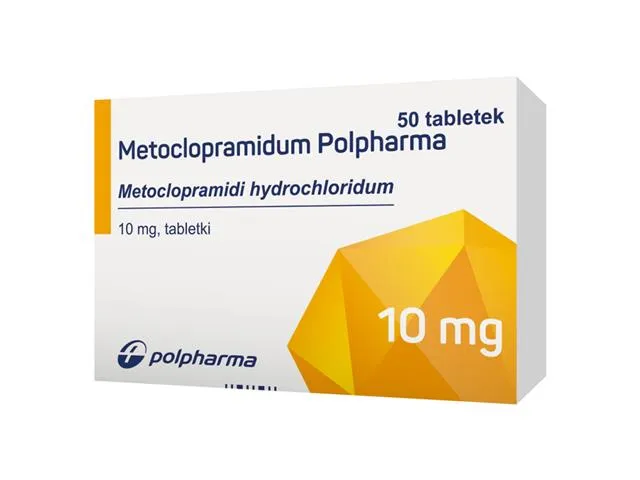
Table of Contents
- Package leaflet: information for the patient
- 1. What Metoclopramidum Polpharma is and what it is used for
- 2. Important information before using Metoclopramidum Polpharma
- 3. How to use Metoclopramidum Polpharma
- 4. Possible adverse reactions
- 5. How to store Metoclopramidum Polpharma
- 6. Contents of the pack and other information
Package leaflet: information for the patient
Metoclopramidum Polpharma, 10 mg, tablets
Metoclopramidi hydrochloridum
Please read carefully the entire leaflet before using the medicine, as it contains
important information for the patient.
- Keep this leaflet, as you may need to read it again.
- If you have any further questions, please consult your doctor or pharmacist.
- This medicine has been prescribed for a specific individual. Do not pass it on to others. It may harm them even if their symptoms are the same.
- If you experience any adverse reactions, including any not listed in this leaflet, inform your doctor or pharmacist. See section 4.
Table of contents
- What Metoclopramidum Polpharma is and what it is used for
- Important information before taking Metoclopramidum Polpharma
- How to take Metoclopramidum Polpharma
- Possible side effects
- How to store Metoclopramidum Polpharma
- Contents of the pack and other information
1. What Metoclopramidum Polpharma is and what it is used for
Metoclopramidum Polpharma is an antiemetic medicine. It contains an active substance called
"metoclopramide". The medicine acts on a part of the brain that controls nausea and vomiting.
Adults
Metoclopramidum Polpharma is used in adults in the following cases:
- prevention of delayed nausea and vomiting that may occur after chemotherapy;
- prevention of nausea and vomiting associated with radiotherapy;
- treatment of nausea and vomiting, including nausea and vomiting associated with migraine. Metoclopramide may be used in combination with oral analgesics in migraine to enhance the analgesic effect.
Adolescents
Metoclopramidum Polpharma is indicated for use in adolescents (aged 15 to 18 years)
only if other treatment methods have proven ineffective or cannot be used for the prevention of
nausea and vomiting that may occur after chemotherapy.
2. Important information before using Metoclopramidum Polpharma
When not to use Metoclopramidum Polpharma:
- if the patient is allergic to metoclopramide or any of the other ingredients of this medicine (listed in section 6);
- in case of bleeding, obstruction or perforation of the stomach or intestines;
- if the patient has a rare adrenal gland tumour located near the kidney (pheochromocytoma);
- if the patient has or has had involuntary muscle contractions (tardive dyskinesia) during treatment with medicines;
- if the patient has epilepsy;
- if the patient has Parkinson's disease;
- if the patient is taking levodopa (a medicine for Parkinson's disease) or dopamine agonists (see "Metoclopramidum Polpharma and other medicines" below);
- if the patient has ever experienced abnormal levels of blood pigment (methemoglobinemia) or NADH-cytochrome b5 reductase deficiency.
Metoclopramidum Polpharma must not be used in children under 1 year of age (see "Children and adolescents" below).
If any of the above symptoms occur in the patient, Metoclopramidum Polpharma must not be used.
In case of doubt, consult a doctor, pharmacist or nurse before using Metoclopramidum Polpharma.
Warnings and precautions
Before starting treatment with Metoclopramidum Polpharma, discuss with your doctor or pharmacist if:
- the patient has previously had irregular heart rhythm (QT prolongation) or other heart problems;
- the patient has problems with blood electrolyte levels such as potassium, sodium or magnesium;
- the patient is taking other medicines that affect heart function;
- the patient has neurological (brain) disorders;
- the patient has kidney or liver problems. A dose reduction may be necessary (see section 3);
- the patient has had depression, especially moderate to severe depression with suicidal tendencies, as symptoms may recur during treatment with metoclopramide;
- the patient has been diagnosed with breast cancer.
Metoclopramide causes a transient increase in plasma aldosterone concentration, which may lead to fluid retention.
The doctor may order blood tests to check the level of blood pigment. In case of abnormal levels (methemoglobinemia), the medicine must be discontinued immediately.
A minimum six-hour interval between doses must be observed, even if vomiting and dose rejection occur, to avoid overdose.
Do not exceed a treatment duration of 3 months due to the risk of involuntary muscle contractions.
Children and adolescents
Uncontrolled movements (extrapyramidal symptoms) may occur in children and adolescents. This medicine must not be used in children under 1 year of age due to the increased risk of uncontrolled movements (see "When not to use Metoclopramidum Polpharma").
Metoclopramidum Polpharma and other medicines
Tell your doctor, pharmacist or nurse about all medicines you are currently taking or have recently taken, as well as any medicines you plan to take. This is important because some medicines may affect the action of Metoclopramidum Polpharma or Metoclopramidum Polpharma may affect the action of other medicines. In particular, inform your doctor if you are taking the following medicines:
- levodopa or other medicines used in the treatment of Parkinson's disease (see "When not to use Metoclopramidum Polpharma");
- anticholinergic medicines (medicines used to relieve stomach cramps);
- morphine derivatives (medicines used to treat severe pain);
- sedatives;
- medicines used to treat psychiatric disorders;
- digoxin (a medicine used to treat heart failure);
- cyclosporine (a medicine used to treat certain immunological disorders);
- mivacurium and suxamethonium (medicines used to relax muscles);
- fluoxetine and paroxetine (medicines used to treat depression);
- monoamine oxidase inhibitors (MAOIs), e.g. phenelzine, iproniazid, isocarboxazid, nialamide or tranylcypromine.
Metoclopramidum Polpharma and alcohol
Do not consume alcohol while taking metoclopramide, as alcohol enhances the sedative effect of Metoclopramidum Polpharma.
Pregnancy and breastfeeding
If the patient is pregnant or breastfeeding, suspects she may be pregnant or plans to become pregnant, she should consult a doctor or pharmacist before using this medicine.
If necessary, Metoclopramidum Polpharma may be used during pregnancy. The doctor will decide on the need for treatment.
Metoclopramidum Polpharma is not recommended during breastfeeding, as metoclopramide passes into breast milk and may affect the infant.
Driving and operating machinery
The patient may experience drowsiness, dizziness, uncontrolled tremors, sudden or twisting movements, and unusual muscle tension causing body distortion after taking Metoclopramidum Polpharma. This may impair vision and the ability to drive or operate machinery.
Metoclopramidum Polpharma contains monohydrate lactose
Each tablet contains 50 mg of monohydrate lactose.
If the patient has previously been diagnosed with intolerance to certain sugars, the patient should consult a doctor before taking this medicine.
3. How to use Metoclopramidum Polpharma
This medicine should always be taken exactly as directed by your doctor. If in doubt, consult your
doctor or pharmacist.
All indications (adult patients)
The recommended single dose is 10 mg, repeated up to three times daily.
The maximum recommended daily dose is 30 mg or 0.5 mg/kg body weight.
The maximum recommended duration of treatment is 5 days.
Prevention of delayed nausea and vomiting after chemotherapy (adolescents aged 15 to 18 years)
The recommended dose is 0.1 to 0.15 mg/kg body weight, repeated up to three times daily (orally).
The maximum daily dose is 0.5 mg/kg body weight.
In adolescents aged 15 to 18 years with body weight above 60 kg, one 10 mg tablet should be taken
orally up to three times daily.
The medicine should be used for a maximum of 5 days to prevent delayed nausea and vomiting that
may occur after chemotherapy.
Metoclopramidum Polpharma tablets are a formulation not suitable for use in children with body
weight below 61 kg. Alternative pharmaceutical forms/strengths of the product should be used for
this patient group.
Method of administration
At least a six-hour interval should be maintained between doses, even if vomiting and expulsion of
the dose occurs.
Elderly patients
Dose reduction may be necessary depending on renal and hepatic function and general health status.
Alternative pharmaceutical forms and strengths may be more appropriate for this patient group.
Adults with renal impairment
Inform your doctor about any kidney problems. The dose should be reduced in patients with
moderate or severe renal impairment.
Alternative pharmaceutical forms and strengths may be more appropriate for this patient group.
Adults with hepatic impairment
Inform your doctor about any liver problems. The dose should be reduced in patients with severe
hepatic impairment.
Alternative pharmaceutical forms and strengths may be more appropriate for this patient group.
Children and adolescents
Metoclopramide must not be used in children under 1 year of age (see section 2).
Use of a higher than recommended dose of Metoclopramidum Polpharma
Seek immediate medical advice from a doctor or pharmacist. The patient may experience
uncontrolled movements (extrapyramidal symptoms), drowsiness, disturbances of consciousness,
disorientation, hallucinations, and heart problems. If necessary, the doctor will prescribe appropriate
symptomatic treatment.
Missed dose of Metoclopramidum Polpharma
Do not take a double dose to make up for a missed dose.
If you have any further questions about the use of this medicine, consult your doctor, pharmacist, or nurse.
4. Possible adverse reactions
Like all medicines, this medicine can cause adverse reactions, although not everyone will experience them.
If any of the following adverse symptoms occur, stop using this medicine immediately and inform your doctor, pharmacist or nurse without delay:
- uncontrolled movements (often around the head and neck). These may occur in children and adolescents, especially when high doses are used. These symptoms usually occur at the beginning of treatment and may appear even after a single dose. Appropriate treatment will usually stop these movements.
- high fever, high blood pressure, seizures, sweating, salivation. These may be symptoms of a disorder called neuroleptic malignant syndrome.
- itching or skin rash, swelling of the face, lips or throat, breathing difficulties. These may be potentially serious symptoms of an allergic reaction.
Very common (may affect more than 1 in 10 patients)
- drowsiness.
Common (may affect up to 1 in 10 patients)
- depression (see section “Warnings and precautions”)
- uncontrolled movements such as tics, tremors, twisting of the body or muscle spasms (stiffness, rigidity)
- Parkinson-like symptoms (stiffness, trembling)
- motor restlessness
- anxiety, fatigue and weakness
- low blood pressure (especially after intravenous administration)
- diarrhoea
- weakness.
Uncommon (may affect up to 1 in 100 patients)
- hypersensitivity
- increased levels of a hormone called prolactin in the blood, which may cause: milk production in men and in women who are not breastfeeding
- irregular menstruation
- hallucinations
- acute dystonia (involuntary movements causing twisting and posturing of various body parts)
- dyskinesia (incoordinated and involuntary movements of limbs or the whole body)
- visual disturbances and involuntary upward deviation of the eyeball
- reduced level of consciousness
- slow heart rate (especially after intravenous administration).
Rare (may affect up to 1 in 1,000 patients)
- insomnia, disorientation
- visual disturbances
- swelling of the tongue or larynx
- confusion
- seizures (especially in patients with epilepsy)
- headaches and dizziness
- harmful effects on the liver.
Very rare (affects less than 1 in 10,000 patients)
- rash, urticaria or bronchospasm, especially in patients with a history of bronchial asthma
- decreased number of white blood cells.
Frequency not known (frequency cannot be estimated from the available data)
- nausea
- urinary incontinence or frequent urination
- porphyria (symptoms may include severe abdominal pain, nausea, vomiting, constipation, weakness, muscle pain, rapid heartbeat, high blood pressure, numbness, limb weakness, disturbances of consciousness)
- abnormal levels of blood pigment, which may cause skin discoloration
- abnormal breast enlargement (gynaecomastia), impotence
- involuntary muscle contractions after long-term treatment, especially in elderly patients
- high fever, high blood pressure, seizures, sweating, salivation. These may be symptoms of a disorder called neuroleptic malignant syndrome.
- rapid heartbeat or other changes in heart function, which may be visible on an ECG recording
- circulatory arrest (especially after intravenous administration)
- shock (severe drop in blood pressure) (especially after intravenous administration)
- loss of consciousness (especially after intravenous administration)
- allergic reaction, which may be severe (especially after intravenous administration)
- very high blood pressure.
Reporting of adverse reactions
If any adverse reactions occur, including any possible adverse reactions not listed in this leaflet, inform your doctor or pharmacist. Adverse reactions can be reported directly to the Department of Monitoring of Adverse Reactions of Medicinal Products at the Office for Registration of Medicinal Products, Medical Devices and Biocidal Products
Al. Jerozolimskie 181C
02-222 Warsaw
Tel.: + 48 22 49 21 301
Fax: + 48 22 49 21 309
Website: https://smz.ezdrowie.gov.pl
Adverse reactions may also be reported to the marketing authorisation holder.
Reporting adverse reactions helps provide more information on the safety of the medicine.
5. How to store Metoclopramidum Polpharma
Keep the medicine out of the sight and reach of children.
Do not store above 25°C. Store in the original packaging to protect from light and moisture.
Do not use this medicine after the expiry date stated on the packaging following EXP.
The expiry date refers to the last day of the stated month.
The marking on the packaging following EXP indicates the expiry date, and following Lot/LOT indicates the batch number.
Medicines must not be disposed of via wastewater or household waste. Ask your pharmacist how to dispose of medicines no longer required. This will help protect the environment.
6. Contents of the pack and other information
What Metoclopramidum Polpharma contains
- The active substance is metoclopramide hydrochloride. Each tablet contains 10 mg of metoclopramide hydrochloride.
- Other ingredients are: lactose monohydrate, potato starch, povidone K-25, magnesium stearate.
What Metoclopramidum Polpharma looks like and contents of the pack
White, round, biconvex tablets, with an embossed "M" on one side,
6 mm in diameter.
The tablets are packed in blisters contained within the packaging.
Pack sizes: 10, 15, or 50 tablets.
Marketing Authorisation Holder and Manufacturer
Zakłady Farmaceutyczne POLPHARMA S.A.
ul. Pelplińska 19, 83-200 Starogard Gdański
tel. + 48 22 364 61 01