Metoclopramide hydrochloride noridem
Poland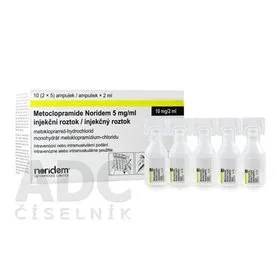
Table of Contents
- Package leaflet: Information for the user
- 1. What Metoclopramidi hydrochloridum Noridem is and what it is used for
- 2. Important information before taking Metoclopramidi hydrochloridum Noridem
- 3. How to use Metoclopramidi hydrochloridum Noridem
- 4. Possible adverse reactions
- 5. How to store Metoclopramidi hydrochloridum Noridem
- 6. Contents of the package and other information
Package leaflet: Information for the user
Metoclopramidi hydrochloridum Noridem, 5 mg/mL, solution for injection
Metoclopramidi hydrochloridum anhydricus
Please read this leaflet carefully before using this medicine because it contains important information for you.
- Keep this leaflet. You may need to read it again.
- If you have any further questions, please ask your doctor, pharmacist, or nurse.
- This medicine has been prescribed for a specific individual. Do not pass it on to others. It may harm them even if their symptoms are the same.
- If you experience any side effects, including any not listed in this leaflet, tell your doctor, pharmacist, or nurse. See section 4.
Table of contents
- What Metoclopramidi hydrochloridum Noridem is and what it is used for
- Important information before using Metoclopramidi hydrochloridum Noridem
- How to use Metoclopramidi hydrochloridum Noridem
- Possible side effects
- How to store Metoclopramidi hydrochloridum Noridem
- Contents of the pack and other information
1. What Metoclopramidi hydrochloridum Noridem is and what it is used for
Metoclopramidi hydrochloridum Noridem is an antiemetic medicine. It contains the active substance called "metoclopramide". The medicine acts on the part of the brain that controls nausea and vomiting.
Metoclopramidi hydrochloridum Noridem is used in adults:
- to prevent nausea and vomiting that may occur after surgery
- to treat nausea and vomiting, including nausea and vomiting associated with migraine
- to prevent nausea and vomiting associated with radiotherapy
Metoclopramidi hydrochloridum Noridem is indicated for use in children and adolescents (aged 1–18 years), only if other treatment methods have proven ineffective or cannot be used:
- prevention of delayed nausea and vomiting that may occur after chemotherapy
- treatment of nausea and vomiting occurring after surgical procedures
2. Important information before taking Metoclopramidi hydrochloridum Noridem
When not to use Metoclopramidi hydrochloridum Noridem:
if the patient is allergic to metoclopramide or any of the other ingredients of this medicine
(listed in section 6).
in case of bleeding, obstruction, or perforation of the stomach or intestines.
if the patient has a rare adrenal gland tumour located near the kidney (pheochromocytoma).
if the patient has or has previously had involuntary muscle contractions (tardive dyskinesia) while taking medicines.
if the patient has epilepsy
if the patient has Parkinson's disease
if the patient is taking levodopa (a medicine for Parkinson's disease) or dopamine agonists (see below "Other medicines and Metoclopramidi hydrochloridum Noridem")
if the patient has ever had abnormal levels of blood pigment (methemoglobinemia) or deficiency of the enzyme NADH-cytochrome b5 reductase.
Metoclopramidi hydrochloridum Noridem must not be used in children under 1 year of age (see below "Children and adolescents").
Warnings and precautions
Before starting treatment with Metoclopramidi hydrochloridum Noridem, consult a doctor, pharmacist, or nurse if:
- the patient has previously had heart rhythm disorders (QT prolongation) or other heart problems
- the patient has disturbances in blood electrolyte levels such as potassium, sodium, or magnesium
- the patient is taking other medicines that affect heart function
- the patient has neurological disorders (related to the brain)
- the patient has kidney or liver problems. A dose reduction may be necessary (see section 3).
The doctor may order a blood test to check the level of blood pigment. If abnormal levels are detected (methemoglobinemia), the medicine must be discontinued immediately and permanently.
Children and adolescents
Uncontrolled movements (extrapyramidal symptoms) may occur in children and adolescents. This medicine must not be used in children under 1 year of age due to the increased risk of uncontrolled movements (see "When not to use Metoclopramidi hydrochloridum Noridem").
Other medicines and Metoclopramidi hydrochloridum Noridem
Inform your doctor, pharmacist, or nurse about all medicines currently taken or recently taken, as well as any medicines you plan to take. This is important because some medicines may affect the action of Metoclopramidi hydrochloridum Noridem or Metoclopramidi hydrochloridum Noridem may affect the action of other medicines. In particular, inform your doctor if you are taking the following medicines:
levodopa or other medicines used to treat Parkinson's disease (see "When not to use Metoclopramidi hydrochloridum Noridem")
anticholinergic medicines (medicines used to relieve stomach cramps)
morphine derivatives (medicines used to treat severe pain)
sedatives
medicines used to treat psychiatric disorders
digoxin (a medicine used to treat heart failure)
cyclosporine (a medicine used to treat certain immune system disorders)
mivacurium and suxamethonium (medicines used to relax muscles)
fluoxetine and paroxetine (medicines used to treat depression)
Use of Metoclopramidi hydrochloridum Noridem with alcohol
Do not drink alcohol while taking metoclopramide, as alcohol enhances the sedative effect of Metoclopramidi hydrochloridum Noridem.
Pregnancy and breastfeeding
If the patient is pregnant, suspects she is pregnant, or plans to become pregnant, she should contact a doctor or pharmacist before using this medicine. If necessary, Metoclopramidi hydrochloridum Noridem may be used during pregnancy. The doctor will decide whether treatment is necessary.
Use of Metoclopramidi hydrochloridum Noridem during breastfeeding is not recommended, as metoclopramide passes into breast milk and may affect the infant.
Driving and operating machinery
The patient may experience drowsiness, dizziness, uncontrolled tremors, sudden or twisting movements, and unusual muscle tension causing body distortion after taking Metoclopramidi hydrochloridum Noridem. This may impair vision and the ability to drive or operate machinery.
Metoclopramidi hydrochloridum Noridem contains sodium
Each mL contains 3.35 mg (0.1455 mmol) of sodium.
The medicine contains less than 1 mmol (23 mg) of sodium per ampoule, meaning the medicine is considered "sodium-free".
3. How to use Metoclopramidi hydrochloridum Noridem
The medicine is usually administered by a doctor or nurse. It will be given as a slow intravenous injection (over at least 3 minutes) or as an intramuscular injection.
Use in adults
Treatment of nausea and vomiting, including nausea and vomiting associated with migraine, and prevention of nausea and vomiting related to radiotherapy: the recommended single dose is 10 mg. The dose may be repeated up to three times daily.
The maximum recommended daily dose is 30 mg or 0.5 mg/kg body weight.
Prevention of postoperatively induced nausea and vomiting: the recommended single dose is 10 mg.
Use in children and adolescents aged 1–18 years (all indications)
The recommended dose is 0.1 to 0.15 mg/kg body weight, repeated up to three times daily, administered as a slow intravenous injection.
The maximum daily dose is 0.5 mg/kg body weight.
Dosing table
Age Body Weight Dose Frequency
1–3 years 10–14 kg 1 mg Up to 3 times daily
3–5 years 15–19 kg 2 mg Up to 3 times daily
5–9 years 20–29 kg 2.5 mg Up to 3 times daily
9–15 years 30–60 kg 5 mg Up to 3 times daily
15–18 years Over 60 kg 10 mg Up to 3 times daily
Treatment should not last longer than 48 hours when treating postoperative nausea and vomiting.
Treatment should not last longer than 5 days when preventing delayed nausea and vomiting after chemotherapy.
Use in elderly patients
Dose reduction may be necessary depending on renal and hepatic function and general health status.
Other pharmaceutical forms may be more suitable for this patient group.
Use in adults with renal impairment
Inform your doctor about any kidney problems. The dose should be reduced in patients with severe renal impairment.
Other pharmaceutical forms may be more suitable for this patient group.
Use in adults with hepatic impairment
Inform your doctor about any liver problems. The dose should be reduced in patients with severe hepatic impairment.
Other pharmaceutical forms may be more suitable for this patient group.
Use in children under 1 year of age
Metoclopramide must not be used in children under 1 year of age (see section 2).
Accidental overdose of Metoclopramidi hydrochloridum Noridem
Contact your doctor or pharmacist immediately. The patient may experience uncontrolled movements (extrapyramidal symptoms), drowsiness, disturbances in consciousness, disorientation, hallucinations, and cardiac problems. If necessary, the doctor will prescribe appropriate symptomatic treatment.
Missed dose of Metoclopramidi hydrochloridum Noridem
Do not take a double dose to make up for a missed dose.
If you have any further questions about the use of this medicine, consult your doctor, nurse, or pharmacist.
4. Possible adverse reactions
Like all medicines, this medicine can cause adverse reactions, although not everybody will get them.
If any of the following adverse effects occur, stop using this medicine immediately and inform your doctor, pharmacist or nurse without delay:
Uncontrolled movements (often around the head and neck). These may occur in children and young adults, especially when high doses are used. These symptoms usually occur at the beginning of treatment and may even appear after a single dose. Appropriate treatment will stop the movements.
High fever, high blood pressure, seizures, sweating, salivation. These may be symptoms of a disorder called neuroleptic malignant syndrome.
Itching or skin rash, swelling of the face, lips or throat, difficulty breathing. These may be potentially serious symptoms of an allergic reaction.
Very common (may affect more than 1 in 10 people)
- drowsiness
Common (may affect up to 1 in 10 people)
- depression
- uncontrolled movements such as tics, tremor, body twisting or muscle spasms (stiffness, rigidity)
- Parkinsonism-like symptoms (stiffness, tremor)
- motor restlessness
- low blood pressure (especially after intravenous administration)
- diarrhoea
- weakness
Uncommon (may affect up to 1 in 100 people)
- increased blood levels of a hormone called prolactin, which may cause: milk production in men, and in women who are not breastfeeding
- irregular menstruation
- hallucinations
- decreased level of consciousness
- slow heart rate (especially after intravenous administration)
- hypersensitivity
- vision problems and involuntary deviation of the eyeball
Rare (may affect up to 1 in 1,000 people)
- confusion
- seizures (especially in patients with epilepsy)
Frequency not known (frequency cannot be estimated from the available data)
- abnormal levels of a blood pigment, which may cause skin discoloration
- abnormal breast enlargement (gynecomastia)
- involuntary muscle contractions after long-term treatment, particularly in elderly patients
- high fever, high blood pressure, seizures, sweating, salivation. These may be symptoms of a disorder called neuroleptic malignant syndrome
- changes in heart function, which may be visible on ECG
- circulatory arrest (especially after injection)
- shock (severe drop in blood pressure) (especially after injection)
- loss of consciousness (especially after intravenous administration)
- allergic reaction, which may be severe (especially after intravenous administration)
- very high blood pressure
- suicidal thoughts
If any adverse reactions occur, tell your doctor, pharmacist or nurse. This includes any adverse reactions not listed in this leaflet.
Reporting of adverse reactions
If you get any adverse reactions, including any not listed in this leaflet, tell your doctor or nurse. Adverse reactions can also be reported directly to the Department of Monitoring of Adverse Drug Reactions, Office for Registration of Medicinal Products, Medical Devices and Biocidal Products,
Al. Jerozolimskie 181C
02-222 Warsaw,
Tel.: + 48 22 49 21 301
Fax: + 48 22 49 21 309
Website: https://smz.ezdrowie.gov.pl .
Adverse reactions can also be reported to the marketing authorization holder.
By reporting adverse reactions, more information can be gathered about the safety of this medicine.
5. How to store Metoclopramidi hydrochloridum Noridem
Keep the medicine out of the sight and reach of children.
Store the ampoules in the protective pouch and outer packaging to protect from light.
No special temperature storage conditions are required for this medicine.
After first opening:
Use within 2 months if the ampoules are stored without the protective pouch.
After mixing/dilution: Chemical and physical stability has been demonstrated for 48 hours when mixed with 0.9% sodium chloride, 5% glucose, Ringer's lactate solution, and 4% glucose in 0.18% sodium chloride, at a concentration of 0.1 mg/mL of Metoclopramidi hydrochloridum Noridem, stored at 15–25°C under artificial light and for 48 hours at 5 (±3)°C.
From a microbiological standpoint, unless the method of opening excludes the risk of microbial contamination, the product should be used immediately. If not used immediately, the responsibility for the storage period and conditions during use lies with the user.
Do not use this medicine after the expiry date stated on the protective pouch and cardboard box after "EXP". The expiry date refers to the last day of that month.
Medicines must not be disposed of via wastewater or household waste. Ask your pharmacist how to dispose of medicines no longer required. Such measures will help protect the environment.
6. Contents of the package and other information
What Metoclopramidi hydrochloridum Noridem contains
- The active substance is metoclopramide hydrochloride anhydrous (in the form of metoclopramide hydrochloride monohydrate). Each mL of solution contains 5.27 mg of monohydrate metoclopramide hydrochloride, equivalent to 5 mg of anhydrous metoclopramide hydrochloride.
- The other ingredients are sodium chloride, sodium hydroxide and/or hydrochloric acid, and water for injections.
What Metoclopramidi hydrochloridum Noridem looks like and contents of the pack
Metoclopramidi hydrochloridum Noridem, 5 mg/mL, solution for injection is a clear,
colourless solution for injection.
PP ampoules containing 2 mL of solution, packed in cardboard boxes containing 5, 10 (2 x 5), 20 (4 x 5),
50 (10 x 5) or 60 (12 x 5) ampoules.
Each set of 5 ampoules is wrapped in a protective pouch.
Not all pack sizes may be marketed.
Marketing Authorisation Holder and Manufacturer
Marketing Authorisation Holder: Noridem Enterprises Ltd, Makariou & Evagorou 1, Mitsi Building 3,
Office 115, 1065 Nicosia, Cyprus.
Manufacturer: DEMO S.A., PHARMACEUTICAL INDUSTRY, 21st km National Road Athens-Lamia,
14568 Krioneri, Attiki, Greece. T.: +302108161802, F.: +302108161587
This medicinal product is authorised in the Member States of the European Economic Area under the following names:
| Cyprus | PRIBEKINET 5 mg/mL Solution for injection |
| Czech Republic | Metoclopramide Noridem |
| Germany | Metoclopramide hydrochloride Noridem 5 mg/mL Injection solution |
| Greece | PRIBEKINET 5 mg/mL Injectable Solution |
| France | METOCLOPRAMIDE NORIDEM 10 mg/2 mL, solution for injection |
| Hungary | Metoclopramide hydrochloride Noridem 5 mg/mL solution for injection |
| Poland | Metoclopramidi hydrochloridum Noridem |
| Slovakia | Metoclopramide Noridem 5 mg/mL injection solution |
<--------------------------------------------------------------------------------------------------------------------------
--->
Information intended exclusively for healthcare professionals:
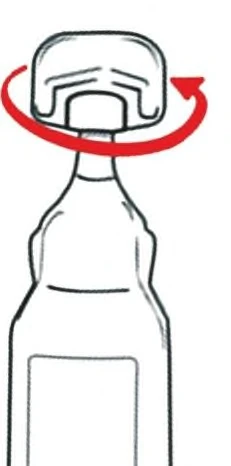
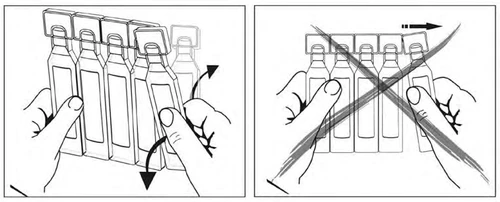
Preparation and disposal
Incompatibilities
Due to lack of compatibility studies, this medicinal product must not be mixed with other
medicinal products except the following solutions:
- 0.9% sodium chloride solution,
- 5% dextrose,
- Ringer's lactate solution,
- 4% dextrose in 0.18% sodium chloride for final concentration of Metoclopramidi hydrochloridum Noridem 0.1 mg/mL.
Dosage and method of administration
All indications (adults)
Dosage information is provided in section 3 of the package leaflet.
The duration of treatment by injection should be as short as possible, and transition to oral or
rectal administration should occur as soon as possible.
Frequency of administration:
A minimum interval of 6 hours must be maintained between two doses, even in case of
vomiting or dose rejection.
Special patient groups
Elderly patients:
In elderly patients, dose reduction should be considered depending on renal and hepatic
function and general health status.
Renal impairment:
In patients with end-stage renal disease (creatinine clearance < 15 mL/min), the daily dose should
be reduced by 75%.
In patients with moderate or severe renal impairment (creatinine clearance 15–60 mL/min),
the daily dose should be reduced by 50%.
Hepatic impairment:
In patients with severe hepatic impairment, the dose should be reduced by 50%.
Other pharmaceutical forms may be more suitable for administration in this population.
Children and adolescents:
Metoclopramide is contraindicated in children under 1 year of age.
Disposal
Any unused medicinal product or waste material must be disposed of in accordance with
local regulations.
Overdose
Symptoms
Extrapyramidal disorders, drowsiness, decreased level of consciousness, confusion, hallucinations,
and circulatory and respiratory arrest may occur.
Management
In case of extrapyramidal symptoms, regardless of whether related to overdose or not, treatment
is purely symptomatic (in children: benzodiazepines and/or anticholinergic drugs used in
Parkinson’s disease in adults).
Depending on the clinical condition, symptomatic treatment should be applied and cardiovascular
and respiratory functions should be continuously monitored.