Metformin bluefish
Poland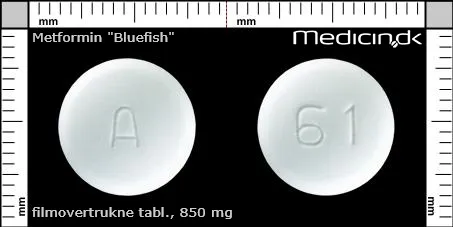
Table of Contents
PACKAGE LEAFLET: INFORMATION FOR THE USER
Metformin Bluefish, 850 mg, coated tablets
Metformini hydrochloridum
Please read all of this leaflet carefully before taking this medicine, because it contains
important information for you.
- Keep this leaflet. You may need to read it again.
- If you have any further questions, ask your doctor or pharmacist.
- This medicine has been prescribed for a specific individual. Do not give it to others. It may harm them, even if their symptoms are the same as yours.
- If you experience any side effects, including any not listed in this leaflet, tell your doctor or pharmacist. See section 4.
Leaflet contents:
- What Metformin Bluefish is and what it is used for
- What you need to know before taking Metformin Bluefish
- How to take Metformin Bluefish
- Possible side effects
- How to store Metformin Bluefish
- Contents of the pack and other information
1. What Metformin Bluefish is and what it is used for
Metformin Bluefish contains metformin, a medicine used in the treatment of diabetes. It belongs to a group of medicines called biguanides.
Insulin is a hormone produced by the pancreas that enables the body to take up glucose (sugar) from the blood. The body uses glucose to produce energy or stores it for later use.
In diabetes, the pancreas does not produce enough insulin, or the body cannot properly use the insulin it produces. This leads to increased glucose levels in the blood. Metformin Bluefish helps reduce blood glucose levels to values as close as possible to normal.
In overweight adults, long-term use of Metformin Bluefish also helps reduce the risk of diabetes-related complications. Treatment with Metformin Bluefish is associated with maintenance of body weight or with moderate weight reduction.
Metformin Bluefish is used in the treatment of patients with type 2 diabetes (also known as insulin-independent diabetes) when diet and physical exercise alone have not achieved adequate control of blood glucose levels. The medicine is particularly used in overweight patients.
Adults may take Metformin Bluefish as the only antidiabetic medicine or together with other antidiabetic medicines (oral agents or insulin).
Children aged 10 years and older and adolescents may take Metformin Bluefish as the only medicine or together with insulin.
2. Important information before using Metformin Bluefish
When not to use Metformin Bluefish
- if the patient is allergic (hypersensitive) to metformine or any of the other ingredients of this medicine (listed in section 6),
- if the patient has liver function disorders,
- if the patient has significantly reduced kidney function,
- if the patient has uncontrolled diabetes, for example severe hyperglycaemia (high blood glucose levels), nausea, vomiting, diarrhoea, sudden weight loss, lactic acidosis (see "Risk of lactic acidosis" below) or ketoacidosis. Ketoacidosis is a condition in which substances called ketone bodies accumulate in the blood and which may lead to diabetic pre-coma. Symptoms include: abdominal pain, rapid and deep breathing, drowsiness or an unusual fruity odour of the breath,
- in case of excessive loss of body water (dehydration), caused for example by prolonged or severe diarrhoea or repeated vomiting. Dehydration may lead to kidney function disorders, especially increasing the risk of lactic acidosis (see section "Warnings and precautions" below),
- in case of severe infection, such as lung, bronchial or kidney infection. Severe infection may lead to kidney function disorders, especially increasing the risk of lactic acidosis (see section "Warnings and precautions" below),
- if the patient is being treated for acute heart failure, has recently had a heart attack, has severe circulatory disorders (such as shock) or breathing difficulties. These conditions may lead to reduced oxygen supply to tissues and may increase the risk of lactic acidosis (see section "Warnings and precautions" below),
- if the patient consumes large amounts of alcohol.
If the patient suspects that any of the above situations may apply, they should
inform their doctor before using this medicine.
Consult a doctor if:
- a radiological or scintigraphic examination involving intravascular administration of iodine-containing contrast agents is required,
- a major surgical procedure is required.
The use of Metformin Bluefish should be temporarily discontinued for some time before and after such an examination or surgical procedure.
The doctor will decide whether alternative treatment is necessary during this period.
It is important to strictly follow the doctor's instructions.
Warnings and precautions
Risk of lactic acidosis
Metformin Bluefish may cause a very rare but serious adverse effect known as lactic acidosis, especially if the patient has kidney function disorders. The risk of lactic acidosis increases in cases of uncontrolled diabetes, severe infection, prolonged fasting or alcohol consumption, dehydration (see more detailed information below), liver function disorders, and any disease states in which part of the body is inadequately supplied with oxygen (e.g. acute severe heart disease).
If any of the above conditions apply to the patient, they should consult their doctor for further instructions.
Temporarily discontinue the use of Metformin Bluefish if the patient develops a medical condition that may involve dehydration (significant loss of body water), such as severe vomiting, diarrhoea, fever, exposure to high temperatures, or if the patient drinks less fluid than usual. Consult a doctor for further instructions.
Discontinue the use of Metformin Bluefish and immediately contact a doctor or the nearest hospital if the patient experiences any symptoms of lactic acidosis, as this condition may lead to coma.
Symptoms of lactic acidosis include:
- vomiting,
- abdominal pain,
- muscle cramps,
- general malaise associated with severe fatigue,
- difficulty breathing,
- decreased body temperature and slowed heart rate.
Lactic acidosis is an acute, life-threatening condition requiring immediate hospital treatment.
Contact a doctor immediately for further instructions if:
- the patient has a genetically inherited disease affecting mitochondria (cellular energy-producing structures), such as MELAS syndrome (mitochondrial encephalopathy, myopathy, lactic acidosis and stroke-like episodes) or maternally inherited diabetes and deafness (MIDD),
- the patient develops any of the following symptoms after starting metformin: seizures, worsening cognitive function, difficulty moving, symptoms indicating nerve damage (e.g. pain or numbness), migraine or deafness.
If the patient is to undergo major surgery, they must not take Metformin Bluefish during the procedure and for some time afterwards. The doctor will decide when the patient should stop and restart treatment with Metformin Bluefish.
Metformin Bluefish, when used alone, does not cause hypoglycaemia (low blood sugar). However, the risk of hypoglycaemia exists when Metformin Bluefish is used concomitantly with other antidiabetic medicines that cause hypoglycaemia (such as sulfonylurea derivatives, insulin and meglitinides). If symptoms of hypoglycaemia occur, such as weakness, dizziness, excessive sweating, rapid heartbeat, visual disturbances or reduced concentration, eating food or drinking a sugary beverage is usually helpful.
During treatment with Metformin Bluefish, the doctor will monitor the patient's kidney function at least once a year, or more frequently if the patient is elderly and/or has worsening kidney function.
Metformin Bluefish and other medicines
If the patient receives an intravascular iodine-containing contrast agent, for example for an X-ray examination or computed tomography, they must stop taking Metformin Bluefish before or at the latest at the time of administration. The doctor will decide when the patient should stop and restart treatment with Metformin Bluefish.
Tell the doctor about all medicines the patient is currently taking or has recently taken, as well as any medicines the patient plans to take. The patient may require more frequent monitoring of blood glucose levels and kidney function assessments, or dose adjustments of Metformin Bluefish by the doctor. It is especially important to inform the doctor about the following medicines:
- diuretics (medicines that increase urine production),
- medicines used to treat pain and inflammation (NSAIDs and COX-2 inhibitors, such as ibuprofen and celecoxib),
- certain medicines used to treat high blood pressure (ACE inhibitors and angiotensin II receptor antagonists),
- beta-adrenergic receptor agonists, such as salbutamol and terbutaline (used in the treatment of asthma),
- corticosteroids (medicines used to treat many conditions, such as severe skin inflammation or asthma),
- medicines that may alter the blood concentration of Metformin Bluefish, especially if the patient has impaired kidney function (such as verapamil, rifampicin, cimetidine, dolutegravir, ranolazine, trimethoprim, vandetanib, isavuconazole, crizotinib, olaparib),
- other medicines used in the treatment of diabetes.
Metformin Bluefish and alcohol
Avoid consuming excessive amounts of alcohol while taking Metformin Bluefish, as this may increase the risk of lactic acidosis (see section "Warnings and precautions").
Pregnancy and breastfeeding
During pregnancy, insulin should be used to treat diabetes. If the patient is pregnant, breastfeeding, suspects she may be pregnant, or is planning to have a child, she should consult her doctor before using this medicine: the doctor may decide that a change in treatment is necessary.
This medicine is not recommended if a woman is breastfeeding or planning to breastfeed.
Driving and operating machinery
Metformin Bluefish, when used alone, does not cause hypoglycaemia (low blood sugar). This means that the medicine will not affect the ability to drive or operate machinery.
However, particular caution is required if Metformin Bluefish is used concomitantly with other antidiabetic medicines that may cause hypoglycaemia, such as sulfonylurea derivatives, insulin and meglitinides.
Symptoms of hypoglycaemia include: weakness, dizziness, excessive sweating, rapid heartbeat, visual disturbances or reduced concentration. Do not drive or operate machinery if these symptoms occur.
3. How to take Metformin Bluefish
This medicine should always be taken exactly as instructed by your doctor. If in doubt, consult your doctor or pharmacist.
Metformin Bluefish must not replace the benefits derived from a healthy lifestyle. You should continue the diet recommended by your doctor and engage in regular physical exercise.
Recommended dose:
For children aged 10 years and older and adolescents, the usual initial dose is 500 mg or 850 mg of Metformin Bluefish once daily. The maximum daily dose is 2000 mg, given in 2 or 3 divided doses. Treatment in children aged 10 to 12 years is indicated only on special recommendation by the doctor due to limited experience in this age group.
The usual initial dose for adults is 500 mg or 850 mg of Metformin Bluefish two or three times daily. The maximum daily dose is 3000 mg, administered in three divided doses.
If the patient has impaired kidney function, the doctor may prescribe a lower dose.
When insulin is used concomitantly, the doctor will inform the patient how to initiate treatment with Metformin Bluefish.
Monitoring of treatment
- The doctor will recommend regular blood glucose monitoring and will adjust the dose of Metformin Bluefish according to blood glucose levels. Regular consultations with the doctor are necessary. This is particularly important for children and adolescents, as well as elderly patients.
- Additionally, the doctor will assess kidney function at least once a year. More frequent monitoring may be necessary for elderly patients or patients with impaired kidney function.
How to take Metformin Bluefish
Metformin Bluefish should be taken during or after a meal. This helps to avoid gastrointestinal side effects.
Do not crush or chew the tablets. Swallow the tablets whole with a glass of water.
- If taking once daily, the dose should be taken in the morning (with breakfast).
- If taking two divided doses daily, they should be taken in the morning (with breakfast) and in the evening (with dinner).
- If taking three divided doses daily, they should be taken in the morning (with breakfast), at midday (with lunch), and in the evening (with dinner).
If you feel the effect of the medicine is too strong or too weak, consult your doctor or pharmacist.
Taking more Metformin Bluefish than prescribed
If you take more Metformin Bluefish than prescribed, lactic acidosis may occur. Symptoms of lactic acidosis are nonspecific and include vomiting, abdominal pain with muscle cramps, general malaise with severe fatigue, and breathing difficulties. Other symptoms include lowered body temperature and slowed heart rate. If any of these symptoms occur, the patient must immediately seek medical help, as lactic acidosis can lead to coma. Metformin Bluefish must be stopped immediately and the patient should contact a doctor or go to the nearest hospital.
Missed dose of Metformin Bluefish
Do not take a double dose to make up for a missed dose. Take the next dose at the usual time.
If you have any further questions about the use of this medicine, consult your doctor or pharmacist.
4. Possible side effects
Like all medicines, this medicine can cause side effects, although not everybody will experience them.
The following side effects may occur:
Metformin Bluefish may very rarely cause (may occur in up to 1 in 10,000 patients) a very serious side effect known as lactic acidosis, especially if the kidneys are not functioning properly. The symptoms of lactic acidosis are non-specific (see section “Warnings and precautions”). If lactic acidosis occurs in a patient, treatment with Metformin Bluefish must be discontinued and immediate contact must be made with a
doctor or the nearest hospital, as lactic acidosis may lead to coma.
Very common side effects (occur in more than 1 in 10 patients)
- Gastrointestinal disturbances such as nausea, vomiting, diarrhoea, abdominal pain and loss of appetite. These side effects most commonly occur at the beginning of treatment with Metformin Bluefish. They can be prevented by dividing the daily dose throughout the day and taking Metformin Bluefish during or immediately after meals. If symptoms do not resolve, treatment with Metformin Bluefish should be discontinued and a doctor should be consulted.
Common side effects (occur in less than 1 in 10 patients)
- Taste disturbances.
- Reduced or low levels of vitamin B12 in the blood (symptoms may include extreme tiredness (fatigue), pain and redness of the tongue (glossitis), tingling sensations (paraesthesiae), or pale or yellowish skin). Your doctor may order several tests to determine the cause of symptoms, as some of them may also be caused by diabetes or other health problems unrelated to diabetes.
Very rare side effects (occur in less than 1 in 10,000 patients)
- Liver function abnormalities with abnormal test results or hepatitis (may cause fatigue, loss of appetite, weight loss, with or without yellowing of the skin and whites of the eyes). If these symptoms occur, treatment with Metformin Bluefish should be discontinued and a doctor should be contacted.
- Skin reactions such as redness of the skin (flushing), itching or itchy rash (urticaria).
Children and adolescents
Limited data from studies in children and adolescents indicate that side effects are of similar nature and severity as in adults.
Reporting of side effects
If any side effects occur, including any side effects not listed in this leaflet, inform your doctor or pharmacist. Side effects can also be reported directly to the Department of Monitoring of Adverse Drug Reactions of the Office for Registration of Medicinal Products, Medical Devices and Biocidal Products,
Al. Jerozolimskie 181C
02-222 Warsaw
Tel.: +48 22 49 21 301
Fax: +48 22 4921 309
Website: https://smz.ezdrowie.gov.pl
Side effects can also be reported to the marketing authorisation holder.
Reporting side effects helps provide more information on the safety of this medicine.
5. How to store Metformin Bluefish
Keep this medicine out of the sight and reach of children. If a child is being treated with Metformin Bluefish, parents and caregivers should supervise its use.
There are no special storage instructions for this medicine.
Do not use this medicine after the expiry date stated on the carton or blister pack following “EXP” or “Expiry date”. The expiry date refers to the last day of the stated month.
Medicines should not be disposed of via wastewater or household waste. Ask your pharmacist how to dispose of medicines no longer required. These measures help protect the environment.
6. Contents of the pack and other information
What Metformin Bluefish contains
- The active substance is metformin hydrochloride.
Each film-coated tablet contains 850 mg of metformin hydrochloride, equivalent to 663 mg of metformin.
- The other ingredients are:
Tablet core: povidone, magnesium stearate.
Coating: hypromellose, macrogol.
What Metformin Bluefish looks like and contents of the pack
Film-coated tablet.
White, round, biconvex film-coated tablets, embossed with "A" on one side and "61" on the other side.
Metformin Bluefish is available in blister packs.
Each cardboard box contains 20, 28, 30, 40, 42, 50, 56, 60, 70, 80, 84, 90, 98, 100, 120, 200, 300 or 400 film-coated tablets in blisters of 10 or 14 film-coated tablets.
Not all pack sizes may be marketed.
Marketing Authorisation Holder and Manufacturer
Marketing Authorisation Holder
Bluefish Pharmaceuticals AB
P.O. Box 49013
100 28 Stockholm
Sweden
Tel. +46 8 51 91 16 00
Manufacturer
Bluefish Pharmaceuticals AB
Gävlegatan 22
113 30 Stockholm
Sweden
This medicinal product is authorised in the Member States of the European Economic Area under the following names:
Austria Metformin Bluefish 850 mg Filmtabletten
Denmark Metformin “Bluefish”
France Metformine Cristers Pharma 850 mg, comprimés pelliculés
Spain Metformina Bluefish 850 mg comprimidos recubiertos con película EFG
Iceland Metformin Bluefish 850 mg filmuhúðaðar töflur
Ireland Metformin Bluefish 850 mg film-coated tablets
Poland Metformin Bluefish 850 mg tabletki powlekane
Portugal Metformina Bluefish 850 mg comprimidos revestidos por pelicula
Sweden Metformin Bluefish