Meloxistad
Poland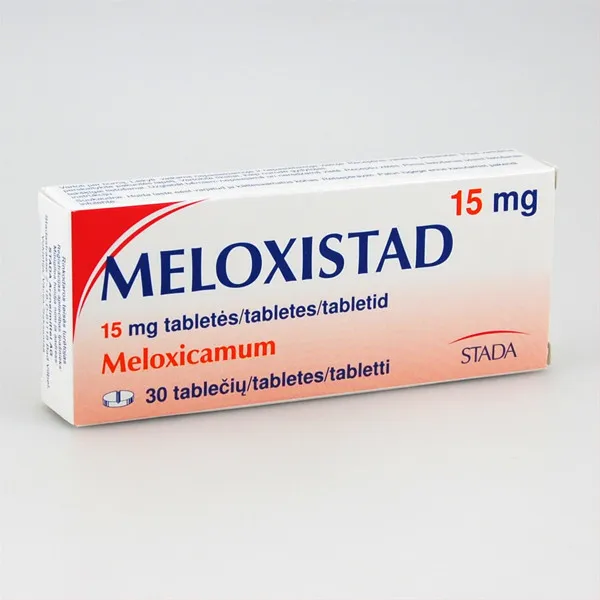
Table of Contents
Meloxistad, 15 mg tablets
(Meloxicam)
Read the entire leaflet carefully before using this medicine, as it contains important information for the patient.
- Keep this leaflet for future reference.
- Consult your doctor or pharmacist if you have any further questions.
- This medicine has been prescribed for a specific individual. Do not share it with others. This medicine may harm others, even if their symptoms are the same.
- If any of the adverse effects worsen or if any adverse effects occur, including those not listed in this leaflet, inform your doctor or pharmacist. See section 4.
Table of contents of the leaflet
- What Meloxistad is and what it is used for
- Important information before taking Meloxistad
- How to take Meloxistad
- Possible side effects
- How to store Meloxistad
- Contents of the pack and other information
1. What Meloxistad is and what it is used for
Meloxistad is an analgesic and anti-inflammatory medicine belonging to the group of non-steroidal anti-inflammatory drugs (NSAIDs), which are used to reduce inflammation and pain in joints and muscles.
Meloxistad is used:
- For the short-term symptomatic treatment of osteoarthritis flare-ups (degenerative joint disease).
- For the long-term treatment of rheumatoid arthritis or ankylosing spondylitis (chronic joint inflammation leading to loss of joint mobility).
2. Important information before taking Meloxistad
When not to take Meloxistad:
- during the last three months of pregnancy (see section 2. Pregnancy and breastfeeding),
- in children and adolescents under 16 years of age,
- if the patient is allergic to meloxicam or to any of the other ingredients of this medicine (listed in section 6) or to substances with a similar mechanism of action (e.g. non-steroidal anti-inflammatory drugs (NSAIDs), acetylsalicylic acid). Meloxicam should not be used in patients who have experienced asthma symptoms (respiratory disorders with shortness of breath), nasal polyps (swelling arising from nasal mucosa), angioedema or urticaria after taking acetylsalicylic acid (e.g. aspirin) or another NSAID,
- if the patient has active gastrointestinal ulcerative disease (peptic ulcer, inflammation and ulceration of the stomach or intestines) or gastrointestinal bleeding (bleeding from the stomach, which may cause black stools),
- if the patient has a history of recurrent gastric or duodenal ulcer disease or bleeding (two or more confirmed episodes of ulceration or bleeding),
- if the patient has previously experienced a cerebrovascular haemorrhage (bleeding from cerebral blood vessels),
- if the patient has any other bleeding disorders,
- if the patient has previously experienced gastrointestinal haemorrhage or perforation (rupture) caused by prior use of medicines belonging to the group of non-steroidal anti-inflammatory drugs (NSAIDs),
- if the patient suffers from severe liver function disorders,
- if the patient has severe kidney function disorders and is not undergoing dialysis,
- if the patient suffers from severe heart failure (when the heart does not function properly).
Warnings and precautions
The doctor must ensure that if there have been previous diseases such as oesophagitis (inflammation of the oesophagus), gastritis (inflammation of the stomach lining) and/or peptic ulcer, they must be completely healed before starting treatment with meloxicam.
Gastrointestinal bleeding/ulceration or perforation (rupture)
NSAIDs should be used with caution in patients with a history of gastrointestinal disorders (ulcerative colitis, Crohn's disease), as their condition may worsen (see section 4. Possible side effects).
As with other NSAIDs, gastrointestinal bleeding or gastrointestinal ulceration/perforation has been reported during meloxicam treatment at any time, rarely resulting in patient death, with or without warning symptoms, and also in patients with or without a history of severe gastrointestinal disorders.
During treatment, patients experiencing symptoms (gastrointestinal symptoms) or with a history of gastrointestinal disorders (e.g. ulcerative colitis, Crohn's disease (chronic inflammation and recurrent intestinal disease)) should report any gastrointestinal disturbances to their doctor, especially bleeding (bleeding from the stomach and intestines causing black stools).
The risk of gastrointestinal bleeding (stomach haemorrhage), ulceration or perforation (rupture) is higher in patients:
- treated with high doses of NSAIDs,
- with a history of ulceration, especially combined with bleeding or perforation (see section 2. When not to take Meloxistad),
- in elderly patients.
In these patients, treatment should be initiated using the lowest possible dose. In these patients, as well as in those taking low-dose aspirin or other medicines which, when used concomitantly, may increase the risk of gastrointestinal damage, the doctor may decide to prescribe concomitant protective therapy (medicines helping to protect the stomach). The same applies to patients taking low-dose acetylsalicylic acid or other medicines which, when used together, may increase the risk of gastrointestinal complications. Please consult your doctor about this.
If the patient has previously experienced adverse gastrointestinal effects, especially if elderly, they should report any unexpected gastrointestinal symptoms to their doctor (particularly gastrointestinal bleeding, causing bloody or black stools or vomiting blood), especially during the first few months of treatment.
Caution should be exercised if the patient is concurrently taking medicines which may increase the risk of gastrointestinal ulceration or bleeding:
- oral corticosteroids (medicines used to treat inflammation, e.g. rheumatism),
- anticoagulants, such as warfarin (used to thin the blood),
- selective serotonin reuptake inhibitors (medicines used to treat depression),
- antiplatelet agents such as acetylsalicylic acid (medicines inhibiting blood clot formation). (See also section 2. Other medicines and Meloxistad).
If gastrointestinal bleeding (stomach bleeding causing bloody or black stools or vomiting blood) or ulceration occurs during treatment with Meloxistad, the medicine should be discontinued.
Concomitant use of Meloxistad with other medicines belonging to the group of non-steroidal anti-inflammatory drugs (NSAIDs), including COX-2 inhibitors (cyclooxygenase-2 inhibitors), medicines used to treat inflammation, should be avoided.
Effects on the circulatory system and cerebral vessels
Taking medicines such as Meloxistad may be associated with a small increased risk of heart attack (myocardial infarction) or stroke. This risk increases with long-term use of high doses of the medicine. Doses higher than recommended or longer treatment duration than recommended should not be used.
If the patient has heart problems, has had a stroke, or suspects they are at risk of such disorders (e.g. high blood pressure, diabetes, elevated cholesterol levels, smoking), they should discuss the treatment approach with their doctor or pharmacist.
If the patient has a history of hypertension (high blood pressure) or heart failure (impaired ability of the heart to pump sufficient blood to the body), the doctor will closely monitor treatment.
Severe skin reactions / hypersensitivity reactions
Cases of potentially life-threatening skin rashes have been reported after meloxicam use (exfoliative dermatitis, Stevens-Johnson syndrome, toxic epidermal necrolysis, see section 4), initially appearing as reddish, disc-shaped spots or round patches with blisters in the centre, located on the trunk.
Additional symptoms may include oral, throat, nasal or genital ulcers and conjunctivitis (redness and watering of the eyes). These potentially life-threatening skin rashes are often accompanied by flu-like symptoms. The rash may lead to the formation of extensive blisters or skin peeling.
The highest risk of severe skin reactions occurs during the first weeks of treatment.
Meloxistad must never be re-administered to a patient who has previously experienced Stevens-Johnson syndrome or toxic epidermal necrolysis associated with the use of Meloxistad.
If the patient develops a rash, any of the above skin symptoms or any hypersensitivity symptoms (such as difficulty breathing, throat tightness, swelling of lips, tongue or face, or urticaria), Meloxistad should be discontinued immediately and the doctor should be contacted urgently for assistance, informing them about the use of this medicine.
Other recommendations
The onset of meloxicam's effective action is delayed. The patient should consult their doctor if the effect of Meloxistad is too weak or if rapid pain relief is needed.
Meloxicam may cause increased values in laboratory tests. These disturbances are usually mild and transient. If any significant, persistent abnormalities occur in laboratory tests, the doctor will discontinue the medicine and recommend appropriate investigations.
At the beginning of treatment or during dose escalation, careful monitoring of urine output and kidney function is recommended in the following patients:
- elderly patients,
- those concurrently treated with angiotensin-converting enzyme (ACE) inhibitors, angiotensin II antagonists, sartans, or diuretics (medicines used to treat high blood pressure),
- with blood volume deficiency,
- with congestive heart failure,
- with kidney diseases (renal failure, nephrotic syndrome, lupus nephritis),
- with severe liver diseases.
In patients with diabetes or those taking medicines that increase potassium levels, regular monitoring of blood potassium levels is recommended.
Meloxicam use may mask symptoms of existing infection.
Meloxicam use may cause difficulties in becoming pregnant. If a woman plans pregnancy or has problems conceiving, she should inform her doctor.
Adverse effects can be minimized by using the lowest effective dose for the shortest possible duration needed to control symptoms.
The recommended maximum daily dose should not be exceeded, nor should another NSAID preparation be taken additionally if the effect of the medicine seems too weak. If there is no improvement after several days of treatment, the patient should consult their doctor again!
Elderly patients
The risk of adverse effects, especially gastrointestinal bleeding and perforation, which may be fatal, is increased in elderly patients. In elderly patients, gastrointestinal bleeding or ulceration/perforation generally have more severe consequences. Therefore, these patients require careful medical supervision.
The doctor will closely monitor the patient, especially if they have kidney function disorders, liver function disorders or heart failure (impaired ability of the heart to pump sufficient blood to the body).
Other medicines and Meloxistad
Inform your doctor about all medicines currently or recently taken, as well as those the patient plans to take.
The following medicines may increase the risk of adverse gastrointestinal effects:
- other non-steroidal anti-inflammatory drugs (NSAIDs) (e.g. ibuprofen),
- selective cyclooxygenase-2 inhibitors (medicines used to treat inflammation),
- corticosteroids (medicines used to treat inflammation or allergies),
- antiplatelet agents such as acetylsalicylic acid,
- certain antidepressants (selective serotonin reuptake inhibitors, SSRI).
Interactions may also occur with the following medicines:
- oral anticoagulants. NSAIDs may enhance the effect of anticoagulant medicines, e.g. warfarin. Concomitant use of NSAIDs, such as meloxicam, and oral anticoagulants is not recommended. If the patient is taking oral anticoagulants, they must inform their doctor!
- heparin (an anticoagulant administered by injection).
- immunosuppressive medicines or those suppressing immune responses after organ transplantation (cyclosporine, tacrolimus) may increase renal adverse effects (nephrotoxicity) if meloxicam is used simultaneously.
- blood pressure-lowering medicines (e.g. diuretics, angiotensin-converting enzyme (ACE) inhibitors, angiotensin II antagonists, beta-blockers). Meloxistad may reduce the antihypertensive effect of these medicines.
- intrauterine device (IUD), a small device made of metal and/or plastic placed in the uterus to prevent pregnancy. Its effectiveness may be reduced by meloxicam.
- certain medicines used to treat psychiatric disorders and depression (lithium).
- certain medicines used to treat rheumatic diseases and cancer (methotrexate). The blood concentration of these medicines may be increased when used concomitantly with meloxicam.
- cholesterol-lowering medicines (cholestyramine) reduce the blood concentration of meloxicam and thus its effect.
Taking Meloxistad with food and drink
Tablets should be taken once daily, during a meal, with water or another liquid.
Pregnancy and breastfeeding
During pregnancy and breastfeeding, or if pregnancy is suspected or planned, consult a doctor before using this medicine.
Pregnancy
Meloxistad should not be taken during the last 3 months of pregnancy, as it may harm the unborn child or cause problems during delivery. The medicine may cause kidney and heart problems in the unborn child. It may affect bleeding tendency in both mother and child and cause delivery to occur later or last longer than expected.
Meloxistad should not be taken during the first 6 months of pregnancy unless absolutely necessary and prescribed by a doctor. If treatment is needed during this period or when trying to conceive, the lowest possible dose should be used for the shortest possible duration.
If Meloxistad is taken for longer than a few days after the 20th week of pregnancy, it may cause kidney problems in the unborn child, leading to low levels of amniotic fluid surrounding the baby (oligohydramnios) or narrowing of a blood vessel (ductus arteriosus) in the baby's heart. If longer-term treatment is needed, the doctor may recommend additional monitoring.
Meloxicam use may make it more difficult to become pregnant (see section 2. Warnings and precautions).
Breastfeeding
Use of Meloxistad is not recommended during breastfeeding.
Driving and operating machinery
Meloxistad has no effect or has a negligible effect on the ability to drive mechanical vehicles and operate machinery. However, during meloxicam use, central nervous system disturbances (visual disturbances, drowsiness, dizziness or other symptoms) may occur. If such symptoms occur, the patient should not drive mechanical vehicles or operate machinery.
Meloxistad contains lactose
If the patient has previously been diagnosed with intolerance to certain sugars, they should consult their doctor before taking this medicine.
3. How to take Meloxistad
This medicine should always be taken as prescribed by your doctor. If in doubt, contact your doctor again.
15 mg tablets:
Osteoarthritis flare-up
1/2 tablet per day (7.5 mg meloxicam).
If necessary and no improvement occurs, the dose may be increased to 1 tablet per day (15 mg meloxicam).
Rheumatoid arthritis or ankylosing spondylitis
1 tablet per day (15 mg meloxicam) (see also section Special patient groups).
Depending on treatment response, your doctor may reduce the dose to 1/2 tablet per day (7.5 mg meloxicam).
Do not exceed a dose of 1 tablet of Meloxistad 15 mg (15 mg meloxicam) per day.
Method of administration
For oral use.
Tablets should be taken once daily, with an adequate amount of liquid (e.g. a glass of water), during a meal.
Since the risk associated with meloxicam use increases with dose and duration of treatment, your doctor will determine the shortest possible treatment duration and the lowest effective dose. Therefore, you should contact your doctor periodically.
Special patient groups
Elderly patients and patients at increased risk of adverse reactions:
The recommended dose for long-term therapy in elderly patients is 1/2 tablet of Meloxistad 15 mg per day (7.5 mg meloxicam).
Patients at increased risk of adverse reactions should start treatment with 1/2 tablet of Meloxistad 15 mg per day (7.5 mg meloxicam).
Patients with renal impairment:
In dialysed patients with severe renal impairment, the dose should not exceed 1/2 tablet of Meloxistad 15 mg per day (7.5 mg meloxicam).
Meloxicam should not be used in patients with severe renal impairment who are not undergoing dialysis (see section - When not to use Meloxistad).
Patients with hepatic impairment:
Dose adjustment is not required in patients with mild to moderate hepatic impairment. Meloxicam should not be used in patients with severe hepatic impairment (see section - When not to use Meloxistad).
Children and adolescents (under 16 years of age):
This medicine must not be used in children under 16 years of age.
Taking more Meloxistad than prescribed
If too many tablets have been taken, contact your doctor or pharmacist immediately.
Symptoms of meloxicam overdose may include:
- nausea,
- vomiting,
- drowsiness,
- fatigue (lethargy),
- upper abdominal pain (epigastric pain), which resolves with supportive treatment,
- gastrointestinal bleeding.
Severe poisoning may lead to serious adverse effects:
- high blood pressure (hypertension),
- acute renal failure,
- liver disorders,
- shallow breathing or respiratory arrest (respiratory depression),
- seizures (convulsions),
- loss of consciousness (coma),
- circulatory collapse (cardiovascular collapse),
- cardiac arrest,
- immediate allergic reactions (hypersensitivity), including:
- fainting
- shortness of breath
- skin reactions.
Missing a dose of Meloxistad
Do not take a double dose to make up for a missed dose. Continue taking the medicine as prescribed by your doctor.
Stopping Meloxistad treatment
Do not stop taking this medicine or discontinue treatment without consulting your doctor.
If you have any doubts about how to use this medicine, contact your doctor or pharmacist.
4. Possible adverse effects
Like all medicines, this medicine can cause adverse effects, although not everyone will experience them.
You should stop taking Meloxistad and contact your doctor or the nearest hospital immediately if you experience:
Any allergic (hypersensitivity) reactions, which may manifest as:
- difficulty breathing, tightness in the throat, swelling of lips, tongue or face, or hives,
- swelling or sudden weight gain (fluid retention),
- ulcers (open sores) in the mouth,
- yellowing of the skin or eyes,
- severe itching,
- flu-like symptoms,
- muscle cramps, numbness or tingling,
- seizures,
- hearing loss or ringing in the ears,
- unusual feeling of tiredness or weakness.
Any adverse gastrointestinal symptoms, particularly:
- abdominal cramps, heartburn or indigestion,
- pain or discomfort in the abdomen,
- bloody, black or tarry stools,
- blood in vomit.
These symptoms may indicate serious adverse effects (e.g. gastrointestinal ulcers, perforation or gastrointestinal bleeding), which may sometimes be severe, especially in elderly patients. Symptoms may occur at any stage of treatment, with or without warning signs, in patients with or without a history of serious gastrointestinal episodes. These symptoms may have more severe consequences in elderly patients.
General adverse effects associated with the use of non-steroidal anti-inflammatory drugs (NSAIDs)
The use of certain non-steroidal anti-inflammatory drugs (NSAIDs) may be associated with a small increased risk of arterial thrombosis (e.g. myocardial infarction or stroke), particularly after high-dose or long-term treatment.
Fluid retention (oedema), high blood pressure (hypertension) and heart failure have been reported during NSAID therapy.
The most commonly observed adverse effects are gastrointestinal. Gastrointestinal ulcers (peptic ulcers), perforation (rupture) or gastrointestinal bleeding, sometimes fatal, may occur, especially in elderly patients (see section 2. Warnings and precautions).
The following adverse effects have been reported with NSAIDs:
- nausea and vomiting
- loose stools (diarrhoea)
- flatulence (bloating with gas)
- constipation
- indigestion (dyspepsia)
- abdominal pain
- tarry stools due to gastrointestinal bleeding
- bloody vomit
- ulcerative stomatitis
- exacerbation of colitis
- exacerbation of gastrointestinal inflammation (exacerbation of Crohn’s disease)
Gastritis has been observed less frequently.
Adverse effects of meloxicam – the active substance in Meloxistad
Very common (may affect more than 1 in 10 people):
- stomach and intestinal disorders such as:
- indigestion (dyspepsia),
- nausea and vomiting,
- abdominal pain,
- constipation,
- flatulence (bloating with gas),
- diarrhoea,
- minor gastrointestinal blood loss, which may very rarely lead to a reduction in red blood cells (anaemia).
Common (may affect up to 1 in 10 people):
- headache.
Uncommon (may affect up to 1 in 100 people):
- reduction in red blood cells (anaemia),
- sensation of vertigo or spinning (vestibular origin),
- dizziness,
- drowsiness (somnolence),
- increased blood pressure (hypertension),
- hot flushes,
- bleeding from the stomach or intestines (which may cause black stools or vomiting blood),
- gastritis,
- belching,
- oral ulcers (inflammation of the oral mucosa),
- skin or mucosal swelling (angioedema),
- allergic reactions,
- itching (pruritus),
- rash,
- sodium and fluid retention,
- increased blood potassium levels (hyperkalaemia),
- transient abnormalities in liver and kidney function tests,
- formation of blood clots or emboli within blood vessels, which may cause certain heart diseases or affect the brain (cardiovascular or cerebrovascular thromboembolic events),
- fluid retention (oedema), e.g. swelling of the lower limbs.
Rare (may affect up to 1 in 1,000 people):
- potentially life-threatening blistering skin rashes with redness and peeling (e.g. Stevens-Johnson syndrome and toxic epidermal necrolysis / Lyell’s syndrome) (see section 2),
- urticaria (hives),
- noticeable palpitations,
- mood changes,
- insomnia and nightmares,
- visual disturbances, including blurred vision,
- eye irritation (conjunctivitis),
- ringing or buzzing in the ears (tinnitus),
- asthma attacks in individuals hypersensitive to acetylsalicylic acid (e.g. aspirin) or other NSAIDs,
- colitis (inflammation of the colon),
- oesophagitis,
- blood disorders (reduction in blood cells, such as leukopenia, thrombocytopenia).
Very rare (may affect up to 1 in 10,000 people):
- gastrointestinal perforation (perforation of the stomach or intestinal wall). This will cause peritonitis (inflammation of the abdominal cavity) and requires immediate surgery,
- marked decrease in white blood cells, leading to increased risk of infection,
- hepatitis,
- skin reactions with skin peeling (bullous reactions) and erythema multiforme. Erythema multiforme is a severe allergic skin reaction characterised by spots, red streaks or areas of bruising or blisters. Symptoms may also affect the mouth, eyes and other mucous membranes,
- acute, functional kidney failure, particularly in patients with risk factors.
Not known (frequency cannot be estimated from available data):
- anaphylactic reactions (acute allergic reactions), including symptoms such as skin inflammation or peeling, swelling of lips or tongue, difficulty breathing, low blood pressure and fainting. If such symptoms occur, contact a doctor immediately,
- exacerbation of gastrointestinal disease (colitis and Crohn’s disease; see section 2. Warnings and precautions),
- formation of clots or emboli in veins, blocking blood flow through the circulatory system (peripheral venous thromboembolic events),
- lung inflammation due to an allergic reaction (pulmonary eosinophilia),
- confusion,
- disorientation,
- photosensitivity reactions,
- pancreatitis.
Adverse effects associated with non-steroidal anti-inflammatory drugs (NSAIDs) but not yet reported after use of Meloxistad:
acute kidney failure due to structural changes in the kidneys:
- very rare cases of kidney inflammation (interstitial nephritis),
- death of certain kidney cells (acute necrosis of glomeruli or renal papillae),
- presence of protein in urine (nephrotic syndrome with proteinuria).
Reporting of adverse effects
If any adverse effects occur, including any adverse effects not listed in this leaflet, inform your doctor or pharmacist. Adverse effects can be reported directly to the Department of Monitoring Adverse Drug Reactions of the Office for Registration of Medicinal Products, Medical Devices and Biocidal Products:
Al. Jerozolimskie 181C, 02-222 Warsaw
Tel.: +48 22 49 21 301
Fax: +48 22 49 21 309
Website: https://smz.ezdrowie.gov.pl
Reporting adverse effects helps to provide more information on the safety of the medicine.
5. How to store Meloxistad
Keep this medicine out of sight and reach of children.
Do not use this medicine after the expiry date stated on the carton and blister pack
following the wording "Expiry date". The date refers to the last day of the specified month.
No special storage conditions are required.
Medicines must not be disposed of via the sewage system or household waste. Ask your
pharmacist how to dispose of medicines no longer in use. This will help protect
the environment.
6. Contents of the package and other information
What Meloxistad contains
The active substance is meloxicam.
Meloxistad 15 mg: 1 tablet contains 15 mg of meloxicam.
The other ingredients are: microcrystalline cellulose, pregelatinized starch (maize), maize starch, sodium citrate, colloidal anhydrous silica, magnesium stearate, lactose monohydrate (see section 2. Meloxistad contains lactose).
What Meloxistad looks like and contents of the pack
Light yellow tablet with a flat bevelled edge and a central groove on one side, smooth on the other side.
PVC/PVDC/Aluminium blisters. Packs contain 7, 10, 14, 15, 20, 28, 30, 50, 60, 100, 140, 280, 300, 500 or 1,000 tablets.
Not all pack sizes may be marketed.
Marketing Authorisation Holder:
STADA Arzneimittel AG, Stadastr. 2 – 18, 61118 Bad Vilbel, Germany
Manufacturers:
Chanelle Medical Unlimited Company, Dublin Road, Loughrea, H62 FH90, Ireland
STADA Arzneimittel AG, Stadastr. 2 – 18, 61118 Bad Vilbel, Germany
This medicinal product is authorised in the European Economic Area under the following names:
CZ: MELOXISTAD 15
DE: Meloxicam AL 15mg Tabletten
DK: Meloxicam STADA
EE: MELOXISTAD 15 mg tabletid
ES: Meloxicam STADA 15 mg comprimidos EFG
HU: MELOXISTAD 15 mg tabletta
IT: Meloxicam EG 15 mg Compresse
LT: MELOXISTAD 15 mg tabletés
LV: MELOXISTAD 15 mg tabletes
PL: Meloxistad
PT: Meloxicam Ciclum 15 mg comprimidos