Melatonin senaxa
Poland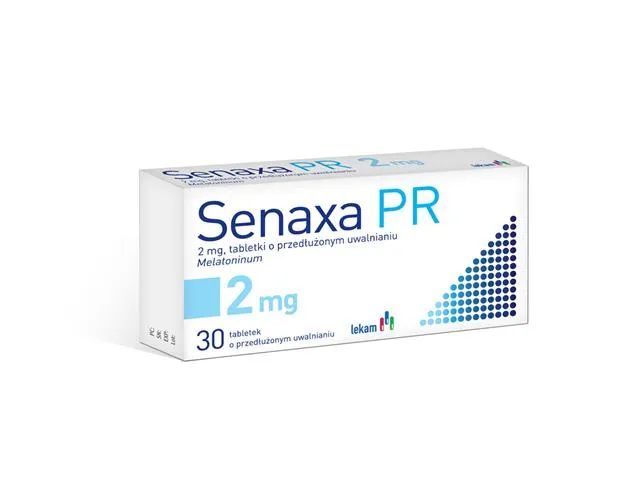
Table of Contents
Package leaflet: Information for the user
Melatonin Senaxa, 2 mg, prolonged-release tablets
Melatoninum
Please read all of this leaflet carefully before taking this medicine because it contains important information for you.
- Keep this leaflet. You may need to read it again.
- If you have any further questions, ask your doctor or pharmacist.
- This medicine has been prescribed for you personally. Do not pass it on to others. It may harm them, even if their symptoms are the same as yours.
- If you experience any side effects, including any not listed in this leaflet, tell your doctor or pharmacist. See section 4.
Contents of the leaflet
- What Melatonin Senaxa is and what it is used for
- What you need to know before taking Melatonin Senaxa
- How to take Melatonin Senaxa
- Possible side effects
- How to store Melatonin Senaxa
- Contents of the pack and other information
1. What Melatonin Senaxa is and what it is used for
The active substance in Melatonin Senaxa, melatonin, belongs to a group of natural hormones produced by the human body.
Melatonin Senaxa is used alone for the short-term treatment of primary insomnia (persistent difficulty in falling asleep or maintaining sleep continuity, or poor sleep quality) in patients aged 55 years and older. "Primary" means that the insomnia has no identified cause, including medical, psychiatric, or environmental causes.
2. Important information before taking Melatonin Senaxa
When not to take Melatonin Senaxa
- If the patient is allergic to melatonin or to any of the other ingredients of this medicine (listed in section 6).
Warnings and precautions
Before starting to take Melatonin Senaxa, the patient should discuss this with a doctor or
pharmacist.
-
If the patient has impaired kidney or liver function. Studies on the use of Melatonin Senaxa in patients with liver or kidney disease have not been conducted; therefore, the patient should consult a doctor before taking this medicine, as its use is not recommended in such cases.
-
If the patient has been diagnosed with intolerance to certain sugars.
-
If the patient has been diagnosed with an autoimmune disease (in which the body is attacked by its own immune system). Studies on the use of Melatonin Senaxa in patients with autoimmune diseases have not been conducted; therefore, the patient
should consult a doctor before starting treatment with this medicine, as
its use is not recommended in such cases. -
Melatonin Senaxa may cause drowsiness; caution should be exercised if drowsiness affects the patient, as it may impair the ability to perform certain activities, such as driving.
-
Smoking may reduce the effectiveness of Melatonin Senaxa, as components of tobacco smoke may accelerate the breakdown of melatonin in the liver.
Children and adolescents
Do not use this medicine in children and adolescents aged 0 to 18 years, as it has not been tested in this patient group and its effects are unknown. Another melatonin-containing medicine may be more suitable for use in this age group. Consult a
doctor or pharmacist.
Melatonin Senaxa and other medicines
Inform the doctor or pharmacist about all medicines currently or recently taken, as well as any medicines the patient intends to take. These include:
- Fluvoxamine (used in the treatment of depression and obsessive-compulsive disorder), psoralens (used in the treatment of skin disorders such as psoriasis), cimetidine (used in the treatment of gastric disorders such as ulcers), quinolones and rifampicin (used in the treatment of bacterial infections), estrogens (used in contraceptive medicines and hormone replacement therapy), and carbamazepine (used in the treatment of epilepsy).
- Adrenergic receptor agonists/antagonists (such as certain medicines used to control blood pressure by constricting blood vessels, nasal decongestants, blood pressure-lowering medicines), opioid receptor agonists/antagonists (such as medicines used in the treatment of drug addiction), prostaglandin inhibitors (such as non-steroidal anti-inflammatory drugs), antidepressants, tryptophan, and alcohol.
- Benzodiazepines and non-benzodiazepine sleep medicines (medicines used to induce sleep, such as zaleplon, zolpidem, and zopiclone).
- Thioridazine (used in the treatment of schizophrenia) and imipramine (used in the treatment of depression).
Taking Melatonin Senaxa with food, drink, and alcohol
Melatonin Senaxa should be taken after a meal. Do not consume alcohol before, during, or after taking Melatonin Senaxa, as alcohol reduces the effectiveness of the medicine.
Pregnancy and breastfeeding
If the patient is pregnant or breastfeeding, suspects she may be pregnant, or is planning to have a child, she should consult a doctor or pharmacist before using this medicine.
Driving and operating machinery
Melatonin Senaxa may cause drowsiness. In such a case, the patient should not drive or operate machinery. If drowsiness persists, consult a doctor.
Melatonin Senaxa contains lactose monohydrate
If the patient has previously been diagnosed with intolerance to certain sugars, the patient should
consult a doctor before taking this medicine.
3. How to take Melatonin Senaxa
This medicine should always be taken as directed by a physician or pharmacist. If in doubt,
consult a doctor or pharmacist.
The recommended dose of Melatonin Senaxa is one tablet (2 mg) taken orally once daily after
a meal, 1–2 hours before bedtime. This dose may be continued for up to thirteen weeks.
The tablet should be swallowed whole. Do not crush or split Melatonin Senaxa tablets.
Taking more Melatonin Senaxa than recommended
If an overdose is taken, contact a doctor or pharmacist immediately.
Taking more than the recommended daily dose may cause drowsiness.
Missing a dose of Melatonin Senaxa
If a dose is missed, take the next tablet before bedtime when remembered, or wait until the next scheduled dose and then resume the normal dosing schedule.
Do not take a double dose to make up for a missed dose.
Stopping Melatonin Senaxa treatment
There are no known harmful effects of discontinuing or prematurely ending treatment.
No withdrawal symptoms have been observed after stopping treatment with Melatonin Senaxa.
If you have any further doubts about how to use this medicine, consult your doctor or pharmacist.
4. Possible adverse reactions
Like all medicines, this medicine can cause adverse reactions, although not everyone will experience them.
If the patient experiences any of the following serious adverse reactions, the medicine must be discontinued and the doctor must be contacted immediately:
Uncommon: (may occur in up to 1 in 100 patients)
- Chest pain
Rare: (may occur in up to 1 in 1000 patients)
- Loss of consciousness or fainting
- Severe chest pain due to angina pectoris
- Palpitations
- Depression
- Visual disturbances
- Blurred vision
- Disorientation
- Dizziness
- Presence of red blood cells in urine
- Decreased number of white blood cells in blood
- Decreased number of platelets, increasing the risk of bleeding or bruising
- Psoriasis
Frequency not known: (frequency cannot be estimated from available data)
- Hypersensitivity reaction
- Swelling of lips or tongue
- Skin swelling
If any of the following non-serious adverse reactions occur, contact a doctor and/or seek medical advice:
Uncommon: (may occur in up to 1 in 100 patients)
Irritability, nervousness, restlessness, insomnia, unusual dreams, nightmares, anxiety, migraine, headache, lethargy, restlessness associated with increased activity, dizziness, fatigue, somnolence, high blood pressure, upper abdominal pain, indigestion, oral ulceration, dryness of the mouth, nausea, changes in blood composition which may cause yellowing of the skin and whites of the eyes, skin inflammation, night sweats, itching, rash, dry skin, limb pain, menopausal symptoms, weakness, excretion of glucose in urine, excessive protein in urine, abnormal liver function, and weight gain.
Rare: (may occur in up to 1 in 1000 patients)
Shingles, high levels of fat particles in blood, low calcium levels in blood serum, low sodium levels in blood, mood changes, aggression, agitation, crying, tension symptoms, waking up early in the morning, increased libido (increased sexual drive), depressive mood, memory disturbances, attention disorders, dream-like state, restless legs syndrome, poor sleep quality, tingling sensation, watery eyes, dizziness upon standing or while sitting, hot flushes, reflux disease, gastric disturbances, oral blisters, tongue ulceration, upset stomach, vomiting, unusual bowel sounds, flatulence, excessive salivation, bad breath, abdominal discomfort, gastric disorders, gastritis, rash, skin eruption, hand dermatitis, itchy rash, nail plate changes, joint inflammation, muscle cramps, neck pain, nocturnal cramps, prolonged erection which may be painful, prostatitis, feeling of exhaustion (fatigue), pain, thirst, passing large amounts of urine, nocturia, increased liver enzyme activity, abnormal blood electrolyte levels, and abnormal laboratory test results.
Frequency not known: (frequency cannot be estimated from available data)
Abnormal milk secretion from breasts.
Reporting of adverse reactions
If any adverse reactions occur, including any not listed in this leaflet, inform your doctor or pharmacist.
Adverse reactions can be reported directly to the Department of Monitoring Adverse Drug Reactions of the Office for Registration of Medicinal Products, Medical Devices and Biocidal Products:
Al. Jerozolimskie 181C
02-222 Warszawa
Tel.: +48 22 49 21 301
Fax: +48 22 49 21 309
Website: https://smz.ezdrowie.gov.pl
Adverse reactions can also be reported to the marketing authorization holder.
Reporting adverse reactions helps provide more information on the safety of the medicine.
5. How to store Melatonin Senaxa
Keep this medicine out of sight and reach of children.
Do not use this medicine after the expiry date stated on the carton after: EXP. The expiry date refers to the last day of the stated month.
Do not store above 25°C. Store in the original packaging to protect from light.
Medicines must not be disposed of via wastewater or household waste. Ask your pharmacist how to dispose of medicines no longer required. These measures will help protect the environment.
6. Contents of the pack and other information
What Melatonin Senaxa contains
- The active substance is melatonin. Each prolonged-release tablet contains 2 mg of melatonin.
- The other ingredients (excipients) are: ammonio methacrylate copolymer (type B), calcium hydrogen phosphate dihydrate, lactose monohydrate, colloidal anhydrous silica, talc and magnesium stearate.
What Melatonin Senaxa looks like and contents of the pack
Melatonin Senaxa 2 mg prolonged-release tablets are available as round, biconvex tablets with a diameter of 8.0 ± 0.3 mm and white or off-white in colour.
The medicine is available in blisters made of PVC/PVDC/Aluminium, packed in a cardboard box.
The pack contains 7, 20, 21 or 30 tablets.
Not all pack sizes may be marketed.
Marketing Authorisation Holder and Manufacturer
LEK-AM Sp. z o.o. Pharmaceutical Company
ul. Ostrzykowizna 14 A
05-170 Zakroczym
Tel. +48 22 785 27 60
This medicinal product has been authorised in the Member States of the European Economic Area under the following names:
Poland, Malta, Denmark, Finland, Norway, Sweden: Melatonin Senaxa
Spain: Melatonina Senaxa
Cyprus: MELATONIN MEDICAIR
France: MELATONINE VENIPHARM LP 2 mg, comprimé à libération prolongée
Greece: MELATONIN/MEDICAIR
Italy: MELATONINA DOC