Megalia
Poland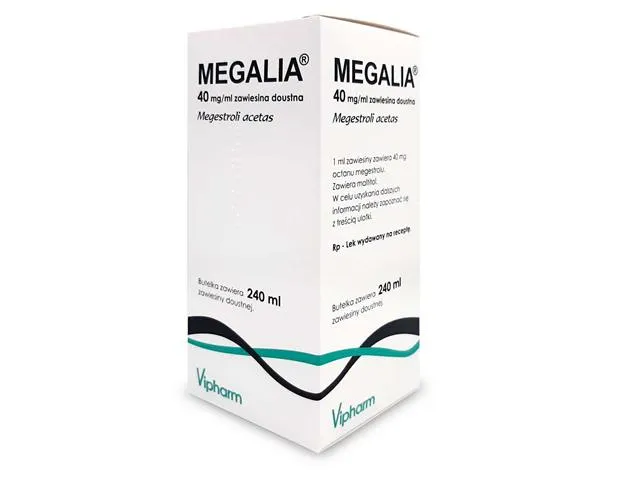
Table of Contents
Package leaflet: Information for the patient
MEGALIA, 40 mg/ml, oral suspension
Megestrol acetate
Please read carefully all the information in this leaflet before taking the medicine, as it contains
important information for the patient.
Keep this leaflet as you may need to read it again.
If you have any further questions, please consult your doctor or pharmacist.
This medicine has been prescribed for a specific individual. Do not give it to others. The medicine may harm another person, even if their symptoms are the same.
If the patient experiences any adverse reactions, including any not listed in this leaflet, they should inform their doctor or pharmacist. See section 4.
Contents of the leaflet:
1. What MEGALIA is and what it is used for
2. Important information before taking MEGALIA
3. How to take MEGALIA
4. Possible side effects
5. How to store MEGALIA
6. Contents of the package and other information
1. WHAT MEGALIA IS AND WHAT IT IS USED FOR
The active substance in MEGALIA is megestrol acetate, a synthetic progestagen.
MEGALIA is indicated for the treatment of lack of appetite (anorexia) or weight loss associated with cancer or acquired immunodeficiency syndrome (AIDS). The medicine is administered as an oral suspension.
2. IMPORTANT INFORMATION BEFORE TAKING MEGALIA
Follow all your doctor's instructions carefully.
When not to take MEGALIA
Do not take MEGALIA if:
- the patient is allergic to megestrol acetate or any of the other ingredients of the medicine (listed in section 6),
- the woman is pregnant or breastfeeding.
Warnings and precautions
Before starting treatment with MEGALIA, discuss it with your doctor, pharmacist, or nurse.
Exercise particular caution when using MEGALIA in:
- patients who have previously had thrombophlebitis,
- patients with diabetes mellitus – increased insulin requirements may occur.
Clinical and laboratory signs of mild adrenal suppression have been reported during or after discontinuation of megestrol acetate. After abrupt withdrawal of the drug, patients should be carefully monitored, especially for symptoms such as hypotension, nausea, vomiting, dizziness, or weakness.
Use in patients with renal and/or hepatic impairment
Inform your doctor if you have any problems related to liver or kidney disease before taking MEGALIA.
Use in elderly patients
MEGALIA may be used in elderly patients.
Children and adolescents
The efficacy and safety of MEGALIA in children and adolescents have not been established.
MEGALIA with other medicines
Inform your doctor about all medicines currently or recently taken, as well as any medicines you plan to take.
No clinically confirmed interactions between megestrol acetate and other concomitantly administered medicines are known.
Pregnancy, breastfeeding, and fertility
Consult your doctor before taking any medicine.
MEGALIA is contraindicated during pregnancy and breastfeeding.
If you are pregnant or suspect you may be pregnant, inform your doctor.
If you are breastfeeding, consult your doctor.
Driving and operating machinery
There is no data available on the influence of megestrol acetate on the ability to drive motor vehicles or operate moving machinery.
MEGALIA contains liquid maltitol (a sweetening agent). If the patient has previously been diagnosed with intolerance to certain sugars, the patient should consult their doctor before taking this medicine.
3. HOW TO USE THE MEDICINAL PRODUCT MEGALIA
Megalia should always be used as directed by the physician. In case of doubt, consult a doctor or pharmacist.
Method of administration
The suspension should be thoroughly mixed before administration.
The usual dosage is:
Adults: 400–800 mg (10 to 20 ml) orally.
It is recommended to continue treatment with Megalia for a period of at least two months.
Elderly patients
There is insufficient clinical trial data on megestrol acetate in patients aged 65 years and older to determine whether it acts differently than in younger patients. Based on clinical experience, no differences in effects have been observed between elderly patients and younger ones. Dose selection should be cautious in elderly individuals. Due to the higher prevalence of impaired liver, kidney, or heart function, as well as concomitant diseases and use of other medications, treatment usually starts with doses at the lower end of the dosage range.
Megestrol acetate is primarily excreted by the kidneys. Therefore, the risk of toxic effects of this medicinal product may be higher in patients with impaired renal function. Since age-related decline in renal function is more likely to occur in elderly patients, caution should be exercised when determining the dose, and monitoring of renal function may be advisable.
Use in children and adolescents
Megalia is not recommended for use in children.
Duration of treatment with Megalia
Treatment with Megalia is recommended for a period of at least two months.
Overdose of Megalia
Studies on the effects of high-dose administration (1,600 mg daily for 6 months) have not shown occurrence of severe adverse symptoms.
If necessary, symptomatic treatment should be administered.
Missed dose of Megalia
Do not take a double dose to make up for a missed dose.
If you have any further questions about the use of this medicinal product, consult your doctor.
4. POSSIBLE ADVERSE REACTIONS
Like all medicines, the Megalia medicine may cause adverse reactions, although not everyone experiences them.
Common adverse reactions (occurring in 1 to 10 patients out of 100):
nausea, vomiting, diarrhoea, bloating, rash;
uterine bleeding;
impotence (reduced sexual function, erectile dysfunction);
weakness, pain, swelling at the site of administration.
Adverse reactions with unknown frequency (which cannot be estimated from available data):
rapid tumour growth;
adrenal insufficiency (symptoms: increasing weakness, loss of appetite, weight loss, nausea, vomiting, irritability);
symptoms resembling Cushing's syndrome, Cushing's syndrome (symptoms: obesity, so-called moon face, striae, hypertension, rapid fatigue);
diabetes, impaired glucose tolerance, hyperglycaemia (blood sugar too high, symptoms: excessive thirst, dry mouth, weight loss, drowsiness), increased appetite;
mood changes;
carpal tunnel syndrome (symptoms: tingling in the wrist and fingers, weakened grip, lack of movement precision), lethargy;
circulatory failure;
venous thrombosis, pulmonary embolism (in some cases resulting in death), hypertension, hot flushes;
shortness of breath;
constipation;
alopecia;
frequent urination;
weight gain.
The main adverse reactions occurring in patients treated with megestrol acetate, especially at high doses, are weight gain, which is usually not related to fluid retention, but results from increased appetite and higher food intake. This effect is the basis for using megestrol acetate in patients with anorexia or weight loss.
If any of the adverse symptoms worsen or if any symptoms not listed in this leaflet occur, inform your doctor or pharmacist.
Reporting adverse reactions
If any adverse reactions occur, including those not listed in this leaflet, tell your doctor or pharmacist. Adverse reactions can be reported to the Department of Monitoring Adverse Drug Reactions of the Office for Registration of Medicinal Products, Medical Devices and Biocidal Products {current address, telephone and fax numbers of the above Department} e-mail: [email protected]
Reporting adverse reactions helps to collect more information on the safety of using the medicine.
5. HOW TO STORE MEGALIA
Keep this medicine out of the sight and reach of children.
Do not use after the expiry date stated on the packaging. The first two characters indicate the month, and the last four characters indicate the year. The expiry date refers to the last day of the specified month.
Store below 25°C.
The medicine should be used within 24 days of opening.
Medicines should not be disposed of via wastewater or household waste. Ask your pharmacist how to dispose of medicines no longer in use. This will help protect the environment.
6. CONTENTS OF THE PACKAGE AND OTHER INFORMATION
What Megalia contains
The active substance in Megalia is megestrol acetate. It is present in the form of an oral suspension.
Other ingredients are: carbomer, macrogol glycerol hydroxystearate, sodium hydroxide (10%), citric acid monohydrate, sodium citrate, methyl p-hydroxybenzoate, propyl p-hydroxybenzoate, liquid maltitol, sodium saccharin, lemon flavor, purified water.
What Megalia looks like and contents of the pack
Megalia is available as a suspension in polyethylene bottles with a screw cap and a measuring cup, packed in a cardboard box. The bottle contains 240 ml of suspension.
Marketing Authorisation Holder and Manufacturer
Vipharm S.A.
ul. A. i F. Radziwiłłów 9
05-850 Ożarów Mazowiecki
tel.: +48 22 679 51 35
fax: +48 22 678 92 87
e-mail: [email protected]