Maxipirin
Poland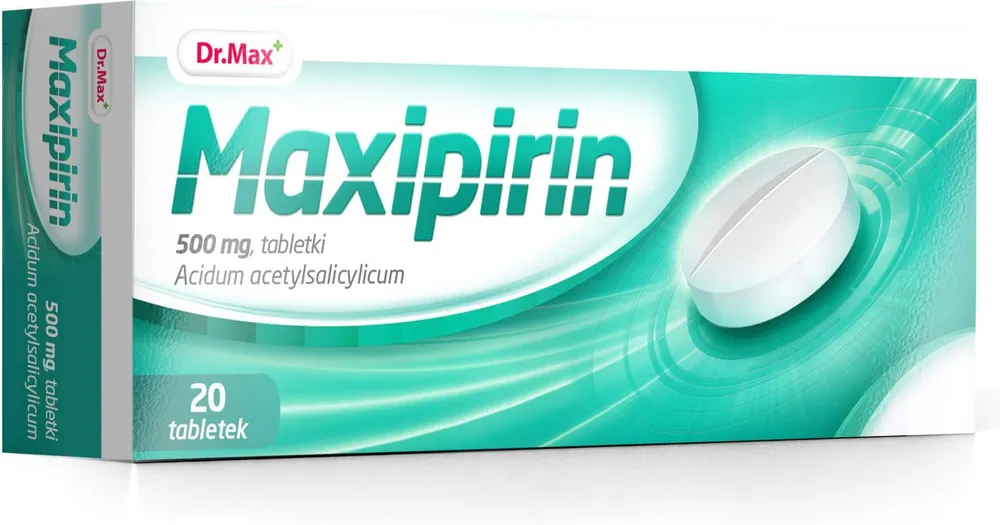
Table of Contents
Patient Information Leaflet
Maxipirin, 500 mg, tablets
Acidum acetylsalicylicum
Please read the entire leaflet carefully before using the medicine, as it contains
important information for the patient.
This medicine should always be used according to the instructions in this patient leaflet or as directed by a doctor or pharmacist.
- Keep this leaflet for future reference.
- Consult your pharmacist if you need advice or further information.
- If any adverse reactions occur, including any possible side effects not listed in this leaflet, inform your doctor or pharmacist. See section 4.
- Contact your doctor if symptoms do not improve or worsen after 3 days in case of fever or after 5 days in case of pain.
Table of contents:
- What Maxipirin is and what it is used for
- Important information before taking Maxipirin
- How to take Maxipirin
- Possible side effects
- How to store Maxipirin
- Contents of the pack and other information
1. What Maxipirin is and what it is used for
Maxipirin belongs to a group of medicines that have analgesic (pain-relieving), anti-inflammatory (reducing inflammation), and antipyretic (fever-reducing) properties.
Maxipirin is intended for the treatment of mild to moderate pain, such as headache, toothache, muscle and joint pain, or menstrual pain, as well as for fever and inflammatory conditions.
Maxipirin is intended for use in adults and adolescents aged 16 years and older.
Consult a doctor if there is no improvement or if the patient feels worse after 3 days of treatment for fever or after 5 days for pain.
2. Important information before using Maxipirin
When not to use Maxipirin:
- if the patient is hypersensitive to acetylsalicylic acid, other salicylates, or to any of the excipients listed in section 6.1.
- if the patient suffers from allergic reactions with asthma in medical history or shows similar reactions to salicylates or other non-steroidal anti-inflammatory drugs (NSAIDs).
- gastric or duodenal ulcer disease.
- if the patient has an increased tendency to bleeding (bleeding diathesis).
- if the patient suffers from severe kidney or liver disorders.
- if the patient has severe heart failure.
- in combination with methotrexate at doses exceeding 15 mg per week.
- if the patient is in the last three months of pregnancy, doses higher than 100 mg per day must not be used (see section "Pregnancy and breastfeeding").
Warnings and precautions
Before starting treatment with Maxipirin, consult your doctor or pharmacist if:
- the patient is allergic to other painkillers, anti-rheumatic drugs (medicines used to treat inflammatory joint, muscle, or tendon diseases), other anti-inflammatory drugs, or other allergenic substances.
- the patient has a history of gastric or duodenal ulcer or gastrointestinal bleeding.
- the patient is taking anticoagulant medicines (blood thinners).
- the patient has impaired kidney function or circulatory disorders (e.g. renal vascular disease, congestive heart failure, reduced circulating blood volume, sepsis (blood infection), severe bleeding), as acetylsalicylic acid may further increase the risk of kidney function disorders and severe renal failure.
- the patient suffers from liver insufficiency.
- the patient has severe glucose-6-phosphate dehydrogenase deficiency – acetylsalicylic acid may cause haemolysis (destruction of red blood cells) or haemolytic anaemia (anaemia due to red blood cell breakdown). Factors increasing the potential risk of haemolysis include high doses of the drug, fever, or acute infection.
- the patient has reduced uric acid excretion, which in low doses may trigger gout attacks.
- the patient is pregnant (first 6 months).
- the patient is breastfeeding.
The risk of asthma attacks (analgesic intolerance or analgesic-induced asthma) occurs in patients with asthma, allergic rhinitis, nasal polyps, or chronic respiratory infections (especially with symptoms resembling allergic rhinitis) or in patients sensitive to certain types of painkillers and anti-rheumatic drugs who take Maxipirin. If the patient suffers from any of the above conditions, consult a doctor before taking Maxipirin. The same applies to patients who react to other substances with allergic skin reactions, itching, or urticaria.
Severe skin reactions, such as Stevens-Johnson syndrome or toxic epidermal necrolysis, have been very rarely reported in patients taking non-steroidal anti-inflammatory drugs. Often, the rash may involve ulcers in the mouth, throat, nose, eyes, or genital organs (red and swollen eyes). These serious skin reactions are often preceded by flu-like symptoms such as fever, headache, and body aches. The rash may progress to widespread blisters and skin peeling. If a rash or such skin symptoms occur, discontinue Maxipirin immediately and contact a doctor without delay. See also section 4.
Before any medical or dental procedure, inform your doctor or dentist about taking Maxipirin.
Acetylsalicylic acid-containing medicines should not be taken long-term or in high doses without consulting a doctor.
Children and adolescents
Maxipirin should not be used in children and adolescents with fever-related illnesses unless prescribed by a doctor and other therapeutic options have failed. Persistent vomiting in association with these illnesses may be a sign of Reye's syndrome, a very rare but life-threatening condition requiring immediate medical attention. The risk of Reye's syndrome is higher in certain viral diseases, especially influenza and varicella (chickenpox).
Interaction of Maxipirin with other medicines
Inform your doctor about all medicines currently used, recently taken, or planned for use.
Acetylsalicylic acid enhances the effect of the following medicines:
- methotrexate (used in cancer or rheumatoid arthritis treatment)
- anticoagulants (such as coumarins, heparin) and platelet aggregation inhibitors (substances used to prevent platelet aggregation and blood clot formation, such as ticlopidine)
- anti-inflammatory and pain-relieving medicines (such as ibuprofen)
- selective serotonin reuptake inhibitors (SSRIs) (medicines used to treat depression)
- digoxin (used in heart failure treatment)
- antidiabetic medicines (substances used to lower blood sugar levels)
- treatment with glucocorticoids or alcohol consumption – increased risk of gastrointestinal bleeding and ulcer formation
- valproic acid (medicines used to treat epileptic seizures)
Acetylsalicylic acid reduces the effect of the following medicines:
- diuretics (medicines that improve urine excretion)
- blood pressure-lowering medicines (ACE inhibitors)
- medicines used in gout treatment (uricosuric action) that improve uric acid excretion (such as probenecid, benzbromarone)
Metamizole (a substance with analgesic and antipyretic properties) may reduce the effect of acetylsalicylic acid on platelet aggregation (clumping of blood cells and clot formation) when both medicines are used simultaneously. Therefore, caution should be exercised when using metamizole in patients receiving acetylsalicylic acid.
Maxipirin with food, drink, and alcohol
Take this medicine always after food, with a large amount of water. Do not consume alcohol while taking Maxipirin.
Pregnancy and breastfeeding
If the patient is pregnant or breastfeeding, suspects she may be pregnant, or plans to become pregnant, she should consult a doctor or pharmacist before using this medicine.
If the patient continues or starts treatment with Maxipirin during pregnancy as advised by a doctor, she should take Maxipirin according to the doctor's instructions and not exceed the recommended dose.
Pregnancy – third trimester
Do not use doses of Maxipirin higher than 100 mg per day if the patient is in the last three months of pregnancy, as this may harm the unborn child or cause complications during delivery. Maxipirin may cause kidney and heart function disorders in the unborn child. It may increase the tendency to bleeding in both the mother and the child and may delay or prolong labour.
If the patient takes Maxipirin in low doses (up to 100 mg per day inclusive), the obstetric condition of the patient should be closely monitored according to the doctor's recommendations.
Pregnancy – first and second trimester
Maxipirin should not be used during the first 6 months of pregnancy unless the doctor considers its use absolutely necessary. If treatment is required during this period or when trying to conceive, the lowest possible dose should be used for the shortest possible duration. From the 20th week of pregnancy, Maxipirin may lead to impaired kidney function in the unborn child if taken for longer than a few days. This may result in low levels of amniotic fluid surrounding the baby (oligohydramnios) or narrowing of a blood vessel (ductus arteriosus) in the baby's heart. If treatment is required for longer than a few days, the doctor may recommend additional monitoring.
Only small amounts of acetylsalicylic acid and its metabolites pass into breast milk. No adverse effects on the infant have been observed during short-term treatment. Therefore, it is not necessary to interrupt breastfeeding. However, if the patient cannot avoid regular intake of high doses of the medicine, breastfeeding should be discontinued.
Driving and operating machinery
No effects on the ability to drive or operate machinery have been observed.
3. How to use Maxipirin
This medicine should always be taken according to this leaflet or as directed by a doctor or pharmacist.
If in doubt, consult a doctor or pharmacist.
Contact a doctor if there is no improvement or if the patient feels worse after
3 days of treatment for fever or 5 days for pain. Do not use for longer than 3–5 days without
consulting a doctor.
Swallow the tablet with a full glass of water. Do not take on an empty stomach.
The recommended dose for adults and adolescents over 16 years of age is 1–2 tablets per single dose.
If needed, the dose may be repeated 3–4 times daily, leaving an interval of 4–8 hours between doses.
Do not exceed the maximum daily dose of 8 tablets (4 g of active substance).
Taking more than the recommended dose of Maxipirin
If too many tablets have been taken at once, or if there is suspicion that a child has swallowed a tablet,
seek immediate medical advice from a doctor or the nearest hospital emergency department.
Missed dose of Maxipirin
Do not take a double dose to make up for a missed dose.
Do not take more than one dose every 4 hours.
If in doubt about how to use the medicine, consult your doctor or pharmacist.
4. Possible adverse reactions
Like all medicines, this medicine can cause adverse reactions, although not everyone experiences them.
You should inform your doctor if any of the following adverse reactions occur
or if any other adverse reactions not listed here occur:
Common (may occur in fewer than 1 in 10 people):
- indigestion
- gastrointestinal and abdominal pain
Uncommon (may occur in fewer than 1 in 1,000 people):
- gastrointestinal inflammation, peptic ulcer disease
- hypersensitivity reactions, including symptoms such as rash, urticaria, swelling, itching, nasal inflammation, nasal mucosal congestion, breathing and heart problems
Rare (may occur in fewer than 1 in 10,000 people):
- ulceration with associated bleeding and perforation
- gastric bleeding
- intracranial bleeding
- anaphylactic reactions, including shock
- transient disturbances in liver function with increased hepatic aminotransferase activity
- severe skin reactions such as Stevens-Johnson syndrome and toxic epidermal necrolysis
Frequency not known (frequency cannot be estimated from available data):
- perioperative bleeding
- hematoma
- epistaxis (nosebleed)
- genitourinary bleeding
- bleeding gums
- acute and chronic anemia or iron-deficiency anemia (due to occult microbleeding) – reduction in red blood cells may cause paleness of the skin and may lead to fatigue or shortness of breath
- hemolytic anemia and hemolysis – decreased number or destruction of red blood cells, leading to pale yellow discoloration of the skin and fatigue or shortness of breath, particularly in patients with glucose-6-phosphate dehydrogenase deficiency
- dizziness and tinnitus (ringing or noise in the ears), which may be caused by overdose
- reduced kidney function
Reporting of adverse reactions
If any adverse reactions occur, including any adverse reactions not listed
in this leaflet, you should inform your doctor or pharmacist. Adverse reactions can
be reported directly to the Department of Monitoring Adverse Drug Reactions of the Office for Registration of Medicinal Products, Medical Devices and Biocidal Products, Al. Jerozolimskie 181C, 02-222 Warsaw, phone: +48 22 49 21 301, fax: +48 22 49 21 309, website: https://smz.ezdrowie.gov.pl
Adverse reactions can also be reported to the marketing authorization holder.
By reporting adverse reactions, additional information on the safety of the medicine can be collected.
5. How to store Maxipirin
Keep this medicine out of sight and reach of children.
Store below 30°C. Keep in the original packaging to protect from moisture.
Do not use this medicine after the expiry date stated on the cardboard box following:
Expiry date (EXP). The expiry date refers to the last day of the stated month.
Medicines must not be disposed of via wastewater or household waste. Ask your pharmacist how to dispose of medicines no longer required. Such measures will help protect the environment.
6. Contents of the packaging and other information
What Maxipirin contains
- The active substance is acetylsalicylic acid. Each tablet contains 500 mg of acetylsalicylic acid.
- The excipients are: maize starch, cellulose powder.
What Maxipirin looks like and contents of the pack
Maxipirin is a white or almost white, round, biconvex tablet with a break line on one side, 13 mm in diameter, packed in PVC/PVDC/Aluminium blisters in a cardboard box.
The tablet can be divided into equal doses.
Pack sizes: 8, 10, 20 tablets.
Not all pack sizes may be marketed.
Marketing Authorisation Holder and Manufacturer
Marketing Authorisation Holder:
Dr. Max Pharma s.r.o.
Na Florenci 2116/15
110 00 Prague
Czech Republic
tel.: (+420) 516 770 199
Manufacturer:
Saneca Pharmaceuticals
Nitrianska 100
920 27 Hlohovec
Slovakia
This medicinal product is authorised in the European Economic Area countries under the following names:
Slovakia: Algirin 500 mg
Czech Republic: Algirin
Poland: Maxipirin
Romania: Maxipirin 500 mg tablets