Mannitol 20% fresenius
Poland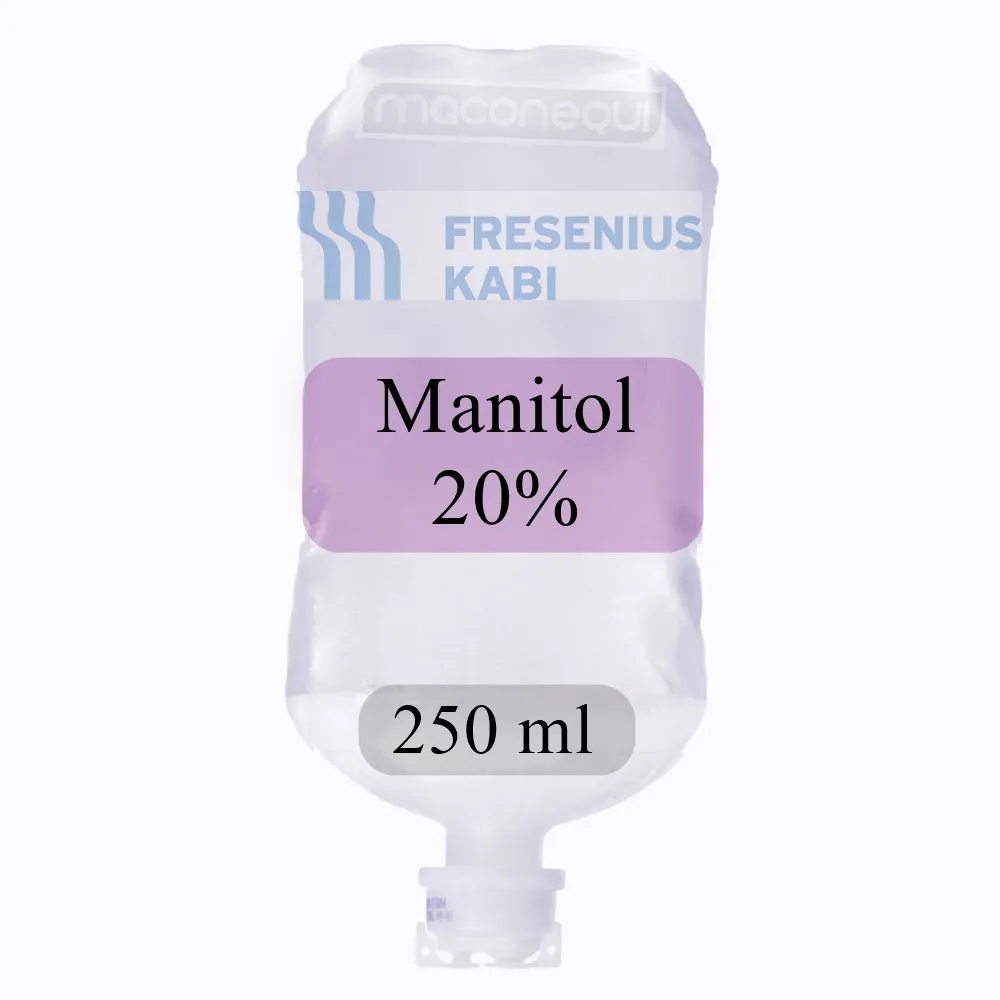
Table of Contents
- 1. What MANNITOL 20% FRESENIUS is and what it is used for
- 2. Important information before using MANNITOL 20% FRESENIUS
- 3. How to use MANNITOL 20% FRESENIUS
- 4. Possible adverse reactions
- 5. How to store MANNITOL 20% FRESENIUS
- 6. Contents of the pack and other information
- Information intended exclusively for medical professionals:
MANNITOL 20% FRESENIUS, 200 mg/ml, infusion solution
Mannitolum
Please read the entire leaflet carefully before using the medicine, as it contains
important information for the patient.
- Keep this leaflet for future reference.
- If you have any doubts, consult your doctor, pharmacist, or nurse.
- This medicine has been prescribed for a specific individual. Do not pass it on to others. The medicine may harm someone else, even if their symptoms are the same.
- If any adverse reactions occur in the patient, including any adverse reactions not listed in this leaflet, inform your doctor, pharmacist, or nurse. See section 4.
Table of contents of the leaflet
- What MANNITOL 20% FRESENIUS is and what it is used for
- Important information before using MANNITOL 20% FRESENIUS
- How to use MANNITOL 20% FRESENIUS
- Possible side effects
- How to store MANNITOL 20% FRESENIUS
- Contents of the pack and other information
1. What MANNITOL 20% FRESENIUS is and what it is used for
MANNITOL 20% FRESENIUS is a medicine that increases urine output
and promotes the shift of water from tissues into the intravascular space. The medicine reduces intracranial and intraocular pressure. It is administered intravenously.
Indications:
- Increasing diuresis (increased urine output) in the prevention and treatment of oliguria (low urine output) in acute kidney failure;
- Reduction of intracranial pressure and reduction of cerebral edema;
- Reduction of elevated intraocular pressure when it cannot be lowered by other means;
- Enhancement of renal excretion of toxic substances (so-called forced diuresis).
2. Important information before using MANNITOL 20% FRESENIUS
When not to use MANNITOL 20% FRESENIUS:
- if the patient is allergic to mannitol;
- if the patient has advanced renal failure with anuria;
- if the patient has symptoms of pulmonary congestion or pulmonary oedema;
- if the patient has intracranial haemorrhage, except for bleeding during craniotomy (surgical opening of the skull);
- if the patient is severely dehydrated;
- if, after starting mannitol administration, progressive renal failure occurs with increasing oliguria (marked reduction in urine output) and azotemia (excess nitrogen in the blood);
- if, after starting mannitol administration, heart failure or symptoms of pulmonary circulatory congestion worsen.
Warnings and precautions
In patients with significant renal function impairment, the physician will administer a test dose before starting treatment with MANNITOL 20% FRESENIUS to assess the patient's response to the drug.
During administration of MANNITOL 20% FRESENIUS, the physician will monitor:
- serum sodium and potassium levels (to detect any fluid and electrolyte imbalance);
- hourly diuresis (volume of urine output per hour);
- whether hypovolaemia (insufficient blood volume in the circulatory system) is worsening;
- whether congestive heart failure (a heart dysfunction manifested, among others, by ankle oedema and pulmonary oedema) is worsening;
- kidney function.
The drug must not be administered intramuscularly or subcutaneously, nor should it be mixed with blood.
MANNITOL 20% FRESENIUS and other medicines
Inform the physician or pharmacist about all medicines currently used or recently used, as well as any medicines the patient plans to take.
Exercise caution when using the following medicines concomitantly with MANNITOL 20% FRESENIUS:
- neomycin (an antibiotic used to treat fungal infections) due to increased risk of ototoxicity and nephrotoxicity;
- kanamycin (an antibiotic used to treat infections) due to the risk of hearing loss;
- cardiac glycosides (medicines used to treat heart failure) due to the risk of digitalis toxicity, especially if the patient has low serum potassium levels;
- diuretics (medicines used to increase urine output and reduce oedema), because mannitol may enhance their effect;
- other diuretics, including carbonic anhydrase inhibitors, as they may enhance the effect of reducing intraocular pressure.
Pregnancy and breastfeeding
If the patient is pregnant or breastfeeding, suspects she may be pregnant, or is planning to have a child, she should consult a physician or pharmacist before using this medicine.
MANNITOL 20% FRESENIUS may be administered to women during pregnancy and breastfeeding if the physician considers it necessary.
Driving and operating machinery
MANNITOL 20% FRESENIUS has no effect or has a negligible effect on the ability to drive and operate machinery.
3. How to use MANNITOL 20% FRESENIUS
This medicine is administered exclusively by medical personnel. You must not use this medicine yourself.
If in doubt, consult your doctor.
The dosage is determined individually by the doctor for each patient, depending on the patient's clinical condition,
age, body weight, and laboratory test results.
Administration of a higher than recommended dose of MANNITOL 20% FRESENIUS
If a higher than recommended dose is administered, inform the doctor or
nurse immediately.
Rapid administration of a large amount of mannitol may cause:
- excessive increase in blood volume;
- heart failure;
- pulmonary edema.
Administration of higher than recommended doses of MANNITOL 20% FRESENIUS may lead to excessive reduction in blood electrolyte concentrations (particularly sodium, potassium, and chlorides). Decreased concentrations of these electrolytes may cause:
- orthostatic hypotension (reduction in arterial blood pressure occurring upon changing from a lying to a standing position);
- tachycardia (rapid, irregular heartbeat);
- reduced central venous pressure (due to insufficient blood volume in the blood vessels);
- neuromuscular conduction disorders (muscle paralysis);
- gastrointestinal atony (lack of contractions in gastrointestinal muscles).
If you have any further doubts regarding the use of this medicine, consult your
doctor or nurse.
4. Possible adverse reactions
Like all medicines, this medicinal product can cause adverse reactions, although not everyone experiences them.
The following adverse effects may occur:
- pulmonary congestion (characteristic crackles in the lungs);
- disturbances in water and electrolyte balance;
- acidosis (accumulation in the blood of excessive amounts of acidic substances);
- dryness of the mouth, increased thirst;
- excessive diuresis (excretion of large amounts of urine), urinary retention;
- oedema;
- headache, dizziness;
- blurred vision;
- convulsions;
- nausea, vomiting, diarrhoea;
- nasal irritation;
- shoulder pain;
- skin necrosis;
- thrombophlebitis (inflammation and small blood clots causing a palpable vein hardening, redness around the vein, pain and tenderness);
- chills;
- urticaria (bright pink, itchy skin blisters);
- dehydration (excessive loss of body fluids);
- hypotension (low blood pressure);
- tachycardia (fast, irregular heartbeat);
- fever;
- chest pain resembling angina (severe substernal pain radiating to arms, jaw);
- congestive heart failure (heart dysfunction manifested by oedema around the ankles and pulmonary oedema);
- pain and irritation of the vein due to too rapid administration of the medicine.
Reporting of adverse reactions
If any adverse reactions occur, including those not listed in this
leaflet, inform your doctor, pharmacist, or nurse. Adverse reactions can
be reported directly to the Department of Monitoring Adverse Drug Reactions of the Office for Registration of Medicinal Products, Medical Devices and Biocidal Products
Al. Jerozolimskie 181C, 02-222 Warsaw
tel.: + 48 22 49 21 301
fax: + 48 22 49 21 309
website: https://smz.ezdrowie.gov.pl
Adverse reactions can also be reported to the marketing authorization holder.
Reporting adverse reactions helps provide more information on the safety of using this medicine.
5. How to store MANNITOL 20% FRESENIUS
Keep the medicine out of the sight and reach of children.
Store below 25°C. Do not freeze.
Once opened, the container must not be stored or reused. Any unused portion of the medicine
is not suitable for further use.
Do not use this medicine after the expiry date stated on the packaging. The expiry date refers to the last day of the stated month.
Do not use this medicine if contamination or discoloration is observed, or if the packaging is damaged.
Medicines must not be disposed of via wastewater or household waste. Ask your pharmacist how to dispose of medicines no longer required. This will help protect the environment.
6. Contents of the pack and other information
What MANNITOL 20% FRESENIUS contains
- The active substance is mannitol. 1 ml of solution contains 200 mg of mannitol. 1000 ml of solution contains 200 g of mannitol.
- The other component is: water for injections.
The osmolarity of the solution is 1098 mOsmol/l.
What MANNITOL 20% FRESENIUS looks like and contents of the pack
The medicine is a clear, colourless liquid.
Pack sizes:
- glass bottle: 100 ml, 250 ml or 500 ml, and
- glass bottles: 20 x 100 ml, 12 x 250 ml and 12 x 500 ml, in a cardboard box.
Not all pack sizes may be marketed.
Marketing Authorisation Holder and Manufacturer
Marketing Authorisation Holder
Fresenius Kabi Polska Sp. z o.o.
Al. Jerozolimskie 134
02-305 Warsaw
Manufacturer
Fresenius Kabi Italia S.r.l.
Via Camagre 41
37063 Isola della Scala - Verona
Italy
For further information regarding this medicinal product, please contact the Marketing Authorisation Holder:
Fresenius Kabi Polska Sp. z o.o.
Al. Jerozolimskie 134
02-305 Warsaw
Tel.: + 48 22 345 67 89
Information intended exclusively for medical professionals:
Dosage and method of administration
Dosage
The infusion rate and volume of administered solution depend on the indication, fluid requirements, and renal function.
The usual dose in adult patients is 50–200 g/day.
In most cases, an adequate response occurs after administration of approximately 100 g/day.
The infusion rate is usually determined based on diuresis. Maintain a diuresis rate of at least 30–50 mL/h.
The above guidelines are general recommendations only.
The drug is typically administered according to the following regimen:
Adult patients
Test dose in patients with marked oliguria or impaired renal function
Dose: 0.2 g/kg body weight (75 mL of 20% solution). Administration of this dose over 3–5 minutes should induce diuresis at a rate of at least 30–50 mL/h. If diuresis does not increase, a second test dose may be administered. Lack of desired effect after the second dose indicates ineffectiveness of mannitol therapy.
Treatment of oliguria
Increase diuresis in the treatment of oliguria.
Maximum daily dose: approximately 1.5 g/kg body weight/day (approximately 100 g/day for a 70 kg patient).
Maximum infusion rate: 0.3 g/kg body weight/h (21 g/h for a 70 kg patient).
Do not re-administer the drug to patients with persistent oliguria.
Prevention of oliguria
To prevent acute renal failure during cardiothoracic and other surgical procedures, a dose of 50–100 g of mannitol is used.
Reduction of intracranial pressure, cerebral edema
To achieve maximum effect, mannitol is administered intravenously at a dose of 0.25 g/kg body weight, no more frequently than every 6–8 hours.
Reduction of intraocular pressure
A dose of mannitol 1.5–2 g/kg body weight (7.5 mL to 10 mL of 20% solution/kg body weight) may be administered over 30 minutes to achieve rapid and maximal effect. If mannitol is used to reduce intraocular pressure before ophthalmic surgical procedures, the above dose should be administered approximately 1–1.5 hours before surgery.
Acceleration of excretion of toxic substances via the urinary tract
The dose should be adjusted according to the patient's current diuresis and fluid requirements.
Total mannitol dose should not exceed 200 g. Replace water and electrolyte losses as needed.
Children
The efficacy and safety of MANNITOL 20% FRESENIUS in children under 12 years of age have not been established.
Reduction of cerebral edema, reduction of intracranial pressure, reduction of intraocular pressure
In intravenous infusion, administer a dose of 1–2 g/kg body weight over 60 minutes.
Oliguria
In intravenous infusion, administer a dose of 0.25–2 g/kg body weight over 2–6 hours.
Prior to administration, first give a test dose of 0.75 g/kg body weight over 3–5 minutes. If diuresis does not increase within 2 hours, the drug should not be used.
Method of administration
MANNITOL 20% FRESENIUS must be administered intravenously through a catheter placed in a vein of as large a diameter as possible to minimize the risk of irritation.
The drug must not be administered intramuscularly or subcutaneously.
Overdose
Rapid administration of a large amount of mannitol may cause excessive increase in intravascular fluid volume, leading to heart failure and pulmonary edema.
Administration of doses higher than recommended may cause excessive electrolyte loss, particularly of sodium, potassium, and chlorides. Excessive reduction in serum concentrations of sodium and chlorides may lead to orthostatic hypotension, tachycardia, and decreased central venous pressure. Reduction in serum potassium levels may cause neuromuscular conduction disturbances and lead to symptoms of gastrointestinal atony.
Interactions with other medicinal products and other types of interactions
If blood transfusion is necessary simultaneously with mannitol solution infusion, blood and mannitol should be administered into separate veins.
Mannitol enhances the diuretic effect of saluretic drugs.
Concomitant use of mannitol with neomycin increases ototoxicity and nephrotoxicity.
Simultaneous use of mannitol with kanamycin may cause deafness.
Concomitant use of cardiac glycosides with mannitol increases the risk of digitalis toxicity associated with hypokalemia.
Simultaneous use of other diuretics, including carbonic anhydrase inhibitors, with mannitol may enhance the intraocular pressure-lowering effect. Therefore, dose adjustment may be necessary.
Preparation of the medicinal product for administration
Use only clear, transparent solution.
Any unused portion of the medicinal product is not suitable for further use.
Do not use this medicinal product if contamination, discoloration, or damage to the packaging is observed.
Follow aseptic procedures.
Pharmaceutical incompatibilities
MANNITOL 20% FRESENIUS must not be mixed with the following medicinal products due to incompatibility:
erythromycin, tetracycline hydrochloride, cephalothin, ofloxacin, potassium chloride.
Due to lack of data on interactions between mannitol and other substances, mixing with other medicinal products should be avoided.
Storage conditions
After opening, the container must not be stored and reused.
Store below 25°C. Do not freeze.
At low temperatures, MANNITOL 20% FRESENIUS may crystallize in the bottle.
If crystallization occurs, the solution should be warmed in a water bath to approximately 70°C until crystals are completely dissolved. The solution must be cooled to body temperature before administration.
Disposal of unused medicinal product
Any unused residues or waste of the medicinal product must be disposed of in accordance with local regulations.