Magnevist
Poland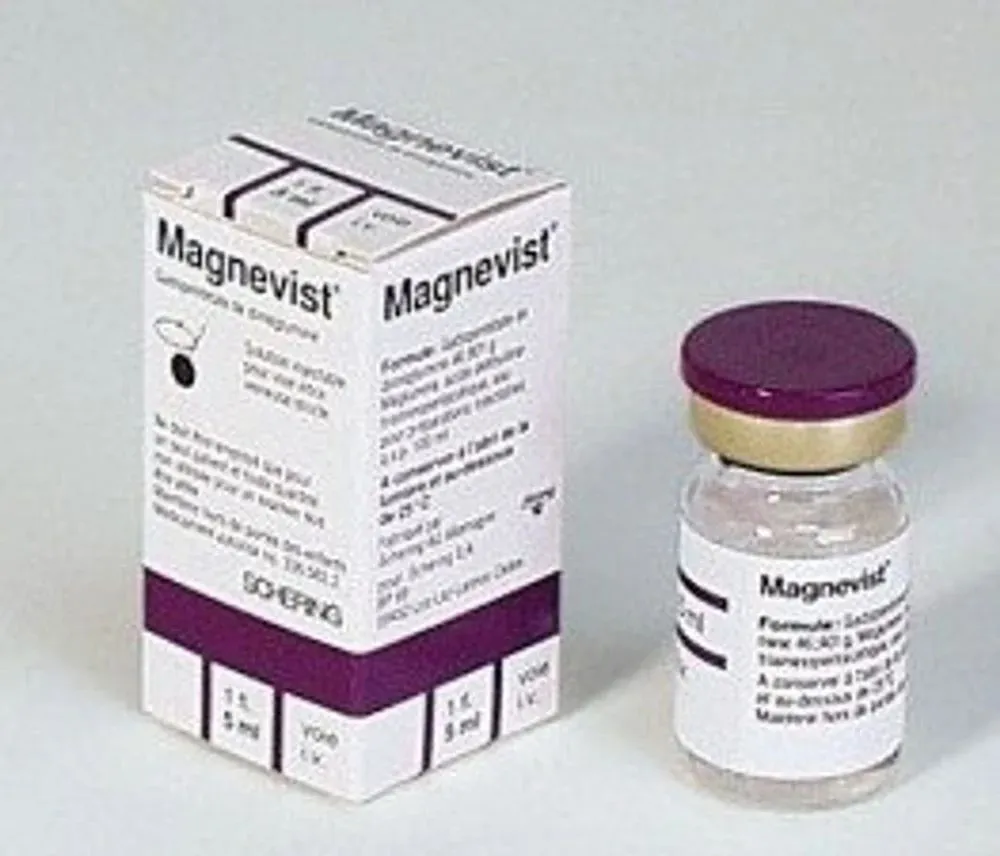
Table of Contents
Magnevist, 469 mg/ml, solution for injection
Gadopentetate dimeglumine
Read the entire leaflet before using this medicine.
- Keep this leaflet for future reference.
- Consult your doctor or pharmacist if you need advice or additional information.
- This medicine has been prescribed for a specific individual and should not be passed on to others, as it may harm them even if their symptoms appear identical.
- If any of the adverse effects worsen or if new adverse effects not listed in this leaflet occur, inform your doctor or pharmacist immediately.
Leaflet Contents:
- What Magnevist is and what it is used for
- Important information before using Magnevist
- How to use Magnevist
- Possible side effects
- How to store Magnevist
- Further information
1. WHAT IS MAGNEVIST AND WHAT IS IT USED FOR?
Magnevist is a paramagnetic contrast agent used during magnetic resonance imaging (MRI) of the brain, spinal cord, blood vessels, and other body parts. It is generally well tolerated and only rarely causes usually mild local or systemic adverse effects.
The product is supplied as a solution for intravenous injection. It is intended solely for diagnostic use.
MRI is a diagnostic imaging technique in medicine that exploits differences in the behavior of water molecules in healthy versus diseased tissues. The procedure uses a complex system of magnets and radio waves. Signals are detected by computers and translated into images.
Indications for use
For diagnostic purposes only via intravenous administration.
- Magnetic resonance imaging (MRI) of the head and spinal cord
Particularly useful for visualizing tumors and in suspected cases of meningioma, vestibular schwannoma (acoustic neuroma), infiltrating tumors (e.g. glioma), and metastases; for detecting small and/or isointense tumors; in suspected tumor recurrence following surgical or radiation therapy; for differentiation of rare tumors such as fetal angiomata, ependymomas, and pituitary microadenomas; and for improved topographic assessment of extracerebral tumors.
Additionally, in spinal MRI: differentiation between intramedullary and extramedullary tumors; visualization of solid and cystic spinal tumors; and precise localization of intramedullary tumor extent.
- Whole-body MRI
Used in imaging of the facial skull, neck region, thorax including heart, abdomen, female breasts, pelvis, musculoskeletal system, and blood vessels throughout the body.
Magnevist enables the acquisition of diagnostic information, particularly:
- confirmation or exclusion of tumors, infiltrations, and vascular abnormalities;
- determination of the topography and extent of such lesions;
- differentiation of internal structure of pathological changes;
- assessment of circulation in both normal and diseased tissues;
- differentiation between tumor tissue and post-treatment scar tissue;
- diagnosis of recurrent disc disease after surgical intervention;
- semi-quantitative evaluation of renal function, including anatomical diagnosis of the organ.
2. IMPORTANT INFORMATION BEFORE USING MAGNEVIST
When not to use Magnevist
Magnevist must not be administered to patients with severe kidney disease and/or acute kidney injury, or to patients who have undergone or are scheduled to undergo liver transplantation.
In these patient groups, administration of Magnevist has been associated with a disease called nephrogenic systemic fibrosis (NSF). NSF is a disorder characterized by thickening of the skin and connective tissues. NSF may lead to reduced joint mobility, muscle weakness, or impairment of internal organ function, which may be life-threatening.
Magnevist must also not be used in newborns during the first 4 weeks of life.
When to exercise special caution when using Magnevist
Inform the doctor if:
- the patient has a known allergy (hypersensitivity) to gadopentetic acid dimeglumine or to any of the other components of Magnevist (see "Other information");
- the patient previously experienced a reaction to a contrast agent;
- the patient has or has had allergies (e.g. hay fever, urticaria) or asthma;
- the patient suffers from heart or vascular disease. In rare cases, hypersensitivity reactions may be severe or fatal;
- the patient's kidneys are not functioning properly and/or if the patient has acute kidney injury (see also section "When not to use Magnevist");
- the patient has recently undergone or is scheduled to undergo liver transplantation;
- the patient suffers from epilepsy or has a history of seizure disorders or other brain disorders. Seizures or convulsions are rare but may occur in such patients.
- Before administering Magnevist, it is essential to inform the doctor, radiologist, or MRI facility staff if any of the above conditions apply. The physician will decide whether the planned examination can be performed.
After administration of Magnevist, allergic-type reactions may occur. These reactions may be severe. Most reactions occur within 30 minutes of administration. Therefore, patients should be observed for at least 30 minutes after injection.
Delayed reactions (occurring hours or days later) have also been reported (see section "Possible side effects").
Before any blood tests are performed, inform the doctor that the patient has received Magnevist. The product may influence serum iron measurements for up to 24 hours after administration.
Kidney function impairment
Before receiving Magnevist, the doctor will assess kidney function.
Prior to the MRI examination with Magnevist, a blood test will be performed to evaluate kidney function.
If kidney function is impaired, the doctor will ensure that Magnevist has been eliminated from the body before the patient receives another dose of Magnevist.
Hemodialysis shortly after administration of Magnevist in patients already on dialysis may help remove the product from the body. There is no evidence that initiating hemodialysis in other, non-dialyzed patients prevents or treats NSF.
Cases of severe reactions, primarily involving skin and connective tissue thickening (Nephrogenic Systemic Fibrosis - NSF), have been reported. NSF may lead to significant joint immobility, muscle weakness, or impaired function of internal organs, which may be life-threatening.
NSF has been associated with the use of certain gadolinium-containing products, including Magnevist, in patients with severe kidney dysfunction.
It has also been associated with the use of certain gadolinium-containing products, including Magnevist, in patients with acute kidney failure due to hepatorenal syndrome (kidney failure in patients with advanced chronic liver disease), or in patients with acute kidney failure who have recently undergone or are scheduled to undergo liver transplantation (see section "Possible side effects").
- Children and adolescents
Magnevist must not be used in newborns during the first 4 weeks of life. Due to immature kidney function in infants during the first year of life, Magnevist should be used in infants only after careful consideration by the physician of the necessity for such use.
The recommended dose should be administered manually to infants.
Use of other medicines
Inform the doctor, radiologist, or MRI facility staff about all medicines the patient is currently taking or has recently taken, including those obtained without a prescription.
Pregnancy and breastfeeding
Consult a doctor before using any medication.
Pregnancy
Inform the doctor if the patient is pregnant or suspects she may be pregnant. Magnevist must not be used in pregnant women unless absolutely necessary.
Breastfeeding
Inform the doctor if the patient is breastfeeding or intends to start breastfeeding. Breastfeeding should be interrupted for at least 24 hours after administration of Magnevist.
Driving and operating machinery
No effects of Magnevist on the ability to drive motor vehicles or operate mechanical equipment have been observed.
3. HOW TO USE MAGNEVIST
Magnevist is administered by injection into a vein through a needle or catheter by medical personnel.
Magnevist will be given shortly before the MRI examination.
The actual dose of Magnevist appropriate for a given patient will depend on body weight and the body region being examined.
In adults, a single intravenous dose of 0.2 millilitres of Magnevist per kilogram of body weight is usually sufficient (this means that a person weighing 70 kg will receive a dose of 14 millilitres).
In special cases, the dose may be increased up to a maximum single dose of 0.6 millilitres per kilogram of body weight in adults and up to 0.4 millilitres per kilogram of body weight in children. The radiologist will decide how much Magnevist is necessary for the examination.
In patients under two years of age, experience with the use of Magnevist, except for brain and spinal cord examinations, is limited.
Dosing in special patient groups
Magnevist is contraindicated in patients with severe kidney disease and/or acute kidney injury, as well as in patients who are due to undergo or have recently undergone liver transplantation. Magnevist should not be used in newborns during the first 4 weeks of life.
In patients with acute impairment of kidney function or acute kidney failure, the dose should not exceed 0.2 ml/kg body weight. The physician or radiologist will decide whether the examination can be performed (see section "Important information before using Magnevist").
In patients with moderate kidney impairment, no more than a single dose of the drug should be administered during one examination, and Magnevist should not be administered at intervals shorter than 7 days.
Due to immature kidney function in infants under 1 year of age, no more than a single dose of the drug should be administered, and Magnevist should not be administered at intervals shorter than 7 days.
When administering Magnevist to patients aged 65 years and older, dose adjustment is not required; however, a blood test should be performed to assess whether the kidneys are functioning properly.
Further information on the use and preparation of Magnevist can be found at the end of the leaflet (see section "Other information").
Administration of a higher than recommended dose of Magnevist
If the kidneys are not functioning properly, the doctor may recommend dialysis to remove Magnevist from the body.
If you have any further questions, please consult your doctor or radiologist.
4. POSSIBLE ADVERSE REACTIONS
Like all medicines, Magnevist may cause adverse reactions, although not everyone will experience them.
Most adverse reactions are mild to moderate in intensity.
The most commonly reported symptoms in patients receiving Magnevist (occurring in 4 or more per 1,000 patients) are: various injection site reactions, headache, and nausea (feeling sick).
The most serious adverse reactions observed in patients receiving Magnevist are nephrogenic systemic fibrosis (NSF) and pseudoallergic anaphylactoid reactions (allergy-like reactions), including severe reactions such as shock.
NSF is a serious reaction primarily associated with thickening of the skin and connective tissue. NSF may lead to significant joint immobility, muscle weakness, or may affect the normal function of internal organs, which can be life-threatening.
Cases of nephrogenic systemic fibrosis (a disease associated with skin hardening that may also involve soft tissues and internal organs) have been observed.
Allergy-like reactions may rarely occur, including severe reactions that may require medical intervention. If the patient notices slight swelling of the face, lips, tongue or throat, coughing or sneezing, difficulty breathing, itching, runny nose, urticaria (hives), they should immediately inform the doctor, radiologist, or MRI facility staff. These symptoms may be the first signs of a severe reaction, meaning that the examination may need to be stopped and appropriate treatment initiated.
Rarely, delayed allergic-type reactions have been observed, occurring from hours to several days after administration of Magnevist. If such reactions occur, the doctor or MRI facility staff should be informed.
The following are reported / observed adverse reactions listed by frequency of occurrence:
Uncommon (occurring in 1 to 10 out of 1,000 patients)
- headache, dizziness, taste disturbances;
- vomiting, nausea (feeling sick);
- pain, sensation of warmth, sensation of cold;
- sensation or reactions at the injection site such as: cold sensation, paresthesia (tingling), swelling, warmth sensation, pain, edema, irritation, hemorrhage (bleeding), erythema (red, painful skin), malaise, necrosis (tissue death), thrombophlebitis (vein inflammation due to or associated with blood clot), phlebitis, inflammation, extravasation (bleeding into tissues at injection site), pain, bruising, skin discoloration.
Rare (occurring in less than 1 out of 1,000 patients)
- hypersensitivity (allergy) / pseudoallergic anaphylactoid reactions (allergy-like reactions), e.g.: pseudoallergic anaphylactic shock (severe allergy-like reactions), shock (circulatory collapse), hypotension (low blood pressure), conjunctivitis, loss of consciousness, throat tightness, sneezing, urticaria (hives), pruritus (intense itching), rash, erythema (skin redness), dyspnea (difficulty breathing), respiratory arrest, bronchospasm (difficulty breathing), wheezing, laryngospasm, laryngeal edema, throat edema, cyanosis (blue lips), rhinitis (runny nose), angioedema (e.g., swelling of face, throat, oral cavity, lips and/or tongue), facial edema, reflex tachycardia (exceptionally fast or slow heartbeat);
- disorientation;
- seizures (fits or convulsions), paresthesia (numbness and tingling), burning sensation, muscle twitching;
- tachycardia (abnormally rapid heartbeat), arrhythmia (irregular heartbeat);
- thrombophlebitis (vein inflammation due to or associated with blood clot), facial flushing, vasodilation (blood vessel dilation);
- throat irritation, sore throat / throat discomfort, cough;
- stomach (abdominal) pain or discomfort, diarrhea, toothache, dry mouth sensation, soft tissue pain in mouth and paresthesia (pain, numbness and tingling in oral cavity);
- pain in arms, hands, legs and feet (limbs);
- chest pain, fever, swelling of arms, hands, legs and feet (peripheral edema), malaise, fatigue, thirst, weakness;
Frequency unknown (cannot be estimated from available data):
- increased serum iron levels (changes may be detected in blood tests);
- anxiety, restlessness;
- coma, somnolence, speech disorders, olfactory hallucinations (disturbed sense of smell);
- visual disturbances, lacrimation, eye pain;
- hearing disturbances, ear pain;
- cardiac arrest (sudden stop of heartbeat), (bradycardia) slowing of heartbeat;
- fainting, vasovagal reaction (temporary sudden drop in blood pressure, paleness potentially leading to loss of consciousness), increased blood pressure;
- respiratory failure, increased or decreased breathing rate, pulmonary edema (fluid in lungs);
- hypersalivation;
- elevated bilirubin levels in blood, increased liver enzyme activity (changes may be detected in blood tests);
- nephrogenic systemic fibrosis (NSF is a serious reaction primarily associated with thickening of the skin and connective tissue. NSF may lead to significant joint immobility, muscle weakness, or may affect the normal function of internal organs, which can be life-threatening);
- back pain, joint pain;
- acute renal failure in patients with pre-existing renal impairment, increased creatinine concentration (a blood marker used to assess kidney function; changes may be detected in blood tests), urinary incontinence (loss of bladder control), urgent need to urinate;
- chills, sweating, body temperature changes.
In dialysis-dependent patients with renal impairment who were administered Magnevist, delayed and transient inflammatory-like reactions were frequently observed, such as fever, chills, and elevated C-reactive protein (a blood test marker). These patients underwent MRI with Magnevist shortly before hemodialysis.
The following adverse reactions have in some cases led to life-threatening conditions or death:
nephrogenic systemic fibrosis (NSF, a serious reaction primarily associated with thickening of the skin and connective tissue), pseudoallergic anaphylactic shock (severe allergy-like reaction), pseudoallergic anaphylactoid reaction (allergy-like reaction), hypersensitivity reactions (allergy), shock (circulatory collapse), hypotension (low blood pressure), loss of consciousness, throat tightness, dyspnea (difficulty breathing), respiratory failure (respiratory arrest), bronchospasm (difficulty breathing), laryngospasm, laryngeal edema, throat edema, cyanosis (blue lips), angioedema (e.g., swollen face, throat, mouth, lips and/or tongue), facial edema (swollen face), seizures (convulsions or fits), tachycardia (increased heart rate), increased serum iron levels, coma, somnolence (drowsiness), cardiac arrest (sudden stop of heartbeat), bradycardia (reduced heart rate), loss of consciousness (fainting), pulmonary edema (fluid in lungs).
If any of the adverse reactions worsen or if any adverse reactions not listed in this leaflet occur, inform your doctor, radiologist, or MRI facility staff immediately.
Reporting of adverse reactions
If any adverse reactions occur, including those not listed in this leaflet, inform your doctor, pharmacist, or nurse. Adverse reactions can be reported directly to the Department of Monitoring of Adverse Drug Reactions, Office for Registration of Medicinal Products, Medical Devices and Biocidal Products, Al. Jerozolimskie 181C, 02-222 Warsaw, phone: +48 22 49 21 301, fax: +48 22 49 21 309, e-mail: [email protected]. Reporting adverse reactions helps to provide more information on the safety of this medicine.
5. HOW TO STORE MAGNEVIST
Magnevist is light-sensitive. Store below 25 °C and protect from light.
Keep vials and bottles in the outer cardboard package.
Protection from light is not required during administration.
After opening the vial or bottle, Magnevist remains stable for 24 hours
at 30 °C, after which it must be discarded.
Do not use after the expiry date stated on the packaging.
Keep out of the reach and sight of children.
6. OTHER INFORMATION
What Magnevist contains
- The active substance is gadopentetate dimeglumine. Each ml of solution contains 469 mg of gadopentetate dimeglumine (equivalent to 0.5 mmol of gadopentetate dimeglumine).
- Other ingredients are: meglumine pentaacetate, meglumine, water for injections.
What Magnevist looks like and contents of the pack
Magnevist is a clear, particle-free solution.
Pack contents: 1 vial of 5, 10, 15, 20, 30 ml, 10 vials of 20, 30 ml, 1 bottle of 100 ml, and
10 bottles of 100 ml.
Marketing Authorisation Holder and Manufacturer
Marketing Authorisation Holder
Bayer AG
Kaiser-Wilhelm-Allee 1
51373 Leverkusen
Germany
Manufacturer
Bayer AG
Müllerstrasse 178
13353 Berlin
Germany
For further information, please contact your doctor or
representative of the Marketing Authorisation Holder:
Bayer Sp. z o.o.
Al. Jerozolimskie 158
02-326 Warsaw, Poland
tel. 0 22 572 35 00
Information intended exclusively for medical personnel
(see also sections 1 to 6):
Instructions for use
- Before injection: inspect the product. Magnevist is supplied as a clear, colorless to light yellow solution. Do not use Magnevist if significant discoloration, presence of particulate matter, or container damage is observed.
Route of administration
For intravenous use only.
Vials
Magnevist should be drawn from the container into a syringe immediately before administration.
The rubber stopper must never be punctured more than once.
Any unused portion of Magnevist remaining after a single examination must be discarded.
Large-volume containers
Additionally, when using infusion bottles containing 50 or 100 ml, the following recommendations apply:
Magnevist may be administered slowly only via an automated syringe pump or by another approved procedure ensuring product sterility. Follow the instructions provided by the equipment manufacturer.
Automated syringe pumps must not be used to administer Magnevist to neonates and infants.
In children under two years of age, the required dose should be administered manually, not via an automated syringe pump, to avoid injury.
Any unused Magnevist remaining in opened containers must be discarded at the end of the day's examinations (within a maximum of 24 hours). For further information, see section "How to store Magnevist".
Dosage
Adults
- MRI of the brain and spinal cord
0.2 ml/kg body weight (equivalent to 0.1 mmol gadopentetate dimeglumine per kg body weight) of Magnevist.
Maximum single dose of Magnevist: 0.6 ml/kg body weight.
- Whole-body MRI
0.2 ml/kg body weight of Magnevist.
Maximum single dose of Magnevist: 0.6 ml/kg body weight.
Additional information for special patient groups
Children and adolescents (see section "What Magnevist is and what it is used for")
Children: 0.2 ml of Magnevist per kg body weight.
Maximum single dose: 0.4 ml of Magnevist per kg body weight.
Children under two years of age: limited experience with whole-body MRI.
In children under two years of age, the recommended dose should be administered manually and not via an automated syringe pump to avoid injury.
Special warnings and precautions for use
-
Hypersensitivity
In patients with a history of allergies, the decision to administer Magnevist must be made only after careful assessment of benefit versus risk.
Patients should be observed following completion of the examination.
Immediate access to medications for treating hypersensitivity reactions and readiness to implement emergency measures must be ensured (see also "When to exercise special caution when using Magnevist"). -
Renal function impairment
Before administering Magnevist to any patient, screening laboratory tests for renal function impairment must be performed.
Cases of nephrogenic systemic fibrosis (NSF) associated with the use of Magnevist and certain other gadolinium-containing medicinal products have been reported in patients with acute or chronic severe renal impairment (GFR < 30 ml/min/1.73 m²) and/or acute kidney injury. Magnevist is contraindicated in these patients. Patients undergoing liver transplantation are at particular risk, as the risk of acute renal failure in this patient group is high. Therefore, Magnevist must not be used during the perioperative period of liver transplantation.
Magnevist must not be used in neonates up to 4 weeks of age.
The risk of developing NSF in patients with moderate renal impairment (GFR 30–59 ml/min/1.73 m²) is unknown; therefore, Magnevist may be used only after careful benefit-risk assessment in patients with moderate renal impairment, at a dose not exceeding 0.2 ml/kg body weight. More than one dose must not be administered during a single examination. Due to lack of information on multiple dosing, at least 7 days must elapse between consecutive administrations of Magnevist.
Because renal function in infants up to 1 year of age is not fully developed, Magnevist should be used in these patients only after careful consideration of the justification for such use, at a dose not exceeding 0.2 ml/kg body weight. More than one dose must not be administered during a single examination. Due to lack of information on multiple dosing, at least 7 days must elapse between consecutive administrations of Magnevist. Magnevist must not be used in neonates up to 4 weeks of age.
Since glomerular filtration rate of gadopentetic acid may be reduced in elderly patients, screening for renal function impairment is particularly important in patients over 65 years of age.
Hemodialysis shortly after administration of Magnevist may facilitate elimination of Magnevist from the body. However, there is no evidence supporting initiation of hemodialysis specifically to prevent or treat NSF in patients not already undergoing hemodialysis.
- Seizures
Rarely, an increased risk of seizures has been observed following administration of the contrast agent Magnevist in patients with a history of seizures or intracranial abnormalities.
Interactions with other medicinal products and other forms of interaction
- Effect on diagnostic test results
Serum iron measurements using a complexometric method (e.g., with bathophenanthroline) performed within 24 hours after administration of Magnevist may yield falsely low results, because the contrast agent solution contains free DTPA.
Pregnancy
Magnevist must not be used during pregnancy unless the clinical condition of the woman justifies the use of gadopentetate dimeglumine.
Breast-feeding
Patients should not breast-feed for at least 24 hours after administration of Magnevist.
Adverse reactions
The overall safety profile of Magnevist is based on data from approximately 11,000 patients included in clinical trials and post-marketing surveillance (see section "Possible adverse reactions").
Overdose
In case of accidental overdose, as a precautionary measure, renal function should be monitored in patients with renal impairment.
Magnevist can be removed from the body by hemodialysis (see section "When to exercise special caution when using Magnevist").
Pharmaceutical incompatibilities
Due to lack of compatibility studies, this product must not be mixed with other medicinal products.
Patients should be observed after completion of the examination.
Immediate access to medications for treating hypersensitivity reactions and readiness to implement emergency measures must be ensured.
A self-adhesive control label from the vial or bottle should be affixed to the patient's medical record to accurately document the administered gadolinium-containing medicinal product. The administered dose must also be documented. If electronic patient records are used, the product name, batch number, and dose must be entered into the patient's registry.