Magnefar b6
Poland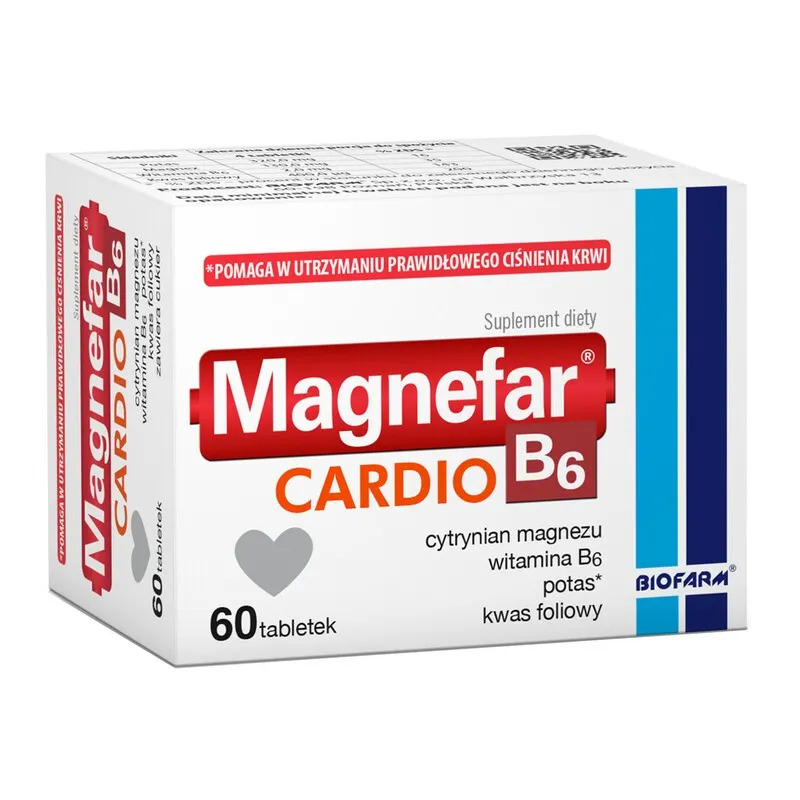
Table of Contents
Patient Information Leaflet
Magnefar B, 50 mg + 5.05 mg, coated tablets
Magnesii citras + Pyridoxini hydrochloridum
Please read this leaflet carefully before using the medicine, as it contains important information for the patient.
This medicine should always be used exactly as described in this patient leaflet or as directed by a physician or pharmacist.
- Keep this leaflet for future reference.
- If you need advice or further information, please consult your pharmacist.
- If you experience any adverse reactions, including those not listed in this leaflet, inform your doctor or pharmacist. See section 4.
- If your symptoms do not improve or worsen, consult your doctor.
Table of Contents
- What Magnefar B is and what it is used for
- Important information before taking Magnefar B
- How to take Magnefar B
- Possible side effects
- How to store Magnefar B
- Contents of the pack and other information
1. What Magnefar B is and what it is used for
Magnefar B contains magnesium ions and pyridoxine hydrochloride (vitamin B ).
Magnesium is a cation essential for the proper functioning of numerous biochemical processes in the body. Its biological role involves the activation of various enzymes. It plays an important role in myocardial contraction and influences neuromuscular excitability.
Magnesium is only partially absorbed from the gastrointestinal tract, mainly in the small intestine, and the degree of absorption depends on dietary intake. Magnesium deficiency may lead to disorders of the muscular and central nervous systems.
Magnefar B is indicated for the treatment and prevention of magnesium deficiency.
Magnesium deficiency may be indicated by the following symptoms:
- Nervousness, irritability, mood swings, mild anxiety, restlessness, transient fatigue, drowsiness, mild sleep disturbances;
- Anxiety-related symptoms such as gastrointestinal spasms or palpitations (in the absence of cardiac disorders);
- Muscle cramps, tingling sensations, eyelid twitching.
Supplementing magnesium may alleviate the above-mentioned symptoms of deficiency. If no improvement is observed after one month of treatment with Magnefar B, continued use is not recommended.
2. Important information before using Magnefar B
When not to use Magnefar B:
- if the patient is allergic to magnesium citrate, pyridoxine hydrochloride,
- or to any of the other ingredients of this medicine (listed in section 6);
- if the patient has hypermagnesemia (increased magnesium levels in the blood);
- if the patient has acute renal failure (creatinine clearance < 30 ml/min);
- if the patient has significant arterial hypotension;
- if the patient has atrioventricular block;
- if the patient has a condition called myasthenia gravis (an acquired, chronic disorder characterized by rapid fatigue and weakness of skeletal muscles).
Warnings and precautions
Before starting treatment with Magnefar B, discuss this with your doctor or pharmacist.
In cases of concomitant magnesium and calcium deficiency, magnesium deficiency should be corrected first.
In severe magnesium deficiency and malabsorption disorders, treatment should be initiated under medical supervision with intravenous magnesium administration.
Long-term use of high doses of magnesium may contribute to the development of dental caries.
Administration of the medicine at doses higher than recommended may cause diarrhea.
Particular caution is required in patients with moderate renal impairment due to the risk of elevated magnesium levels in the blood.
Long-term magnesium use may increase blood potassium levels, especially in patients with restricted potassium intake and impaired kidney function.
Prolonged use of pyridoxine (for several months or years) may cause sensory nerve disorders. Symptoms include numbness and disturbances in position sense, tingling in hands and feet, as well as gradually progressive coordination disturbances. In most cases, symptoms resolve after discontinuation of pyridoxine.
If adverse effects occur, temporarily discontinue the medicine until symptoms subside or reduce the dose.
Children and adolescents
Magnefar B may be used in adults and children aged 6 years and older.
If in doubt, consult your doctor or pharmacist.
Magnefar B and other medicines
Inform your doctor or pharmacist about all medicines currently or recently taken, as well as any medicines you plan to take.
Inform your doctor or pharmacist if the patient is taking any of the following medicines, as they may cause magnesium and/or vitamin B deficiency by, among other mechanisms, increasing their excretion from the body or impairing absorption:
- certain antibiotics (cisplatin, cyclosporine A, rifampicin, amphotericin B, penicillamine, isoniazid, cycloserine);
- bisphosphonates (medicines used in the treatment of osteoporosis);
- diuretics (e.g. thiazides or furosemide);
- cetuximab or erlotinib (medicines used in cancer treatment);
- proton pump inhibitors (medicines used to treat heartburn, such as pantoprazole or omeprazole);
- foscarnet (an antiviral medicine);
- pentamidine (a medicine used to treat parasitic infections or lung infections);
- hydralazine (a medicine used to lower blood pressure);
- phosphates, iron compounds, or calcium salts;
- contraceptive agents;
- laxatives.
When taking these medicines, individual dose adjustment of Magnefar B may be necessary.
Inform your doctor or pharmacist if the patient is taking levodopa (a medicine used in the treatment of Parkinson's disease), as vitamin B may inhibit its effect.
Do not take magnesium-containing medicines simultaneously with certain antibiotics (fluoroquinolones, tetracyclines) or medicines used in the treatment of osteoporosis (so-called bisphosphonates), as magnesium may reduce their gastrointestinal absorption. An interval of at least 2–3 hours should be maintained between administration of these medicines and Magnefar B.
Concomitant use of magnesium preparations with lithium carbonate, potassium-sparing diuretics (such as amiloride and spironolactone), or other magnesium-containing medicines (such as laxatives, antacids) increases the risk of hypermagnesemia and symptoms of magnesium toxicity. This risk is particularly increased in patients with renal impairment.
Use of Magnefar B with food, drink, and alcohol
The medicine should be taken during a meal and accompanied by a large amount of water (one glass).
Pregnancy, breastfeeding, and effects on fertility
If the patient is pregnant, breastfeeding, suspects she may be pregnant, or is planning to have a baby, she should consult her doctor or pharmacist before using this medicine.
Pregnancy
This medicine may be used during pregnancy only under medical supervision.
Studies have not shown harmful effects of magnesium during pregnancy.
Breastfeeding
This medicine may be used during breastfeeding only under medical supervision.
It is recommended that the daily dose of vitamin B during breastfeeding should not exceed 20 mg.
Fertility
Studies on vitamin B have shown effects on male fertility. However, such effects occur only at very high doses. Magnefar B contains low doses of vitamin B.
Driving and operating machinery
Magnefar B has no influence on the ability to drive or operate machinery.
Magnefar B contains less than 1 mmol (23 mg) of sodium per recommended dose unit, meaning the medicine is considered "sodium-free".
3. How to use Magnefar B6 medicine
This medicine should always be taken exactly as described in this patient leaflet or as advised by
your doctor or pharmacist. If in doubt, consult your doctor or pharmacist.
Dosage in the treatment of magnesium deficiency
Magnefar B6
Adults:
6 to 8 tablets per day, in 2 or 3 divided doses, taken during meals.
Children and adolescents:
Dosage recommendations for children are as follows:
| Age | Body weight | Dosage |
| 6 - 14 years | 21 - 30 kg | 2 to 4 tablets daily, in 2 or 3 divided doses, during meals |
| 31 - 39 kg | 4 to 6 tablets daily, in 2 or 3 divided doses, during meals | |
| 14 - 18 years | ≥ 40 kg | 6 to 8 tablets daily, in 2 or 3 divided doses, during meals |
Do not use the medicine in children under 6 years of age and weighing less than 20 kg.
Tablets should be swallowed whole with plenty of water.
Tablets should be taken during a meal.
Treatment usually lasts 1 month.
Use of a higher than recommended dose of Magnefar B
If a higher than recommended dose of the medicine is taken, consult a doctor or pharmacist immediately.
Overdose of magnesium administered orally does not cause toxic reactions in patients with normal kidney function. In patients with renal insufficiency, magnesium poisoning may occur.
Missed dose of Magnefar B
Do not take a double dose to make up for a missed dose.
Discontinuation of Magnefar B
If you have any further doubts regarding the use of this medicine, consult your doctor or pharmacist.
4. Possible adverse reactions
Like all medicines, this medicine can cause adverse reactions, although not everyone will experience them.
The following adverse reactions may occur during treatment with Magnefar B:
Rare (may occur in up to 1 in 1,000 people): abdominal pain, loose stools or diarrhea at the beginning of treatment (usually mild and transient); skin redness.
Very rare (may occur in up to 1 in 10,000 people): allergic reactions.
Reporting of adverse reactions
If any adverse effects occur, including any adverse effects not listed in this leaflet, inform your doctor or pharmacist. Adverse reactions can be reported directly to the Department of Monitoring Adverse Drug Reactions of the Office for Registration of Medicinal Products, Medical Devices and Biocidal Products
Al. Jerozolimskie 181C
02-222 Warsaw
Phone: +48 22 49 21 301
Fax: +48 22 49 21 309
Website: https://smz.ezdrowie.gov.pl
Adverse reactions can also be reported to the marketing authorization holder.
Reporting adverse reactions helps to provide more information on the safety of the medicine.
5. How to store Magnefar B6
Keep this medicine out of sight and reach of children.
Do not use this medicine after the expiry date stated on the carton and blister.
The expiry date refers to the last day of the specified month.
Do not store above 30°C.
Store in the original packaging to protect from moisture.
Medicines must not be disposed of via wastewater or household waste. Ask your pharmacist how to dispose of medicines no longer required. This will help protect the environment.
6. Contents of the pack and other information
What Magnefar B contains
- The active substances in the medicinal product are magnesium citrate and pyridoxine hydrochloride (vitamin B ).
Magnefar B , 50 mg + 5.05 mg
One coated tablet contains 50 mg of magnesium ions in the form of magnesium citrate
(Magnesii citras) and 5.05 mg of pyridoxine hydrochloride (Pyridoxini hydrochloridum).
- Other components are:
Tablet core: microcrystalline cellulose (Type 102), microcrystalline cellulose (Type 105), crospovidone (Type A), sodium croscarmellose, magnesium stearate, colloidal anhydrous silica.
Tablet coating (Opadry AMB II white 88A180040): polyvinyl alcohol, talc, titanium dioxide (E 171), glycerol monocaprylocapronate (Type 1), sodium lauryl sulfate.
What Magnefar B looks like and contents of the pack
Magnefar B:
White, oblong, biconvex coated tablets, 16.5 mm ± 0.3 mm in length and 8.0 mm ± 0.2 mm in width.
The tablets are packed in PVC/PVDC/Aluminium blisters, placed together with the patient leaflet in a cardboard carton.
Pack sizes:
The pack contains 10, 20, 30, 50, 60, 90 or 120 coated tablets of Magnefar B.
Not all pack sizes may be marketed.
Marketing Authorisation Holder and Manufacturer
Biofarm Sp. z o.o.
ul. Wałbrzyska 13
60-198 Poznań
tel.: +48 61 66 51 500
fax: +48 61 66 51 505
e-mail: [email protected]