Maalox
Poland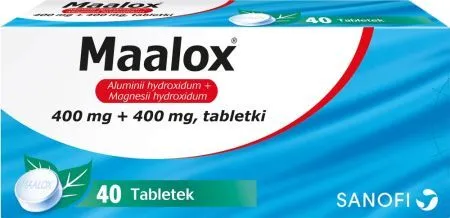
Table of Contents
Package leaflet: Information for the patient
Maalox (400 mg + 400 mg), tablets
Aluminii hydroxidum + Magnesii hydroxidum
Please read the entire leaflet carefully before using the medicine, because
it contains important information for the patient.
This medicine should always be used exactly as described in the patient leaflet or
as recommended by the doctor or pharmacist.
- Keep this leaflet so that you can read it again if necessary.
- If you need advice or further information, please consult your pharmacist.
- If you experience any adverse reactions, including any possible adverse reactions not listed in this leaflet, inform your doctor, pharmacist, or nurse. See section 4.
- If there is no improvement after 7 days, or if you feel worse, contact your doctor.
Table of contents of the leaflet
- What Maalox is and what it is used for
- Important information before taking Maalox
- How to take Maalox
- Possible side effects
- How to store Maalox
- Contents of the package and other information
1. What Maalox is and what it is used for
Maalox is a combination medicine with local action, neutralizing excess hydrochloric acid in gastric juice, with astringent and protective effects on the gastric and duodenal mucosa.
It does not cause excessive neutralization of gastric contents or secondary stimulation of acid secretion.
Maalox is indicated for symptomatic treatment of disorders of the upper gastrointestinal tract associated with hyperacidity:
- gastric dyspepsia,
- gastroesophageal reflux in hiatal hernia,
- indigestion, heartburn due to hyperacidity, and as an adjunct in the treatment of:
- duodenal ulcer,
- gastric ulcer.
2. Important information before using Maalox
When not to use Maalox
- if the patient is allergic to aluminium hydroxide, magnesium hydroxide, or any of the other ingredients of this medicine (listed in section 6),
- if the patient has severe renal impairment (see Warnings and precautions).
Warnings and precautions
Before starting treatment with Maalox, consult your doctor or pharmacist.
Exercise particular caution when using Maalox:
- in patients with renal impairment or undergoing haemodialysis,
- in children under 6 years of age, Maalox should be administered only after consultation with a doctor,
- in elderly patients,
- when using the medicine for longer than 2 weeks or in patients at risk of hypophosphataemia (low serum inorganic phosphate levels), medical advice is recommended.
Children
In young children, the use of magnesium hydroxide may lead to hypermagnesaemia, especially if renal dysfunction or dehydration is present.
Maalox and other medicines
Inform your doctor or pharmacist about all medicines the patient is currently taking or has recently taken, as well as any medicines the patient plans to take, because Maalox may affect the action of certain medicines or certain medicines may affect the action of Maalox.
Specifically:
- Medicines used in the treatment of heart conditions, such as digoxin, quinidine, metoprolol, atenolol, and propranolol
- Medicines used in the treatment of anaemia, such as iron salts
- Medicines used in the treatment of gastric ulcers and reducing gastric acid, such as ranitidine or cimetidine (H2 receptor antagonists)
- Medicines used in the treatment of malaria, such as chloroquine
- Medicines used in the treatment of certain bone disorders, such as bisphosphonates
- Medicines used in the treatment of certain allergic reactions, inflammatory conditions, or abnormal immune responses, such as glucocorticosteroids
- Medicines used in the treatment of kidney disorders, such as citrates
- Medicines used in the treatment of tuberculosis, such as ethambutol, isoniazid
- Medicines used in the treatment of infections, such as fluoroquinolones, lincosamides, ketoconazole, tetracyclines, cephalosporins (cefpodoxime and cefdynir), dolutegravir, elvitegravir, raltegravir (potassium salt), and antiviral combination therapy including tenofovir alafenamide fumarate/emtricitabine/bictegravir (sodium salt), rilpivirine
- Medicines used in the treatment of mental illnesses (psychoses), such as phenothiazines, neuroleptic drugs
- Medicines used in the treatment of elevated potassium levels in the body, such as polystyrene sulfonate
- Medicines used in pain treatment, such as diflunisal, indomethacin
- Medicines used in dentistry, such as sodium fluoride
- Medicines used in the treatment of hypothyroidism, such as levothyroxine
- Medicines used in the treatment of joint pain and abnormal chemical reactions in the body, such as penicillamine
- Medicines used to lower cholesterol levels, such as rosuvastatin
- Medicines used in the treatment of cancers, such as nilotinib, dasatinib (monohydrate form)
- Medicines used in the treatment of blood disorders, such as eltrombopag olamine
- Medicines used in the treatment of pulmonary hypertension (high blood pressure in the lungs), such as riociguat
As a precaution, oral administration of any other medicine and Maalox should be separated by at least 2 hours (in the case of fluoroquinolones – more than 4 hours).
Concomitant use of Maalox with:
- quinidine (used in the treatment of cardiac arrhythmias and prevention thereof) may increase quinidine plasma concentration and lead to overdose
- polystyrene sulfonate (used in the treatment of hyperkalaemia – excessive potassium levels in the blood) reduces the antacid effect of Maalox. Maalox reduces the effectiveness of polystyrene sulfonate. Concurrent use of these medicines increases the risk of metabolic alkalosis in patients with renal impairment and intestinal obstruction.
Magnesium hydroxide and other medicines
Magnesium hydroxide may affect the action of certain medicines or certain medicines may affect the efficacy of magnesium hydroxide. Inform your doctor or pharmacist if the patient is taking:
- salicylates
Aluminium hydroxide and citrates may increase serum aluminium levels, especially in patients with renal impairment.
Maalox with food and drink
Take the medicine after meals.
Pregnancy, breastfeeding and fertility
This medicine may be used during pregnancy only on the advice of a doctor.
Maalox may be used during breastfeeding.
If the patient is pregnant or breastfeeding, suspects she may be pregnant, or is planning to have a child, she should consult her doctor before using this medicine.
Driving and operating machinery
No negative effect of the medicine on the ability to drive and operate machinery has been observed.
Maalox contains sucrose
Maalox contains 245.44 mg of sucrose per tablet.
If the patient has previously been diagnosed with intolerance to certain sugars, the patient should consult a doctor before taking this medicine.
Maalox contains sorbitol
Maalox contains 125 mg of sorbitol per tablet. Sorbitol is a source of fructose.
If the patient (or their child) has previously been diagnosed with intolerance to certain sugars or hereditary fructose intolerance, a rare genetic disorder in which the patient's body cannot break down fructose, the patient should consult a doctor before taking the medicine or giving it to a child.
Maalox contains benzyl alcohol
Maalox contains 0.000072 mg of benzyl alcohol per tablet. Benzyl alcohol may cause allergic reactions. Administration of benzyl alcohol to young children is associated with the risk of serious adverse effects, including respiratory disorders (so-called "gasping syndrome"). Do not administer to neonates (up to 4 weeks of age) without medical advice. Do not administer to young children (under 3 years of age) for longer than one week without medical advice from a doctor or pharmacist.
Pregnant or breastfeeding women should consult their doctor before using this medicine, as large amounts of benzyl alcohol may accumulate in their body and cause adverse effects (so-called metabolic acidosis).
Patients with liver or kidney disease should consult their doctor before using this medicine, as large amounts of benzyl alcohol may accumulate in their body and cause adverse effects (so-called metabolic acidosis).
Maalox contains sodium
The medicine contains less than 1 mmol (23 mg) of sodium per dose, meaning the medicine is considered "sodium-free".
3. How to use Maalox
1-2 tablets should be sucked or chewed after a meal or during an episode of pain.
If you feel the effect of Maalox is too strong or too weak, consult your doctor.
Taking more Maalox than recommended
In case of suspected overdose, seek medical advice immediately.
Missing a dose of Maalox
If you miss a dose, take it as soon as possible, unless it is almost time for the next dose. Do not take a double dose to make up for a missed tablet.
If you have any further questions about the use of this medicine, consult your doctor.
4. Possible adverse reactions
Like all medicines, this medicine can cause adverse reactions, although not everyone experiences them.
Uncommon (less frequent than in 1 out of 100 people): diarrhoea or constipation.
Very rare (less frequent than in 1 out of 10,000 people): nausea, vomiting, or pale-coloured stools may occur.
- Hyper-magnesemia (increased concentration of magnesium in blood serum): including hypermagnesemia observed after long-term use of magnesium hydroxide in patients with impaired kidney function.
Frequency not known (frequency cannot be estimated from the available data):
- Hypersensitivity reactions such as itching, urticaria, angioedema, and anaphylactic reactions
- Hyperaluminaemia (increased aluminium content in body tissues)
- Hypophosphataemia (decreased concentration of inorganic phosphates in blood serum)
- Abdominal pain
Reporting of adverse reactions
If any adverse reactions occur, including any adverse reactions not listed in this leaflet, inform your doctor or pharmacist. Adverse reactions can be reported directly to the Department of Monitoring Adverse Drug Reactions at the Office for Registration of Medicinal Products, Medical Devices and Biocidal Products
Al. Jerozolimskie 181C
02-222 Warsaw
Phone: +48 22 49 21 301
Fax: +48 22 49 21 309
Website: https://smz.ezdrowie.gov.pl
Adverse reactions can also be reported to the marketing authorization holder.
Reporting adverse reactions helps provide more information on the safety of the medicine.
5. How to store Maalox
Store below 25 °C.
Keep the medicine out of sight and reach of children.
Do not use this medicine after the expiry date stated on the packaging.
Medicines should not be disposed of via wastewater or household waste. Ask your pharmacist how to dispose of medicines no longer required. This will help protect the environment.
6. Contents of the pack and other information
What Maalox contains
-
The active substances are:
Aluminium hydroxide 400 mg
Magnesium hydroxide 400 mg -
Other ingredients are:
mannitol, sorbitol, sodium saccharin, peppermint flavour*, magnesium stearate, sucrose, sucrose containing 3% starch.
* peppermint flavour contains benzyl alcohol.
What Maalox looks like and contents of the pack
One pack contains 20 or 40 tablets packed in blisters.
Marketing Authorisation Holder and Manufacturer
Marketing Authorisation Holder
Opella Healthcare Poland Sp. z o.o.
ul. Marcina Kasprzaka 6
01-211 Warsaw
Poland
Manufacturer
Sanofi S.r.l.
S.S. 17 km 22
67019 Scoppito (AQ)
Italy
For further information, please contact:
Opella Healthcare Poland Sp. z o.o.
ul. Marcina Kasprzaka 6
01-211 Warsaw
Poland
tel.: +48 22 280 00 00