Maalox
Poland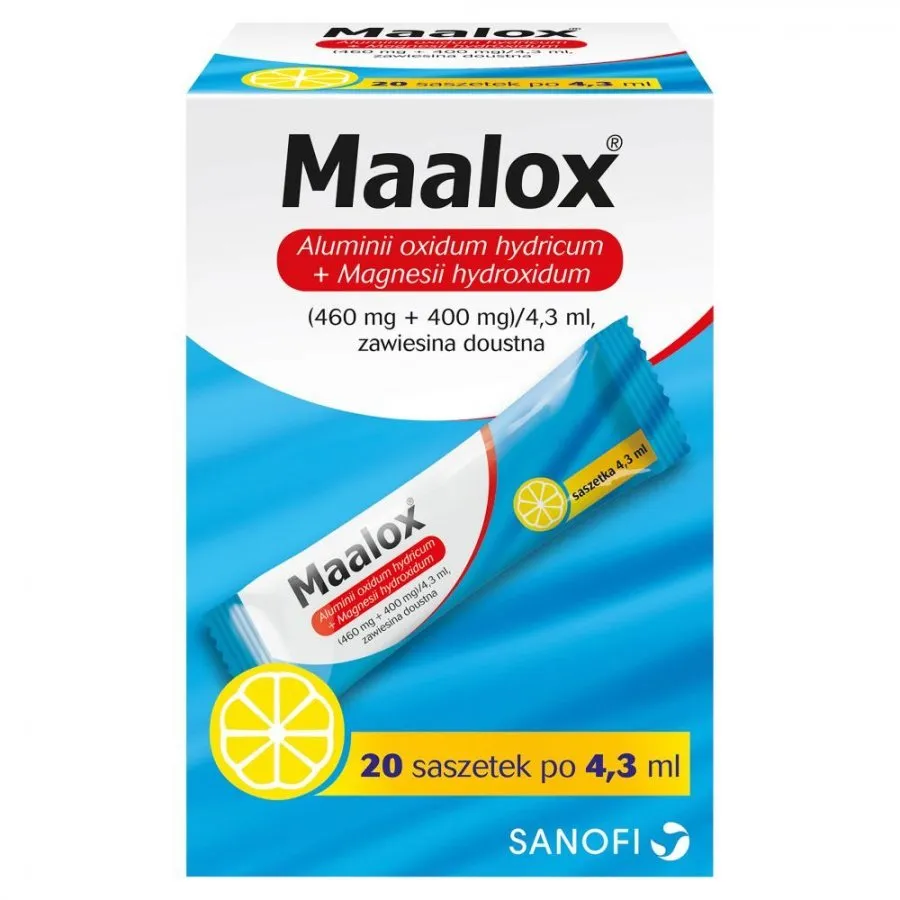
Table of Contents
Package leaflet: Information for the patient
Maalox (460 mg + 400 mg)/4.3 ml, oral suspension
Aluminium hydroxide + Magnesium hydroxide
Please read carefully the entire leaflet before use, as it contains important information for the patient.
This medicine should always be used exactly as described in this patient leaflet or as directed by a physician or pharmacist.
- Keep this leaflet, as you may need to read it again.
- If you need advice or further information, consult your pharmacist.
- If you experience any adverse reactions, including any possible adverse reactions not listed in this leaflet, inform your doctor or pharmacist. See section 4.
- If there is no improvement after 7 days of treatment, or if you feel worse, consult your doctor.
Table of contents
- What Maalox is and what it is used for
- Important information before taking Maalox
- How to take Maalox
- Possible side effects
- How to store Maalox
- Contents of the pack and other information
1. What Maalox is and what it is used for
Maalox is a combination medicine with local action that neutralizes excess hydrochloric acid in gastric juice, has an astringent effect, and protects the mucous membrane of the stomach and duodenum. It does not cause excessive neutralization of gastric contents or secondary stimulation of acid secretion.
Maalox is indicated for symptomatic treatment of disorders of the upper gastrointestinal tract associated with hyperacidity:
- gastric dyspepsia
- gastroesophageal reflux in hiatal hernia
- dyspepsia, heartburn due to hyperacidity, and as adjunctive therapy in the treatment of:
- duodenal ulcer
- gastric ulcer.
2. Important information before using Maalox
When not to use Maalox
- if the patient is allergic to hydrated aluminium oxide, magnesium hydroxide, or any of the other ingredients of this medicine (listed in section 6),
- if the patient has severe renal insufficiency (see Warnings and precautions).
Warnings and precautions
Before starting to take Maalox, discuss this with your doctor or pharmacist.
Exercise special caution when using Maalox:
- if the patient has renal insufficiency or is undergoing hemodialysis,
- in children under 6 years of age, Maalox should be administered only after consultation with a doctor,
- in elderly patients,
- when using the medicine for longer than 2 weeks or in patients at risk of hypophosphatemia (reduced serum inorganic phosphate concentration), medical consultation is recommended.
Children
In small children, the use of magnesium hydroxide may lead to hypermagnesemia, especially if impaired renal function or dehydration is present.
Maalox and other medicines
Inform your doctor or pharmacist about all medicines the patient is currently taking or has recently taken, as well as any medicines the patient plans to take, because Maalox may affect the action of certain medicines or certain medicines may affect the action of Maalox.
Specifically:
- Medicines used in the treatment of heart conditions, such as digoxin, quinidine, metoprolol, atenolol, and propranolol
- Medicines used in the treatment of anaemia, such as iron salts
- Medicines used in the treatment of gastric ulcers and reducing gastric acidity, such as ranitidine or cimetidine (H2 receptor antagonists)
- Medicines used in the treatment of malaria, such as chloroquine
- Medicines used in the treatment of certain bone disorders, such as bisphosphonates
- Medicines used in the treatment of certain allergic reactions, inflammatory reactions, or abnormal immune responses, such as glucocorticosteroids
- Medicines used in the treatment of kidney disorders, such as citrates
- Medicines used in the treatment of tuberculosis, such as ethambutol, isoniazid
- Medicines used in the treatment of infections, such as fluoroquinolones, lincosamides, ketoconazole, tetracyclines, cephalosporins (cefpodoxime and cefdynir), dolutegravir, elvitegravir, raltegravir (as potassium salt), and combined antiviral therapy including tenofovir alafenamide fumarate/emtricitabine/bictegravir (as sodium salt), rilpivirine
- Medicines used in the treatment of mental disorders (psychoses), such as phenothiazines, neuroleptic drugs
- Medicines used in the treatment of elevated potassium levels in the body, such as polystyrene sulfonate
- Medicines used in pain treatment, such as diflunisal, indomethacin
- Medicines used in dentistry, such as sodium fluoride
- Medicines used in the treatment of hypothyroidism, such as levothyroxine
- Medicines used in the treatment of joint pain and abnormal chemical reactions in the body, such as penicillamine
- Medicines used to lower cholesterol levels, such as rosuvastatin
- Medicines used in the treatment of cancers, such as nilotinib, dasatinib (as monohydrate)
- Medicines used in the treatment of blood disorders, such as eltrombopag olamine
- Medicines used in the treatment of pulmonary hypertension (high blood pressure in the lungs), such as riociguat
As a precaution, any oral medicine and antacid should be taken at least 2 hours apart (in the case of fluoroquinolones – more than 4 hours apart).
Concomitant use of Maalox with:
- quinidine (used to treat and prevent cardiac arrhythmias) may increase quinidine plasma concentration and lead to quinidine overdose
- polystyrene sulfonate (used in the treatment of hyperkalemia – excessive potassium levels in the blood) reduces the neutralizing effect of Maalox. Maalox reduces the efficacy of polystyrene sulfonate. Concomitant use of these medicines increases the risk of metabolic alkalosis in patients with renal insufficiency and intestinal obstruction.
Magnesium hydroxide and other medicines
Magnesium hydroxide may affect the action of certain medicines or certain medicines may affect the efficacy of magnesium hydroxide. Inform your doctor or pharmacist if the patient is taking:
- salicylates.
Hydrated aluminium oxide and citrates may cause increased serum aluminium concentration, especially in patients with renal insufficiency.
Maalox with food and drink
Take the medicine after meals.
Pregnancy, breastfeeding, and fertility
This medicine may be used during pregnancy only on the advice of a doctor. Maalox may be continued during breastfeeding.
If the patient is pregnant or breastfeeding, suspects she may be pregnant, or is planning to have a child, she should consult her doctor before using this medicine.
Driving and operating machinery
No negative effect of Maalox on the ability to drive or operate machinery has been observed.
Maalox contains sucrose and sorbitol
If the patient has previously been diagnosed with intolerance to certain sugars, the patient should consult a doctor before taking this medicine.
The medicine contains 140 mg of sorbitol in each sachet.
Sorbitol is a source of fructose. If the patient (or the patient's child) has previously been diagnosed with intolerance to certain sugars or has been diagnosed with hereditary fructose intolerance, a rare genetic disorder in which the patient's body cannot break down fructose, the patient should consult a doctor before taking the medicine or giving it to a child.
3. How to use Maalox
The usual dose is 1-2 sachets taken when experiencing pain, not exceeding 6 doses (12
sachets) per day.
Shake before use.
Use in children
Before using Maalox in children under 6 years of age, consult a doctor.
Accidental overdose of Maalox
If overdose is suspected, seek medical advice immediately.
Missed dose of Maalox
Do not take a double dose to make up for a missed dose.
If you have any further questions regarding the use of this medicine,
consult a doctor.
4. Possible adverse reactions
Like all medicines, this medicine can cause adverse reactions, although not everyone experiences them.
Not frequently (less frequently than in 1 out of 100 people): diarrhoea or constipation.
Very rarely (less frequently than in 1 out of 10,000 people): nausea, vomiting, and pale-coloured stools may occur.
- Hypermagnesaemia (increased magnesium concentration in blood serum): including hypermagnesaemia observed after long-term use of magnesium hydroxide in patients with impaired kidney function.
Frequency unknown (frequency cannot be estimated from available data):
- Hypersensitivity reactions such as itching, urticaria, angioedema, and anaphylactic reactions
- Hyperaluminaemia (increased aluminium content in body tissues)
- Hypophosphataemia (decreased concentration of inorganic phosphates in blood serum)
- Abdominal pain
Reporting of adverse reactions
If any adverse reactions occur, including any adverse reactions not listed in this leaflet, inform your doctor or pharmacist. Adverse reactions can be reported directly to the Department of Monitoring Adverse Drug Reactions of the Office for Registration of Medicinal Products, Medical Devices and Biocidal Products
Al. Jerozolimskie 181C
02-222 Warsaw
Phone: +48 22 49 21 301
Fax: +48 22 49 21 309
Website: https://smz.ezdrowie.gov.pl
Adverse reactions can also be reported to the marketing authorisation holder.
Reporting adverse reactions helps to provide more information on the safety of the medicine.
5. How to store Maalox
There are no special storage instructions for this medicine.
Keep the medicine in a place out of sight and reach of children.
Do not use this medicine after the expiry date stated on the packaging.
Do not use this medicine if you notice any visible signs of deterioration.
Medicines must not be disposed of via wastewater or household waste. Ask your pharmacist how to dispose of medicines no longer in use. This will help protect the environment.
6. Contents of the pack and other information
What Maalox contains
- The active substances are: Aluminum oxide hydrate 460 mg, Magnesium hydroxide 400 mg
- Other excipients: Sucrose solution 64%, sorbitol liquid non-crystallizing, xanthan gum, guar gum, natural lemon tree flavor, sodium chloride, hydrogen peroxide 30%
What Maalox looks like and contents of the pack
Sachets containing 4.3 ml of suspension, packed 20 sachets per carton.
Marketing Authorization Holder and Manufacturer
Marketing Authorization Holder
Opella Healthcare Poland Sp. z o.o.
ul. Bonifraterska 17
00-203 Warsaw
Manufacturer
Opella Healthcare Italy S.r.l.
Viale Europa 11
21040 Origgio (VA)
Italy
A. Nattermann & Cie. GmbH
Nattermannallee 1
50829 - Cologne
Germany
For further information, please contact:
Opella Healthcare Poland Sp. z o.o.
ul. Bonifraterska 17
00-203 Warsaw
tel.: +48 22 280 00 00