Lutrate depot
Poland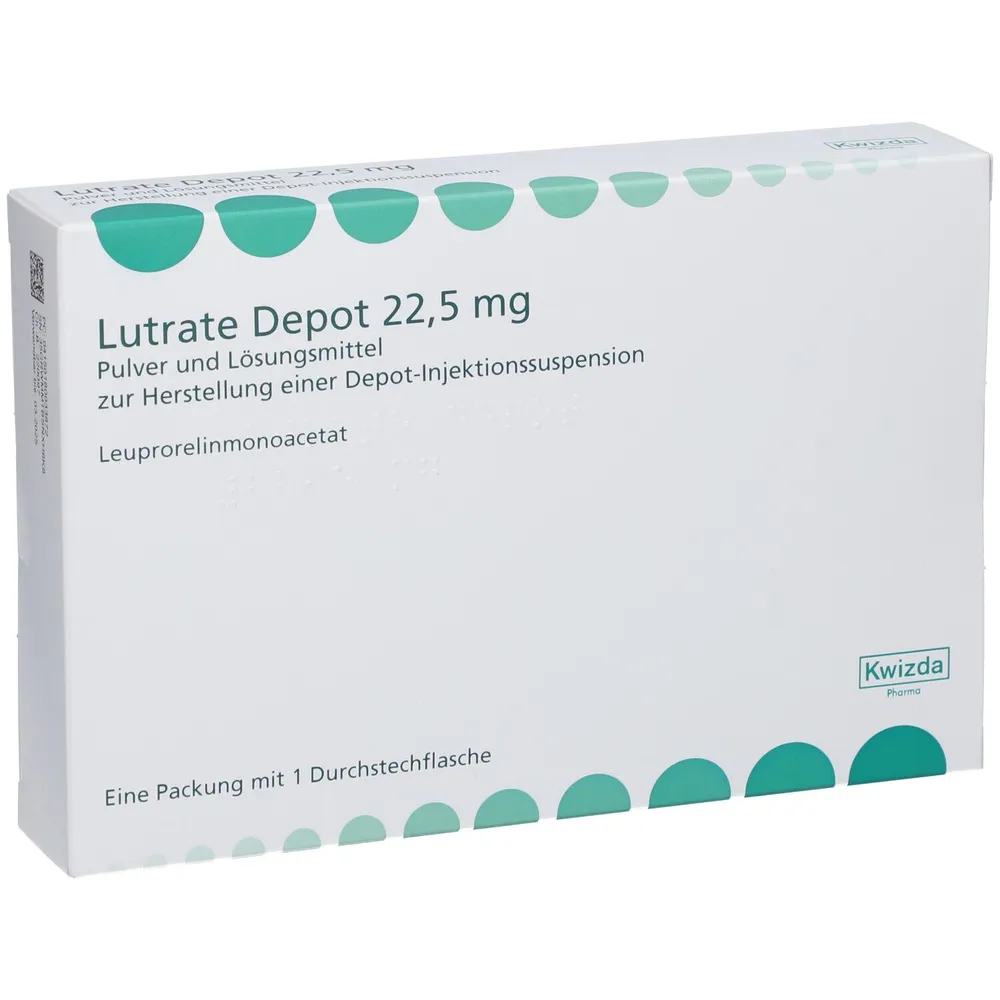
Table of Contents
- Patient Information Leaflet
- 1. What Lutrate Depot is and what it is used for
- 2. Important information before using Lutrate Depot
- 3. How to use Lutrate Depot
- 4. Possible adverse reactions
- 5. How to store Lutrate Depot
- 6. Contents of the package and other information
- Information intended exclusively for medical professionals
Patient Information Leaflet
Lutrate Depot, 22.5 mg, powder and solvent for suspension for injection
prolonged release
Leuprorelinum
Please read all of this leaflet carefully before using this medicine, because it contains important information for you.
- Keep this leaflet, as you may need to read it again.
- If you have any further questions, please consult your doctor or pharmacist.
- This medicine has been prescribed for a specific individual. Do not pass it on to others. It may harm other people, even if their symptoms are the same.
- If you experience any adverse effects, including any not listed in this leaflet, tell your doctor or pharmacist. See section 4.
Table of contents
- What Lutrate Depot is and what it is used for
- Important information before using Lutrate Depot
- How to use Lutrate Depot
- Possible side effects
- How to store Lutrate Depot
- Contents of the pack and other information
1. What Lutrate Depot is and what it is used for
Lutrate Depot is a medicine available as a white powder in a vial, which is converted into a suspension for intramuscular injection. Lutrate Depot contains the active substance leuprorelin (also known as leuprolide), which belongs to a group of medicines called luteinizing hormone-releasing hormone (LHRH) agonists. These medicines reduce the level of the sex hormone testosterone.
Lutrate Depot is prescribed by a doctor for palliative treatment of advanced prostate cancer.
2. Important information before using Lutrate Depot
When not to use Lutrate Depot
- if the patient is allergic to LHRH, LHRH agonists, or any of the other ingredients of this medicine (listed in section 6). Allergic reactions may cause: rash, itching, difficulty breathing, or swelling of the face, throat, lips, or tongue.
- if the patient has undergone surgical removal of the testicles (orchidectomy)
- in women and children
- if the patient has spinal cord compression or spinal metastases, Lutrate Depot should not be used as monotherapy (i.e. as the sole treatment) for prostate cancer
Warnings and precautions
- Before starting treatment with Lutrate Depot, consult a doctor or pharmacist.
- The patient's condition may worsen during the first weeks of treatment, but should improve as treatment continues. Objective and subjective symptoms may include: transient increase in testosterone levels (male sex hormone), hot flushes, bone pain, nervous system disorders (including depression), or difficulty urinating.
- If the patient suspects an allergic reaction (shortness of breath, asthma, rhinitis, facial swelling, urticaria, skin rashes), they should stop taking the medicine and inform their doctor immediately.
- Inform the doctor if the patient is in a risk group or currently has any of the following conditions, as the doctor may then recommend more frequent monitoring:
- unexplained bruising or bleeding, or if the patient generally feels unwell. Although these symptoms are rare, they may indicate changes in the number of red or white blood cells.
- if the patient has a metabolic disorder
- if the patient has heart problems or palpitations
- if the patient has diabetes
- Inform the doctor if the patient has previously had a pituitary adenoma (a benign tumor of the pituitary gland). Cases of pituitary apoplexy (partial necrosis of pituitary gland tissue) have been reported after starting treatment with this type of medicine in patients with pituitary adenoma. Symptoms of pituitary apoplexy may include: sudden headache, diplopia (double vision), visual disturbances or even vision loss, and occasionally altered consciousness.
- Inform the doctor if the patient has bleeding disorders, thrombocytopenia, or is taking anticoagulant medicines. More frequent monitoring of liver function may be necessary, as abnormalities in liver function and cases of jaundice (yellowing of the eyes and skin) have been reported during treatment with leuprorelin.
- During treatment with leuprorelin, vertebral fractures, paralysis, hypotension, and hypertension have been reported.
- Depression, which may be severe, has been observed in patients receiving Lutrate Depot. If depressive mood occurs, the patient should inform their doctor.
- Reduced bone density (bone fragility or thinning) has been reported following the use of leuprorelin. The doctor may consider concomitant use of an antiandrogen during treatment with Lutrate Depot. In such cases, special attention should be paid to signs of thrombophlebitis and other symptoms of blood clotting disorders, as well as edema (in hands, feet, or joints), since the risk of these events increases when antiandrogens are used together with Lutrate Depot.
- If the patient develops spinal cord compression and/or urinary symptoms and/or hematuria (blood in urine), the doctor will initiate, if necessary, additional management to prevent neurological complications (e.g. tingling in hands and feet, paralysis) or urethral obstruction (the tube carrying urine from the bladder to the outside of the body). The patient should have continuous medical supervision during the first weeks of treatment.
- Metabolic changes (e.g. glucose intolerance or worsening of pre-existing diabetes), changes in body weight, and cardiovascular disorders may occur in patients.
- Patients with metabolic or cardiovascular disorders should be monitored during treatment with leuprorelin, especially those with a history of congestive heart failure (a condition in which the heart cannot pump sufficient blood to the body).
- Before using Lutrate Depot, discuss this with a doctor, pharmacist, or nurse if the patient has fatty liver disease.
- Certain blood tests may be necessary during treatment to confirm the effectiveness of Lutrate Depot.
- Decreased libido, hot flushes, and occasionally reduced testicular size and impaired testicular function may occur. Fertility may be restored after completion of treatment with Lutrate Depot.
- Since Lutrate Depot may interfere with the results of certain laboratory tests, the patient should inform any doctor ordering tests that they are taking this medicine.
- Seizures may occur during treatment in patients with a history of seizures, epilepsy, cerebral circulation disorders, central nervous system abnormalities or tumors, and in patients taking medicines that may provoke seizures. Seizures may also occur, although less frequently, in patients not belonging to any of these groups.
- Inform the doctor if the patient has heart or vascular diseases, including cardiac arrhythmias, or if the patient is taking medicines used to treat these conditions. Treatment with Lutrate Depot may exacerbate cardiac rhythm disturbances.
- If the patient experiences severe or recurrent headaches, visual disturbances, or tinnitus (ringing or buzzing in the ears), they should seek immediate medical advice.
- Severe skin reactions, including Stevens-Johnson syndrome (SJS) and toxic epidermal necrolysis (TEN), have been reported with the use of leuprorelin. If any symptoms of severe skin reactions described in section 4 are observed, treatment with leuprorelin should be discontinued immediately and the patient should contact their doctor without delay.
Lutrate Depot with other medicines
Inform the doctor or pharmacist about all medicines the patient is currently taking, has recently taken, or plans to take. These medicines may still be used with Lutrate Depot, but the decision will be made by the doctor.
Lutrate Depot may interfere with the action of certain medicines used for cardiac rhythm disorders (e.g. quinidine, procainamide, amiodarone, and sotalol), or may increase the risk of cardiac rhythm disturbances when used with certain other medicines, such as methadone (used for pain relief or as one of the medicines in opioid addiction treatment), moxifloxacin (an antibiotic), or antipsychotics used in severe psychiatric disorders.
Pregnancy and breastfeeding
Lutrate Depot is not intended for use in women.
This medicine is contraindicated in pregnant women. Its use during pregnancy may result in spontaneous abortion.
Driving and operating machinery
The effect of Lutrate Depot on the ability to drive and operate machinery has not been studied.
Visual disturbances and dizziness may occur during treatment. If these occur, the patient should not drive or operate machinery.
Lutrate Depot contains sodium
This medicine contains less than 1 mmol (23 mg) of sodium per vial, meaning the medicine is considered "sodium-free".
3. How to use Lutrate Depot
Dosage
Lutrate Depot must be administered only by a doctor or nurse, who will also prepare the solution.
Adults, including elderly patients
The recommended dose of Lutrate Depot is one injection every three months. After reconstituting the powder into a suspension, it is given as a single intramuscular injection every three months.
The injection site should be changed regularly.
Lutrate Depot must be administered exclusively by intramuscular injection. Other routes of administration must not be used.
The physician determines the intensity of treatment.
Use in children
Lutrate Depot is not indicated for use in children.
Use of a higher than recommended dose of Lutrate Depot
It is unlikely that a doctor or nurse would be unaware of the correct dosage. However, if a patient suspects having received a higher dose than recommended, they should immediately inform the doctor so appropriate measures can be taken.
Missed dose of Lutrate Depot
It is important not to miss a dose of Lutrate Depot. If a patient forgets an injection, they should contact their doctor as soon as possible to schedule the next injection.
Stopping treatment with Lutrate Depot
Since treatment with Lutrate Depot is long-term, stopping the treatment prematurely may lead to worsening of disease symptoms. Therefore, treatment must not be discontinued early without the physician's consent.
If you have any further questions about the use of this medicine, consult your doctor or pharmacist.
4. Possible adverse reactions
Like all medicines, this medicine can cause adverse reactions, although not everyone experiences them.
You must immediately tell the doctor if the patient experiences: sudden wheezing,
difficulty breathing, swelling of the eyelids, face or lips, rash or itching of the skin
(especially affecting the whole body).
The following adverse reactions have been reported:
Very common (may occur in more than 1 in 10 people):
hot flushes and injection site reactions
Common (may occur in less than 1 in 10 people):
cold sweats, excessive sweating (increased perspiration), itching, fatigue,
insomnia (difficulty falling asleep), decreased libido, dizziness, flushing, nausea,
diarrhea, decreased appetite, erectile dysfunction, weakness (reduced or loss of strength),
bone pain, joint pain and injection site reactions such as: pain, hardening, erythema
(redness of the skin), urinary discomfort, reduced urine flow, frequent need to urinate,
mood changes and depression after long-term use of leuprorelin, changes in liver enzyme activity and increased blood triglyceride levels (increased blood lipid levels), increased blood glucose concentration
Uncommon (may occur in less than 1 in 100 people):
high blood cholesterol levels, sleep disorders, anxiety, taste disturbances, tingling
(skin sensation disorders), headache, somnolence (drowsiness), visual disturbances, pleuritis,
tinnitus (ringing in the ears), abdominal pain, constipation, nodules, erythema, generalized itching,
night sweats, back pain, muscle pain, neck pain, breast pain, pelvic pain, testicular atrophy, testicular disorders, hot sensations, mood changes and depression after short-term use of leuprorelin, changes in blood test results and changes in ECG findings (prolongation of QT interval), and injection site reactions such as: urticaria, feeling of warmth and bleeding
Frequency not known (frequency cannot be estimated from available data):
pneumonia, lung disease, idiopathic intracranial hypertension (increased intracranial pressure around the brain, characterized by headache, double vision and other vision-related symptoms, and ringing or buzzing in one or both ears), red, non-raised, target-shaped or round spots on the trunk, often with blisters in the center, skin peeling, oral, throat, nasal, genital or ocular mucosal ulcers – these severe skin rashes may be preceded by fever and flu-like symptoms (Stevens-Johnson syndrome, toxic epidermal necrolysis), redness of the skin and itchy rash (toxic skin eruptions), skin reaction causing red spots or patches which may resemble a bull's-eye with a dark red center surrounded by lighter red rings (erythema multiforme)
Reporting of adverse reactions
If any adverse effects occur, including any possible adverse effects not listed in this leaflet, consult a doctor or pharmacist. Adverse reactions can be reported directly to the Department of Monitoring Adverse Drug Reactions of the Office for Registration of Medicinal Products, Medical Devices and Biocidal Products, Al. Jerozolimskie 181C, 02-222 Warsaw, tel.: +48 22 49 21 301, fax: +48 22 49 21 309, website: https://smz.ezdrowie.gov.pl
Adverse reactions can also be reported to the marketing authorization holder or its representative in Poland.
Reporting adverse reactions helps provide more information on the safety of this medicine.
5. How to store Lutrate Depot
Your doctor and pharmacist are informed how to store this medicine.
Keep the medicine out of sight and reach of children.
Do not store above 25°C. Do not freeze.
Do not use this medicine after the expiry date stated on the carton, vial, and pre-filled syringe after "EXP". The expiry date on the pre-filled sywringe is the same as that on the vial. The expiry date refers to the last day of the stated month.
Medicines must not be disposed of via wastewater or household waste. Ask your pharmacist how to dispose of medicines no longer required. Such measures help protect the environment.
6. Contents of the package and other information
What Lutrate Depot contains
The active substance is leuprorelin acetate. Each vial contains 22.5 mg of leuprorelin acetate.
The concentration of the reconstituted medicinal product is 11.25 mg/ml.
Other components are:
Powder (vial): poly(lactic acid) (PLA), triethyl citrate, mannitol, sodium carboxymethylcellulose, polysorbate 80
Solvent (in prefilled syringe): mannitol, hydrochloric acid (for pH adjustment), sodium hydroxide (for pH adjustment), water for injections
What Lutrate Depot looks like and contents of the pack
Each pack contains one vial containing 22.5 mg of leuprorelin acetate, one prefilled syringe containing 2 ml of solvent, one connecting device, and one sterile needle with a diameter of 20 G.
Marketing Authorisation Holder
+pharma arzneimittel gmbh
Hafnerstrasse 211
8054 Graz
Austria
Manufacturer
GP-Pharm S.A.
Poligono Industrial Els Vinyets - Els Fogars, Sector 2
Carretera Comarcal C-244, Km. 22
08777 Sant Quintí de Mediona (Barcelona)
Spain
This medicinal product is authorised in the European Economic Area countries under the following names:
Austria Lutrate Depot 22.5 mg Pulver und Lösungsmittel zur Herstellung einer Depot-Injektionssuspension
Bulgaria Лутрат Депо 22,5 mg прах и разтворител за инжекционна суспензия с удължено освобождаване
Czech Republic Lutrate Depot 22.5 mg
Greece Lutrate Depot 22.5 mg Κόνις και διαλύτης για παρασκευή ενεσίμου εναιωρήματος παρατεταμένης αποδέσμευσης
Spain Leuprorelina GP-Pharm Depot Trimestral 22.5 mg polvo y disolvente para suspensión de liberación prolongada inyectable
Germany Lutrate Depot 22.5 mg Pulver und Lösungsmittel zur Herstellung einer Depot-Injektionssuspension
Poland Lutrate Depot
Portugal Lutrate Depot 22.5 mg / 2 ml pó e veículo para suspensão injectável de libertação prolongada
Hungary Politrate Depot 22.5 mg
Italy Politrate
For further information about this medicinal product, please contact the local representative of the Marketing Authorisation Holder in Poland:
+pharma Polska sp. z o.o.
ul. Podgórska 34
31-536 Kraków, Poland
tel.: +48 12 262 32 36
e-mail: [email protected]
Information intended exclusively for medical professionals
Preparation of the injection product
IMPORTANT: Read carefully before administering the product ("Instructions for use" are also
included on the tray containing the product components). Aseptic techniques must be used during the drug preparation procedure.
Use only the diluent provided in the kit.
After mixing, the product should be administered immediately as a single intramuscular injection.
The medicine is intended for single use only. Any unused suspension must be discarded.
Check the kit contents and ensure that all components listed in the package leaflet are present.
The package contains:
- 1 (one) vial of Lutrate Depot containing 22.5 mg of leuprorelin acetate as a powder for suspension for injection
- 1 (one) ampoule-syringe containing solvent for preparation of the suspension (0.8% mannitol solution for injection)
- 1 (one) connecting device required for reconstituting the medicine together with 1 (one) sterile single-use needle.
1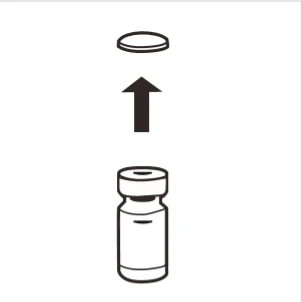 | Completely remove the flip-off cap from the top of the vial to expose the rubber stopper. Ensure that no parts of the flip-off cap remain on the vial. |
2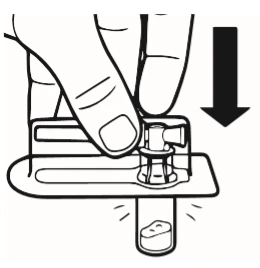 | Place the vial upright on a flat surface. Peel off the foil backing from the blister containing the vial connector (MIXJECT), but do not remove the connector from the blister. Firmly place the blister with the vial connector onto the top of the vial, piercing the vial while it remains in an upright position. Press gently until you feel the connector snap into place. |
3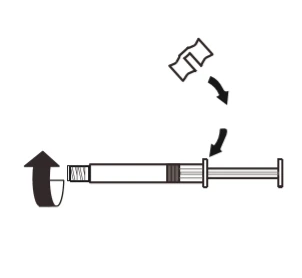 | Attach the white handle to the syringe and lock it in place. Unscrew the rubber syringe cap counterclockwise. Then remove the blister packaging from the MIXJECT system. |
4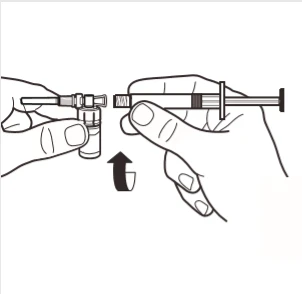 | Screw the syringe into the ampoule adapter by turning it clockwise into the side opening of the adapter. Carefully tighten the syringe until it stops turning to ensure a secure, leak-proof connection. |
5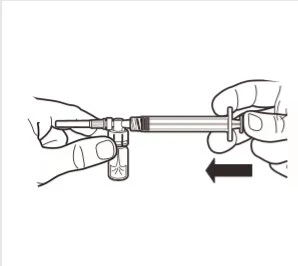 | Holding the syringe and ampoule in an upright position, slowly depress the plunger to transfer the entire amount of diluent into the ampoule. |
6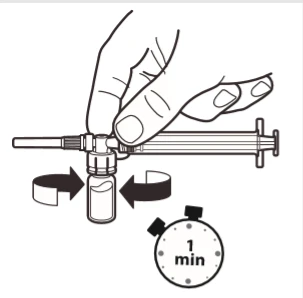 | With the syringe still attached to the ampoule, gently shake the ampoule for approximately one minute until a uniform milky white suspension is obtained. To avoid separation of the suspension, proceed immediately to the next steps. |
7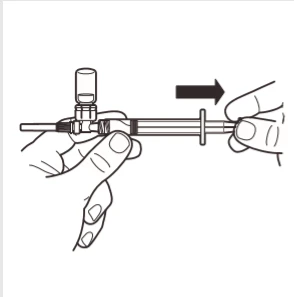 | Turn the MIXJECT system upside down so that the ampoule is on top. Firmly hold the MIXJECT system by the syringe and slowly pull back the plunger to draw the prepared product into the syringe. Some product may clump or adhere to the ampoule walls. This is a normal phenomenon. |
8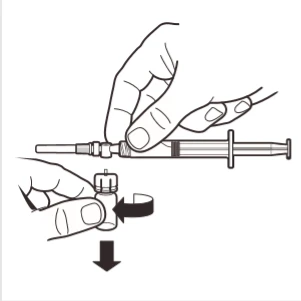 | Detach the ampoule adapter from the MIXJECT system connected to the syringe: firmly hold the syringe and rotate the ampoule (holding the plastic adapter cap) clockwise. |
9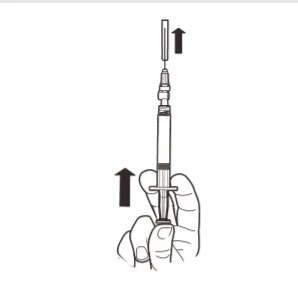 | Hold the syringe UPRIGHT. With the other hand, pull the needle cap upward. Press the plunger to expel air from the syringe. The syringe containing the product is now ready for immediate administration. |
10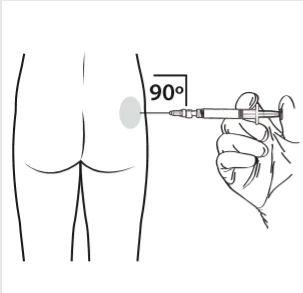 | Administer the intramuscular injection by inserting the needle at a 90-degree angle into the gluteal area. Ensure that the entire dose is injected. Injection sites should be rotated. |
Instructions for use
Lutrate ® Depot - instructions for use
Read carefully before administering the product.
Prepare for use immediately before administration as a single intramuscular injection.
Use only the diluent supplied with the pack.
The product is intended for single injection use only.
Any unused suspension should be discarded.
1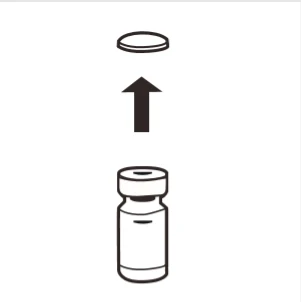 | Completely remove the flip-off cap from the top of the vial to expose the rubber stopper. Make sure no parts of the flip-off cap remain on the vial. |
2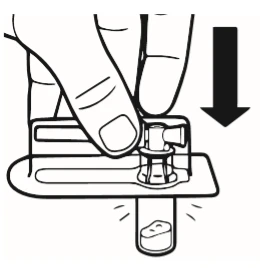 | Place the vial upright on a flat surface. Peel off the foil seal from the blister containing the vial connector (MIXJECT). Do not remove the vial connector from the blister. Place the blister with the vial connector firmly onto the top of the vial, piercing the vial while it is in an upright position. Press gently until you feel the connector snap into place. |
3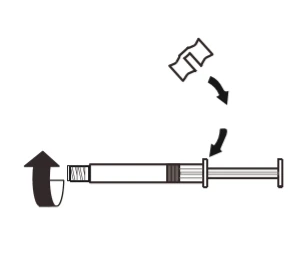 | Attach the white handle to the syringe and lock it in place. Unscrew the rubber syringe cap counterclockwise. Then remove the blister packaging from the MIXJECT system. |
4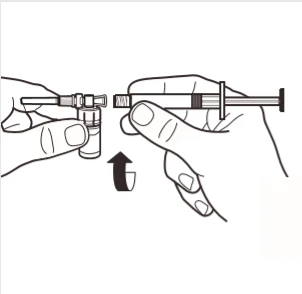 | Connect the syringe to the vial adapter by screwing it clockwise into the side opening of the adapter. Carefully tighten the syringe until it stops turning to ensure a secure, leak-proof connection. |
5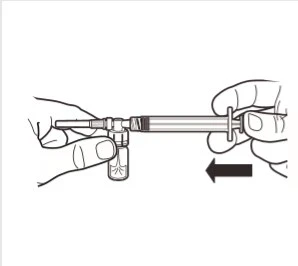 | Holding the syringe and vial in an upright position, slowly depress the plunger to transfer the entire amount of diluent into the vial. |
6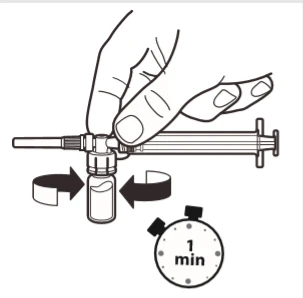 | With the syringe still attached to the vial, gently shake the vial for approximately one minute until a uniform milky white suspension is obtained. To prevent separation of the suspension, proceed immediately to the next steps. |
7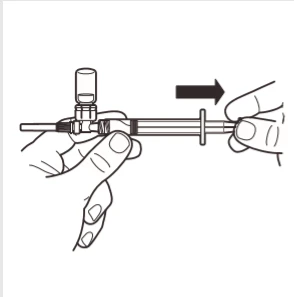 | Turn the MIXJECT system upside down so that the vial is on top. Firmly hold the MIXJECT system by the syringe and slowly pull back the plunger to draw the prepared solution into the syringe. Some product may clump or adhere to the vial walls. This is normal. |
8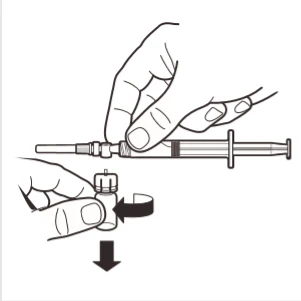 | Detach the vial adapter from the MIXJECT system connected to the syringe: firmly hold the syringe and rotate the vial (holding the plastic adapter cap) clockwise. |
9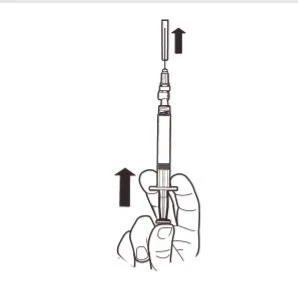 | Hold the syringe UPRIGHT. With the other hand, pull the needle cap upward. Press the plunger to expel air from the syringe. The syringe containing the product is now ready for immediate administration. |
10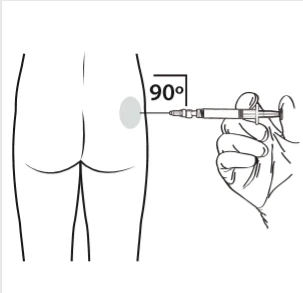 | Administer the intramuscular injection by inserting the needle at a 90-degree angle into the gluteal area. Ensure that the entire dose is injected. Injection sites should be rotated. |