Lutenyl
Poland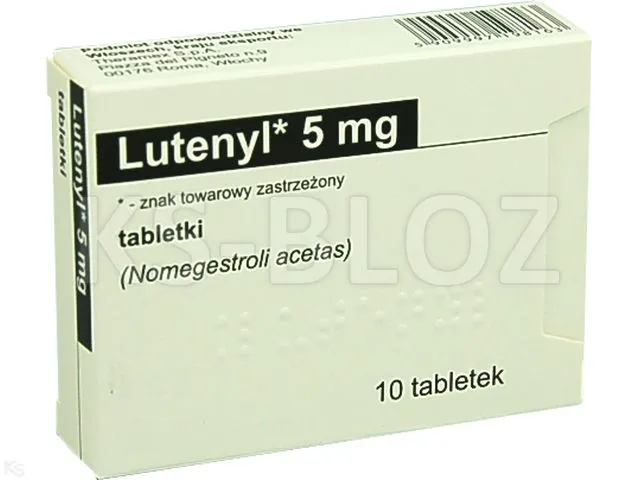
Table of Contents
Patient Information Leaflet
Warning! Keep this leaflet! The information on the immediate packaging is in a foreign language.
Lutenyl
5 mg, tablets
Nomegestrol acetate
Please read the following information carefully before using this medicine, as it contains
important information for the patient.
- Keep this leaflet, as you may need to read it again.
- If you have any questions, consult your doctor or pharmacist.
- This medicine has been prescribed for a specific individual. Do not pass it on to others. It may harm someone else, even if their symptoms are the same.
- If you experience any adverse reactions, including those not listed in this leaflet, inform your doctor or pharmacist. See section 4.
Table of Contents:
- What Lutenyl is and what it is used for
- Important information before taking Lutenyl
- How to take Lutenyl
- Possible side effects
- How to store Lutenyl
- Contents of the pack and other information
1. What Lutenyl is and what it is used for
Nomegestrol, the active substance in Lutenyl, is a 19-norprogesterone derivative used to compensate for progesterone deficiency. Nomegestrol has an affinity for progesterone receptors 2.5 times greater than that of the natural hormone.
When administered from day 5 to day 25 of the cycle at a dose of 5 mg daily, Lutenyl suppresses ovulation, reduces gonadotropin secretion, lowers circulating estrogen levels, and prevents the secretion of natural progesterone. Pharmacological and clinical studies have not demonstrated complete anti-gonadotropic effects in all patients.
Nomegestrol acetate is rapidly absorbed, with peak plasma concentration occurring 2 hours after administration. The elimination half-life is approximately 40 hours. It is primarily excreted via the intestines and partially through urine.
Indications
In premenopausal women: menstrual disorders associated with reduced or absent progesterone secretion:
- Menstrual disorders: scanty or infrequent menstruation, excessively frequent menstruation, absence of menstruation,
- Functional uterine bleeding: uterine hemorrhages, menstrual hemorrhages, including bleeding associated with fibroids,
- Premenstrual or menstruation-related symptoms: primary dysmenorrhea, premenstrual syndrome, cyclical breast pain.
In postmenopausal women: Lutenyl is used in combination with estrogens (artificially induced cycles) as part of hormone replacement therapy.
2. Important information before using Lutenyl
When not to use Lutenyl:
- if the patient is allergic to nomegestrol or any of the other ingredients of this medicine (listed in section 6),
- if the patient has undiagnosed vaginal bleeding,
- if the patient has a history of idiopathic venous thrombosis or active venous thromboembolic disease (deep vein thrombosis, pulmonary embolism),
- if the patient has active or past arterial thromboembolic diseases (e.g. myocardial infarction),
- if the patient currently or previously had severe liver function disorders,
- if the patient has had meningioma (usually a benign tumour located between the brain and the skull) currently or in the past. In case of doubt, consult a physician. If any of the above conditions occurs for the first time during treatment with Lutenyl, the medicine must be discontinued immediately and a physician should be consulted without delay.
Warnings and precautions
Before starting treatment with Lutenyl, discuss this with your doctor or pharmacist.
- In clinical studies, complete anti-gonadotropic activity was not demonstrated in all patients;
- Before starting treatment, especially in indications such as painful menstruation, uterine bleeding, or absence of menstruation, the physician must determine whether the condition is functional;
- Before initiating treatment, breast and uterine (cervix and endometrium) cancer should be ruled out;
- The medicine should be discontinued if any of the following occur: any visual disturbances (double vision, acute visual impairment, retinal vascular lesions), development of thrombosis or embolism, severe or unusual headache;
- Caution should be exercised in patients with cardiovascular diseases, unstable hypertension, diabetes, or porphyria.
Special precautions
The patient should have regular check-ups.
If the patient notices any changes in the breasts during treatment, the physician should be informed immediately.
If any of the conditions listed below is currently present, occurred in the past, and/or worsened during pregnancy or previous hormonal treatment, the patient should remain under close medical supervision. It should be considered that these conditions may recur or worsen during treatment with Lutenyl; in particular:
- uterine fibroids,
- endometriosis (endometrial tissue growth outside the uterine cavity) or previous cases of excessive endometrial proliferation (endometrial hyperplasia),
- history of thromboembolic disorders or presence of risk factors increasing their likelihood (see below),
- risk factors for estrogen-dependent cancer, e.g. first-degree relative with breast cancer,
- hypertension,
- liver function disorders (e.g. hepatic adenoma),
- diabetes, regardless of whether vascular complications are present,
- gallstones,
- migraine or severe headaches,
- systemic autoimmune disease affecting multiple organs (systemic lupus erythematosus),
- epilepsy,
- asthma,
- otosclerosis (ear disease leading to hearing loss).
The physician will decide whether to discontinue treatment if contraindications occur, as well as in the following situations:
- yellowing of the skin or whites of the eyes (jaundice) or worsening liver function disorders,
- significant increase in blood pressure,
- new onset of migraine-type headache,
- pregnancy.
HRT and malignant tumours
Endometrial hyperplasia and endometrial cancer
Unopposed oestrogen HRT increases the risk of endometrial hyperplasia and endometrial cancer. The addition of a progestogen for at least 12 days per cycle protects against this increased risk.
In women with an intact uterus who do not use HRT, an average of 5 out of 1000 women aged 50 to 65 years will be diagnosed with endometrial cancer.
In women aged 50 to 65 years with an intact uterus who use oestrogen-only HRT, 10 to 60 out of 1000 women will be diagnosed with endometrial cancer (i.e. 5 to 55 additional cases), depending on the dose and duration of treatment.
Breast cancer
Studies indicate that combined oestrogen-progestagen HRT, and possibly oestrogen-only HRT, increases the risk of breast cancer. The additional risk depends on the duration of HRT use. The additional risk becomes apparent within a few years. However, it returns to baseline within a few years (at most 5) after stopping treatment.
In women who used oestrogen-only HRT for 5 years, no or only a slight increase in breast cancer risk has been observed.
Comparison
Among women aged 50–79 years who do not use HRT, an average of 16 out of 1000 will be diagnosed with invasive breast cancer over 5 years. Among women aged 50–79 years who use combined oestrogen-progestagen HRT for 5 years, there will be 16 to 25 cases per 1000 women on therapy (i.e. 0 to 9 additional cases).
Breast examinations should be performed regularly. Consult a doctor if any of the following changes occur:
- skin dimpling,
- nipple changes,
- any visible or palpable lumps.
Ovarian cancer
According to some epidemiological studies, long-term (at least 5–10 years) use of oestrogen alone in women after hysterectomy may increase the risk of ovarian cancer. The risk associated with long-term use of combined oestrogen-progestagen therapy is unknown.
Meningioma
Cases of meningioma (usually benign brain tumours) have been reported during nomegestrol use (see section 4 "Possible side effects"). If a patient is diagnosed with meningioma, nomegestrol treatment should be discontinued.
Effect of HRT on the heart and circulation
Venous thrombosis (blood clots)
The risk of venous thrombosis is approximately 2–3 times higher in women using HRT, especially during the first year of treatment, compared to women not using HRT. If a clot reaches the lungs, it may cause chest pain, shortness of breath, fainting, or even death.
The likelihood of venous thrombosis increases with age and in the presence of the following factors. Inform your doctor if any of the following apply:
- the patient cannot walk for prolonged periods due to major surgery, trauma, or illness,
- the patient is obese (Body Mass Index, BMI >30 kg/m²),
- the patient has blood clotting disorders requiring long-term anticoagulant therapy,
- if the patient or any close relative has had a blood clot in the leg, lung, or another organ,
- the patient is pregnant or in the postpartum period,
- the patient has systemic lupus erythematosus (SLE).
Coronary heart disease
There is no scientific evidence confirming a beneficial effect of HRT on the circulatory system. Two large clinical trials on combined (oestrogen and progestagen) therapy suggest a possible increased risk of cardiovascular disease during the first year of treatment and no overall benefit. Data on the impact of other HRT medications on cardiovascular morbidity and mortality are limited.
Stroke
The risk of ischaemic stroke is higher in women using HRT than in those who do not. The number of additional stroke cases due to HRT use increases with age.
Comparison
Among women aged 50–59 years not using HRT, an average of 3 out of 1000 will likely experience a stroke within 5 years. Among women aged 50–59 years using HRT, there will be an additional 0 to 3 cases per 1000 women on therapy over 5 years.
Other conditions
Due to fluid retention caused by oestrogens, patients with renal or cardiac dysfunction require special monitoring. Women with severe renal impairment require close observation due to the potential increase in circulating nomegestrol levels.
Women with previously diagnosed hypertriglyceridaemia undergoing hormonal replacement therapy require special monitoring. Isolated reports suggest a possible risk of pancreatitis following significant increases in triglyceride levels in women treated with oestrogen alone.
Oestrogens increase levels of thyroid-binding globulin (TBG; thyroid binding globulin), leading to increased total circulating thyroxine. Levels of other binding proteins in blood may also increase, such as corticosteroid-binding globulin and sex hormone-binding globulin, resulting in increased circulating levels of corticosteroids and sex hormones, respectively. Levels of free or biologically active hormones remain unchanged.
Other plasma proteins may also be increased (angiotensinogen/renin substrate, alpha-1 antitrypsin, ceruloplasmin).
HRT does not improve cognitive function (memory loss, perceptual disturbances, attention deficits).
Evidence suggests an increased risk of dementia in women who initiate HRT after age 65.
Lutenyl and other medicines
Inform your doctor or pharmacist about any other medicines currently or recently taken, or those planned for use.
This includes the following medicines:
- medicines used to treat epilepsy (e.g. phenobarbital, phenytoin, carbamazepine),
- medicines used to treat tuberculosis (e.g. rifampicin, rifabutin).
Pregnancy and breastfeeding
If the patient is pregnant or breastfeeding, suspects she may be pregnant, or is planning a pregnancy, she should consult her doctor or pharmacist before using this medicine. Lutenyl must not be used during pregnancy or breastfeeding.
Driving and operating machinery
This medicine may cause visual disturbances (see sections 2 and 4).
Lutenyl contains monohydrate lactose
This medicine should not be used in patients with rare hereditary galactose intolerance, Lapp-type lactase deficiency, or glucose-galactose malabsorption syndrome.
3. How to use Lutenyl
This medicine should always be used according to the doctor's instructions. If in doubt, consult
your doctor or pharmacist.
Recommended dose
The usual daily dose is 5 mg (1 tablet).
In premenopausal women, treatment usually lasts 10 days, from day 16 to day 25 of the cycle.
In postmenopausal women, the dosage depends on the type of hormone replacement therapy used.
In continuous hormone replacement therapy, Lutenyl is administered for 12 to 14 days each cycle.
The dose and duration of treatment may be adjusted depending on the indication and the patient's response to the medicine.
Taking a higher than recommended dose of Lutenyl
Cases of overdose have not been reported so far.
4. Possible adverse reactions
Like all medicinal products, this medicine can cause adverse reactions, although not everyone experiences them.
The frequency of occurrence is defined according to the following categories:
very common (≥1/10); common (≥1/100 to <1/10); uncommon (≥1/1000 to <1/100); rare
(≥1/10,000 to <1/1000); very rare (<1/10,000); frequency not known (cannot be estimated from
the available data).
Metabolism and nutrition disorders
Frequency not known: weight gain
Psychiatric disorders
Frequency not known: insomnia
Eye disorders
Frequency not known: visual disturbances
Vascular disorders
Frequency not known: worsening of venous insufficiency in the lower limbs; occurrence of venous thromboembolism
Gastrointestinal disorders
Frequency not known: gastrointestinal disturbances
Skin and subcutaneous tissue disorders
Frequency not known: skin allergies, excessive hair growth
Reproductive system and breast disorders
Frequency not known: menstrual disorders, absence of menstruation, intermenstrual bleeding
General disorders and administration site conditions
Frequency not known: fever
After prolonged use (several years) of nomegestrol at doses of 3.75 mg or 5 mg per day and higher, meningiomas have been reported (see section "When not to take nomegestrol").
Reporting of adverse reactions
If any adverse reactions occur, including any adverse reactions not listed in this leaflet, inform your doctor or pharmacist. Adverse reactions can be reported directly to the Department of Monitoring Adverse Drug Reactions of the Office for Registration of Medicinal Products, Medical Devices and Biocidal Products, Al. Jerozolimskie 181C, 02-222 Warsaw, phone: +48 22 4921 301, fax: +48 22 4921 309, website: https://smz.ezdrowie.gov.pl.
Reporting adverse reactions helps to provide more information on the safety of the medicine.
5. How to store Lutenyl
Keep this medicine out of sight and reach of children.
Do not use this medicine after the expiry date stated on the packaging. The expiry date refers to the last day of the stated month.
Store below 25°C.
Medicines must not be disposed of via wastewater or household waste. Ask your pharmacist how to dispose of medicines no longer in use. This will help protect the environment.
6. Contents of the package and other information
What Lutenyl contains
1 tablet contains:
active substance: 5 mg nomegestrol acetate;
excipients: monohydrate lactose, microcrystalline cellulose, glycerol palmitostearate, colloidal anhydrous silica.
What Lutenyl looks like and contents of the pack
Lutenyl is in the form of elongated tablets, scored on one side.
The pack contains 10 tablets.
For more detailed information, please contact the marketing authorisation holder or the parallel importer.
Marketing Authorisation Holder in France, country of export:
THERAMEX Ireland Limited
3rd Floor, Kilmore House
Park Lane, Spencer Dock
Dublin 1 D01 YE64
Ireland
Manufacturer:
Delpharm Lille S.A.S, Parc d’Activites Roubaix-Est, 22 rue de Toufflers - CS 50070, 59452 Lys-Lez-Lannoy, France
Laboratoires Macors, rue des Caillottes, ZI Plaine des Isles, 89000 Auxerre, France
Teva Pharmaceuticals Europe B.V., Swensweg 5, 2031 GA Haarlem, Netherlands
Parallel Importer:
InPharm Sp. z o.o.
ul. Strumykowa 28/11
03-138 Warsaw
Poland
Repackaged in:
InPharm Sp. z o.o. Services sp. k.
ul. Chełmżyńska 249
04-458 Warsaw
Poland
Marketing Authorisation Numbers in France, country of export: 326 611-2
326 612-9
Marketing Authorisation Number for parallel import: 564/12