Luteina
Poland
Table of Contents
Package leaflet: Information for the user
Luteina, 200 mg, vaginal tablets
Progesteronum
Please read all of this leaflet carefully before using this medicine because it contains
important information for you.
- Keep this leaflet. You may need to read it again.
- If you have any further questions, please ask your doctor or pharmacist.
- This medicine has been prescribed for you personally. Do not pass it on to others. It may harm someone else even if their symptoms are the same as yours.
- If you experience any side effects, including any not listed in this leaflet, please inform your doctor or pharmacist. See section 4.
Contents of the leaflet
- What Luteina is and what it is used for
- Important information before using Luteina
- How to use Luteina
- Possible side effects
- How to store Luteina
- Contents of the pack and other information
1. What Luteina is and what it is used for
Luteina is a medicine containing progesterone, a naturally occurring female sex hormone produced synthetically.
In the body, progesterone acts through specific receptors located, among others, in the uterus, mammary glands, central nervous system, and pituitary gland.
The most important effects of progesterone on reproductive organs include: enabling ovulation, transformation of the uterine mucosa (endometrium) to allow implantation of the fertilized egg, inhibition of excessive endometrial proliferation caused by estrogens, and cyclic changes in the epithelium of the fallopian tubes, cervix, and vagina. Progesterone and estrogens also act on the mammary gland, stimulating growth of glands and ductal epithelium and enabling lactation.
Progesterone is a hormone essential for proper preparation of the endometrium for embryo implantation and for maintaining pregnancy throughout its duration: it suppresses spontaneous contractile activity of the pregnant uterus, inhibits the mother's immune response to fetal antigens, serves as a basic substance for the production of fetal hormones, and initiates labor.
Indications for use of Luteina:
- In vitro fertilization (IVF).
- Prevention of endometrial hyperplasia in women receiving estrogens (e.g., in hormone replacement therapy).
- Prevention of preterm birth in singleton pregnancies in certain women [with a short cervix (in ultrasound examination, cervical length at mid-second trimester ≤ 25 mm) and (or) with a history of spontaneous preterm births].
- Treatment of recurrent and threatened miscarriages.
2. Important information before using Luteina
When not to use Luteina:
- If the patient is allergic to progesterone or any of the other ingredients of this medicine (listed in section 6);
- If the patient has experienced vaginal bleeding of unknown cause;
- If the patient has severe liver failure;
- If the patient has a liver tumour;
- If the patient has or is suspected of having a breast or genital organ tumour;
- If the patient has active venous thrombosis (blood clots), e.g. in the limbs (deep vein thrombosis) or in the lungs (pulmonary embolism), or if such types of blood clots have occurred in the past;
- If the patient is at risk of intracranial haemorrhage;
- If the patient has a rare inherited blood disorder called porphyria;
- If a miscarriage has occurred and there is suspicion that some tissue remains in the uterus, or if pregnancy is developing outside the uterus.
Warnings and precautions
Before starting treatment with Luteina, discuss this with your doctor.
This medicine, when used as directed, does not have contraceptive effects.
Before starting hormone replacement therapy during menopause (and subsequently at regular annual intervals), a medical examination of the breasts and pelvic organs should be performed. Inform your doctor if:
- The patient has a history of venous thrombosis (venous blood clots);
- The patient experiences uterine bleeding. The patient should stop taking this medicine if:
- Any visual disturbances occur (e.g. visual field defects, double vision, retinal vascular lesions);
- Blood clots occur (venous thromboembolic disease or thrombosis);
- Severe headaches develop.
If the patient does not have a menstrual period during treatment, pregnancy should be ruled out.
During treatment, the endometrium (uterine lining) may undergo excessive growth (endometrial hyperplasia), or existing hyperplasia may worsen.
If unexpected bleeding or spotting occurs during long-term treatment, at the end of treatment, or after treatment has ended and persists, contact your doctor.
Children and adolescents
There is insufficient data on the safety and efficacy of Luteina in children and adolescents.
Luteina and other medicines
Inform your doctor about all medicines currently used, recently used, or planned for use.
Some medicines may affect the action of Luteina:
- Barbiturates used for sleep disorders or anxiety treatment;
- Medicines used for epilepsy (carbamazepine, phenytoin);
- Certain antibiotics (ampicillins, tetracyclines, rifampicin);
- Phenylbutazone (an anti-inflammatory medicine);
- Spironolactone (a diuretic);
- Certain antifungal medicines (ketoconazole, griseofulvin).
Similarly, Luteina may affect the action of certain medicines used in diabetes treatment.
Herbal products containing St. John's wort ( Hypericum perforatum ) may reduce the effectiveness of Luteina.
Luteina may enhance the effect of cyclosporine.
Pregnancy and breastfeeding
Pregnancy
- If the patient is pregnant, suspects she may be pregnant, or plans to become pregnant, she should consult a doctor or pharmacist before using this medicine.
Breastfeeding
- Women who are breastfeeding should not use this medicine.
Fertility
- This medicine may be used in women who have difficulty becoming pregnant. This medicine has no harmful effect on fertility.
- Before starting this medicine, discuss it with your doctor.
Driving and operating machinery
Luteina administered vaginally does not affect the ability to drive or operate machinery. However, if adverse effects such as drowsiness, concentration disturbances, or dizziness occur, driving and operating machinery are not recommended (see section 4).
3. How to use Luteina
This medicine should always be used as directed by the physician. In case of any doubts, consult
your doctor or pharmacist.
The dosage of progesterone should always be individually determined based on the indication and
therapeutic response. For doses other than 200 mg, vaginal tablets with strengths of 50 mg and 100 mg
are available.
In in vitro fertilization programs, 200–400 mg of progesterone should be administered vaginally
twice daily.
Treatment should continue until day 77 after embryo transfer.
Discontinuation of therapy should be done by gradually reducing the dose.
The dose providing adequate endometrial protection is 200 mg daily for 12 days or 100–200 mg daily
in continuous daily therapy.
For prevention of preterm birth in women with a singleton pregnancy, a short cervix, and/or a history
of spontaneous preterm birth, 200 mg of progesterone should be administered vaginally once daily
from approximately week 20 of pregnancy until week 34 of pregnancy.
For threatened and recurrent miscarriage, 200–400 mg of progesterone should be administered
vaginally twice daily.
In cases of recurrent miscarriage, progesterone supplementation should be initiated in the cycle in
which pregnancy is planned. Treatment should be continued continuously until weeks 18–22 of
pregnancy.
In cases of threatened miscarriage, progesterone should be administered continuously until week 22
of pregnancy.
Instructions for use
Luteina should be inserted into the vagina using the provided applicator. The applicator supplied with
Luteina is intended for personal use only and is designated exclusively for one patient.
In pregnant women, due to the softened cervix, it is recommended to insert Luteina with the index
finger.
INSTRUCTIONS FOR USING THE APPLICATOR
- Unpack the applicator.
- Place one Luteina tablet into the designated space at the end of the applicator. The tablet should fit snugly against the walls of the applicator and must not fall out.
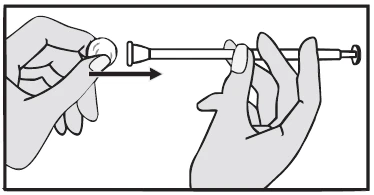
- The applicator may be inserted into the vagina in a comfortable position (standing, sitting, or lying on the back with knees bent).
- Insert the applicator into the vagina until the convex mark, palpable under the finger, aligns with the level of the labia majora.
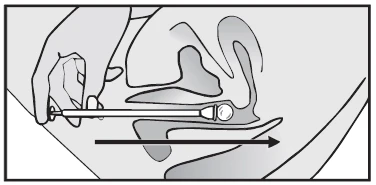
- Press the plunger of the applicator to release the tablet.
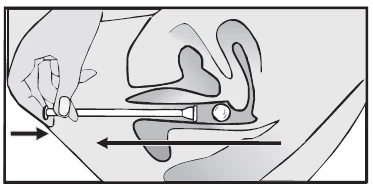
- Then withdraw the applicator, rinse it thoroughly under warm running water, and dry it with a soft towel.
- Keep the applicator for reuse.
Use of a higher than recommended dose of Luteina
In case of an overdose of this medicine, contact your doctor or pharmacist immediately.
Symptoms of overdose may include drowsiness, dizziness, and depression.
These symptoms usually resolve spontaneously after dose reduction. Consult your doctor promptly.
Missed dose of Luteina
If a dose is missed, take it as soon as you remember, unless it is almost time for the next dose. Do not
take a double dose to make up for a missed dose.
Discontinuation of Luteina
If you have any further questions about the use of this medicine, consult your doctor or pharmacist.
4. Possible adverse effects
Like all medicines, this medicine can cause adverse effects, although not everyone will experience them.
You must stop taking this medicine immediately if the patient experiences:
- stroke, blood clots or internal bleeding in the brain,
- blood clots in the leg or pelvic veins,
- sudden severe headaches,
- vision disturbances,
- yellowing of the skin or whites of the eyes (jaundice).
The following adverse effects are common (occur in 1 out of 10 patients):
- headaches,
- bloating,
- abdominal pain,
- nausea,
- uterine cramps.
The following adverse effects are uncommon (occur in 1 out of 100 patients):
- dizziness,
- drowsiness,
- diarrhoea,
- constipation,
- urticaria (allergic rash),
- rash,
- vulvar and vaginal disorders (e.g. vaginal discomfort, burning sensation, discharge, dryness and bleeding),
- vaginal fungal infection,
- breast disorders (e.g. breast pain, breast swelling, breast tenderness),
- genital itching,
- peripheral oedema (swelling due to fluid accumulation).
The following adverse effects have been observed after marketing of vaginal preparations containing progesterone.
Frequency is unknown (cannot be estimated from available data):
- fatigue,
- vomiting,
- hypersensitivity reactions.
Reporting of adverse effects
If any adverse effects occur, including any adverse effects not listed in the leaflet, inform a doctor or pharmacist. Adverse effects can be reported directly to the Department of Monitoring of Adverse Drug Reactions at the Office for Registration of Medicinal Products, Medical Devices and Biocidal Products, Al. Jerozolimskie 181C, 02-222 Warsaw, tel.: +48 22 49 21 301, fax: +48 22 49 21 309, website: https://smz.ezdrowie.gov.pl
Adverse effects can also be reported directly to the marketing authorisation holder.
Reporting adverse effects helps to provide more information on the safety of this medicine.
5. How to store Luteina
Store below 30°C.
Keep the medicine out of sight and reach of children.
Do not use this medicine after the expiry date stated on the packaging. The expiry date refers to the last day of the month indicated.
Medicines must not be disposed of via wastewater or household waste. Ask your pharmacist how to dispose of medicines no longer required. This will help protect the environment.
6. Contents of the package and other information
What Luteina contains
- The active substance is progesterone. Each tablet contains 200 mg of progesterone.
- The other ingredients are: monohydrate lactose, pregelatinized corn starch, sodium croscarmellose, hypromellose, monohydrate citric acid, magnesium stearate, anhydrous colloidal silicon dioxide.
What Luteina looks like and contents of the pack
White or off-white, round vaginal tablet.
Blister pack containing 10 vaginal tablets.
The carton contains 3 blisters (30 vaginal tablets) or 6 blisters (60 vaginal tablets) and one applicator marked "vaginal applicator 200".
Marketing Authorisation Holder and Manufacturer
Adamed Pharma S.A.
Pieńków, ul. M. Adamkiewicza 6A
05-152 Czosnów
tel.: +48 22 732 77 00