Luminalum unia
Poland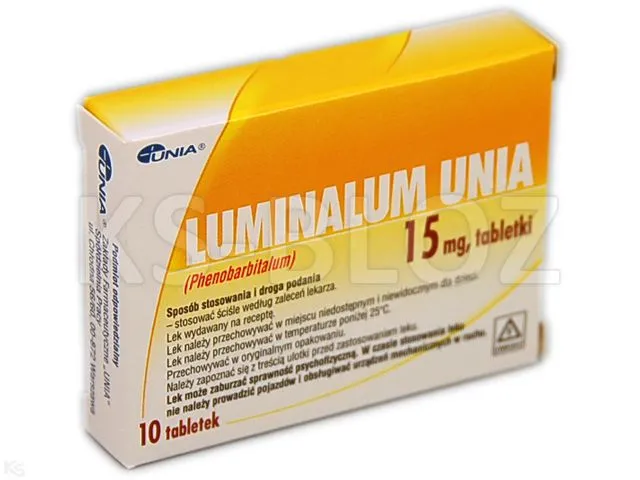
Table of Contents
Package leaflet: Information for the user
Luminalum UNIA
15 mg, tablets
Phenobarbitalum
Please read carefully the entire leaflet before taking the medicine, as it contains
important information for the patient.
- Keep this leaflet, so that you can read it again if necessary.
- If you have any doubts, please consult your doctor or pharmacist.
- This medicine has been prescribed for a specific individual. Do not pass it on to others. The medicine may harm another person, even if their symptoms are the same.
- If the patient experiences any adverse reactions, including any adverse reactions not listed in this leaflet, they should inform their doctor or pharmacist. See section 4.
Table of contents of the leaflet
- What Luminalum UNIA is and what it is used for
- Important information before taking Luminalum UNIA
- How to take Luminalum UNIA
- Possible side effects
- How to store Luminalum UNIA
- Contents of the pack and other information
1. What Luminalum UNIA is and what it is used for
Luminalum UNIA contains the active substance phenobarbital, which exerts a depressant effect on the central nervous system. Depending on the dose, the medicine has sedative, hypnotic, and anticonvulsant properties.
Indications for use:
- Epilepsy – partial and generalized tonic-clonic seizures.
2. Important information before taking Luminalum UNIA
When not to take Luminalum UNIA
- if the patient is allergic to phenobarbital or to other barbituric acid derivatives, or to any of the other ingredients of this medicine (listed in section 6);
- if the patient has respiratory insufficiency;
- if the patient has severe liver insufficiency;
- if the patient is in hepatic coma;
- if the patient has porphyria (a disease characterized by abnormal heme production – a component of hemoglobin);
- if the patient has alcoholic disease;
- if the patient has acute poisoning with central nervous system depressants;
- if the patient is breastfeeding.
Warnings and precautions
Luminalum UNIA should be used with caution:
- if the patient has bronchial asthma or other diseases causing breathlessness, airway constriction, or respiratory insufficiency, as phenobarbital may worsen breathlessness symptoms;
- if the patient has depression with suicidal tendencies;
- if the patient abuses drugs;
- if the patient has cerebral circulatory disorders;
- if the patient has severe anemia;
- if the patient has hyperkinesia (increased motor excitability);
- if the patient has hyperthyroidism;
- if the patient has acute or chronic pain (possible masking of significant symptoms);
- if the patient has diabetes;
- if the patient has adrenal insufficiency;
- if the patient is debilitated, as during treatment agitation, depression, confusion, or disorientation may occur (see section 4: Possible side effects);
- if the patient has impaired liver or kidney function. In such patients, the doctor may reduce the dose of the medicine.
Life-threatening skin reactions (Stevens-Johnson syndrome,
toxic epidermal necrolysis, or DRESS syndrome) have been reported during treatment,
initially appearing as reddish spots or round skin lesions, often with blisters on the trunk. Additionally,
ulceration of the oral cavity, throat, nose, genital organs, and conjunctiva may occur (symptoms may also include
red and swollen eyes).
These potentially life-threatening skin symptoms are often accompanied by flu-like symptoms.
Initially mild skin rash may progress to extensive blisters or skin peeling.
Therefore, skin reactions should be monitored during treatment. If a rash or other
skin reactions occur, treatment should be discontinued and a doctor should be contacted immediately. The highest risk of occurrence is during the first weeks of treatment.
If the patient develops Stevens-Johnson syndrome, toxic epidermal necrolysis, or
DRESS syndrome after taking a medicine containing phenobarbital, such medicine must never
be used again in this patient.
If the patient develops a rash or the above-mentioned skin symptoms, treatment with
phenobarbital must be discontinued and medical advice should be sought immediately, informing the doctor about the use of this medicine.
In case of long-term treatment in children, rickets prophylaxis with vitamin D
(1200 to 2000 IU/day) or vitamin D should be initiated.
Phenobarbital use may lead to psychological and physical dependence. Abrupt
discontinuation of this medicine may cause withdrawal symptoms (see section: Discontinuing
Luminalum UNIA).
Long-term use of phenobarbital may reduce its effectiveness.
In children and elderly patients (over 65 years of age), phenobarbital may cause paradoxical reactions (see section 4: Possible side effects).
Phenobarbital affects the results of laboratory tests (see section: Luminalum UNIA and other medicines).
Children under 2 years of age
Use of Luminalum UNIA in children under 2 years of age is contraindicated (due to the risk of tablet choking).
Luminalum UNIA and other medicines
Inform your doctor or pharmacist about all medicines currently or recently taken, as well as any medicines planned for use.
Luminalum UNIA reduces the effectiveness of the following medicines:
- doxycycline (an antibiotic used to treat bacterial infections);
- metronidazole (a medicine used to treat infections caused by certain bacteria and protozoa);
- theophylline (a medicine used to treat bronchial asthma);
- quinidine (a medicine used to treat heart rhythm disorders);
- corticosteroids (steroids used to treat, among others, rheumatic disease);
- cyclosporine (a medicine used in organ transplant patients);
- paracetamol (a medicine used to relieve pain and reduce fever);
- phenylbutazone (a medicine used to treat, among others, ankylosing spondylitis and rheumatoid arthritis);
- griseofulvin (an antibiotic used to treat fungal infections);
- itraconazole (a medicine used to treat fungal infections);
- levothyroxine (a medicine used to treat hypothyroidism);
- oral anticoagulants (used to reduce blood clotting, e.g., warfarin);
- oral estrogen-containing contraceptives (a change in contraception method may be necessary);
- tricyclic antidepressants (used to treat depression);
- digoxin (a medicine used to treat heart failure and heart rhythm disorders);
- haloperidol (a medicine used to treat psychiatric disorders, including schizophrenia).
Particular caution is required when using Luminalum UNIA together with any of the following medicines:
- phenothiazine and thioxanthene derivatives (medicines used to treat psychiatric disorders, including schizophrenia), as they increase the risk of seizures; therefore, the doctor should adjust the phenobarbital dose;
- chlorpromazine (a psychotropic medicine used to treat schizophrenia), as Luminalum UNIA reduces its effectiveness;
- primidone (a medicine used to treat epilepsy), as it may enhance the sedative effect of phenobarbital or increase the likelihood of adverse effects (e.g., seizure type may change). When phenobarbital and primidone are used concomitantly, primidone dose reduction may be necessary;
- carbamazepine or succinic acid derivatives (medicines used to treat epilepsy); the doctor should monitor blood levels of carbamazepine and succinic acid derivatives;
- valproic acid (a medicine used to treat epilepsy), as it enhances the effect of phenobarbital;
- phenytoin (a medicine used to treat epilepsy), as phenobarbital alters (increases or decreases) its blood concentration;
- hydantoin (a medicine used to treat epilepsy), as adverse effects may occur; therefore, the doctor should closely monitor its blood concentration;
- rifampicin (an antibiotic used to treat tuberculosis or certain other infections) – may reduce phenobarbital blood concentration; therefore, the doctor should adjust phenobarbital doses;
- MAO inhibitors (medicines used to treat depression), as they prolong the effect of phenobarbital;
- calcium channel blockers (medicines used to treat hypertension), as phenobarbital may enhance their blood pressure-lowering effect;
- guanethidine (a medicine used to treat hypertension), as phenobarbital may worsen symptoms of orthostatic hypotension (dizziness or fainting when rising from sitting or lying position);
- vitamin D, as phenobarbital reduces its blood concentration; therefore, in patients receiving long-term phenobarbital, especially children, rickets prophylaxis should be initiated, and vitamin D supplementation (1200 to 2000 IU/day) or vitamin D is recommended;
- long-term use of phenobarbital before administration of anesthetics (e.g., halothane, enflurane, methoxyflurane) may cause liver damage, and when methoxyflurane is used, there is an additional risk of kidney damage;
- maprotiline (a medicine used to treat depression) – when used in high doses, may reduce the antiepileptic effect of Luminalum UNIA;
- ketamine (a medicine used for preoperative anesthesia), especially when administered in high doses, increases the risk of hypotension – significant drop in blood pressure and (or) respiratory depression – slowed and shallow breathing, apnea, and death due to asphyxiation;
- carbonic anhydrase inhibitors (medicines used to treat glaucoma, e.g., acetazolamide) may cause osteopenia (reduced bone mass). If symptoms of osteopenia occur, the doctor should discontinue carbonic anhydrase inhibitors and initiate appropriate treatment.
Phenobarbital enhances the effect of the following medicines:
- hypnotics;
- sedatives;
- opioid analgesics (strong painkillers, e.g., morphine);
- sedative antihistamines (medicines used to treat, among others, allergies);
- methotrexate (a medicine used to treat certain cancers and rheumatoid arthritis).
Alcohol intensifies the central nervous system depressant effect of phenobarbital.
Phenobarbital affects the results of certain laboratory tests:
- may reduce absorption of Co-labeled cyanocobalamin;
- may reduce response to metyrapone (due to increased metyrapone metabolism);
- false-positive response to phentolamine may occur;
- blood bilirubin concentration may decrease (due to activation of glucuronyltransferase,
the enzyme responsible for bilirubin conjugation).
Luminalum UNIA and alcohol
Do not consume any alcoholic beverages during treatment with this medicine. Alcohol intensifies the effect of Luminalum UNIA.
Pregnancy and breastfeeding
If the patient is pregnant or breastfeeding, suspects she may be pregnant, or plans to have a child, she should consult a doctor or pharmacist before using this medicine.
Pregnancy
Phenobarbital taken during pregnancy may cause serious congenital malformations and may affect the child's development. Congenital malformations reported in studies include cleft lip (split upper lip) and cleft palate (split upper palate), as well as heart defects. Other congenital malformations reported include developmental abnormalities of the penis (hypospadias), smaller than normal head size, facial, nail, and finger abnormalities. If a patient takes phenobarbital during pregnancy, the risk of giving birth to a child with congenital malformations requiring treatment is higher than in other women. In the general population, the baseline risk of serious developmental defects is 2–3%. In women taking phenobarbital, this risk is approximately three times higher.
Newborns born to mothers who used phenobarbital during pregnancy may also be at increased risk of being smaller than expected.
Neurodevelopmental disorders (developmental delays due to brain development disorders) have been reported in children exposed to phenobarbital during pregnancy. Research findings on the risk of neurodevelopmental disorders remain inconsistent.
Phenobarbital should not be used during pregnancy unless other medicines are ineffective.
In case of pregnancy, consult a doctor immediately. The doctor should discuss the potential impact of phenobarbital on the unborn child and carefully weigh the risks and benefits of treatment. Do not discontinue phenobarbital without consulting a doctor, as abrupt discontinuation may increase the risk of seizures, which could harm the patient and her unborn child.
If a woman took phenobarbital during the third trimester of pregnancy, the newborn should be monitored for potential disorders such as seizures, excessive crying, muscle weakness, and feeding difficulties.
Women of childbearing potential, contraception
Women of childbearing potential should use effective contraception during phenobarbital treatment and for two months after its discontinuation. Phenobarbital may affect the effectiveness of hormonal contraceptives, such as birth control pills, and reduce their efficacy in preventing pregnancy. Consult a doctor, who will discuss the most appropriate type of contraception to use during phenobarbital treatment.
If a patient is a woman of childbearing potential and plans pregnancy, she should consult a doctor before discontinuing contraception and before becoming pregnant, to discuss changing to alternative appropriate treatment methods to avoid exposing the unborn child to phenobarbital.
Phenobarbital used in the third trimester of pregnancy may cause physical dependence, withdrawal symptoms, and bleeding in the newborn.
Luminalum UNIA must not be used during breastfeeding, as the medicine passes into breast milk.
Driving and operating machinery
Luminalum UNIA may cause drowsiness and prolong reaction time; therefore, driving vehicles and operating machinery should be avoided during treatment.
Luminalum UNIA contains monohydrate lactose and sodium
If the patient has previously been diagnosed with intolerance to certain sugars, the patient should consult a doctor before taking this medicine.
The medicine contains less than 1 mmol (23 mg) of sodium per tablet, meaning the medicine is considered "sodium-free".
3. How to take Luminalum UNIA
This medicine should always be taken according to the doctor's instructions. If in doubt, consult your
doctor or pharmacist.
Luminalum UNIA may be taken independently of meals.
Recommended dosage
The dosage is individually determined by the doctor for each patient (to achieve a blood concentration
within the range of 15 to 40 micrograms per mL).
Adults
the usual dose is 60 mg (4 tablets) to 200 mg once daily. The medicine should be taken at night.
If the daily dose exceeds 100 mg, the doctor may prescribe Luminalum UNIA 100 mg tablets.
Children over 2 years of age
if able to swallow tablets: 1 mg to 6 mg per kg body weight per day, as a single dose or divided doses.
Use in children under 2 years of age
Do not use in children under 2 years of age due to the risk of choking.
Taking more Luminalum UNIA than recommended
If more medicine than recommended has been taken, contact a doctor immediately.
Symptoms of acute overdose:
- severe confusion (see section 4: Possible side effects);
- weakness or loss of reflexes;
- marked drowsiness;
- fever, lowered body temperature;
- breathing difficulties;
- bradycardia (slowed heart rate);
- slurred speech;
- staggering;
- unusual eye movements;
- marked weakness.
Symptoms of severe overdose:
- Cheyne-Stokes respiration (irregular breathing – shallow and slowed, or even apnea alternating with hyperventilation – very deep breathing);
- absence of reflexes;
- tachycardia (rapid heartbeat);
- coma;
- shock syndrome may occur, characterized by apnea, circulatory collapse, respiratory arrest leading to death.
Symptoms of chronic overdose:
- severe confusion;
- persistent irritability;
- impaired judgment;
- sleep disturbances.
Missing a dose of Luminalum UNIA
If a dose is missed, take the medicine as soon as possible. If it is almost time for the next dose, skip the missed dose. Take the next dose at the usual time.
Do not take a double dose to make up for a missed dose.
Stopping Luminalum UNIA treatment
The medicine should be discontinued gradually. Abruptly stopping Luminalum UNIA may cause withdrawal symptoms such as:
- delirium (delirium tremens);
- tremor, seizures;
- insomnia, nightmares;
- irritability;
- death.
If you have any further questions about the use of this medicine, consult your doctor or pharmacist.
4. Possible adverse reactions
Like all medicines, this medicine can cause adverse reactions, although not everyone will experience them.
- Symptoms requiring immediate contact with a doctor:
Uncommon adverse reactions (may occur in up to 1 in 100 patients):
- confusion (disturbances in consciousness and disorientation in time, place, situation or self);
- depression (excessive sadness), especially in elderly patients (over 65 years of age) or debilitated individuals;
- paradoxical reactions (anxiety, restlessness, aggressive behaviour), especially in children, elderly patients or debilitated individuals.
Rare adverse reactions (may occur in up to 1 in 1,000 patients):
- agranulocytosis (marked decrease in granulocytes - a type of white blood cells, leading to increased susceptibility to infections);
- allergic reactions (rash or hives, eyelid, facial or lip swelling, wheezing or shortness of breath, especially in patients with asthma, hives, angioedema);
- exfoliative dermatitis (fever, red, thickened or peeling skin);
- hallucinations (perception of non-existent objects or people);
- hypotension (reduced blood pressure);
- megaloblastic anaemia (manifested by weakness, easy fatigue, pallor of skin and mucous membranes, headache, dizziness, loss of taste sensation, burning tongue, diarrhoea or constipation);
- Stevens-Johnson syndrome (blisters on the skin and/or mucous membranes which rupture and turn into painful sores (erosions); often accompanied by fever, muscle and joint pain);
- thrombocytopenia (reduced number of platelets - increased risk of bleeding and bruising).
Very rare adverse reactions (may occur in up to 1 in 10,000 patients):
- potentially life-threatening skin rashes: Stevens-Johnson syndrome and toxic epidermal necrolysis (see section 2).
Frequency not known (cannot be estimated from available data):
-
life-threatening skin rashes have been reported (drug reaction with eosinophilia and systemic symptoms) (see section 2).
-
Symptoms occurring with long-term use of phenobarbital:
-
liver damage (yellowing of the whites of the eyes or skin);
-
osteopenia (reduced bone mass);
-
rickets (a chronic disease caused by vitamin D deficiency, leading to bone deformities. Symptoms include bone pain and tenderness, loss of appetite, muscle weakness, unexplained weight loss).
-
Symptoms requiring contact with a doctor only if they persist or are bothersome:
Common adverse reactions (may occur in up to 1 in 10 patients):
- impaired balance;
- dizziness or feeling of emptiness in the head;
- drowsiness;
- sensations similar to those after alcohol intoxication.
Uncommon adverse reactions (may occur in up to 1 in 100 patients):
-
anxiety or nervousness;
-
constipation;
-
mental clouding;
-
headache;
-
irritability;
-
nausea or vomiting;
-
nightmares or sleep disturbances.
-
Symptoms requiring contact with a doctor, occurring after discontinuation of phenobarbital treatment:
Moderate symptoms, appearing within 8 to 12 hours:
- anxiety;
- muscle twitching, hand tremor;
- weakness;
- dizziness;
- visual disturbances;
- nausea, vomiting;
- sleep disturbances, increased dream activity or nightmares;
- orthostatic hypotension (dizziness or fainting when rising from a sitting or lying position).
Severe symptoms, appearing within 16 hours and lasting up to 5 days:
- seizures;
- hallucinations.
There have been reports of bone disorders including osteopenia, osteoporosis ("thinning" of bones) and fractures. Patients should contact a doctor or pharmacist if undergoing long-term antiepileptic therapy, suffering from osteoporosis or taking steroids.
Reporting of adverse reactions
If any adverse reactions occur, including any not listed in this leaflet, inform your doctor, pharmacist or nurse. Adverse reactions can be reported directly to the Department of Monitoring Adverse Drug Reactions of the Office for Registration of Medicinal Products, Medical Devices and Biocidal Products
Al. Jerozolimskie 181C, 02-222 Warsaw
Tel: +48 22 49 21 301, Fax: +48 22 49 21 309
Website: https://smz.ezdrowie.gov.pl
Adverse reactions can also be reported to the responsible entity.
Reporting adverse reactions helps to provide more information on the safety of the medicine.
5. How to store Luminalum Unia
Keep this medicine out of sight and reach of children.
Store below 25 °C. Keep in the original packaging.
Do not use this medicine after the expiry date stated on the packaging. The expiry date refers to the last day of the stated month.
Medicines must not be disposed of via wastewater or household waste. Ask your pharmacist how to dispose of medicines no longer required. These measures will help protect the environment.
6. Contents of the pack and other information
What Luminalum UNIA contains
- The active substance is phenobarbital. Each tablet contains 15 mg of phenobarbital.
- Other ingredients are: monohydrate lactose; gelatin; magnesium stearate; talc; potato starch; sodium carboxymethyl starch.
What Luminalum UNIA looks like and contents of the pack
Tablets are packed in Al/PCW foil blisters.
The medicinal product pack contains 10 white, flat, biconvex tablets without chips or stains
(1 blister) placed together with the package leaflet in a cardboard box.
Marketing Authorisation Holder and Manufacturer
Zakłady Farmaceutyczne „UNIA” Spółdzielnia Pracy
Chłodna 56/60, 00-872 Warsaw
Phone: 22 620 90 81 ext. 190, Fax: 22 654 92 40
e-mail: [email protected]
The package leaflet content for Luminalum UNIA is available in the Audio Leaflet system via a nationwide, free telephone number: 800 706 848.