Lortanda
Poland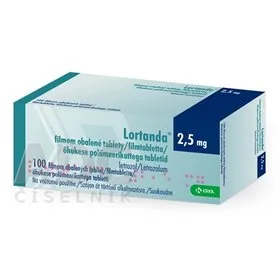
Table of Contents
Package leaflet: Information for the patient
Lortanda, 2.5 mg, film-coated tablets
Letrozole
Please read all of this leaflet carefully before taking this medicine, because it contains
important information for you.
- Keep this leaflet, as you may need to read it again.
- If you have any further questions, please ask your doctor or pharmacist.
- This medicine has been prescribed for a specific individual. Do not pass it on to others. It may harm other people, even if their symptoms are the same.
- If you experience any adverse reactions, including any not listed in this leaflet, inform your doctor or pharmacist. See section 4.
Table of contents
- What Lortanda is and what it is used for
- Important information before taking Lortanda
- How to take Lortanda
- Possible side effects
- How to store Lortanda
- Contents of the pack and other information
1. What Lortanda is and what it is used for
What Lortanda is and how it works
Lortanda contains an active substance called letrozole. It belongs to a group of medicines known as
aromatase inhibitors. It is a hormonal (endocrine) medicine indicated for the treatment of breast cancer.
The growth of breast cancer is often stimulated by estrogens, which are female sex hormones.
Lortanda reduces the amount of estrogen by inhibiting the activity of an enzyme (aromatase) involved in estrogen production, and therefore may inhibit the growth of estrogen-dependent breast cancer.
As a result of this action, cancer cells stop growing or grow more slowly and (or) stop spreading to other parts of the body.
What Lortanda is used for
Lortanda is used to treat breast cancer in postmenopausal women, i.e. after menstruation has stopped.
The medicine is used to prevent recurrence of breast cancer. It may be used as initial treatment before breast cancer surgery when immediate surgery is not indicated, or as initial treatment after breast cancer surgery, or following 5 years of tamoxifen therapy.
Lortanda is also used to prevent the spread of breast cancer to other parts of the body in patients with advanced disease.
If you have any questions regarding how Lortanda works or why it has been prescribed, please consult your doctor.
2. Important information before using Lortanda
Follow your doctor's advice. Your doctor's recommendations may differ from
those presented in this leaflet.
When not to use Lortanda
- if the patient is allergic to letrozole or any of the other ingredients of this medicine (listed in section 6),
- if the patient is still menstruating, i.e. is premenopausal,
- during pregnancy,
- during breastfeeding.
Do not use Lortanda if any of the above apply to the patient – consult your doctor.
Warnings and precautions
Before using Lortanda, consult your doctor or pharmacist:
- if the patient has severe kidney disease,
- if the patient has severe liver disease,
- if the patient has previously experienced osteoporosis or bone fractures (see also "Monitoring during treatment with Lortanda" in section 3). If any of the above conditions apply, inform your doctor. Your doctor will take this into account during treatment with Lortanda.
Letrozole may cause inflammation or damage to tendons (see section 4). If the patient
experiences pain or swelling in a tendon, the affected area should be rested and the patient should contact their doctor.
Children and adolescents (under 18 years of age)
This medicine should not be used in children and adolescents.
Elderly patients (aged 65 years and older)
Lortanda may be used at the same dosage in patients aged 65 years and older as in other adults.
Lortanda and other medicines
Inform your doctor or pharmacist about all medicines the patient is currently taking or has recently taken, as well as any medicines the patient plans to take.
Pregnancy, breastfeeding and fertility
- Lortanda should only be used in postmenopausal women; however, the doctor should discuss the use of effective contraceptive methods with the patient, as there remains a possibility of becoming pregnant during treatment with Lortanda.
- Lortanda must not be used during pregnancy or breastfeeding, as the medicine may harm the unborn or nursing child.
Driving and using machines
If dizziness, fatigue, drowsiness or general malaise occurs, the patient should not drive, operate machinery or use tools until her condition returns to normal.
Lortanda contains monohydrate lactose and sodium
If the patient has previously been diagnosed with intolerance to certain sugars, she should consult her doctor before taking this medicine.
This medicine contains less than 1 mmol (23 mg) of sodium per tablet, meaning that the medicine is considered "sodium-free".
3. How to use Lortanda
Lortanda should always be used as directed by the doctor or pharmacist. If in doubt, consult your doctor or pharmacist.
The recommended dose of Lortanda is 1 tablet once daily. Taking the tablet at the same time each day will help you remember to take it.
Lortanda may be taken with food or independently of meals. Swallow the tablet whole with a glass of water or another liquid.
How long to use Lortanda
Lortanda should be taken daily for as long as your doctor has prescribed. You may need to take this medicine for several months or even years. If you have any questions about the duration of treatment, speak with your doctor.
Monitoring during treatment with Lortanda
Lortanda should be taken under strict medical supervision. Your doctor will regularly monitor your condition to ensure the treatment is effective.
Lortanda may cause reduced bone density or loss of bone mass (osteoporosis) due to decreased estrogen levels in the body. Your doctor may order bone density measurements (a method of monitoring osteoporosis) before, during, and after treatment.
Overdose of Lortanda
If you take more Lortanda than prescribed, or if someone else takes the medicine, go immediately to a doctor or hospital. Show the medicine package. Treatment may be necessary.
Missed dose of Lortanda
- If approximately 2–3 hours or less remain before the next dose is due, skip the missed dose and take the next dose at the scheduled time.
- Otherwise, take the missed dose as soon as possible, then take the next dose at the scheduled time.
- Do not take a double dose to make up for a missed dose.
Stopping Lortanda treatment
Do not stop taking Lortanda without consulting your doctor. See also the section "How long to use Lortanda".
If you have any further questions about the use of this medicine, consult your doctor or pharmacist.
4. Possible adverse reactions
Like all medicines, this medicine can cause adverse reactions, although not everyone will experience them.
Most adverse reactions are mild to moderate in intensity and usually resolve after a few days or weeks of treatment.
Some of these reactions, such as hot flushes, hair loss or vaginal bleeding, may be caused by low estrogen levels in the body.
Do not be alarmed after reading the adverse reactions listed below. It is possible that none of them will occur.
Some adverse reactions may be serious
Rare or uncommon adverse reactions (i.e. may occur in 1 to 100 out of 10,000 patients)
- weakness, paralysis or loss of sensation in any part of the body (especially in hands and feet), loss of coordination, nausea, speech or breathing difficulties (symptoms of brain disorders, e.g. stroke),
- sudden, severe chest pain (symptom of heart disorders),
- difficulty breathing, chest pain, fainting, rapid heartbeat, skin cyanosis or sudden pain in the hand, leg or foot (symptoms of blood clot formation),
- swelling and redness along a vein that is extremely tender and painful to touch,
- high fever, chills or oral ulceration due to infections (lack of white blood cells),
- severe, persistent blurred vision. If any of the symptoms listed above occur, contact your doctor immediately.
If any of the symptoms listed below occur during treatment with Lortanda, contact your doctor immediately.
- swelling, mainly of the face and throat (symptoms of allergic reaction),
- yellowing of the skin and eyes, nausea, loss of appetite, dark urine (symptoms of hepatitis),
- skin rash, skin redness, blisters on the lips, eyes or in the mouth, skin peeling, fever (symptoms of skin disorders).
Some adverse reactions are very common. These adverse reactions may occur in more than 10 out of 100 patients.
- hot flushes,
- increased cholesterol levels (hypercholesterolemia),
- feeling of fatigue,
- excessive sweating,
- bone and joint pain (arthralgia). If any of the above symptoms worsen, inform your doctor.
Some adverse reactions are common. These adverse reactions may occur in 1 to 10 out of 100 patients.
- palpitations, increased heart rate,
- joint stiffness (arthritis),
- chest pain,
- skin rash,
- headache,
- dizziness,
- general malaise (feeling generally unwell),
- gastrointestinal disorders, including nausea, vomiting, indigestion, constipation, diarrhoea,
- increased or decreased appetite,
- muscle pain,
- loss of bone density or mass (osteoporosis), leading in some cases to bone fractures (see also "Monitoring during treatment with Lortanda" in section 3),
- swelling of arms, hands, feet, ankles,
- depression,
- weight gain,
- hair loss,
- high blood pressure (hypertension),
- abdominal pain,
- dry skin,
- vaginal bleeding. If any of the above symptoms worsen, inform your doctor.
Some adverse reactions are uncommon. These reactions may occur in 1 to 10 out of 1,000 patients.
- nervous system disorders such as: anxiety, nervousness, irritability, lethargy, memory disturbances, somnolence, insomnia,
- pain or burning sensation in the palm or wrist (carpal tunnel syndrome),
- sensory disturbances, especially touch,
- visual disturbances, blurred vision, eye irritation,
- skin disorders, e.g. itching (urticaria),
- yellowing of the skin and eyes,
- high bilirubin levels in blood (a breakdown product of red blood cells),
- vaginal discharge or dryness,
- breast pain,
- fever,
- increased thirst, taste disturbances, dry mouth,
- dryness of mucous membranes,
- weight loss,
- urinary tract infections, frequent urination,
- cough,
- increased enzyme activity,
- tendonitis (inflammation of the tissue connecting muscles and bones).
Adverse reactions that are rare
- tendon rupture (rupture of the tissue connecting muscles and bones).
Adverse reactions with unknown frequency
- trigger finger, a condition in which a finger or thumb remains in a bent position.
If any of the above symptoms worsen, inform your doctor.
Reporting of adverse reactions
If any adverse reactions occur, including any not listed in this leaflet, inform your doctor or pharmacist. Adverse reactions can be reported directly to the Department of Monitoring of Adverse Drug Reactions of the Office for Registration of Medicinal Products, Medical Devices and Biocidal Products:
Al. Jerozolimskie 181C, 02-222 Warsaw
Tel.: + 48 22 49 21 301
Faks: + 48 22 49 21 309
e-mail: [email protected]
Adverse reactions can also be reported to the marketing authorization holder.
Reporting adverse reactions helps to provide more information on the safety of the medicine.
5. How to store Lortanda
Keep this medicine out of the sight and reach of children.
Do not use this medicine after the expiry date stated on the packaging following the abbreviation
"EXP". The expiry date refers to the last day of the specified month.
No special storage conditions required.
Medicines must not be disposed of via wastewater or household waste. Ask your pharmacist how to dispose of medicines no longer in use. This will help protect the environment.
6. Contents of the pack and other information
What Lortanda contains
- The active substance is letrozole. Each coated tablet contains 2.5 mg of letrozole.
- The other ingredients are: monohydrate lactose, maize starch, hypromellose (type 2910), microcrystalline cellulose, sodium carboxymethyl starch (type A), anhydrous colloidal silicon dioxide, and magnesium stearate in the tablet core; and hypromellose (6 cp), titanium dioxide (E 171), yellow iron oxide (E 172), macrogol 400, and talc in the tablet coating. See section 2 "Lortanda contains monohydrate lactose and sodium".
What Lortanda looks like and contents of the pack
Yellow, round, biconvex coated tablets, 6 mm in diameter, smooth on both sides.
Pack sizes: 10, 14, 28, 30, 50, 60, 84, 90, 98 or 100 coated tablets in blisters, packed in a cardboard carton.
Not all pack sizes may be marketed.
Marketing Authorisation Holder
KRKA, d.d., Novo mesto, Šmarješka cesta 6, 8501 Novo mesto, Slovenia
Manufacturer
KRKA, d.d., Novo mesto, Šmarješka cesta 6, 8501 Novo mesto, Slovenia
TAD Pharma GmbH, Heinz-Lohmann-Straße 5, 27472 Cuxhaven, Germany