Lorista hl
Poland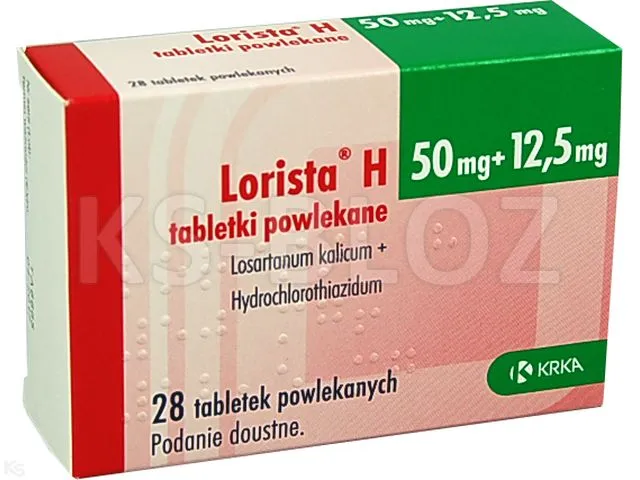
Table of Contents
Package leaflet: Information for the user
Lorista HL, 100 mg + 12.5 mg, film-coated tablets
Losartanum kalicum + Hydrochlorothiazidum
Please read all of this leaflet carefully before taking this medicine because it contains important information for you.
- Keep this leaflet. You may need to read it again.
- If you have any further questions, ask your doctor or pharmacist.
- This medicine has been prescribed for a specific individual. Do not pass it on to others. It may harm other people, even if their symptoms are the same.
- If you experience any adverse effects, including any not listed in this leaflet, tell your doctor or pharmacist. See section 4.
Contents of the leaflet
- What Lorista HL is and what it is used for
- What you need to know before taking Lorista HL
- How to take Lorista HL
- Possible side effects
- How to store Lorista HL
- Contents of the pack and other information
1. What Lorista HL is and what it is used for
Lorista HL is a combination of an angiotensin II receptor antagonist (losartan) and a diuretic (hydrochlorothiazide). Angiotensin II is a substance produced in the body that, by binding to receptors in blood vessel walls, causes blood vessels to narrow. This leads to increased blood pressure. Losartan prevents angiotensin II from binding to these receptors, resulting in blood vessel dilation and consequently lowering blood pressure. Hydrochlorothiazide works by increasing the excretion of water and salts through the kidneys. This also helps reduce blood pressure.
Lorista HL is indicated for the treatment of essential hypertension (high blood pressure).
2. Important information before using Lorista HL
When not to use Lorista HL
- if the patient is allergic to losartan, hydrochlorothiazide, or any of the other components of this medicine (listed in section 6),
- if the patient is allergic to sulfonamide-derived substances (e.g. other thiazide diuretics, certain antibacterial agents such as co-trimoxazole); in case of doubt, consult a physician,
- if the patient has severe impairment of liver function,
- if the patient has low potassium or low sodium levels, or high calcium levels in the blood that cannot be corrected by treatment,
- if the patient has gout,
- if the patient is pregnant beyond the third month (use of Lorista HL should also be avoided during early pregnancy – see section "Pregnancy and breastfeeding"),
- if the patient has severe kidney dysfunction or if the kidneys are not producing urine,
- if the patient has diabetes or kidney problems and is being treated with a blood pressure-lowering medicine containing aliskiren.
Warnings and precautions
Before starting treatment with Lorista HL, discuss this with your doctor or pharmacist.
Inform your doctor if you suspect (or are planning) pregnancy. Use of Lorista HL is not recommended during early pregnancy and must not be used after the third month of pregnancy, as it may seriously harm the unborn child (see section "Pregnancy").
Before starting treatment with Lorista HL, inform your doctor:
- if the patient has previously experienced swelling of the face, lips, throat, or tongue,
- if the patient is taking diuretics (water tablets),
- if the patient is on a salt-restricted diet,
- if the patient has had or currently has severe vomiting and/or diarrhea,
- if the patient has heart failure,
- if the patient has or has had impaired liver function (see section 2 "When not to use Lorista HL"),
- if the patient has narrowing of the blood vessels leading to the kidneys (renal artery stenosis), only one functioning kidney, or has recently undergone kidney transplantation,
- if the patient has arterial narrowing (arteriosclerosis), angina pectoris (chest pain due to impaired heart function),
- if the patient has aortic or mitral valve stenosis (narrowing of heart valves) or hypertrophic cardiomyopathy (a disease causing thickening of the heart muscle),
- if the patient has diabetes,
- if the patient has had gout,
- if the patient has had or currently has allergies, asthma, or a disease causing joint pain, skin rash, and fever (systemic lupus erythematosus),
- if the patient has high calcium levels or low potassium levels in the blood, or if the patient is on a low-potassium diet,
- if the patient is scheduled for anesthesia (even at the dentist), before undergoing surgery, or if tests on parathyroid function are planned, it is essential to inform the doctor or medical staff about taking Lorista HL,
- if the patient has primary hyperaldosteronism (a condition associated with increased secretion of the hormone aldosterone by the adrenal glands due to adrenal disease),
- if the patient is taking other medicines that may increase potassium levels in blood serum (see section 2 "Lorista HL with other medicines"),
- if the patient has previously had skin cancer or if unexpected skin changes appear during treatment. Treatment with hydrochlorothiazide, especially at high doses over a long period, may increase the risk of certain types of non-melanoma skin cancer and lip cancer. While taking Lorista HL, protect the skin from sunlight and UV radiation,
- if the patient has previously experienced breathing problems or lung issues after taking hydrochlorothiazide (including pneumonia or fluid accumulation in the lungs). If the patient develops severe shortness of breath or difficulty breathing after taking Lorista HL, seek immediate medical help,
- if the patient experiences blurred vision or eye pain. These may be symptoms of fluid accumulation in the vascular layer surrounding the eye (excessive fluid accumulation between choroid and sclera) or increased intraocular pressure – these may occur from several hours to weeks after taking Lorista HL. If left untreated, they may lead to permanent vision loss. Patients previously allergic to penicillin or sulfonamides may be at higher risk of developing this condition.
- if the patient is taking any of the following medicines for high blood pressure:
- angiotensin-converting enzyme (ACE) inhibitors, such as enalapril, lisinopril, ramipril, particularly if the patient has kidney problems related to diabetes,
- aliskiren.
Your doctor may recommend regular monitoring of kidney function, blood pressure, and blood electrolyte levels (e.g. potassium).
See also the subsection: "When not to use Lorista HL".
If the patient experiences abdominal pain, nausea, vomiting, or diarrhea after taking Lorista HL, discuss this with the doctor. The doctor will decide on further treatment. Do not make independent decisions to stop taking Lorista HL.
Children and adolescents
There is no experience with the use of Lorista HL in children. Therefore, Lorista HL should not be used in children.
Lorista HL with other medicines
Inform your doctor or pharmacist about all medicines currently used, recently used, or planned for use.
Tell your doctor about potassium supplements, potassium-containing salt substitutes, potassium-sparing medicines, or other medicines that may increase serum potassium levels (e.g. trimethoprim-containing medicines), as concomitant use with Lorista HL is not recommended.
Diuretics such as hydrochlorothiazide contained in Lorista HL may interact with other medicines. Do not take lithium preparations together with Lorista HL without close medical supervision. Special precautions (e.g. blood tests) may be necessary if the patient is taking other diuretics, certain laxatives, medicines used to treat gout, or medicines used to control heart rhythm or diabetes (oral antidiabetic drugs or insulin).
It is also important for the doctor to know if the patient is taking:
- other blood pressure-lowering medicines;
- steroids;
- anticancer medicines;
- painkillers;
- antifungal medicines;
- medicines used to treat arthritis;
- bile acid sequestrants used for high cholesterol, such as cholestyramine;
- muscle relaxants;
- sleeping tablets;
- opioid medicines such as morphine;
- pressor amines such as adrenaline or other medicines in the same group;
- oral antidiabetic medicines or insulin.
The doctor may recommend dose adjustments and/or additional precautions:
- if the patient is taking an ACE inhibitor or aliskiren (see also subsections "When not to use Lorista HL" and "Warnings and precautions").
Also inform your doctor about taking Lorista HL before planned administration of iodine-containing contrast agents.
Lorista HL with food, drink, and alcohol
Alcohol consumption is not recommended during treatment with Lorista HL, as alcohol and Lorista HL tablets may enhance each other's effects.
Excessive salt intake in the diet may reduce the effectiveness of Lorista HL.
Lorista HL may be taken with or without food.
Avoid drinking grapefruit juice while taking Lorista HL tablets.
Pregnancy and breastfeeding
If the patient is pregnant or breastfeeding, suspects she may be pregnant, or plans to become pregnant, she should consult her doctor or pharmacist before taking this medicine.
Pregnancy
Inform your doctor if you are pregnant, suspect pregnancy, or plan to become pregnant. Your doctor will usually advise discontinuing Lorista HL before planned pregnancy or as soon as possible after pregnancy is confirmed, and will recommend an alternative medicine. Lorista HL is not recommended during pregnancy and must not be used after the third month of pregnancy, as it may seriously harm the unborn child if taken during this period.
Breastfeeding
Inform your doctor if you are breastfeeding or plan to breastfeed. Lorista HL is not recommended during breastfeeding, and your doctor may prescribe alternative treatment if you intend to breastfeed.
Use in elderly patients
Lorista HL is equally effective and well tolerated in most elderly patients as in younger patients. Most elderly patients require the same dose as younger patients.
Driving and operating machinery
When starting treatment with Lorista HL, the patient should not perform tasks requiring high concentration (e.g. driving a car or operating dangerous machinery) until it is known how the patient tolerates this medicine.
Lorista HL contains lactose
If the patient has been diagnosed with an intolerance to certain sugars, he or she should consult a doctor before starting treatment with this medicine.
3. How to use Lorista HL
This medicine should always be used exactly as prescribed by your doctor or pharmacist. If you have any doubts,
you should consult your doctor or pharmacist. Your doctor will determine the appropriate dose of Lorista HL
depending on your condition and other medicines you are taking. To achieve proper control of blood pressure,
you should continue taking Lorista HL for as long as your doctor recommends.
The combination of losartan and hydrochlorothiazide is available in three strengths: Lorista H,
50 mg + 12.5 mg, Lorista HL, 100 mg + 12.5 mg, and Lorista HD, 100 mg + 25 mg.
High blood pressure
Usually, for most patients with high blood pressure, one tablet of Lorista H, 50 mg + 12.5 mg daily
is sufficient to control blood pressure for 24 hours. Your doctor may increase the dose to two tablets of
Lorista H, 50 mg + 12.5 mg once daily or switch to one tablet of Lorista HD, 100 mg + 25 mg (a higher strength) daily.
The maximum daily dose is two tablets of Lorista H, 50 mg + 12.5 mg or one tablet of Lorista HD, 100 mg + 25 mg.
Lorista HL 100 mg + 12.5 mg (100 mg of potassium losartan and 12.5 mg of hydrochlorothiazide)
is intended for patients who have already had their losartan dose increased to 100 mg and who require additional
blood pressure control.
Administration
Tablets should be swallowed whole with a glass of water.
Taking more Lorista HL than prescribed
If you take more than the prescribed dose, you should contact your doctor immediately so that appropriate
measures can be taken without delay. Overdose may cause low blood pressure, rapid heartbeat, slow heart rate,
changes in blood composition, and dehydration.
Missing a dose of Lorista HL
You should try to take Lorista HL every day as prescribed by your doctor. If you miss a dose, do not take a double
dose to make up for the missed dose. Continue taking the medicine according to the prescribed schedule.
If you have any further questions about the use of this medicine, consult your doctor or pharmacist.
4. Possible adverse reactions
Like all medicines, this medicine can cause adverse reactions, although not everyone will experience them.
If any of the following adverse reactions occur, stop taking the medicine
Lorista HL and consult your doctor immediately or go to the emergency department of the nearest
hospital:
Severe allergic reaction (rash, itching, swelling of the face, lips, mouth or throat, which may
cause difficulty swallowing or breathing).
This is a serious, but rare adverse reaction, which may occur in up to 1 in 1,000
patients. Urgent medical intervention or hospitalization may be necessary.
Acute respiratory failure (symptoms include severe shortness of breath, fever, weakness and confusion).
This is a serious, but very rare adverse reaction, occurring in up to 1 in 10,000
patients. Urgent medical intervention or hospitalization may be necessary.
The following adverse reactions have been reported:
Common (may occur in not less than 1 in 10 patients):
- cough, upper respiratory tract infection, nasal mucosal congestion, sinusitis, sinus disorders,
- diarrhoea, abdominal pain, nausea, indigestion,
- muscle pain or cramps, leg pain, back pain,
- insomnia, headache, dizziness,
- weakness, fatigue, chest pain,
- increased potassium levels in the blood (which may cause heart rhythm disturbances), decreased haemoglobin levels,
- kidney function disorders, including kidney failure,
- low blood sugar (hypoglycaemia).
Uncommon (may occur in less than 1 in 100 patients):
- anaemia, red or brown skin spots (usually mainly on the feet, legs, arms and buttocks, with joint pain, swelling of hands and feet, and stomach pain), bruising, decreased white blood cell count, coagulation disorders, decreased platelet count,
- loss of appetite, increased uric acid levels or gout, increased blood sugar levels, blood electrolyte imbalances,
- anxiety, nervousness, panic disorder (recurrent panic attacks), disorientation, depression, unusual dreams, sleep disturbances, drowsiness, memory disorders,
- tingling and numbness, limb pain, tremors, migraine, fainting,
- blurred vision, burning or stinging sensation in the eye, conjunctivitis, worsening of vision, yellow vision,
- ringing, buzzing, roaring or clicking in the ears, vertigo of labyrinthine origin,
- low blood pressure, which may be related to postural changes (feeling dizzy or weak upon standing), angina pectoris (chest pain), heart rhythm disturbances, stroke (transient ischaemic attack, "mini-stroke"), myocardial infarction, palpitations,
- vasculitis, often accompanied by skin rash or bruising,
- sore throat, shortness of breath, bronchitis, pneumonia, presence of fluid in the lungs (causing breathing difficulties), nosebleeds, runny nose, nasal mucosal congestion,
- constipation, inability to pass stools, flatulence, upset stomach, stomach cramps, vomiting, dry mouth, sialadenitis, toothache,
- jaundice (yellowing of eyes and skin), pancreatitis,
- urticaria, itching, skin inflammation, rash, skin redness, photosensitivity, dry skin, hot flushes with redness, especially of the face, excessive sweating, hair loss,
- pain in arms, shoulders, hips, knees or other joints, joint swelling, stiffness, decreased muscle strength,
- frequent urination, including at night, kidney function disorders, including nephritis, urinary tract infection, presence of glucose in urine,
- decreased libido, impotence,
- facial swelling, localized swelling, fever.
Rare (may occur in less than 1 in 1,000 patients):
- hepatitis, abnormal liver function test results,
- angioedema of the intestine: swelling in the intestine with symptoms such as abdominal pain, nausea, vomiting and diarrhoea.
Unknown (frequency cannot be estimated from available data):
- skin and lip malignancies (non-melanoma skin cancers),
- influenza-like symptoms,
- unexplained muscle pain with accompanying dark (tea-coloured) urine (rhabdomyolysis),
- low sodium levels in the blood (hyponatraemia),
- general malaise,
- taste disturbances,
- visual impairment or eye pain due to increased pressure (possible symptoms of fluid accumulation in the vascular layer surrounding the eye – excessive fluid buildup between choroid and sclera – or acute angle-closure glaucoma).
Reporting of adverse reactions
If any adverse symptoms occur, including any adverse symptoms not listed
in this leaflet, inform your doctor or pharmacist. Adverse reactions can be reported
directly to the Department of Monitoring Adverse Reactions of Medicinal Products
of the Office for Registration of Medicinal Products, Medical Devices and Biocidal Products:
Al. Jerozolimskie 181C, 02-222 Warsaw
Tel.: + 48 22 49 21 301
Fax: + 48 22 49 21 309
Website: https://smz.ezdrowie.gov.pl
Adverse reactions can also be reported to the marketing authorization holder.
By reporting adverse reactions, more information on the safety of this medicine can be collected.
5. How to store Lorista HL
Keep this medicine out of the sight and reach of children.
Do not use this medicine after the expiry date stated on the packaging after EXP. The expiry date refers to the last day of the stated month.
Do not store above 30°C.
Store in the original packaging to protect from moisture.
Medicines must not be disposed of via wastewater or household waste. Ask your pharmacist how to dispose of medicines no longer required. Such measures help protect the environment.
6. Contents of the packaging and other information
What Lorista HL contains
- The active substances in this medicinal product are losartan potassium and hydrochlorothiazide. Each coated tablet contains 100 mg of losartan potassium, equivalent to 91.52 mg of losartan, and 12.5 mg of hydrochlorothiazide.
- The other ingredients are: pregelatinized starch, corn starch, microcrystalline cellulose, lactose monohydrate, magnesium stearate in the tablet core; hypromellose, macrogol 4000, talc, titanium dioxide (E 171) in the tablet coating. See section 2 "Lorista HL contains lactose".
What Lorista HL looks like and contents of the pack
White, oval, biconvex coated tablets. Tablet dimensions: 13 mm x 8 mm.
Tablets are available in packs containing 28 or 56 coated tablets in blisters,
packaged in a cardboard box.
Marketing Authorisation Holder
KRKA, d.d., Novo mesto, Šmarješka cesta 6, 8501 Novo mesto, Slovenia
Manufacturer
KRKA, d.d., Novo mesto, Šmarješka cesta 6, 8501 Novo mesto, Slovenia
TAD Pharma GmbH, Heinz-Lohmann-Straße 5, 27472 Cuxhaven, Germany
This medicinal product is authorised for supply in the European Economic Area and the United Kingdom (Northern Ireland) under the following names:
| Austria | Losartan/HCT Krka |
| Bulgaria, Poland, Romania | Lorista HL |
| Czech Republic, Estonia, Latvia, Lithuania, Slovakia | Lorista H |
| Cyprus, Finland, Norway, Sweden | Losartan/Hydrochlorothiazide Krka |
| Denmark, Iceland | Losartan potassium/hydrochlorothiazide Krka |
| Spain | Losartan/Hydrochlorothiazide Krka |
| Germany | Losartan-Kalium HCTad |
| Portugal | Losartan+Hydrochlorothiazide Krka |
| Hungary | Lavestra H |
| United Kingdom (Northern Ireland) | Losartan Potassium/Hydrochlorothiazide |
| Italy | Losartan and Hydrochlorothiazide HCS |
For more detailed information about this medicinal product, please contact the local representative of the marketing authorization holder:
KRKA-POLSKA Sp. z o.o.
Równoległa 5 Street
02-235 Warsaw
Phone: 22 57 37 500