Loratadine pylox
Poland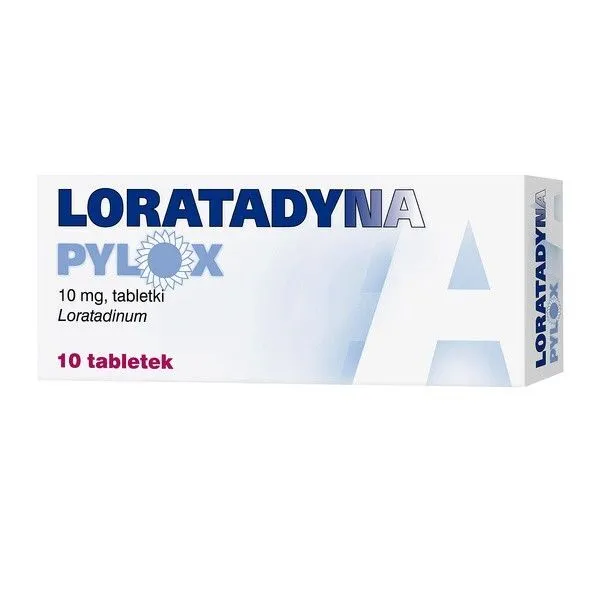
Table of Contents
Package leaflet: Information for the patient
LORATADINE PYLOX
10 mg, tablets
Loratadine
Please read all of this leaflet carefully before taking this medicine, because it contains
important information for you.
This medicine should always be taken exactly as described in this patient leaflet or as directed by
your doctor or pharmacist.
- Keep this leaflet, as you may need to read it again.
- If you need advice or further information, please consult your pharmacist.
- If you experience any side effects, including any not listed in this leaflet, inform your doctor or pharmacist. See section 4.
- If there is no improvement after 10 days, or if you feel worse, you should contact your doctor.
Contents of the leaflet
- What Loratadine Pylox is and what it is used for
- Important information before taking Loratadine Pylox
- How to take Loratadine Pylox
- Possible side effects
- How to store Loratadine Pylox
- Contents of the pack and other information
1. What Loratadine Pylox is and what it is used for
Loratadine Pylox is an antiallergic medicine.
Loratadine Pylox is indicated for the relief of symptoms such as sneezing, itching, watery nasal discharge, swelling of the mucous membranes, and eye itching and burning caused by seasonal and perennial allergic rhinitis. Loratadine Pylox is also indicated for the relief of symptoms of chronic idiopathic urticaria (itching, skin redness).
When taken as directed, Loratadine Pylox does not impair psychomotor performance, has no sedative effect, and does not cause drowsiness.
2. Important information before using Loratadyna Pylox
When not to use Loratadyna Pylox
- if the patient is allergic to loratadine or to any of the other ingredients of this medicine (listed in section 6),
- in children under 2 years of age.
Warnings and precautions
Before starting treatment with Loratadyna Pylox, discuss this with your doctor or pharmacist:
- if the patient has severe hepatic impairment (see section 3. How to use Loratadyna Pylox).
Treatment should be discontinued approximately 48 hours before scheduled skin testing, because
loratadine may cause false-negative results in these tests (the medicine may reduce or completely
suppress the skin reaction that would normally be positive).
Children
Loratadine is contraindicated in children under 2 years of age. Use in children aged 2 years and older (see
section 3).
Use in patients with impaired liver and/or kidney function
In patients with severe hepatic impairment, a lower initial dose should be used (see
section 3).
Dose adjustment is not required in patients with renal impairment.
Use in elderly patients
Dose adjustment is not required in elderly patients.
Loratadyna Pylox and other medicines
Inform your doctor or pharmacist about all medicines currently taken or recently taken, as well as any medicines you plan to use.
Use loratadine with caution together with erythromycin, ketoconazole, and cimetidine, as this may lead to increased blood levels of loratadine.
Concomitant use of loratadine with certain medicines affecting liver metabolism,
such as CYP3A4 or CYP2D6 inhibitors, may increase the blood concentration of loratadine, potentially leading to increased adverse effects.
Loratadyna Pylox with food, drink, and alcohol
This medicine can be taken independently of meals.
Alcohol does not enhance the effects of loratadine; however, alcohol consumption should be avoided during treatment.
Pregnancy, breastfeeding, and fertility
If the patient is pregnant or breastfeeding, suspects she may be pregnant, or is planning to have a child, she should consult her doctor before using this medicine.
Use of Loratadyna Pylox during pregnancy should be avoided.
Since loratadine passes into breast milk, its use is not recommended in breastfeeding women.
There are no data available on the effect of Loratadyna Pylox on fertility.
Driving and operating machinery
In clinical studies, loratadine had no effect or only a negligible effect on the ability to drive and operate machinery. However, very rarely, drowsiness may occur in some individuals during treatment, which may impair the ability to drive or operate machinery. Therefore, caution should be exercised when using this medicine.
3. How to use Loratadyna Pylox
This medicine should always be taken exactly as described in this patient leaflet or as advised by your doctor or pharmacist. If in doubt, consult your doctor or pharmacist.
Recommended dose
Children and adolescents
For children aged 2 to 12 years, the dose should be based on body weight:
| Body weight greater than 30 kg: | Body weight less than 30 kg: | |
| 10 mg (1 tablet) once daily | Children over 6 years of age: | Children from 2 to 6 years of age: |
| 5 mg (half a tablet) once daily | Use of tablets is not recommended in children under 6 years of age; in these patients, loratadine syrup (5 mg) is recommended. | |
In children over 12 years of age: 10 mg (1 tablet) once daily.
The safety and efficacy of the medicinal product have not been established in children under 2 years of age.
Adults
10 mg (1 tablet) once daily.
Elderly patients
There is no need to modify the dose in elderly patients.
Patients with renal impairment
There is no need to modify the dose in patients with renal impairment.
Patients with hepatic impairment
A lower initial dose should be used in patients with severe hepatic impairment, as the clearance of loratadine may be reduced in these individuals. In adults and children weighing more than 30 kg with severe hepatic impairment, treatment should be initiated with 10 mg (1 tablet) every other day; in children weighing 30 kg or less with severe hepatic impairment, treatment should be initiated with 5 mg (in children over 6 years of age - half a tablet; in children aged 2 to 6 years - in syrup form) every other day.
If you feel that the effect of Loratadyna Pylox is too strong or too weak, consult your doctor.
If there is no improvement after 10 days, or if the patient feels worse, contact your doctor.
Method of administration
Oral administration.
The medicinal product may be taken regardless of meals.
The tablet may be divided into halves.
Overdose of Loratadyna Pylox
In case of overdose, seek immediate medical advice from a doctor or pharmacist.
Large doses of loratadine may cause somnolence, tachycardia (increased heart rate), and headache. Symptomatic and supportive treatment is recommended, e.g., administration of activated charcoal, induction of emesis, gastric lavage. Hemodialysis does not remove loratadine from the body.
There are no data indicating that loratadine poses a risk of abuse or dependence.
Missed dose of Loratadyna Pylox
If a dose has been missed, take it as soon as possible. However, if it is almost time for the next dose, skip the missed dose and take the next dose at the scheduled time. Do not take a double dose to make up for a missed dose.
Discontinuation of Loratadyna Pylox
If you have any further questions about the use of this medicinal product, consult your doctor or pharmacist.
4. Possible adverse effects
Like all medicines, this medicine can cause adverse effects, although not everyone will experience them.
The frequency of the possible adverse effects listed below is defined as follows:
- Common (occurs less frequently than in 1 out of 10 people);
- Uncommon (occurs less frequently than in 1 out of 100 people);
- Very rare (occurs less frequently than in 1 out of 10,000 people);
- Frequency not known (frequency cannot be determined from available data).
Common:
- Headache, nervousness, and fatigue (in children aged 2 to 12 years),
- Drowsiness (in adults and adolescents).
Uncommon:
- Headache, increased appetite, and sleep disturbances in adults and adolescents.
Very rare:
- Severe allergic reaction (including difficulty breathing, wheezing, itching, hives, swelling). If any of these symptoms occur, immediately discontinue use of the medicine and contact a doctor or go to the nearest hospital.
- Dizziness, seizures,
- Increased heart rate, palpitations,
- Nausea, dry mouth, inflammation of the gastric mucosa,
- Abnormal liver function,
- Rash, hair loss,
- Fatigue.
Frequency not known:
- Weight gain.
If any of the adverse effects worsen or if any adverse effects not listed in this leaflet occur, inform your doctor or pharmacist.
Reporting of adverse effects
If you experience any adverse effects, including any not listed in this leaflet, inform your doctor or pharmacist. Adverse effects can be reported directly to the Department of Monitoring Adverse Drug Reactions of the Office for Registration of Medicinal Products, Medical Devices and Biocidal Products:
Al. Jerozolimskie 181C
02-222 Warsaw
Phone: +48 22 49 21 301
Fax: +48 22 49 21 309
Website: https://smz.ezdrowie.gov.pl
Adverse effects can also be reported to the marketing authorization holder.
Reporting adverse effects helps to provide more information on the safety of the medicine.
5. How to store Loratadyna Pylox
No special storage requirements apply.
Keep the medicine out of the sight and reach of children.
Do not use this medicine after the expiry date stated on the packaging. The expiry date refers to the last day of the stated month.
Medicines must not be disposed of via the sewage system or household waste. Ask your pharmacist how to dispose of medicines no longer required. This will help protect the environment.
6. Contents of the pack and other information
What Loratadyna Pylox contains
- The active substance is loratadine. One tablet contains 10 mg of loratadine.
- The other ingredients are: microcrystalline cellulose, pregelatinized maize starch, magnesium stearate.
What Loratadyna Pylox looks like and contents of the pack
Loratadyna Pylox is available as white, round, flat tablets with bevelled edges, marked with a break line and the number "10" embossed on one side.
Pack available:
Aluminium/PVC/PVDC foil blisters in a cardboard box.
Pack size: 10 tablets.
Marketing Authorisation Holder and Manufacturer
Farmaceutyczna Spółdzielnia Pracy „GALENA”
ul. Dożynkowa 10
52-311 Wrocław
Poland
Tel.: + 48 71 710 62 01