Loperamide dr. max
Poland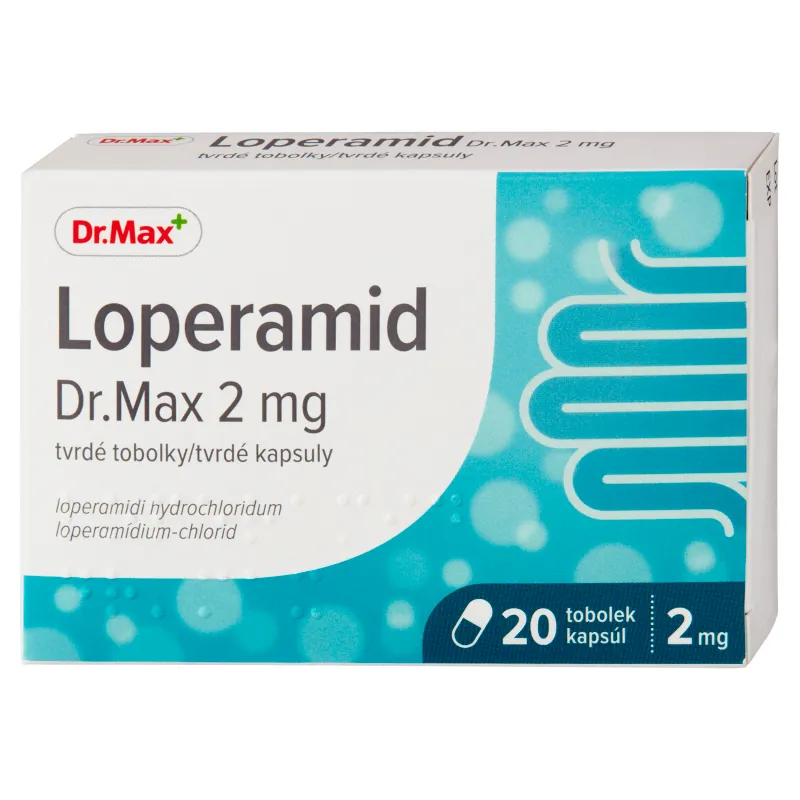
Table of Contents
Package leaflet: Information for the user
Loperamid Dr. Max, 2 mg, hard capsules
Loperamidi hydrochloridum
Please read all of this leaflet carefully before taking this medicine, because it contains
important information for the patient.
This medicine should always be taken exactly as described in this patient leaflet or as directed by
the doctor or pharmacist.
- Keep this leaflet, so that you can read it again if necessary.
- If you need advice or further information, please contact your pharmacist.
- If you experience any adverse reactions, including any possible side effects not listed in this leaflet, inform your doctor or pharmacist. See section 4.
- If there is no improvement after 2 days, or if you feel worse, contact your doctor.
Contents of the leaflet
- What Loperamid Dr. Max is and what it is used for
- Important information before taking Loperamid Dr. Max
- How to take Loperamid Dr. Max
- Possible side effects
- How to store Loperamid Dr. Max
- Contents of the package and other information
1. What Loperamid Dr. Max is and what it is used for
Loperamid Dr. Max contains the active substance loperamide hydrochloride, which belongs to a group of medicines called antidiarrhoeals.
Loperamid Dr. Max helps stop diarrhoea by thickening the consistency of stools and reducing their frequency.
Loperamid Dr. Max is used to treat symptoms of sudden, short-term diarrhoea (acute diarrhoea).
After consultation with a doctor, this medicine may also be used in chronic diarrhoea, or in patients who have undergone surgery involving removal of part of the intestine, which often leads to diarrhoea.
If there is no improvement after 2 days, or if you feel worse, consult your doctor.
Loperamid Dr. Max is intended for use in adults, adolescents, and children above 6 years of age.
2. Important information before using Loperamid Dr. Max
When not to use Loperamid Dr. Max
- If the patient is allergic to loperamide hydrochloride or any of the other ingredients of this medicine (listed in section 6).
- Do not administer Loperamid Dr. Max to children under 2 years of age.
- In patients who have blood in the stool or high fever (acute erythema).
- In patients with inflammation of the large intestine, e.g. ulcerative colitis or pseudomembranous colitis (colitis, ulcerative colitis, colitis as a complication following treatment with broad-spectrum antibiotics).
- If the doctor has determined that the patient's diarrhoea is caused by bacteria (from the genus Salmonella, Shigella, and Campylobacter).
- If the doctor has determined that slowing intestinal peristalsis is contraindicated in the patient, e.g. when constipation or bloating occur.
- If the patient develops bloating or symptoms of intestinal obstruction.
Warnings and precautions
Before taking Loperamid Dr. Max, discuss it with your doctor or pharmacist:
- During diarrhoea, a significant loss of fluids and electrolytes may occur; therefore, it is essential to replenish fluid and electrolyte losses by drinking more than usual, including special rehydration drinks containing sugars and salts. This is particularly important in children, weakened patients, and elderly patients with acute diarrhoea.
- Loperamid Dr. Max only stops diarrhoea but does not treat its underlying cause. Whenever possible, the cause of diarrhoea should also be treated.
- The medicinal product Loperamid Dr. Max usually stops symptoms of sudden, short-term (acute) diarrhoea within 48 hours of the first dose. If symptoms do not resolve, discontinue the medicine immediately and consult a doctor.
- If patients with AIDS who are being treated for diarrhoea with Loperamid Dr. Max develop signs of abdominal distension, discontinue the medicine immediately and contact a doctor.
- If the patient has impaired liver function, consult a doctor before taking the medicine.
- If intestinal obstruction or constipation develops, discontinue the medicine immediately and consult a doctor.
- Do not exceed the recommended dose or duration of treatment (see section 3). In patients who have taken excessive amounts of loperamide, the active substance in Loperamid Dr. Max, serious heart problems have been reported (symptoms include rapid or irregular heartbeat).
Loperamid Dr. Max and other medicines
Inform your doctor or pharmacist about all medicines currently taken, recently taken, or planned to be taken.
In particular, inform your doctor or pharmacist if the patient is taking any of the following medicines:
- ritonavir (used in the treatment of HIV) or quinidine (used in the treatment of heart rhythm disorders or malaria)
- itraconazole or ketoconazole (used in the treatment of fungal infections)
- gemfibrozil (used in the treatment of high cholesterol)
- oral desmopressin (used to control thirst and urine production in patients with diabetes insipidus)
- other medicines that affect intestinal peristalsis, either slowing it down or speeding it up.
Pregnancy and breastfeeding
If the patient is pregnant, breastfeeding, suspects she may be pregnant, or is planning to become pregnant, she should consult a doctor before using this medicine.
Do not take this medicine if the patient is pregnant or breastfeeding, as small amounts may pass into breast milk.
Driving and operating machinery
During diarrhoea, fatigue, dizziness, or drowsiness may occur. Therefore, exercise particular caution when driving or operating machinery.
Loperamid Dr. Max contains lactose
If the patient has previously been diagnosed with intolerance to certain sugars, consult a doctor before taking this medicine.
Loperamid Dr. Max contains sodium
This medicine contains less than 1 mmol (23 mg) of sodium per dose, meaning the medicine is considered "sodium-free".
3. How to take Loperamid Dr. Max
This medicine should always be taken exactly as stated in this leaflet or as directed by your doctor. If you are unsure, you should consult your doctor or pharmacist.
The recommended dose depends on the patient's age and the type of diarrhoea.
Adults and adolescents over 12 years of age
- At the onset of sudden (acute) diarrhoea, take 2 capsules initially, followed by 1 capsule after each subsequent loose stool. If well-formed or unusually hard stools occur, or if the patient stops feeling intestinal movements, stop taking the medicine immediately and contact your doctor without delay.
- For chronic (long-term) diarrhoea and in patients with a surgically removed portion of the intestine, the dose should be determined by the doctor. The usual initial dose is 2 capsules per day. The dose may be increased to a maintenance dose of 1 to 6 capsules per day to achieve 1–2 formed stools per day.
Adults: Do not take more than 8 capsules within 24 hours.
Adolescents and children over 6 years of age: Do not take more than 3 capsules per 20 kg
of body weight and no more than 8 capsules within 24 hours.
Use in children
Loperamid Dr. Max is not recommended for children under 6 years of age.
Children over 6 years of age
- At the onset of sudden (acute) diarrhoea, take 1 capsule initially, followed by 1 capsule after each loose stool. If well-formed or unusually hard stools occur, or if the child develops nausea, which may be caused by intestinal obstruction, stop administering the capsules immediately and contact your doctor without delay.
- For chronic (long-term) diarrhoea and in patients with a surgically removed portion of the intestine, the dose should be determined by the doctor. The usual initial dose is 1 capsule per day. The maintenance dose should be adjusted according to body weight (maximum 3 capsules/20 kg body weight) to achieve 1–2 formed stools per day.
Warning: Never exceed the maximum recommended daily dose per kg of body weight for children!
| Child's body weight in kilograms (kg) | Maximum number of Loperamide Dr.Max capsules per day |
| from 20 kg | no more than 3 capsules |
| from 27 kg | no more than 4 capsules |
| from 34 kg | no more than 5 capsules |
| from 40 kg | no more than 6 capsules |
| from 47 kg | no more than 7 capsules |
| from 54 kg | no more than 8 capsules |
In case of doubt, consult a doctor or pharmacist.
If acute diarrhoea lasts longer than 48 hours, if the patient suffers from recurrent acute diarrhoea, or
if other symptoms occur, contact a doctor.
For oral use only.
The medicinal product Loperamid Dr. Max can be taken at any time of the day.
The capsules should be taken with water.
Use in elderly patients and in patients with impaired liver or kidney function
Elderly patients and patients with impaired liver or kidney function do not require dose adjustment.
If the patient has impaired liver function, consult a doctor or pharmacist before using this medicine.
Taking more than the recommended dose of Loperamid Dr. Max
If the patient has taken too many capsules of Loperamid Dr. Max, contact a doctor or hospital immediately
and ask for advice. The following symptoms may occur:
rapid or irregular heartbeat, changes in heart rhythm (these symptoms may have serious, life-threatening
consequences), muscle stiffness, uncoordinated movements, drowsiness, difficulty urinating, and weak
breathing.
Symptoms of overdose with Loperamid Dr. Max may be more pronounced in children than in adults. If a
child has taken more capsules than recommended, or if the above-mentioned symptoms occur, call a doctor
immediately.
Information for doctors in case of overdose:
- Administer naloxone by injection.
- If necessary, repeat the naloxone injection after 1–3 hours.
- Monitoring is required for at least 48 hours.
If you have any further questions about the use of this medicine, consult your doctor or
pharmacist.
4. Possible adverse reactions
Like all medicines, this medicine can cause adverse reactions, although not everyone will experience them.
Stop taking the medicine immediately and seek medical help urgently if any of the following adverse reactions occur:
Rare (may occur in 1 out of 1,000 people)
- allergic reaction, including unusual wheezing, difficulty breathing, fainting, or swelling of the face and throat
- skin rash, which may be severe and include blisters or peeling of the skin
- loss of consciousness or reduced level of consciousness
Frequency not known (cannot be estimated from available data)
- upper abdominal pain, abdominal pain radiating to the back, abdominal tenderness, fever, rapid heartbeat, nausea, vomiting, which may be symptoms of inflammation of the pancreas (acute pancreatitis). Discontinue taking the medicine and contact your doctor if any of the following adverse reactions occur:
Common (may occur in 1 out of 10 people)
- headache
- constipation
- nausea
- bloating with passage of gas
Uncommon (may occur in 1 out of 100 people)
- dizziness or drowsiness
- nausea, vomiting, indigestion, constipation, and flatulence
- fatigue
- dry mouth
- abdominal discomfort
- rash
Rare (may occur in 1 out of 1,000 people):
- itching or urticaria (hives)
- difficulty in urination
- abdominal pain or abdominal swelling
- severe constipation
- hypertonia (increased muscle tone)
- miosis (constriction of the pupils)
- intestinal obstruction (may be caused by paralysis of the intestinal wall)
- colonic dilation (may occur rapidly)
Reporting of adverse reactions.
If any adverse reactions occur, including any adverse reactions not listed in this leaflet, inform your doctor, pharmacist, or nurse. Adverse reactions can be reported directly to the Department of Monitoring of Adverse Reactions to Medicinal Products, Office for Registration of Medicinal Products, Medical Devices and Biocidal Products, Al. Jerozolimskie 181C, 02-222 Warsaw, tel.: 22 49-21-301, fax: 22 49-21-309, website: https://smz.ezdrowie.gov.pl
By reporting adverse reactions, additional information on the safety of the medicine can be collected.
Adverse reactions can also be reported to the marketing authorization holder.
5. How to store Loperamid Dr. Max
Keep the medicine out of sight and reach of children.
Do not use the medicine after the expiry date stated on the carton and blister pack. The expiry date refers to the last day of the stated month.
No special storage conditions are required for this medicine.
Medicines must not be disposed of via the sewage system or household waste. Ask your pharmacist how to dispose of medicines no longer required. This helps protect the environment.
6. Contents of the pack and other information
What Loperamid Dr. Max contains
The active substance is loperamide hydrochloride. One capsule contains 2 mg of loperamide hydrochloride.
Excipients:
Capsule contents:
monohydrate lactose, maize starch, talc, magnesium stearate
Capsule cap:
yellow iron oxide (E172), brilliant blue FCF (E133), titanium dioxide (E171), gelatin, sodium lauryl sulfate, purified water
Capsule body:
yellow iron oxide (E172), black iron oxide (E172), red iron oxide (E172), titanium dioxide (E171), gelatin, sodium lauryl sulfate, purified water
What Loperamid Dr. Max looks like and contents of the pack
Hard gelatin capsules with a green cap and grey body. The capsule is filled with white or almost white powder.
Aluminium/PVC/PVDC blister pack in a cardboard box.
Pack sizes: 8, 10, 12, 18 or 20 capsules.
Not all pack sizes may be marketed.
Marketing Authorisation Holder:
Dr. Max Pharma s.r.o.
Na Florenci 2116/15
110 00 Prague
Czech Republic
Manufacturer/Importer:
SVUS Pharma a.s.
Smetanovo nábřeží 1238/20a
500 02 Hradec Králové
Czech Republic
This medicinal product is authorised in the Member States of the European Economic Area under the following names:
Czech Republic: Loperamid Dr.Max
Hungary: Loperamid SVUS 2 mg kemény kapszula
Poland: Loperamid Dr.Max
Slovakia: Loperamid Dr.Max 2 mg
Romania: Loperamid Dr.Max 2 mg capsule