Loceryl
Poland
Table of Contents
Package leaflet: information for the patient
Loceryl, 50 mg/ml, nail lacquer, medicinal
Amorolfinum
Please read the entire leaflet carefully before use, as it contains important information for the patient.
This medicine should always be used exactly as described in this patient leaflet or as directed by the physician or pharmacist.
- Keep this leaflet, as you may need to read it again.
- If you need advice or further information, consult your pharmacist.
- If you experience any adverse reactions, including any not listed in this leaflet, inform your doctor or pharmacist. See section 4.
- If there is no improvement or if the patient feels worse, consult a doctor.
Table of contents:
- What Loceryl is and what it is used for
- Important information before using Loceryl
- How to use Loceryl
- Possible adverse reactions
- How to store Loceryl
- Contents of the pack and other information
1. What Loceryl is and what it is used for
Loceryl is an antifungal medicine in the form of a topical nail lacquer.
The active substance, amorolfine, acts against various types of fungi causing nail fungal infections.
Loceryl is indicated for the treatment of fungal nail infections caused by dermatophytes, yeasts, and moulds.
Loceryl is indicated for the treatment of nail fungal infections that do not involve the matrix (the area where the nail plate is formed) and are limited to 2 nail plates.
The medicine may be used when fungal infection of the nail plate has led to a change in nail color (discoloration in white, yellow or brown shades) or nail thickening.
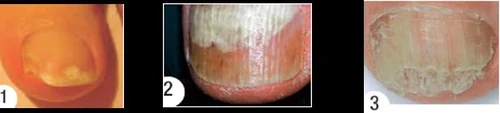
Loceryl is indicated for use in fungal infections affecting only the upper part of the nail plate – as shown in picture no. 1.
If the fungal infection involves a larger portion of the nail plate (e.g. as shown in picture no. 2 or 3), medical advice should be sought.
2. Important information before using Loceryl
When not to use Loceryl:
- if the patient is allergic to amorolfine or any of the other ingredients of this medicine (listed in section 6).
Warnings and precautions
This medicine is intended for application on the nail plate only.
Do not apply Loceryl medicinal nail lacquer to the skin around the nail.
During treatment, do not use artificial nails.
After applying Loceryl medicinal nail lacquer, wait at least 10 minutes before applying any cosmetic nail polish.
Before reapplying Loceryl medicinal nail lacquer, carefully remove any cosmetic nail polish.
Wear impermeable protective gloves if exposed to solvents; this will protect the applied medicinal lacquer from dissolving.
If Loceryl gets into the eye or ear, rinse the area thoroughly with plenty of water and contact a doctor or nearest hospital immediately. Avoid contact of the lacquer with mucous membranes (mouth or nose). Do not inhale the lacquer.
Children and adolescents
Do not use Loceryl in children and adolescents, as there is insufficient data on safety and efficacy in this age group.
Loceryl and other medicines
Tell your doctor or pharmacist about all medicines you are currently taking, have recently taken, or might take in the future.
There are no available data. No studies have been conducted on interactions between Loceryl and other medicines.
Pregnancy, breastfeeding and fertility
If the patient is pregnant, breastfeeding, suspects she may be pregnant, or is planning to have a baby, she should consult a doctor or pharmacist before using this medicine.
Do not use Loceryl in pregnant or breastfeeding women unless considered necessary by a physician.
Driving and operating machinery
No effects of Loceryl on the ability to drive or operate machinery have been observed.
Loceryl contains ethanol
This medicine contains 552.0 mg of alcohol (ethanol) per gram, equivalent to 55.2% w/w.
Ethanol is flammable; therefore, do not use this medicine near open flames, lit cigarettes, or certain devices (e.g. hair dryers).
The medicine may cause a burning sensation on damaged skin.
3. How to use Loceryl
This medicine should always be used exactly as described in this patient information leaflet or as directed by your doctor or pharmacist. If in doubt, consult your doctor or pharmacist.
Before starting treatment
Mark the infected area on the diagram shown below. This will help assess the treatment results.
Each month, outline the area reflecting the infected region until healthy nail growth appears. In the case of two infected nails, select the more severely affected one for monitoring treatment progress.

Before treatment month 1 month 2 month 3 month 6
Dosage
Loceryl nail lacquer should be applied to the infected nail once a week.
Treatment should continue until a fully healthy nail has regrown, which usually takes about 6 months for fingernails and 9 to 12 months for toenails. Nail growth is a slow process, so the first signs of improvement are typically visible after 2 to 3 months of treatment.
If there is no improvement in the appearance of the nail, consult your doctor.
Apply Loceryl nail lacquer as described below:
- Before the first application of Loceryl, remove any previously applied nail polish (e.g. cosmetic nail varnish). File the infected nail thoroughly, especially its surface, using the provided nail file. Warning: Do not use the same file for infected and healthy nails to avoid spreading infection to healthy nails.
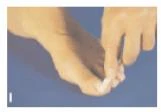
- Clean and degrease the nail surface using the included alcohol pad (impregnated with isopropyl alcohol). The alcohol pad may also be used later to remove lacquer from the spatula. Before reapplying the lacquer, prepare the nail as described above. In each case, first clean the nail of any residual lacquer using the provided files and alcohol pads.
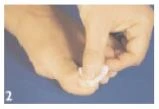
- Use the reusable spatula provided. Dip the spatula into the lacquer (do not wipe off excess lacquer against the bottle neck). Apply the lacquer evenly over the entire nail surface and allow it to dry for 3 to 5 minutes.
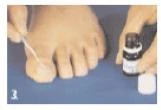
If two nails are being treated, repeat the entire procedure on the second infected nail.
Before reapplying the medicinal lacquer, remove the previously applied layer of Loceryl lacquer and apply a fresh one. Clean the nail using the alcohol pad and apply the lacquer as described above.
Cosmetic nail polish may be applied at least 10 minutes after applying Loceryl medicinal lacquer. Before reapplying Loceryl, any cosmetic nail polish must be carefully removed.
After each application of Loceryl lacquer:
- Carefully clean the spatula using the alcohol pad. The spatula may be reused if cleaned after each use. The same alcohol pad used to clean the nail may be used to clean the spatula.
- Remove any lacquer residue from the cap using an alcohol pad.
- Close the bottle tightly immediately after applying the lacquer.
- Dispose of the alcohol pad carefully, as it is flammable.
- Wash your hands after the lacquer has completely dried.
When in contact with organic solvents, wear impermeable gloves to protect the Loceryl lacquer layer on the nails.
Files used for infected nails must not be used on healthy nails.
Use of a higher than recommended dose of Loceryl
This medicine is intended for topical application on the nail plate only. If Loceryl is accidentally swallowed, contact your doctor, pharmacist, or nearest hospital immediately.
Missed dose of Loceryl
Do not apply a double dose to make up for a missed dose.
If you have any further questions about the use of this medicine, consult your doctor or pharmacist.
4. Possible adverse effects
Like all medicines, Loceryl can cause adverse effects, although not everyone experiences them.
The adverse effects listed below are categorized according to their frequency of occurrence:
Very common (affects more than 1 in 10 people)
Common (affects less than 1 in 10 people)
Uncommon (affects less than 1 in 100 people)
Rare (affects less than 1 in 1,000 people)
Very rare (affects less than 1 in 10,000 people)
Frequency not known (cannot be estimated from available data).
Rare:
nail plate disorders, nail brittleness, discoloration of the nail plate,
excessive nail fragility with nail layering.
Very rare:
skin redness.
Frequency not known:
flushing (intense skin redness), itching, contact dermatitis, urticaria, skin blisters, generalized allergic reaction (severe allergic reaction which may manifest as facial, tongue or throat swelling, breathing difficulties, and severe skin rash).
If a severe allergic reaction occurs, seek immediate medical attention by contacting a doctor or going to the nearest hospital.
Adverse symptoms may also be caused by the progression of nail fungus infection.
Reporting of adverse effects
If any adverse effects occur, including those not listed in this leaflet, inform your doctor, pharmacist, or nurse. Adverse effects can be reported directly to the Department of Monitoring Adverse Drug Reactions at the Office for Registration of Medicinal Products, Medical Devices and Biocidal Products
Al. Jerozolimskie 181C, 02-222 Warsaw
Phone: +48 22 49 21 301
Fax: +48 22 49 21 309
Website: https://smz.ezdrowie.gov.pl
Adverse effects can also be reported to the marketing authorization holder.
Reporting adverse effects helps to provide more information on the safety of the medicine.
5. How to store Loceryl
Keep this medicine out of the sight and reach of children.
Do not use this medicine after the expiry date stated on the carton.
The expiry date refers to the last day of the stated month.
Store below 30°C.
Medicines must not be disposed of via wastewater or household waste. Ask your pharmacist how to dispose of medicines no longer required. This will help protect the environment.
6. Contents of the pack and other information
What Loceryl contains
- The active substance is amorolfine. One millilitre of the nail lacquer contains 50 mg of amorolfine.
- The other ingredients are: methacrylic acid copolymer (type A), triacetin, butyl acetate, ethyl acetate, anhydrous ethanol.
What Loceryl looks like and contents of the pack
Loceryl is a medicinal nail lacquer.
Pack:
An amber glass bottle with an HDPE cap and an LDPE spatula, containing 2.5 ml of nail lacquer,
30 swabs impregnated with 70% isopropyl alcohol, 30 nail files,
all contained in a cardboard box.
Marketing Authorisation Holder and Manufacturer
Marketing Authorisation Holder
Galderma Polska Sp. z o.o.
ul. Puławska 145
02-715 Warszawa, Poland
tel.: 22 331 21 80
Manufacturer:
Laboratoires Galderma
Z.I. Montdésir
74540 Alby-sur-Chéran
France
ADVICE AND RECOMMENDATIONS FOR TREATMENT
Fungal nail infections (onychomycosis): what are the risk factors?
Toenails:
- Repeated microtrauma to the nail, incorrect toe positioning
- Wearing closed footwear or footwear made of synthetic materials, or socks made of synthetic fibres that retain moisture
- Occupations requiring footwear or safety shoes, which may lead to increased foot sweating
- Sports activities increasing the risk of infection (e.g. marathon running), and particularly sports where participants are barefoot: swimming, judo
Fingernails:
- Fungal infections of the feet (dermatophytosis)
- Excessive contact with water (may lead to candidiasis)
- Damage to the nail plate caused by:
- repeated microtrauma (e.g. gardening)
- manual work involving detergents (laundry liquids or powders, or other corrosive substances)
- Certain occupations at higher risk (e.g. hairdressers, manicurists, podiatrists)
Fungal infections: how to prevent and avoid infections
- Disinfect footwear and socks. Ask your pharmacist if you need help.
- Treat skin lesions affecting the spaces between the toes and the skin of the feet as quickly as possible.
- Use only your own towel to avoid infecting others.
- Dry thoroughly the spaces between the toes and the entire feet after bathing to prevent infection of other nails or skin.