Locatop
Poland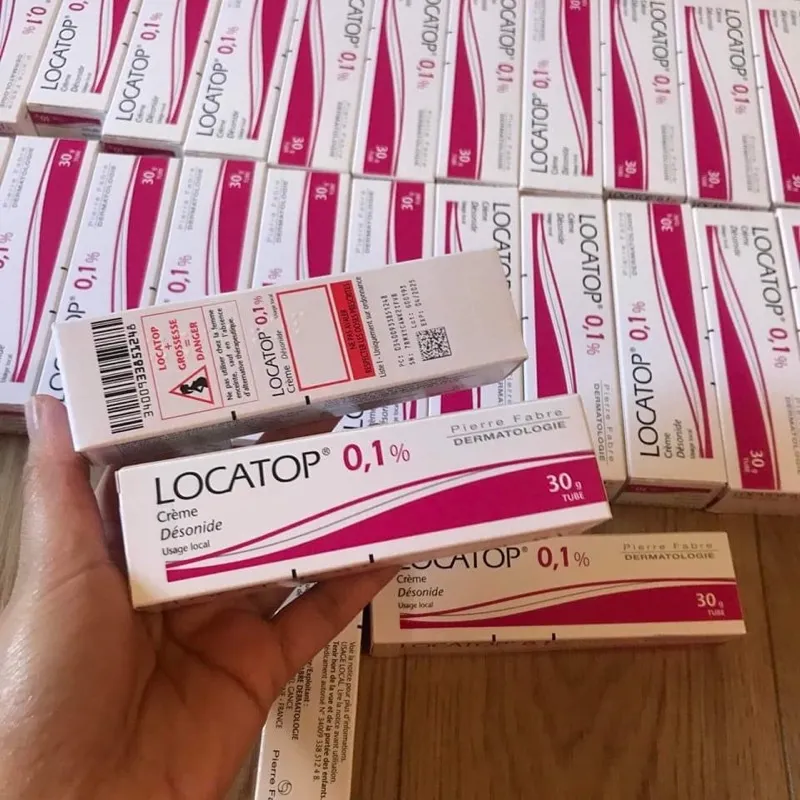
Table of Contents
Package leaflet: Information for the patient
Locatop, 1 mg/g, cream
Desonide
Please read this leaflet carefully before using the medicine, as it contains
important information for the patient.
- Keep this leaflet, as you may need to read it again.
- If you have any questions, please consult your doctor or pharmacist.
- This medicine has been prescribed for a specific individual. Do not pass it on to others. The medicine may harm someone else, even if their symptoms are the same.
- If you experience any adverse reactions, including any not listed in this leaflet, inform your doctor or pharmacist. See section 4.
Table of contents
- What Locatop is and what it is used for
- Important information before using Locatop
- How to use Locatop
- Possible side effects
- How to store Locatop
- Contents of the pack and other information
1. What Locatop is and what it is used for
Locatop is a cream containing the active substance desonide. Desonide is a synthetic corticosteroid for topical use on the skin. According to results of cutaneous vasoconstrictor tests, desonide is a moderately and/or strongly acting corticosteroid. When applied locally to the skin, it exerts anti-inflammatory, antipruritic (reducing itching), and vasoconstrictive effects.
Indications
The medicine is indicated for use in infants, children, adolescents, and adults for relief of inflammatory and pruritic manifestations of the following skin conditions:
- Allergic contact dermatitis,
- Atopic dermatitis,
- Psoriasis, except in very severe lesions,
- Lichen planus,
- Limited neurodermatitis (lichen simplex chronicus),
- Lichen sclerosus et atrophicus,
- Granuloma annulare,
- Chronic cutaneous lupus erythematosus,
- Palmoplantar pustular psoriasis,
- Seborrheic dermatitis, except on facial skin,
- Symptomatic relief of itching in granuloma fungoides,
- Severe reactions to insect bites.
2. Important information before using Locatop
When not to use Locatop:
- if the patient is allergic to desonide or any of the other ingredients of this medicine (listed in section 6),
- in primary bacterial, viral, fungal or parasitic skin infections,
- on ulcers,
- in acne vulgaris,
- in rosacea (a skin disease of the face in which redness particularly affects the nose and adjacent cheek areas),
- in perioral dermatitis (rash on the skin around the mouth).
Warnings and precautions
Before starting treatment with Locatop, discuss this with your doctor or pharmacist.
- This medicine should be used exactly as directed by the doctor.
- Do not use the medicine on facial skin, especially for prolonged periods. Use on the face should only be performed under strict medical supervision.
- Avoid using the medicine over large areas of skin or under occlusive dressings (airtight coverings), as the medicine may be absorbed into the bloodstream. This may lead, especially in children, to systemic adverse effects (including suppression of adrenal cortex function, Cushing's syndrome, growth retardation) – see section 4.
- Repeated or prolonged use may result in significant absorption of the medicine into the bloodstream.
- If the patient experiences blurred vision or other visual disturbances, contact a doctor.
- Repeated or prolonged use of this medicine around the eyes may lead to increased intraocular pressure or cataracts. Prolonged use on the eyelids requires monitoring by an ophthalmologist. Patients at risk of glaucoma should be monitored by an ophthalmologist if the medicine is used for longer than one week.
- If bacterial or fungal infections occur in the area being treated, the doctor should initiate appropriate antimicrobial therapy before administering this medicine.
- Any symptoms of irritation or infection should be reported to the doctor.
- This medicine should be used with particular caution in psoriasis, as topical corticosteroids may be hazardous for several reasons, including disease flare-up due to development of tolerance, risk of generalized pustular psoriasis, and systemic toxic effects resulting from skin impairment and disruption.
- Abrupt discontinuation of treatment after prolonged use may lead to a "rebound effect", i.e. worsening of disease symptoms. This effect can be minimized by gradually tapering off the medicine under medical supervision. If symptoms worsen during treatment, consult a doctor, as this may indicate an allergic reaction, infection, or the need for alternative therapy. If the disease recurs within a short time (within 2 weeks) after treatment ends, do not reapply Locatop cream without first consulting a doctor, unless previously advised by the doctor. If the patient's condition has resolved, but upon recurrence the skin redness extends beyond the previously treated area and the patient experiences skin burning, consult a doctor before resuming treatment. A rebound effect should be suspected.
- If signs of intolerance occur, discontinue use of Locatop cream and contact a doctor immediately.
Infants and children
The decision to use this medicine in children should be made by a doctor. Use in infants and young children should generally be avoided due to the risk of systemic corticosteroid side effects, including growth disturbances.
Locatop and other medicines
Inform your doctor about all medicines currently used or recently used, as well as any medicines planned for future use.
Locatop with food and drink
Not applicable.
Pregnancy and breastfeeding
Pregnancy
There are insufficient data on the use of desonide in pregnant women. This medicine is not recommended during pregnancy unless the doctor considers it absolutely necessary.
Breast-feeding
There is insufficient information on whether desonide passes into human milk. Risk to the breastfed infant cannot be excluded. Locatop should not be used during breast-feeding.
Driving and operating machinery
Locatop has no effect or negligible effect on the ability to drive vehicles or operate machinery.
Locatop contains sorbic acid and cetomacrogol emulsifying wax, which may cause local skin reactions (e.g. contact dermatitis).
3. How to use Locatop
This medicine should always be used as directed by the physician. If in doubt, consult a doctor or pharmacist.
Do not extend the duration of treatment beyond that recommended by the physician.
Recommended dose
The medicine should be applied once or, at most, twice daily to the affected skin area in infants, children, adolescents, and adults. More frequent application increases the risk of adverse effects without improving treatment efficacy.
When applying the medicine to large skin areas, the number of packages used should be monitored.
Method of administration
For topical use only.
A small amount of the medicine should be gently patted onto the affected skin, then spread and gently massaged in until completely absorbed. The use of a plastic glove is recommended.
Use of a higher than recommended dose of Locatop
This medicine should always be used as directed by the physician or pharmacist. Acute overdose is rare. However, prolonged or excessive use may result in systemic absorption and lead to systemic adverse effects due to hormonal effects, such as moon face, increased fat deposition on the upper back and neck ("buffalo hump"), central obesity (Cushing's syndrome), or growth retardation in children.
Immediately inform the doctor if the medicine is used:
- in higher doses than prescribed,
- for longer than recommended by the physician.
In case of overdose (excessive corticosteroid levels in the blood leading to adverse effects), the physician will initiate appropriate treatment.
Missed dose of Locatop
Do not use a double dose to make up for a missed dose.
Discontinuation of Locatop treatment
Treatment should not be stopped abruptly. The medicine should be gradually withdrawn under medical supervision.
If there are any further doubts regarding the use of this medicine, consult a doctor or pharmacist.
4. Possible adverse effects
Like all medicines, this medicine can cause adverse effects, although not everyone will experience them.
Adverse effects may include:
Adverse effects with unknown frequency (frequency cannot be estimated from the available data)
- secondary infections (infections that occur during or immediately after treatment)
- folliculitis
- allergic reaction (hypersensitivity reaction)
- skin rash (contact allergy)
- systemic adverse effects such as changes in body appearance, moon face, truncal obesity (Cushing's syndrome), growth retardation in children – see section 2
- blurred vision
- skin thinning, skin atrophy, fragile skin
- telangiectasia (dilated and reddened blood vessels)
- petechiae
- striae (white marks on the skin)
- perioral rash (perioral dermatitis)
- acneiform dermatitis
- pustular rash
- skin depigmentation
- contact dermatitis (contact eczema)
- exacerbation of rosacea (a skin condition of the face where the nose and cheeks become intensely red)
- pressure sores and (or) scabs
- leg ulcers
- urticaria
- excessive hair growth (hypertrichosis)
- delayed wound healing
- topical steroid withdrawal reaction (rebound effect). If the medicine has been used for a long time, some patients may experience a withdrawal reaction during treatment or within days to weeks after stopping the medicine, i.e. recurrence of the disease, with some or all of the following symptoms: redness of the skin in an area larger than the originally treated area, burning or stinging sensation, intense itching, skin peeling, and oozing open sores.
If any of the adverse effects worsen or if any adverse effects not listed in this leaflet occur,
you should inform your doctor.
Reporting of adverse effects
If any adverse effects occur, including any adverse effects not listed in this leaflet, inform your doctor or pharmacist. Adverse effects can be reported directly to the Department of Monitoring Adverse Drug Reactions of the Office for Registration of Medicinal Products, Medical Devices and Biocidal Products, Al. Jerozolimskie 181C, 02-222 Warsaw, phone: +48 22 49-21-301, fax: +48 22 49-21-309, website: https://smz.ezdrowie.gov.pl
Adverse effects can also be reported to the marketing authorization holder.
Reporting adverse effects helps to provide more information on the safety of the medicine.
5. How to store Locatop
The medicine should be stored at a temperature below 30 °C.
The medicine should be kept out of the sight and reach of children.
Do not use this medicine after the expiry date stated on the packaging after: EXP.
The expiry date refers to the last day of the stated month.
Medicines should not be disposed of via wastewater or household waste. Ask your pharmacist how to dispose of medicines no longer required. This will help protect the environment.
6. Contents of the pack and other information
What Locatop contains
- The active substance is desonide. 1 g of cream contains 1 mg of desonide (Desonidum).
- The other ingredients are: liquid paraffin, white soft paraffin, cetomacrogol emulsifying wax, sorbic acid (E 200), propyl gallate, disodium edetate, purified water.
What Locatop looks like and contents of the pack
Locatop is a white, odourless cream.
The tube contains 30 g of cream, packed in a cardboard box.
Marketing Authorisation Holder
Pierre Fabre Medicament
Les Cauquillous
81500 Lavaur
France
{logo of the Marketing Authorisation Holder}
Manufacturer
Pierre Fabre Médicament Production
Site Progipharm
Rue du Lycée
45500 Gien
France
For further information about this medicine, please contact the representative of the Marketing Authorisation Holder:
Pierre Fabre Dermo-Cosmetique Polska Sp. z o.o.
ul. Belwederska 20/22
00-762 Warsaw
tel.: 22 559 63 60