Lisihexal 20
Poland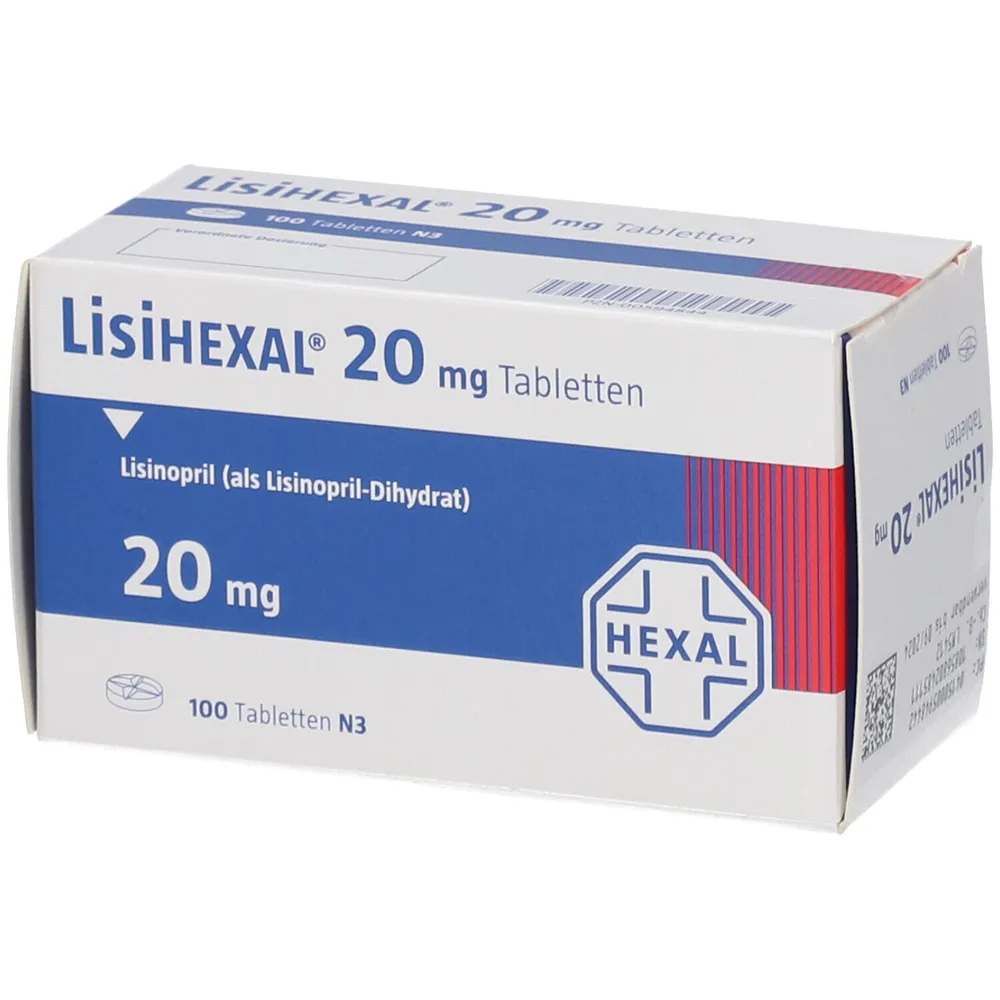
Table of Contents
Package leaflet: Information for the patient
Caution! Keep the leaflet. Information on the immediate packaging in a foreign language.
LisiHEXAL 20 (Lisinopril Sandoz 20 mg)
20 mg, tablets
Lisinoprilum
LisiHEXAL 20 and Lisinopril Sandoz 20 mg are different trade names for the same medicinal product.
Please read the entire leaflet carefully before using the medicine, as it contains
important information for the patient.
- Keep this leaflet so that you can read it again if necessary.
- If you have any doubts, consult your doctor or pharmacist.
- This medicine has been prescribed for a specific individual. Do not share it with others. This medicine may harm another person, even if their symptoms are the same.
- If you experience any adverse reactions, including any not listed in this leaflet, inform your doctor, pharmacist, or nurse. See section 4.
Table of contents:
- What LisiHEXAL 20 is and what it is used for
- Important information before taking LisiHEXAL 20
- How to take LisiHEXAL 20
- Possible side effects
- How to store LisiHEXAL 20
- Contents of the pack and other information
1. What LisiHEXAL 20 is and what it is used for
LisiHEXAL 20 contains lisinopril as the active substance—a drug belonging to the group of angiotensin-converting enzyme (ACE) inhibitors, which lowers arterial blood pressure.
Indications for the use of LisiHEXAL 20 include:
- essential and renovascular hypertension, regardless of severity;
- congestive heart failure;
- acute myocardial infarction in hemodynamically stable patients without cardiogenic shock, with systolic blood pressure above 100 mmHg;
- microalbuminuria in diabetes.
2. Important information before using LisiHEXAL 20
When not to use LisiHEXAL 20
- if the patient is allergic to lisinopril, to another angiotensin-converting enzyme (ACE) inhibitor, or to any of the other ingredients of this medicine (listed in section 6);
- if the patient has had angioedema: hereditary or idiopathic angioedema, or if angioedema occurred previously during treatment with ACE inhibitors;
- if the patient is pregnant;
- if the patient has diabetes or kidney function impairment and is taking a blood pressure-lowering medicine containing aliskiren;
- if the patient has taken or is currently taking a combination medicine containing sacubitril and valsartan (used to treat chronic (long-term) heart failure in adults), because
Page 1 of 9
the risk of angioedema (rapid swelling of the subcutaneous tissue in areas such as the throat) increases.
If in doubt whether any of the above situations applies to the patient, consult a doctor or pharmacist.
Warnings and precautions
Before starting treatment with LisiHEXAL 20, discuss this with your doctor.
Tell your doctor if the patient is taking any of the following medicines, as the risk of angioedema may increase:
- racecadotril, a medicine used to treat diarrhoea;
- medicines used to prevent rejection of transplanted organs and in cancer treatment (e.g. temsirolimus, sirolimus, everolimus);
- vildagliptin, a medicine used to treat diabetes.
Tell your doctor if the patient is taking any of the following medicines used to treat high blood pressure:
- an angiotensin II receptor antagonist (AIIRA), so-called sartan – for example, valsartan, telmisartan, irbesartan, especially if the patient has kidney function impairment related to diabetes;
- aliskiren.
Your doctor may recommend regular monitoring of kidney function, blood pressure, and blood electrolyte levels (e.g. potassium).
See also the section “When not to use LisiHEXAL 20”.
Angioedema
Seek immediate medical advice if the patient develops:
- swelling of the skin and/or mucous membranes; swelling of the face, lips, throat, tongue or larynx; difficulty breathing or swallowing; itching or rash.
Swelling of the tongue, throat or larynx may cause airway obstruction. In such a case, immediate treatment is required.
Patients who have previously experienced such symptoms have a higher risk of recurrence.
The incidence of angioedema after using ACE inhibitors is higher in black patients than in patients of other races.
The risk of angioedema is also increased in patients concurrently taking medicines from the group of so-called mTOR kinase inhibitors, such as sirolimus, everolimus, temsirolimus (used to prevent rejection of transplanted organs or in cancer treatment) or tissue plasminogen activator. See also section “LisiHEXAL 20 with other medicines”.
Hypotension
Excessive reduction in blood pressure may occur in the following patients:
- those on a low-salt diet;
- those undergoing dialysis;
- those with diarrhoea or vomiting;
- those taking diuretics;
- those with heart failure and kidney failure (or without kidney failure).
Inform your doctor if:
- the patient has ischaemic heart disease or cerebrovascular disease;
- the patient is scheduled for surgery under general anaesthesia.
If the patient’s blood pressure drops significantly, lay them on their back and inform the doctor immediately.
Page 2 of 9
Heart conditions
Inform your doctor about:
- heart failure;
- diagnosed stenosis of heart valves in the left ventricle or any other obstruction of blood flow from the left ventricle of the heart.
Kidney function impairment
Before starting and during ongoing treatment, your doctor will recommend monitoring kidney function.
Inform your doctor if:
- the patient has kidney failure;
- the patient has been diagnosed with bilateral renal artery stenosis or stenosis of the renal artery of a single kidney;
- the patient is undergoing haemodialysis;
- the patient is taking diuretics;
- the patient has impaired kidney function and is receiving an antihypertensive medicine containing aliskiren.
Liver function impairment
If jaundice or increased liver enzyme activity occurs during treatment with LisiHEXAL 20, discontinue the medicine and consult your doctor.
Diabetes
During the first month of treatment with LisiHEXAL 20, your doctor will recommend more frequent monitoring of blood glucose levels and, if necessary, adjust the doses of antidiabetic medicines.
Severe hypersensitivity reactions (so-called pseudoanaphylactic reactions)
Due to the risk of hypersensitivity reactions, inform your doctor if:
- the patient is undergoing desensitisation against bee or wasp venom;
- the patient is undergoing treatment to remove cholesterol from the blood (so-called LDL apheresis). Your doctor may recommend temporarily discontinuing LisiHEXAL 20 at an appropriate time.
Changes in blood parameters
During treatment, neutropenia (reduced number of neutrophil granulocytes) or agranulocytosis (reduced number or absence of certain white blood cells), thrombocytopenia, and anaemia may occur. Your doctor may recommend appropriate blood tests. If any signs of infection occur during treatment with LisiHEXAL 20, contact your doctor immediately.
Cough
During treatment with LisiHEXAL 20, a dry, persistent cough may occur, which resolves after discontinuation of treatment. Inform your doctor if cough develops.
Increased blood potassium levels
Due to the possibility of increased blood potassium levels, inform your doctor if:
- the patient has impaired kidney function;
- the patient has diabetes;
- the patient is taking potassium-sparing diuretics or medicines that increase blood potassium levels;
- the patient is taking potassium supplements or potassium-containing salt substitutes.
Your doctor may recommend more frequent blood tests.
Inform your doctor if:
- the patient has collagenosis;
Page 3 of 9
- the patient is receiving immunosuppressive medicines (suppressing the body's immune response), allopurinol (a medicine used to treat gout), or procainamide (a medicine used to treat cardiac arrhythmias).
Consult your doctor, even if the above warnings relate to conditions that occurred in the past.
LisiHEXAL 20 with other medicines
Tell your doctor about all medicines the patient is currently taking or has recently taken, as well as any medicines the patient plans to take.
LisiHEXAL 20 and other concurrently used medicines may interact and affect each other’s action and the occurrence of adverse effects. This particularly applies to the following medicines:
diuretics;
indomethacin and other non-steroidal anti-inflammatory drugs (medicines with anti-inflammatory, analgesic, and antipyretic effects, so-called NSAIDs);
acetylsalicylic acid at doses greater than 3 g/day;
lithium (a medicine used to treat depression);
gold preparations (used to treat, among others, rheumatic diseases or psoriasis);
medicines used in psychiatric disorders (antipsychotics);
some antidepressants;
anaesthetic medicines used during anaesthesia;
antidiabetic medicines (insulin and oral antidiabetic medicines);
sympathomimetics (e.g. ingredients of cold and flu medicines);
other medicines reducing blood pressure and/or used in heart diseases (e.g. beta-blockers, nitrates, other vasodilators);
allopurinol (a medicine used to treat gout);
some medicines used in cardiac arrhythmias (e.g. procainamide);
medicines from the group of tissue plasminogen activators (medicines used in cases of risk of thrombus formation, which may lead to, e.g., stroke or myocardial infarction).
In particular, talk to your doctor or pharmacist if the patient is currently taking, has recently taken, or may take any of the following medicines:
potassium supplements (including salt substitutes), potassium-sparing diuretics, and other medicines increasing blood potassium levels (e.g. trimethoprim and co-trimoxazole, a combination of trimethoprim and sulfamethoxazole, used in bacterial infections; cyclosporine, an immunosuppressive medicine used to prevent rejection of transplanted organs, and heparin, a medicine used to thin the blood to prevent clots).
Excessive intake of table salt may reduce the antihypertensive effect of LisiHEXAL 20.
Your doctor may recommend a dose adjustment and/or additional precautions:
- if the patient is taking an angiotensin II receptor antagonist (AIIRA) or aliskiren (see also sections “When not to use LisiHEXAL 20” and “Warnings and precautions”).
If in doubt whether the patient is taking any of the listed medicines, consult your doctor.
LisiHEXAL 20 with food and drink
The medicine can be taken independently of meals, at the same time each day. Swallow the tablets with an adequate amount of liquid.
Pregnancy and breastfeeding
If the patient is pregnant or breastfeeding, suspects she may be pregnant, or plans to have a child, she should consult a doctor or pharmacist before using this medicine.
Page 4 of 9
LisiHEXAL 20 must not be used during pregnancy.
If the patient becomes pregnant during treatment, she must stop taking the medicine and contact her doctor immediately. Women planning pregnancy should discuss alternative treatment options with their doctor.
It is not known whether the active substance of the medicine (lisinopril) passes into breast milk; therefore, LisiHEXAL 20 should not be used during breastfeeding.
Driving and operating machinery
During treatment with LisiHEXAL 20, dizziness or fatigue may occur, which may impair the ability to drive, operate machinery, or work under hazardous conditions. This is particularly relevant at the beginning of treatment, after dose increase, when changing medicines, and when consuming alcohol concurrently.
LisiHEXAL 20 contains sodium
The medicine contains less than 1 mmol (23 mg) of sodium per tablet, meaning it is considered "sodium-free".
3. How to use LisiHEXAL 20
This medicine should be used as directed by your doctor. If you have any doubts, consult your
doctor.
The following products are available in the market: LisiHEXAL 5 (5 mg), LisiHEXAL 10 (10 mg), LisiHEXAL 20
(20 mg).
Arterial hypertension
Dosing in patients not taking diuretics
The initial dose is 2.5 mg once daily. If the desired therapeutic effect is not achieved after 2 to 4 weeks,
your doctor may increase the dose. The usual effective daily dose ranges from 10 to 20 mg. The maximum
daily dose is 40 mg.
Dosing in patients receiving diuretics
If possible, discontinue or reduce the dose of the diuretic 2 or 3 days before starting treatment with
LisiHEXAL 20.
In hypertensive patients who cannot discontinue diuretic therapy before starting lisinopril, your doctor
will recommend a lower initial dose of lisinopril (2.5 mg or 5 mg once daily) and will closely monitor your
condition.
Dosing in children and adolescents aged 6 to 16 years
Recommended initial dose:
- 2.5 mg once daily in patients with body weight from 20 to <50 kg
- 5 mg once daily in patients with body weight ≥50 kg.
Your doctor will determine the dose individually and may increase it up to the maximum daily dose, which
is:
- 20 mg in patients with body weight from 20 to <50 kg
- 40 mg in patients with body weight ≥50 kg.
In children with renal impairment, your doctor may prescribe a lower initial dose or extend the dosing
intervals.
Lisinopril is not recommended in children with severe renal impairment.
Chronic heart failure
Initial dosing
The recommended initial dose is 2.5 mg daily, which your doctor may increase if necessary. In some
patients, your doctor may recommend initiating treatment with LisiHEXAL 20
Page 5 of 9
under hospital conditions. Before starting treatment and during therapy, your doctor will recommend
monitoring of blood pressure and kidney function.
Maintenance dose
Your doctor may gradually increase the initial dose depending on the patient's response to treatment, to
achieve the commonly used maintenance dose (from 5 to 20 mg).
Dose increases of LisiHEXAL should not exceed 10 mg at a time.
Acute myocardial infarction
Your doctor may recommend starting LisiHEXAL within the first 24 hours after the onset of infarction
symptoms. The initial dose is 5 mg, followed by another 5 mg after 24 hours, then 10 mg after 48 hours,
and subsequently 10 mg once daily. Patients with systolic blood pressure of 120 mmHg or lower should
receive a lower dose of lisinopril, i.e., 2.5 mg. If a patient develops arterial hypotension (systolic blood
pressure <90 mmHg) lasting more than 1 hour, the medicine should be discontinued.
Treatment lasts for 6 weeks. Prolonged treatment may be necessary in patients whose symptoms of heart
failure worsen.
Microalbuminuria in diabetes
The initial dose is 2.5 mg of lisinopril daily.
In patients with normal blood pressure and insulin-dependent diabetes, the usual dose is 10 mg daily.
Your doctor may increase the daily dose up to 20 mg (to achieve a diastolic blood pressure <75 mmHg).
In patients with hypertension and non-insulin-dependent diabetes, the usual dose is 10 mg daily.
If necessary, your doctor may increase the daily dose up to 20 mg (to achieve a diastolic blood pressure
<90 mmHg).
Use in patients with renal impairment
Patients undergoing dialysis may receive the usual dose of LisiHEXAL 20 on dialysis days. On non-dialysis
days, your doctor will determine the dosing regimen based on the patient's blood pressure.
Use in children and adolescents
Lisinopril is not recommended for use in children for indications other than arterial hypertension.
Lisinopril is not recommended in children under 6 years of age or in children with severe renal
impairment.
If you feel that the effect of LisiHEXAL 20 is too strong or too weak, consult your doctor.
Taking more LisiHEXAL 20 than recommended
If you take more than the recommended dose, contact your doctor, pharmacist, or go immediately to
hospital.
Symptoms of overdose may include: severe hypotension, electrolyte disturbances, and renal failure. In case
of overdose, the patient should be under close observation. Treatment depends on the type and severity of
symptoms.
Missing a dose of LisiHEXAL 20
Do not take a double dose to make up for a missed dose.
Stopping LisiHEXAL 20 treatment
Your doctor will advise how long you should take LisiHEXAL 20. Do not stop treatment prematurely under
any circumstances, as symptoms may recur.
If you have any further questions about the use of this medicine, consult your doctor or pharmacist.
Page 6 of 9
4. Possible adverse reactions
Like all medicines, this medicine can cause adverse reactions, although they do not occur in everyone.
Adverse reactions associated with lisinopril may occur with the following frequency:
Common (may affect fewer than 1 in 10 people):
dizziness, headache, orthostatic hypotension (reduction in blood pressure upon standing), cough, diarrhoea, vomiting, renal function disorders.
Uncommon (may affect fewer than 1 in 100 people):
mood changes, tingling sensation, dizziness, taste disturbances, sleep disorders, heart attack or stroke, palpitations, increased heart rate, Raynaud's phenomenon (coldness and blanching of fingers and toes due to arterial spasm in the extremities), nasal mucosa inflammation, nausea, abdominal pain, dyspepsia, rash, pruritus, impotence, fatigue, weakness, increased blood urea levels, increased serum creatinine levels, increased liver enzyme activity, increased blood potassium levels, hallucinations.
Rare (may affect fewer than 1 in 1,000 people):
decreased haemoglobin concentration, decreased haematocrit values, disorientation, dry mouth, hypersensitivity/angioedema (angioedema of the face, limbs, lips, tongue, glottis and/or larynx), urticaria, alopecia, psoriasis, uraemia, acute renal failure, gynaecomastia (enlargement of breasts in males), increased serum bilirubin levels, decreased blood sodium levels, syndrome of inappropriate antidiuretic hormone secretion, smell disorders.
Very rare (may affect fewer than 1 in 10,000 people):
bone marrow suppression, anaemia, thrombocytopenia (reduced platelet count), leukopenia (reduced white blood cell count), neutropenia (reduced neutrophil count), agranulocytosis (complete or near-complete absence of granulocytes), haemolytic anaemia (anaemia due to destruction of red blood cells), lymphadenopathy (disease affecting lymph nodes), autoimmune disorders, decreased blood glucose levels (hypoglycaemia), bronchospasm, sinusitis, allergic/eosinophilic pneumonia, pancreatitis, intestinal angioedema, hepatitis (hepatocellular or cholestatic), jaundice and liver failure, sweating, bullous eruption, severe skin reactions (toxic epidermal necrolysis, Stevens-Johnson syndrome, erythema multiforme), cutaneous pseudolymphoma, reduced or absent urine output.
Frequency not known (cannot be estimated from available data):
anaphylactic or anaphylactoid reactions, depressive symptoms, fainting.
A disease syndrome has been described which may include all or some of the following symptoms: fever, serositis, vasculitis, myalgia and/or myositis, arthralgia and/or arthritis, positive antinuclear antibodies (ANA), elevated erythrocyte sedimentation rate (ESR), increased eosinophils and leukocytosis (increased white blood cell count). Skin rash, photosensitivity or other skin symptoms may also occur.
Reporting of adverse reactions
If any adverse reactions occur, including any adverse reactions not listed in this leaflet, inform your doctor, pharmacist or nurse. Adverse reactions can be reported directly to the Department of Monitoring Adverse Drug Reactions of the Office for Registration of Medicinal Products,
Medical Devices and Biocidal Products
Al. Jerozolimskie 181C
Page 7 of 9
02-222 Warsaw
Tel.: + 48 (22) 49 21 301
Fax: + 48 (22) 49 21 309
Website: https://smz.ezdrowie.gov.pl
Reporting adverse reactions helps provide more information on the safety of the medicine.
5. How to store LisiHEXAL 20
- Keep this medicine out of sight and reach of children.
- Store below 25°C.
- Do not use this medicine after the expiry date stated on the packaging. The expiry date refers to the last day of the stated month.
- Medicines must not be disposed of via wastewater or household waste. Ask your pharmacist how to dispose of medicines no longer required. This will help protect the environment.
6. Contents of the pack and other information
What LisiHEXAL 20 contains
The active substance is lisinopril. One tablet contains 20 mg of lisinopril in the form of lisinopril dihydrate.
The other ingredients are: calcium hydrogen phosphate dihydrate, mannitol, maize starch,
sodium croscarmellose, magnesium stearate, iron oxide red (E 172).
Information for diabetic patients
1 tablet contains less than 0.01 carbohydrate exchange unit (CEU).
What LisiHEXAL 20 looks like and contents of the pack
LisiHEXAL 20 tablets are light red, speckled, round, biconvex, with a dividing score line on one side.
The medicine is available in packs containing 30 tablets.
For more detailed information, please contact the responsible party or the parallel importer.
Marketing Authorisation Holder in the Netherlands, country of export:
Sandoz B.V.
Veluwezoom 22
1327 AH Almere, The Netherlands
Manufacturer:
Salutas Pharma GmbH
Otto-von-Guericke Allee 1
39179 Barleben, Germany
Rowa Pharmaceuticals d.d.
Newtown, Bantry, Co. Cork, Ireland
Lek Pharmaceuticals d.d.
Verovškova 57
1526 Ljubljana, Slovenia
Page 8 of 9
Parallel importer:
Delfarma Sp. z o.o.
ul. Św. Teresy od Dzieciątka Jezus 111
91-222 Łódź, Poland
Repackaged by:
Delfarma Sp. z o.o.
ul. Św. Teresy od Dzieciątka Jezus 111
91-222 Łódź, Poland
Dutch Marketing Authorisation Number, country of export: RVG 28426
Parallel Import Authorisation Number: 415/17
Page 9 of 9