Liprox
Poland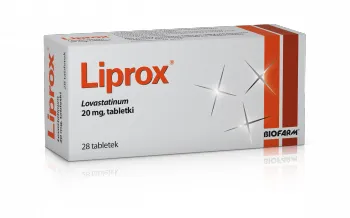
Table of Contents
Patient Information Leaflet
LIPROX
20 mg, tablets
Lovastatin
Please read this leaflet carefully before taking this medicine, as it contains important information for you.
- Keep this leaflet as you may need to read it again.
- If you have any questions, please consult your doctor or pharmacist.
- This medicine has been prescribed for a specific individual. Do not pass it on to others. This medicine may harm other people, even if their symptoms are the same.
- If you experience any adverse reactions, including any not listed in this leaflet, inform your doctor or pharmacist. See section 4.
"This medicine is absolutely contraindicated during pregnancy."
Table of Contents
- What Liprox is and what it is used for
- Important information before taking Liprox
- How to take Liprox
- Possible side effects
- How to store Liprox
- Contents of the pack and other information
1. What Liprox is and what it is used for
The active substance in Liprox is lovastatin.
Liprox is an HMG-CoA reductase inhibitor indicated for use:
- in primary hypercholesterolemia (types IIa and IIb), in combination with an appropriate diet, to reduce total cholesterol and LDL cholesterol levels in patients in whom dietary or other treatments have not been sufficiently effective;
- in coronary atherosclerosis in patients with elevated serum cholesterol levels in whom dietary or other treatments have not been sufficiently effective.
Taking Liprox does not relieve the need to follow a cholesterol-lowering diet.
2. Important information before using Liprox
When not to use Liprox:
- if the patient is allergic to lovastatin or any of the other ingredients of this medicine (listed in section 6),
- during pregnancy and breastfeeding,
- if the patient has active liver disease,
- if the patient has persistently elevated aminotransferase levels (more than three times the upper limit of normal),
- if the patient has severe renal impairment,
- if the patient has skeletal muscle disorders (myopathies),
- if the patient has impaired bile flow (cholestasis),
- if the patient is concurrently taking strong inhibitors of the enzyme CYP3A4 (e.g. itraconazole (a broad-spectrum antifungal agent), ketoconazole, HIV protease inhibitors, erythromycin, clarithromycin, telithromycin, and nefazodone),
- if the patient is concurrently taking mibefradil (a calcium channel blocker from the tetralol derivative group),
- if the patient is alcohol-dependent,
- if the patient is under 20 years of age.
Liprox should not be taken together with alcohol.
Warnings and precautions
Before starting treatment with Liprox, consult a doctor:
- if the patient has elevated levels of liver enzymes (alanine aminotransferase - AlAT, aspartate aminotransferase - AspAT),
- if the patient has liver disease,
- if the patient has renal impairment,
- if the patient has an acute infectious illness,
- if the patient is scheduled for major surgery,
- if the patient has sustained significant trauma,
- if the patient has serious metabolic or electrolyte disturbances,
- if the patient has an endocrine disorder,
- if the patient has hypertension,
- if the patient has seizures,
- if the patient has severe respiratory insufficiency,
- if the patient has or has had myasthenia (a disease causing generalised muscle weakness, including in some cases muscles involved in breathing) or ocular myasthenia (a disease causing weakness of the eye muscles), because statins may occasionally exacerbate symptoms of the disease or lead to the development of myasthenia (see section 4).
If unexplained muscle pain, tenderness or weakness occurs before starting treatment with Liprox or during treatment, inform the doctor as soon as possible. If myopathy is diagnosed or suspected, the doctor will discontinue treatment with Liprox.
Inform the doctor or pharmacist if muscle weakness persists. Additional tests and additional medications may be necessary to diagnose and treat this condition.
Do not use a dose of Liprox greater than 20 mg per day in patients who are also taking cyclosporine, gemfibrozil, other fibrates, or niacin in lipid-lowering doses (≥ 1 g per day). Concomitant use of lovastatin with fibrates or niacin should be avoided unless the expected benefits from lipid changes outweigh the risks of combining these medicines.
Do not use a dose of Liprox greater than 40 mg per day in patients also receiving amiodarone or verapamil. Concomitant use of lovastatin in doses greater than 40 mg per day with amiodarone or verapamil should be avoided unless the expected clinical benefits outweigh the risk of developing myopathy.
Patients with diabetes or those at risk of developing diabetes will be under close medical supervision during treatment with this medicine. Patients with high blood glucose and lipid levels, overweight, and high blood pressure may be at risk of developing diabetes.
Children and adolescents
Lovastatin is not recommended for use in children and adolescents under 18 years of age, as the safety and efficacy of lovastatin in children and adolescents have not been established.
Patients with renal and/or hepatic impairment
Patients with renal impairment:
In patients with renal impairment and creatinine clearance less than 30 mL/min, the daily dose of the medicine should not exceed 20 mg.
Patients with hepatic impairment:
Liprox should be used with caution in patients who have had liver disease.
Active liver disease is a contraindication to the use of Liprox.
Measurement of aminotransferase activity is recommended in patients before starting Liprox and periodic monitoring of these enzymes during treatment, especially in patients with abnormal liver function test results or who consume significant amounts of alcohol, and in patients whose dose has been increased to 40 mg or more per day.
If serum aminotransferase activity exceeds three times the upper limit of normal, the benefits of treatment versus risk should be carefully considered. Aminotransferase activity should be rechecked promptly. If elevated activity persists or worsens, the medicine should be discontinued.
Elderly patients
In a clinical study on the use of lovastatin in patients over 60 years of age, similar efficacy was observed compared to younger populations, and no increase in the frequency of adverse effects or laboratory abnormalities was observed.
Liprox and other medicines
Inform the doctor about all medicines currently or recently taken, as well as any medicines the patient plans to take.
CYP3A4 interactions
Substances that are strong inhibitors of CYP3A4 (listed below) increase the risk of muscle-related adverse effects (myopathy) by reducing the elimination of lovastatin:
- Mibefradil
- Itraconazole
- Ketoconazole
- Erythromycin
- Clarithromycin
- HIV protease inhibitors
- Nefazodone
- Cyclosporine
The risk of muscle-related adverse effects (myopathy) is increased when the following lipid-lowering medicines are used concomitantly. These medicines are not strong inhibitors of CYP3A4, but when used as monotherapy, they may cause myopathy:
- Gemfibrozil
- Other fibrates
- Niacin (nicotinic acid) (≥ 1 g per day)
Amiodarone and verapamil
Concomitant use of amiodarone or verapamil (but not other calcium channel blockers) with high doses of HMG-CoA reductase inhibitors increases the risk of myopathy.
Other types of interactions
During treatment with Liprox, do not consume more than one or two small glasses of grapefruit juice per day.
Coumarin derivatives
When lovastatin is used concomitantly with coumarin derivatives, the prothrombin time may be prolonged in some patients. If anticoagulant therapy is indicated in these patients, the doctor should measure prothrombin time before starting lovastatin and then periodically during treatment to ensure that no significant change in prothrombin time occurs. Once prothrombin time is stable, it can be monitored at intervals normally recommended for patients treated with coumarin-derived anticoagulants. The same procedure should be repeated if the lovastatin dose is changed.
Treatment with lovastatin is not associated with bleeding or changes in prothrombin time in patients not taking anticoagulant medicines.
In numerous clinical studies, no interactions were observed with antipyrine, digoxin, oral hypoglycaemic agents, beta-blockers, calcium channel blockers, diuretics, or non-steroidal anti-inflammatory drugs.
Lovastatin exhibits a clinically beneficial pharmacodynamic interaction with bile acid sequestrants in the intestine.
Liprox with food and drink
The medicine should be taken with food.
Pregnancy and breastfeeding
If the patient is pregnant or breastfeeding, suspects she may be pregnant, or plans to become pregnant, she should consult a doctor or pharmacist before using this medicine.
Liprox is contraindicated in pregnant women.
It is not known whether lovastatin passes into breast milk. Many medicines pass into breast milk and may pose a risk of adverse effects in the infant; therefore, women taking Liprox should not breastfeed.
Driving and operating machinery
There are no data on the effect of the medicine on the ability to drive or operate machinery.
Liprox contains lactose (a sugar found in milk). If the patient has previously been diagnosed with intolerance to certain sugars, the patient should consult a doctor before taking this medicine.
The medicine contains less than 1 mmol (23 mg) of sodium per recommended dose unit, meaning the medicine is considered "sodium-free".
3. How to use Liprox
This medicine should always be used exactly as directed by the doctor. If in doubt, consult
your doctor or pharmacist.
The decision on when to start administering lovastatin and the dosage is made by the doctor.
Dosage
The most commonly recommended initial dose is 20 mg once daily (1 tablet), taken with
the evening meal.
For patients with mild or moderate hypercholesterolemia, the doctor may initiate treatment
with a dose of 10 mg. If this dose does not achieve at least a 20% reduction in
LDL-cholesterol concentration, the doctor may increase it no more frequently than every 4 weeks.
The maximum recommended dose must not exceed 80 mg/day (4 tablets).
The medicine at doses of 40 mg/day or higher may be taken in two equal divided doses
with morning and evening meals.
For patients concurrently using immunosuppressive medicines, and for patients with renal
insufficiency or impaired bile flow, the initial dose should not exceed 10 mg/day (½ tablet),
and the maintenance dose should not exceed 20 mg/day (1 tablet).
The dose of the medicine should be reduced when total cholesterol concentration is reduced below
140 mg/100 ml (3.6 mmol/l), and LDL-cholesterol concentration is reduced below 75 mg/100 ml (1.49 mmol/l).
A dose of Liprox higher than 20 mg daily must not be used in patients concurrently taking
cyclosporine, gemfibrozil, other fibrates, or niacin at lipid-lowering doses (≥ 1 g daily).
A dose of Liprox higher than 40 mg daily must not be used in patients receiving
amiodarone or verapamil.
The tablet may be divided into two equal doses.
Taking a higher than recommended dose of Liprox
If a higher than recommended dose is taken, consult a doctor or pharmacist immediately.
Missing a dose of Liprox
Do not take a double dose to make up for a missed dose.
Continue taking the medicine at the prescribed dose at the next scheduled time.
Stopping treatment with Liprox
If you have any further doubts regarding the use of this medicine, consult your doctor or pharmacist.
4. Possible adverse reactions
Like all medicines, this medicine can cause adverse reactions, although not everyone will experience them.
The following adverse effects (probably, possibly or definitely related to the use of the medicine) occurred in more than 1% of patients in controlled clinical trials:
abdominal distension, diarrhoea, constipation, nausea, indigestion, dizziness, blurred vision, headache, involuntary muscle contractions, muscle pain, rash, and abdominal pain.
If muscle pain, tenderness or weakness occurs, contact your doctor as soon as possible.
Other adverse reactions occurring in 0.5% to 1% of patients include: fatigue, itching, dry mouth, insomnia, sleep disturbances, and taste disturbances.
Myopathy (muscle wasting or weakness) and rhabdomyolysis (a clinical syndrome caused by muscle damage) occurred rarely.
Adverse reactions occurring with unknown frequency:
Myasthenia gravis (a disease causing general muscle weakness, including in some cases muscles involved in breathing).
Ocular myasthenia (a disease causing weakness of the eye muscles).
You should speak with your doctor if the patient experiences weakness in the arms or legs, worsening after periods of activity, double vision or drooping eyelids, difficulty swallowing or shortness of breath.
Other adverse reactions that may occur during treatment include: hepatitis, cholestatic jaundice, vomiting, anorexia, paresthesia (tingling sensation), peripheral neuropathy (a disorder affecting the function of peripheral nerves, which may manifest as limb numbness, limb weakness or loss of muscle mass), psychiatric disorders including anxiety, alopecia, toxic epidermal necrolysis, erythema multiforme, including Stevens-Johnson syndrome (a hypersensitivity reaction to various triggers (infectious, chemical, drugs) with variable severity; primary lesions are transient blisters appearing on mucous membranes, mainly in the oral cavity and genital organs; bursting blisters form painful erosions, which impair feeding).
In rare cases, hypersensitivity syndrome has been reported, characterized by one or more of the following symptoms: anaphylaxis, angioedema (a deeper form of urticaria, often associated with urticarial rash), lupus-like syndrome, polymyositis, dermatomyositis, vasculitis, thrombocytopenia (reduced platelet count in blood), leukopenia (decreased number of leukocytes (white blood cells) in peripheral blood), eosinophilia (increased proportion of eosinophils in blood exceeding 4% of total leukocyte count), hemolytic anaemia, positive antinuclear antibody test, elevated ESR, arthritis, arthralgia, urticaria, malaise, photosensitivity, fever, flushing, chills, dyspnoea, and general feeling of discomfort.
Adverse reactions with unknown frequency: persistent muscle weakness.
If any of the above-mentioned symptoms of hypersensitivity syndrome occur, contact your doctor immediately.
Diabetes. The risk of developing diabetes is higher in individuals with elevated blood glucose and lipid levels, overweight, and high blood pressure. Your doctor will monitor your condition during treatment with this medicine.
Possible adverse reactions reported for some statins (medicines of the same class):
- memory loss,
- sexual dysfunction,
- breathing problems, including persistent cough and/or dyspnoea or fever.
Reporting of adverse reactions
If any adverse reactions occur, including those not listed in this leaflet, inform your doctor or pharmacist. Adverse reactions can be reported directly to the Department of Monitoring Adverse Reactions to Medicinal Products at the Office for Registration of Medicinal Products, Medical Devices and Biocidal Products
Al. Jerozolimskie 181C
02-222 Warsaw
Phone: +48 22 4921 301
Fax: +48 22 4921 309
Website: https://smz.ezdrowie.gov.pl
Adverse reactions may also be reported to the marketing authorization holder.
Reporting adverse reactions helps provide more information on the safety of the medicine.
5. How to store Liprox
Keep this medicine out of sight and reach of children.
Store below 25°C.
Keep in the original packaging to protect from light.
Do not use this medicine after the expiry date stated on the carton and blister pack.
The expiry date refers to the last day of the specified month.
Medicines should not be disposed of via wastewater or household waste. Ask your pharmacist how to dispose of medicines you no longer use. This will help protect the environment.
6. Contents of the pack and other information
What Liprox contains
- The active substance is 20 mg of lovastatin.
- The other ingredients are: microcrystalline cellulose, lactose monohydrate, pregelatinized starch, magnesium stearate, indigo carmine (E 132).
What Liprox looks like and contents of the pack
Tablets are light blue, round, biconvex, with smooth surface, may have slight blue speckles, without chipping, with a break line on one side. The cardboard box contains 28 tablets packed in PVC/Aluminium blisters.
Marketing Authorisation Holder and Manufacturer
Biofarm Sp. z o.o.
Wałbrzyska 13
60-198 Poznań
Tel.: +48 61 66 51 500
Fax: +48 61 66 51 505