Lipanthyl nt 145
Poland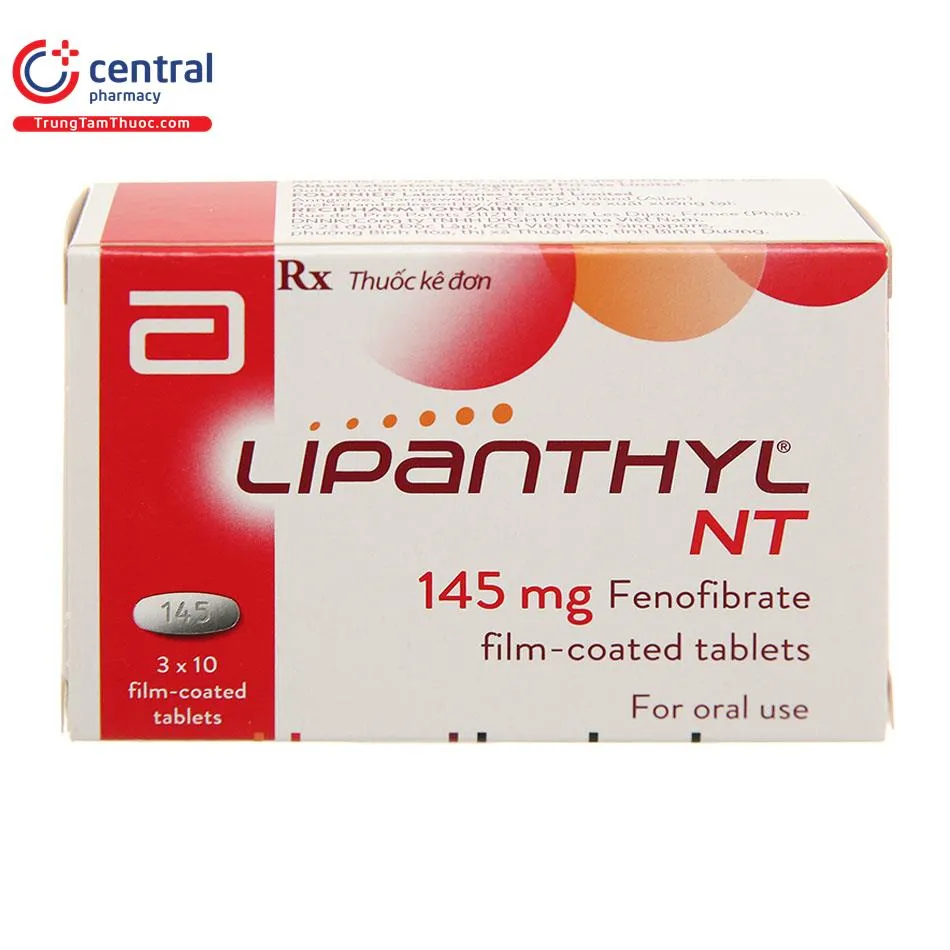
Table of Contents
Patient Information Leaflet
Caution! Keep this leaflet. Information on the immediate packaging is in a foreign language.
Lipanthyl NT 145
145 mg, coated tablets
Fenofibrate
Please read this leaflet carefully before taking the medicine, as it contains
important information for the patient.
- Keep this leaflet, as you may need to read it again.
- If you have any questions, ask your doctor or pharmacist.
- This medicine has been prescribed for a specific individual. Do not pass it on to others. The medicine may harm someone else, even if their symptoms are the same.
- If you experience any adverse reactions, including any not listed in this leaflet, inform your doctor, pharmacist, or nurse. See section 4.
Table of contents
- What Lipanthyl NT 145 is and what it is used for
- Important information before taking Lipanthyl NT 145
- How to take Lipanthyl NT 145
- Possible side effects
- How to store Lipanthyl NT 145
- Contents of the pack and other information
1. What Lipanthyl NT 145 is and what it is used for
Lipanthyl NT 145 belongs to a group of medicines known as fibrates. These medicines are used to reduce levels of fats (lipids) in the blood. An example of such fats are triglycerides.
Lipanthyl NT 145 is used in combination with a low-fat diet and other non-medical treatments such as physical exercise and weight loss, all aimed at reducing blood fat levels.
In certain cases, Lipanthyl NT 145 may be used as an add-on to other medicines (statins) when blood fat levels cannot be controlled with statins alone.
2. Important information before taking Lipanthyl NT 145
When not to take Lipanthyl NT 145
- if the patient is allergic to fenofibrate or any of the other ingredients of this medicine (listed in section 6: Contents of the pack and other information),
- if the patient is allergic to peanuts or peanut oil or to soya lecithin and soy-derived products,
- if the patient has previously experienced an allergic reaction or skin damage caused by sunlight or UV radiation while taking other medicines (e.g. other fibrates or the anti-inflammatory drug ketoprofen),
- if the patient has severe liver, kidney or gallbladder disease,
- if the patient has pancreatitis (a condition causing abdominal pain) not caused by high blood fat levels. If any of the above situations apply, Lipanthyl NT 145 must not be taken.
If in doubt, consult a doctor or pharmacist before taking Lipanthyl NT 145.
Page 1 of 7
Warnings and precautions
Before starting to take Lipanthyl NT 145, discuss with your doctor or pharmacist if:
- the patient has liver or kidney disease,
- symptoms indicating liver inflammation have occurred: yellowing of the skin and whites of the eyes (jaundice), increased liver enzymes (shown by blood tests), abdominal pain or itching,
- the patient has reduced thyroid activity (hypothyroidism).
If any of the above situations apply (or if in doubt), consult a doctor or pharmacist before taking Lipanthyl NT 145.
Effect on muscles
Immediately stop taking Lipanthyl NT 145 and contact a doctor if any of the following occur during treatment:
- unexpected muscle cramps,
- muscle pain, tenderness or weakness.
This medicine may cause muscle disorders, which can be serious. These disorders are rare but include myositis (inflammation of the muscles) and rhabdomyolysis (muscle breakdown). This may lead to kidney damage and even death.
The doctor may order blood tests to monitor muscle function before and during treatment.
The risk of muscle breakdown may be higher in certain patients. Inform the doctor if:
- the patient is over 70 years old,
- the patient has kidney disease,
- the patient has thyroid disease,
- the patient or a family member has a history of hereditary muscle disorders,
- the patient consumes large amounts of alcohol,
- the patient is taking cholesterol-lowering medicines called statins (such as simvastatin, atorvastatin, pravastatin, rosuvastatin or fluvastatin),
- the patient has ever experienced muscle disorders during treatment with statins or fibrates (such as fenofibrate, bezafibrate or gemfibrozil).
If any of the above situations apply (or if in doubt), consult a doctor before starting treatment with Lipanthyl NT 145.
Lipanthyl NT 145 and other medicines
Tell your doctor or pharmacist about all medicines the patient is currently taking or has recently taken, as well as any medicines the patient plans to take. Especially inform the doctor or pharmacist if the patient is taking:
- oral anticoagulants (e.g. warfarin),
- other medicines used to control blood lipid levels (such as statins or fibrates). Taking a statin or another fibrate together with Lipanthyl NT 145 may increase the risk of muscle damage,
- certain medicines used to treat diabetes (such as rosiglitazone or pioglitazone),
- cyclosporine (an immunosuppressive medicine).
If any of the above situations apply (or if in doubt), consult a doctor or pharmacist before taking Lipanthyl NT 145.
Pregnancy, breastfeeding and fertility
- Inform the doctor if the patient is pregnant, suspects she may be pregnant, or is planning to become pregnant. Due to insufficient experience with the use of Lipanthyl NT 145 during pregnancy, this medicine should only be used if the doctor considers it absolutely necessary.
- It is not known whether the active substance of Lipanthyl NT 145 passes into human breast milk. Therefore, Lipanthyl NT 145 must not be taken during breastfeeding or if the patient plans to breastfeed.
Page 2 of 7
Driving and using machines
This medicine has no effect on the ability to drive and use machines.
Lipanthyl NT 145 contains monohydrate lactose, sucrose and soya lecithin (soy oil) and sodium
- Lipanthyl NT 145 contains sugars called lactose and sucrose. If the patient has previously been diagnosed with intolerance to certain sugars, the patient should consult a doctor before taking this medicine.
- Lipanthyl NT 145 contains soya lecithin (soy oil). Patients with hypersensitivity to peanuts, peanut oil or soya should not take this medicine.
- The medicine contains less than 1 mmol (23 mg) of sodium per tablet; therefore, the product is considered "sodium-free".
3. How to take Lipanthyl NT 145
This medicine should always be taken as directed by your doctor or pharmacist.
If in doubt, consult your doctor or pharmacist.
Your doctor will determine the appropriate dose based on your medical condition, current treatment, and individual risk factors.
How to take the medicine
The tablet may be taken with or without food, at any time of day.
- Swallow the tablet whole with a glass of water.
- Do not crush or chew the tablet.
While undergoing treatment with Lipanthyl NT 145, it is important to maintain:
- a diet low in fat,
- regular physical activity.
How much medicine to take
The recommended dose is one tablet daily.
Patients who have previously taken one 200 mg capsule of Lipanthyl 200M or one 160 mg tablet of Lipanthyl Supra 160 may switch to one 145 mg tablet of Lipanthyl NT 145.
Patients with kidney disease
If you have kidney problems, your doctor may reduce your dose. If you have any questions, consult your doctor or pharmacist.
Use in children and adolescents
Lipanthyl NT 145 is not recommended for use in individuals under 18 years of age.
If you take more Lipanthyl NT 145 than recommended
If you take more than the recommended dose, or if someone else accidentally takes this medicine, contact your doctor immediately or go to the nearest hospital emergency department.
If you miss a dose of Lipanthyl NT 145
- If you miss a dose, take the next dose at your usual time.
- Do not take a double dose to make up for a missed dose.
Stopping treatment with Lipanthyl NT 145
Do not stop treatment unless your doctor advises you to do so or if the medicine causes you discomfort. Abnormal blood lipid levels require long-term treatment. If your doctor advises stopping treatment, do not keep the tablets unless otherwise instructed by your doctor. If you have any further doubts about using this medicine, consult your doctor or pharmacist.
Page 3 of 7
4. Possible adverse reactions
Like all medicines, this medicine can cause adverse reactions, although not everyone will experience them.
If any of the following serious adverse reactions occur, stop taking Lipanthyl NT 145 and contact your doctor immediately – prompt treatment may be necessary.
Uncommon: may occur in up to 1 in 100 patients
- Muscle cramps, muscle pain, tenderness or weakness – these may be symptoms of inflammation or breakdown of muscles, which could lead to kidney damage or even death;
- Abdominal pain – may be symptoms of pancreatitis;
- Chest pain and shortness of breath – may be symptoms of blood clots in the lungs (pulmonary embolism);
- Pain, redness and swelling of the legs – may be symptoms of blood clots in the legs (deep vein thrombosis).
Rare: may occur in up to 1 in 1,000 patients
- Allergic reaction, symptoms may include swelling of the face, lips, tongue or throat, which may cause difficulty in breathing;
- Yellowing of the skin and whites of the eyes (jaundice) or increased liver enzymes – may be symptoms of liver inflammation.
Frequency not known: frequency cannot be estimated from the available data
- Severe skin rash with redness, peeling and swelling of the skin resembling severe burns;
- Chronic lung disease.
If any of the above-mentioned adverse reactions occur, stop taking
Lipanthyl NT 145 and contact your doctor immediately.
Other adverse reactions
If any of the following adverse reactions occur, contact your doctor or pharmacist.
Common: may occur in up to 1 in 10 patients
- Diarrhoea;
- Abdominal pain;
- Bloating with passing of wind;
- Nausea;
- Vomiting;
- Increased liver enzyme activity in blood – detected in laboratory tests;
- Increased blood homocysteine levels (elevated levels of this amino acid in blood are associated with a higher risk of coronary heart disease, stroke and peripheral vascular disease, although a causal relationship has not been established).
Uncommon: may occur in up to 1 in 100 patients
- Headache;
- Gallstones;
- Decreased libido;
- Rash, itching or hives;
- Increased creatinine levels excreted by the kidneys – detected in laboratory tests.
Page 4 of 7
Rare: may occur in up to 1 in 1,000 patients
- Hair loss;
- Increased urea levels excreted by the kidneys – detected in laboratory tests;
- Increased sensitivity of the skin to sunlight, sunbed lamps and tanning beds;
- Decreased haemoglobin concentration (the pigment carrying oxygen in the blood) and decreased white blood cell count – detected in laboratory tests.
Frequency not known: frequency cannot be estimated from the available data
- Muscle breakdown;
- Complications associated with gallstones;
- Feeling of fatigue.
Reporting of adverse reactions
If any adverse reactions occur, including any not listed in this leaflet, inform your doctor, pharmacist or nurse. Adverse reactions can be reported directly to the Department for Monitoring Adverse Drug Reactions of the Office for Registration of Medicinal Products, Medical Devices and Biocidal Products: Al. Jerozolimskie 181 C, 02-222 Warsaw
Tel: +48 22 49 21 301, Fax: +48 22 49 21 309, Website: https://smz.ezdrowie.gov.pl
Reporting adverse reactions helps to provide more information on the safety of this medicine.
5. How to store Lipanthyl NT 145
Keep this medicine out of sight and reach of children.
Store the medicine at a temperature not exceeding 30°C.
Do not use this medicine after the expiry date stated on the packaging. The expiry date refers to the last day of the stated month.
Medicines must not be disposed of via the sewage system or household waste. Ask your pharmacist how to dispose of medicines no longer in use. This will help protect the environment.
6. Contents of the pack and other information
What Lipanthyl NT 145 contains
- The active substance is fenofibrate. Each tablet of Lipanthyl NT 145 contains 145 mg of fenofibrate.
- The other ingredients are: hypromellose, sodium docusate, sucrose, sodium lauryl sulfate, monohydrate lactose, microcrystalline cellulose silica, crospovidone, magnesium stearate. The film-coating contains: polyvinyl alcohol, titanium dioxide (E 171), talc, soy lecithin, xanthan gum.
What Lipanthyl NT 145 looks like and contents of the pack
- Lipanthyl NT 145 is a white, elongated film-coated tablet, embossed with "145" on one side and the Fournier logo on the other.
- Lipanthyl NT 145 is packed in packs of 30 tablets.
Page 5 of 7
For further information, please contact the marketing authorisation holder or the parallel importer.
Marketing authorisation holder in the Czech Republic, country of export:
Mylan IRE Healthcare Limited
Unit 35/36, Grange Parade
Baldoyle Industrial Estate
Dublin 13, Ireland
Manufacturer:
Mylan Laboratories SAS
Route de Belleville
Lieu-dit Maillard
01400 Châtillon-sur-Chalaronne
France
Recipharm Fontaine
Rue des Prés Potets
21121 Fontaine-les-Dijon
France
Mylan Hungary Kft.
Mylan utca 1.
Komárom, 2900
Hungary
Parallel importer:
Delfarma Sp. z o.o.
ul. Św. Teresy od Dzieciątka Jezus 111
91-222 Łódź
Repackaged in:
Delfarma Sp. z o.o.
ul. Św. Teresy od Dzieciątka Jezus 111
91-222 Łódź
Marketing authorisation number in the Czech Republic, country of export: 31/214/05-C
Parallel import authorisation number: 101/20
This medicinal product is authorised for sale in the Member States of the European Economic Area under the following names:
MRP Procedure No. DE/H/0497/001:
- Germany: Lipidil 145 ONE
- Austria: Lipanthyl Nanopartikel 145 mg
- Belgium: Lipanthylnano 145 mg
- Luxembourg: Lipanthylnano 145 mg
- Czech Republic: Lipanthyl NT 145 mg
- Finland: Lipanthyl Penta 145 mg
- France: Lipanthyl 145 mg
- Greece: Lipidil NT 145 mg
- Hungary: Lipidil 145 mg
- Ireland: Lipantil supra 145 mg
- Italy: Fulcrosupra 145 mg
- Poland: Lipanthyl NT 145
- Slovakia: Lipanthyl NT 145 mg
- Spain: Secalip 145 mg
Page 6 of 7
MRP Procedure No. DE/H/0498/001:
- Germany: Xafenor 145 mg
- Portugal: Supralip 145 mg
MRP Procedure No. DE/H/0500/001:
- Germany: Liperial 145 mg
- France: Fenofibrate Fournier 145 mg
- Italy: Liperial 145 mg
Page 7 of 7