Lioresal intrathecal 10 mg/5 ml
Poland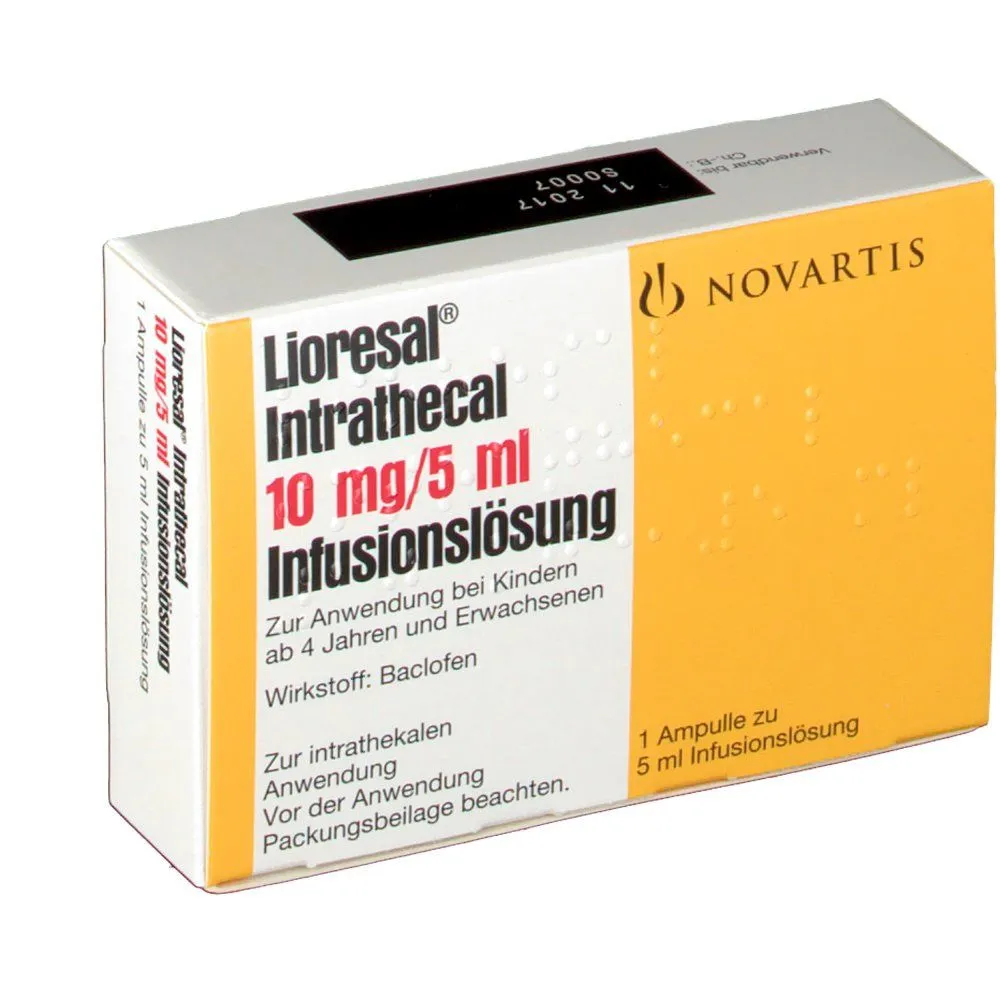
Table of Contents
- Patient Information Leaflet
- 1. What Lioresal Intrathecal 10 mg/5 ml is and what it is used for
- 2. Important information before using Lioresal Intrathecal 10 mg/5 ml
- 3. How to use Lioresal Intrathecal 10 mg/5 ml
- 4. Possible adverse effects
- 5. How to store Lioresal Intrathecal 10 mg/5 ml
- 6. Contents of the pack and other information
- Information intended exclusively for healthcare professionals:
Patient Information Leaflet
Warning! Keep this leaflet! The packaging information in a foreign language.
Lioresal Intrathecal 10 mg/5 ml, solution for infusion
For use in adult patients and children aged 4 years and older
Active substance: baclofen
Please read all of this leaflet carefully before using this medicine, as it contains
important information for you.
- Keep this leaflet, so that you can read it again if necessary.
- If you have any further questions, please ask your doctor or pharmacist.
- This medicine has been prescribed for a specific individual. Do not pass it on to others. It may harm someone else, even if their symptoms are the same.
- If you experience any side effects, including any possible side effects not listed in this leaflet, tell your doctor or pharmacist. See section 4.
Leaflet Contents
- What Lioresal Intrathecal 10 mg/5 ml is and what it is used for
- What you need to know before using Lioresal Intrathecal 10 mg/5 ml
- How to use Lioresal Intrathecal 10 mg/5 ml
- Possible side effects
- How to store Lioresal Intrathecal 10 mg/5 ml
- Contents of the pack and other information
1. What Lioresal Intrathecal 10 mg/5 ml is and what it is used for
Lioresal Intrathecal 10 mg/5 ml contains the active substance baclofen. Lioresal Intrathecal 10 mg/5 ml is a medicine used to treat excessive muscle stiffness.
Lioresal Intrathecal 10 mg/5 ml is used in the treatment of severe, chronic spasticity (increased muscle tone) that cannot be effectively managed with standard treatments:
- in multiple sclerosis – a progressive disease of the nervous system, brain and spinal cord, with physical and mental symptoms
- after spinal cord injuries or brain injuries
- in other spinal cord disorders.
During the patient qualification phase for treatment and during the dose escalation phase, immediately after pump implantation, the patient will be closely monitored under conditions ensuring access to appropriate equipment and medical staff. The dosage, possible side effects, or signs of infection will be regularly assessed. The functioning of the drug delivery system will also be checked.
If there is no improvement or if the patient feels worse, consult your doctor.
2. Important information before using Lioresal Intrathecal 10 mg/5 ml
When not to use Lioresal Intrathecal 10 mg/5 ml:
- if the patient is allergic to baclofen or to any of the other ingredients of this medicine (listed in section 6); if the patient thinks they may be allergic, they should consult their doctor.
- if the patient has treatment-resistant epilepsy.
Warnings and precautions
Consult a doctor immediately if the patient thinks the device is not working properly or if they notice symptoms of withdrawal (see symptoms of discontinuation in section 3 “How to use Lioresal Intrathecal 10 mg/5 ml”).
If any of the following apply to the patient, they should inform their doctor before starting treatment with Lioresal Intrathecal 10 mg/5 ml:
- disturbances in cerebrospinal fluid circulation due to flow obstruction
- treatable epilepsy or other convulsive seizures involving the brain
- neurological disorders caused by damage to cranial nerves in the medulla oblongata (bulbar palsy symptoms) or partial paralysis of respiratory muscles
- acute or chronic confusion states
- psychiatric and (or) psychological disorders, such as schizophrenia
- Parkinson’s disease
- history of autonomic hyperreflexia (uncontrolled)
- insufficient blood flow to the brain
- breathing difficulties
- bladder sphincter hyperactivity
- heart diseases
- kidney function disorders
- gastric and intestinal ulcers
- severe liver function impairment
- increased muscle tone due to previous head injury. Long-term treatment of increased muscle tone should be initiated when spasticity symptoms are stable and can be reliably assessed.
If any of these symptoms occur during treatment with Lioresal Intrathecal 10 mg/5 ml,
the patient should inform their doctor immediately:
- if the patient experiences back, shoulder, neck, or buttock pain during treatment (a type of spinal deformity called scoliosis);
- if the patient ever has thoughts of self-harm or suicide, they should speak with their doctor immediately or go to hospital. The patient should also ask a relative or close friend to inform them if they are concerned about changes in their behaviour and to read this leaflet.
Children
In children, certain requirements regarding appropriate body weight must be met to allow implantation of the infusion pump. Lioresal Intrathecal 10 mg/5 ml is intended for use in children aged 4 years and older. The safety of intrathecal administration of Lioresal Intrathecal 10 mg/5 ml in children under 4 years of age has not yet been established.
Patients over 65 years of age
During clinical trials, Lioresal Intrathecal 10 mg/5 ml was administered to several elderly patients and did not cause particular problems. However, experience with oral Lioresal tablets shows that this patient group may be more susceptible to adverse reactions. Therefore, elderly patients should be carefully monitored for adverse effects.
Lioresal Intrathecal 10 mg/5 ml and other medicines
Inform your doctor or pharmacist about all medicines currently used, recently used, or planned for use.
The following medicines may affect the action of Lioresal Intrathecal 10 mg/5 ml or Lioresal Intrathecal 10 mg/5 ml may affect them. Dose adjustment of Lioresal Intrathecal 10 mg/5 ml or one of the other concomitantly used medicines may be necessary:
- medicines used in Parkinson’s disease
- medicines relieving severe muscle spasms
- medicines with central nervous system depressant effects
- medicines used to treat depression, such as imipramine, doxepin, amitriptyline, opipramol
- medicines used to treat high blood pressure.
Lioresal Intrathecal 10 mg/5 ml with food, drink and alcohol
When using Lioresal Intrathecal 10 mg/5 ml, consumption of alcohol should be avoided, as this may cause undesirable intensification or unpredictable changes in the drug’s effects.
Pregnancy and breastfeeding
Due to lack of experience, women who are pregnant or breastfeeding should use Lioresal Intrathecal 10 mg/5 ml only if the doctor considers it absolutely necessary.
Driving and operating machinery
Do not drive, operate machinery or perform other hazardous activities, as Lioresal Intrathecal 10 mg/5 ml may significantly affect these functions.
Lioresal Intrathecal 10 mg/5 ml contains sodium
This medicine contains less than 1 mmol (23 mg) of sodium per 5 ml, meaning the medicine is considered "sodium-free".
If the doctor needs to dilute Lioresal Intrathecal 10 mg/5 ml with a saline solution, the resulting sodium dose will be higher.
3. How to use Lioresal Intrathecal 10 mg/5 ml
This medicine should always be used exactly as directed by the physician. In case of doubt, consult
your doctor or pharmacist.
The following products are available on the market: Lioresal Intrathecal 0.05 mg/1 ml (0.05 mg/ml), Lioresal Intrathecal
10 mg/20 ml (10 mg/20 ml), Lioresal Intrathecal 10 mg/5 ml (10 mg/5 ml).
Route of administration
Lioresal Intrathecal 10 mg/5 ml may be administered by direct injection or infusion into the intrathecal space
only by a qualified specialist and using appropriate equipment.
For this reason, hospitalization is required at the beginning of treatment.
At the start of treatment, the physician will determine whether a single injection of a lower dose – Lioresal Intrathecal 0.05 mg/1 ml, solution for injection – will relieve muscle spasms. If possible, a special pump will be implanted under the patient's skin, which will allow continuous, patient-adjusted dosing.
It is very important that the patient attends scheduled appointments during which the physician refills
the pump .
If the patient receives too low a dose of Lioresal Intrathecal 10 mg/5 ml, increased muscle tone may return. Muscle spasms may also worsen.
Contact the doctor immediately if muscle spasms do not improve or recur.
The physician must regularly monitor the patient's condition and pump function—at least once a month.
Duration of treatment
The duration of treatment will be determined by the physician.
Use of a higher than recommended dose of Lioresal Intrathecal 10 mg/5 ml
Contact the doctor immediately if the patient or caregiver notices symptoms of overdose, which may occur suddenly or gradually:
- excessive muscle weakness
- drowsiness
- dizziness or feeling faint
- excessive salivation
- nausea or vomiting
- breathing difficulties or even respiratory arrest
- seizures
- reduced consciousness or even coma
- low body temperature
Discontinuation of Lioresal Intrathecal 10 mg/5 ml
If discontinuation of the medicine is necessary, it must be performed only by the treating physician, who will gradually reduce the dose to avoid adverse effects. Sudden discontinuation of Lioresal Intrathecal 10 mg/5 ml may cause severe adverse effects, which in several cases have resulted in death.
Contact the doctor immediately if the patient or caregivers notice the following symptoms of discontinuation of Lioresal Intrathecal 10 mg/5 ml. This is particularly important when continued administration via pump is planned.
- worsening spasticity, excessive muscle tone
- difficulty moving muscles
- increased heart rate and rapid pulse
- itching
- tingling, burning, or numbness in hands and feet
- palpitations
- anxiety
- fever
- low blood pressure
- changes in mental status, e.g. agitation, disorientation, hallucinations, abnormal thinking and behavior
- seizures
- prolonged painful penile erection (priapism)
The above symptoms may lead to severe adverse effects, which may be fatal if treatment is not initiated immediately.
It should be remembered that pump malfunctions, such as battery problems, catheter issues, alarm signal failure, or device malfunction, may lead to overdose or underdosing of the medicine.
In case of any doubts regarding the use of the medicine, consult the physician.
4. Possible adverse effects
* Adverse effects marked with an asterisk occur more frequently in patients with
cerebral palsy.
Like any medicine, this medicine can cause adverse effects, although they do not occur in all patients.
Adverse effects are more common when treatment is initiated in hospital, but they may also occur later.
Many of the listed adverse effects may also be related to the underlying disease being treated.
Malfunction of the implanted drug delivery device or infusion system may lead to withdrawal symptoms, which can be fatal (see symptoms of interruption of treatment in section 3 "How to use Lioresal Intrathecal 10 mg/5 ml").
The following adverse effects and their frequency of occurrence have been reported:
Very common: may affect more than 1 in 10 patients
- decreased muscle tone
- somnolence
Common: may affect up to 1 in 10 patients
- anxiety
- decreased appetite
- dyspnoea, slow or shallow breathing
- reduced alertness
- decreased blood pressure upon sitting or standing
- depression
- disorientation
- diarrhoea, even faecal incontinence
- increased muscle tone
- fever
- increased motor restlessness
- urinary retention*
- itchy skin swelling, similar to an insect bite
- pruritus
- headache*, pain
- seizures*
- pneumonia
- abnormal skin sensations with tingling in hands and feet
- dry mouth
- muscle weakness
- stupor
- chills
- facial, hand and foot oedema
- dizziness
- sexual dysfunction
- visual disturbances with blurred or double vision
- apathy
- involuntary urination
- nausea or vomiting*
- excessive salivation
- constipation
- slurred speech
- confusion
- respiratory depression
Uncommon: may affect up to 1 in 100 patients
- decreased body fluids (dehydration)
- pallor
- high blood pressure
- intestinal obstruction due to blockage
- memory loss / distractibility
- mood disturbances
- alopecia
- false sensory perceptions not caused by external stimuli (hallucinations)
- skin redness
- low body temperature
- difficulty swallowing
- problems with motor coordination
- suicidal thoughts and attempts
- excessive sweating
- nystagmus
- bradycardia
- diminished sense of taste
- blockage of a blood vessel due to deep vein thrombosis
- hallucinations
- euphoria
Rare: may affect up to 1 in 1,000 patients
- life-threatening withdrawal symptoms caused by problems with drug delivery
Some adverse effects occur with unknown frequency:
- progression of lateral curvature of the spine (scoliosis)
- inability to achieve or maintain erection (erectile dysfunction)
Reporting of adverse effects
If any adverse effects occur, including any adverse effects not listed in this leaflet, inform your doctor or pharmacist. Adverse effects can be reported directly to the Department of Monitoring of Adverse Drug Reactions of the Office for Registration of Medicinal Products, Medical Devices and Biocidal Products, Al. Jerozolimskie 181C, 02-222 Warsaw, tel.: + 48 22 49 21 301, fax: + 48 22 49 21 309, website: https://smz.ezdrowie.gov.pl.
Reporting adverse effects helps to provide more information on the safety of the medicine.
5. How to store Lioresal Intrathecal 10 mg/5 ml
Keep this medicine out of sight and reach of children.
Storage conditions
Do not store above 30°C.
Do not freeze. Do not sterilize by heat.
The solution should be used immediately after opening. Any unused solution must be discarded.
The solution must be clear and colourless. Do not use this medicine if cloudiness or discoloration is observed.
Do not use this medicine after the expiry date stated on the ampoule and carton. The expiry date refers to the last day of the stated month.
Medicines must not be disposed of via the sewage system or household waste. Ask your pharmacist how to dispose of medicines no longer required. This will help protect the environment.
6. Contents of the pack and other information
- The active substance is baclofen. Lioresal Intrathecal 10 mg/5 ml infusion solution: 1 ml of infusion solution contains 2.0 mg of baclofen. One 5 ml vial contains 10 mg of baclofen.
- Other components: sodium chloride, water for injections.
What Lioresal Intrathecal 10 mg/5 ml looks like and contents of the pack
Lioresal Intrathecal 10 mg/5 ml is a clear, colourless solution in a transparent, colourless vial.
Lioresal Intrathecal 10 mg/5 ml infusion solution is available in packs containing 1, 2 or 5 vials.
For more detailed information, please contact the marketing authorisation holder or the parallel importer.
Marketing authorisation holder in Belgium, country of export:
Novartis Pharma NV
Medialaan 40
B-1800 Vilvoorde
Netherlands
Manufacturer:
Novartis Pharma NV
Medialaan 40
B-1800 Vilvoorde
Netherlands
Parallel importer:
InPharm Sp. z o.o.
ul. Strumykowa 28/11
03-138 Warsaw
Repackaged in:
InPharm Sp. z o.o. Services sp. k.
ul. Chełmżyńska 249
04-458 Warsaw
Marketing authorisation number in Belgium, country of export: BE174203
Parallel import authorisation number: 76/22
This medicinal product has been authorised in the Member States of the European Economic Area under the following names:
Germany: Lioresal Intrathecal 10 mg/5 ml Infusionslösung
Poland: Lioresal Intrathecal 10 mg/5 ml, infusion solution
Information intended exclusively for healthcare professionals:
How to prepare and administer the medicinal product Lioresal Intrathecal 10 mg/5 ml?
Administration of a test dose, implantation of an infusion pump, and dose escalation of the intrathecally administered medicinal product must be performed in a hospital setting, within centers with appropriate experience and under close supervision by suitably qualified physicians. Immediate access to an intensive care unit must be ensured due to the possibility of severe or life-threatening adverse reactions to the medicinal product.
To determine the optimal dosing regimen for the medicinal product Lioresal Intrathecal 10 mg/5 ml, each patient should first receive a trial dose prior to initiating long-term treatment: the medicinal product Lioresal Intrathecal 0.05 mg/1 ml administered as an intrathecal bolus injection via an intrathecal catheter or by lumbar puncture. Subsequently, the dose must be carefully and individually adjusted for each patient, due to considerable inter-patient variability in therapeutically effective doses.
In long-term therapy, the medicinal product Lioresal Intrathecal 10 mg/5 ml is administered via an implanted pump, enabling continuous intrathecal infusion of baclofen solution into the cerebrospinal fluid.
The efficacy of the medicinal product Lioresal Intrathecal 10 mg/5 ml has been demonstrated in clinical trials using the SynchroMed infusion system. This drug delivery system includes refillable reservoirs implanted subcutaneously in the patient (usually in the abdominal wall tissue). The device is connected to an intrathecal catheter, which runs from the subcutaneous implantation site into the subarachnoid space. There is currently no experience with other implanted infusion systems for this medicinal product.
Prior to administration of Lioresal Intrathecal 10 mg/5 ml, myelography of the subarachnoid space should be performed in patients with post-traumatic spasticity. If radiological signs of meningitis are observed, treatment with Lioresal Intrathecal 10 mg/5 ml should not be initiated.
Prior to administering Lioresal Intrathecal 10 mg/5 ml, the solution should be inspected visually for clarity and colorlessness. The medicinal product must not be administered if the solution is cloudy or discolored.
Each ampoule is intended for single use only. The solution contained within is stable, isotonic, pyrogen-free, and free of antioxidants, with a pH of 5.0–7.0.
Implantation of the infusion pump / dose escalation phase (in hospital setting)
After confirming the patient's response to treatment with Lioresal Intrathecal 10 mg/5 ml during the trial phase, intrathecal infusion of the medicinal product may be initiated using the infusion pump described above. The antispasmodic effect of baclofen begins 6 to 8 hours after initiation of continuous infusion, with maximum effect observed after 24 to 48 hours.
The initial total daily dose of Lioresal Intrathecal 10 mg/5 ml is calculated as follows: if the effect of the drug after the test dose lasts longer than 12 hours, this dose is taken as the initial dose. If the effect lasts less than 12 hours, the test dose should be doubled and administered as the initial dose. The dose should not be increased during the first 24 hours of therapy.
After the first day of treatment, the dose may be gradually increased to achieve the desired therapeutic effect. The daily dose should not be increased by more than 10% to 30% of the previous dose in patients with spinal spasticity, and by 5% to 15% in patients with cerebral spasticity. When using a programmable pump, dose modification is recommended only once every 24 hours. For non-programmable pumps equipped with a 76 cm catheter delivering 1 ml per day, the patient's response to the new dose should be evaluated after 48 hours. If a significant increase in daily dose does not result in enhanced clinical effect, the proper functioning of the pump and catheter patency should be checked.
In general, the dose of the medicinal product is increased until a maintenance dose in the range of 300 µg – 800 µg per day is achieved in patients with spinal spasticity. Patients with cerebral spasticity usually require lower doses (see below).
Long-term therapy phase
The goal of treatment is to use the lowest dose that provides adequate control of spasticity without unacceptable adverse effects. Since therapeutic effects may diminish over time and the severity of spasticity may change, dose adjustments in a hospital setting are usually necessary during long-term therapy.
In this phase, the daily dose may be increased by 10% to 30% in patients with spinal spasticity and by 5% to 20% (upper limit) in patients with cerebral spasticity, by adjusting the infusion rate or changing the baclofen concentration in the pump reservoir. Conversely, if adverse effects occur, the daily dose of the medicinal product may be reduced by 10% to 20%.
The need for sudden dose escalation to achieve adequate therapeutic response may indicate pump malfunction or catheter kinking, fracture (abrasion), or displacement.
The maintenance dose of Lioresal Intrathecal 10 mg/5 ml in long-term treatment of patients with spinal spasticity is typically 300 µg to 800 µg of baclofen per day. The lowest and highest recorded daily doses administered to individual patients during the dose escalation phase were 12 µg and 2003 µg, respectively (studies conducted in the United States). Experience with doses exceeding 1000 µg per day is limited. During the first several months of treatment, the dose should be verified and modified particularly frequently.
In patients with cerebral spasticity, maintenance doses used during long-term therapy with continuous intrathecal infusion of Lioresal Intrathecal 10 mg/5 ml range from 22 µg to 1400 µg of baclofen per day. Mean daily doses of the medicinal product were 276 µg after one year and 307 µg after two years. Children under 12 years of age generally require lower doses (range: 24 µg to 1199 µg per day; mean: 274 µg per day).
If the pump's technical parameters allow, after establishing the daily dose and stabilizing the antispasmodic effect, attempts may be made to adjust drug delivery to the patient's circadian spasticity pattern. For example, if spasms occur more frequently at night, a 20% increase in hourly infusion rate may be required. Infusion rate changes should be programmed to occur two hours before the desired clinical effect is needed.
Throughout the entire treatment period, regular monitoring—at least monthly—is required at the treating center to assess tolerance to Lioresal Intrathecal 10 mg/5 ml and to detect any signs of infection. The proper functioning of the infusion system should be checked regularly. Local infection or catheter malfunction may interrupt intrathecal delivery of Lioresal Intrathecal 10 mg/5 ml, with potentially life-threatening consequences for the patient.
The baclofen concentration required for pump filling depends on the total daily dose of the medicinal product and the infusion rate of the pump. If baclofen administration at concentrations other than 0.05 mg/ml, 0.5 mg/ml, or 2 mg/ml is necessary, the medicinal product Lioresal Intrathecal 10 mg/5 ml should be diluted under aseptic conditions using sterile sodium chloride for injection, free of preservatives. In such cases, the manufacturer's instructions for the infusion pump must be followed.
Approximately 5% of patients may require higher doses due to reduced treatment efficacy ("development of tolerance") during long-term therapy. As described in the literature, tolerance development can be prevented by a 10- to 14-day interruption of baclofen administration, during which preservative-free morphine sulfate should be administered. After this period, the patient may again respond to treatment with Lioresal Intrathecal 10 mg/5 ml. Therapy should be resumed with the initial dose used in continuous infusion, followed by gradual dose escalation to avoid adverse effects due to overdose. This procedure must be performed in a hospital setting.
Pharmaceutical incompatibilities
The medicinal product Lioresal Intrathecal 10 mg/5 ml, solution for infusion, must not be mixed with other injectable or infusion solutions except for sterile sodium chloride solution free of preservatives, diluted under aseptic conditions.
Chemical incompatibility between dextrose and baclofen has been demonstrated.
Do not freeze. Do not sterilize by high temperature.