Linezolid eugia
Poland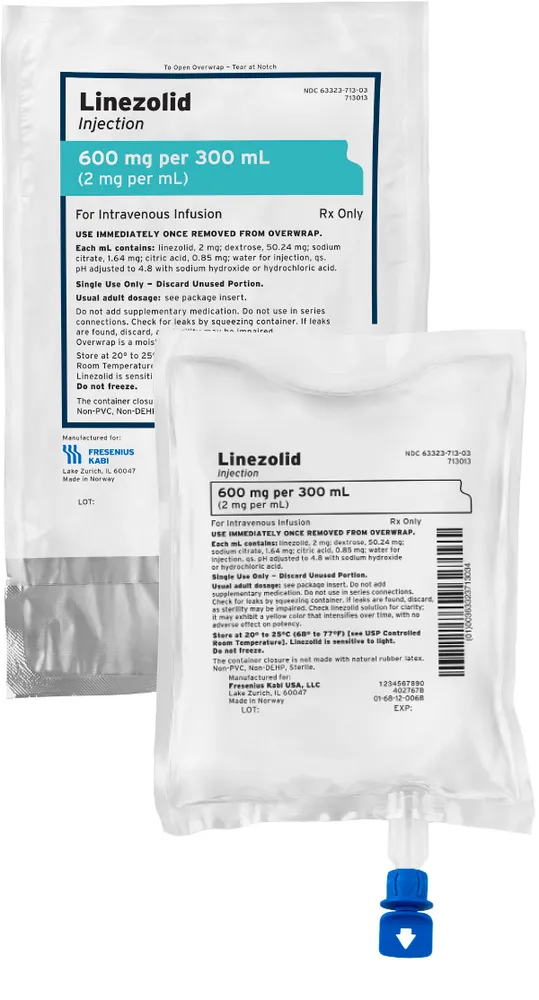
Table of Contents
- Patient Information Leaflet
- 1. What Linezolid Eugia is and what it is used for
- 2. Important information before using Linezolid Eugia
- 3. How to use Linezolid Eugia
- 4. Possible adverse reactions
- 5. How to store Linezolid Eugia
- 6. Contents of the packaging and other information
- Information intended exclusively for medical professionals
Patient Information Leaflet
Linezolid Eugia, 2 mg/mL, infusion solution
For adults
Linezolidum
Please read all of this leaflet carefully before using this medicine, because it contains
important information for you.
- Keep this leaflet, as you may need to read it again.
- If you have any further questions, please ask your doctor, pharmacist or nurse.
- This medicine has been prescribed for a specific individual. Do not pass it on to others. It may harm others, even if their symptoms are the same.
- If you experience any side effects, including any not listed in this leaflet, tell your doctor, pharmacist or nurse. See section 4.
Contents of the leaflet:
- What Linezolid Eugia is and what it is used for
- What you need to know before you use Linezolid Eugia
- How to use Linezolid Eugia
- Possible side effects
- How to store Linezolid Eugia
- Contents of the pack and other information
1. What Linezolid Eugia is and what it is used for
Linezolid Eugia contains an active substance called linezolid. Linezolid is an antibiotic belonging to the oxazolidinone group, which inhibits the growth of certain bacteria (microorganisms) causing infections. This medicine is used to treat pneumonia and certain skin or skin structure infections. Your doctor will decide whether Linezolid Eugia is the appropriate medicine for treating the infection diagnosed in you.
2. Important information before using Linezolid Eugia
When not to use Linezolid Eugia
- if the patient is allergic (hypersensitive) to linezolid or any of the other ingredients of this medicine (listed in section 6),
- if the patient is taking or has taken within the last 2 weeks a medicine from the group of monoamine oxidase inhibitors (MAOIs, e.g. phenelzine, isocarboxazid, selegiline, moklobemide); these medicines may be used in the treatment of depression or Parkinson's disease,
- if the patient is breastfeeding. This medicine passes into breast milk and may harm the infant.
Warnings and precautions
Before starting treatment with Linezolid Eugia, discuss this with your doctor, pharmacist, or
nurse.
If the patient answers “yes” to any of the following questions, this may mean that Linezolid Eugia
is not the appropriate medicine for them. In such a case, inform the doctor, who will assess the patient's general health condition and blood pressure before starting treatment, monitor them during treatment, or may decide to prescribe another, more suitable treatment.
If the patient is unsure whether any of the situations below apply, they should consult their doctor:
- whether the patient has high blood pressure and whether they are taking medicines for it or not,
- whether the patient has hyperthyroidism,
- whether the patient has a tumour of the adrenal gland (so-called chromaffin tumour) or carcinoid syndrome (caused by tumours of the hormonal system with symptoms such as diarrhoea, hot flushes, wheezing),
- whether the patient has been diagnosed with bipolar affective disorder, schizoaffective disorders, confusion (disorientation), or other psychiatric disorders,
- whether the patient has had hyponatraemia (low sodium levels in the blood) or if the patient is taking medicines that reduce sodium levels in the blood, e.g. certain diuretics (also called "water tablets"), such as hydrochlorothiazide,
- whether the patient is taking any opioid medicines.
Concomitant use of certain medicines, including antidepressants and opioids, with Linezolid Eugia
may lead to serotonin syndrome – a potentially life-threatening condition (see section 2 "Linezolid Eugia with other medicines" and section 4).
When to exercise particular caution when using Linezolid Eugia
Before starting treatment with Linezolid Eugia, discuss this with your doctor, pharmacist, or
nurse, if the patient has any of the following conditions:
- is elderly;
- tendency to bleeding and bruising;
- anaemia (too few red blood cells);
- susceptibility to infections;
- history of seizures;
- impaired liver or kidney function (especially if the patient is on dialysis);
- diarrhoea.
Inform the doctor immediately if the patient experiences any of the following during treatment:
- vision disturbances, such as blurred vision, changes in colour vision, difficulty perceiving details, or narrowing of the visual field;
- loss of sensation in the hands or feet, or tingling in the hands or feet;
- diarrhoea may occur during or after antibiotic treatment, including during treatment with Linezolid Eugia. If diarrhoea is severe or persistent, or if blood or mucus is visible in the stool, stop taking Linezolid Eugia immediately and consult a doctor; in such a case, do not take medicines that inhibit or slow intestinal motility;
- recurrent nausea or vomiting, abdominal pain, or rapid breathing;
- nausea and feeling unwell, including muscle weakness, headache, confusion, and memory disturbances, which may indicate hyponatraemia (low sodium levels in the blood).
Linezolid Eugia with other medicines
Linezolid Eugia may sometimes interact with certain other medicines and consequently cause adverse effects, such as changes in blood pressure, body temperature, or heart rhythm.
Tell your doctor or pharmacist about all medicines currently or recently taken by the patient.
If the patient has taken any of the following medicines within the last 2 weeks,
inform the doctor, as concomitant use of Linezolid Eugia is contraindicated (see also section 2 above, "When not to use Linezolid Eugia"):
- monoamine oxidase inhibitors (so-called MAOIs, e.g. phenelzine, isocarboxazid, selegiline, moklobemide). These medicines may be used in the treatment of depression or Parkinson's disease.
You should also inform the doctor if the patient is taking any of the following medicines. The doctor may decide to continue treatment with Linezolid Eugia, but will monitor the patient's general health condition and blood pressure before and during treatment. In other cases, the doctor may decide to prescribe another, more suitable treatment.
- Medicines reducing mucosal congestion used in colds and flu, containing pseudoephedrine or phenylpropanolamine.
- Certain medicines used to treat asthma, e.g. salbutamol, terbutaline, fenoterol.
- Certain antidepressants, so-called tricyclic antidepressants or selective serotonin reuptake inhibitors (SSRIs). This is a large group of medicines, including: amitriptyline, citalopram, clomipramine, doxepin, dosulepin, fluoxetine, fluvoxamine, imipramine, lofepramine, paroxetine, sertraline.
- Medicines used to treat migraine, e.g. sumatriptan and zolmitriptan.
- Medicines used to treat sudden, severe allergic reactions, e.g. adrenaline.
- Medicines that raise blood pressure, e.g. noradrenaline, dopamine, and dobutamine.
- Opioids, e.g. pethidine – used to treat moderate to severe pain.
- Medicines used to treat anxiety disorders, e.g. buspirone.
- Medicines that inhibit blood clotting, e.g. warfarin.
- An antibiotic called rifampicin.
Linezolid Eugia with food and drink
Linezolid Eugia may be taken before, during, or after a meal.
- Avoid consuming large amounts of mature cheeses, yeast extracts, soy products (i.e. soy sauce), and drinking alcohol, especially draught beer and wine. The medicine may react with a substance called tyramine, which occurs naturally in certain food products and increases blood pressure.
- If the patient experiences a pulsating headache after eating or drinking, inform the doctor, pharmacist, or nurse immediately.
Pregnancy, breastfeeding and effects on fertility
The effects of Linezolid Eugia in pregnant women are unknown; therefore, it should not be taken during pregnancy unless prescribed by a doctor. If the patient is pregnant or breastfeeding, suspects she may be pregnant, or is planning to have a child, she should consult her doctor or pharmacist before taking this medicine.
Breastfeeding must be discontinued during treatment with Linezolid Eugia, as it passes into breast milk and may affect the infant.
Driving and operating machinery
Linezolid Eugia may cause dizziness or vision disturbances. If such symptoms occur, the patient should not drive or operate any machinery. Remember that feeling unwell may affect the ability to drive and operate machinery.
Linezolid Eugia contains glucose
Each 1 mL of Linezolid Eugia solution contains 45.7 mg glucose (13.7 g glucose in one infusion bag).
This should be taken into account in diabetic patients.
Linezolid Eugia contains sodium
Each 1 mL of Linezolid Eugia solution contains 0.38 mg sodium (114 mg sodium in one infusion bag).
This should be taken into account in patients controlling sodium intake in their diet.
3. How to use Linezolid Eugia
Adults
This medicine should always be used exactly as prescribed by your doctor, pharmacist or nurse.
If in doubt, consult your doctor, pharmacist or nurse.
This medicine will be administered by intravenous infusion (into a vein) by a doctor or healthcare
professional.
The recommended dose for adults (aged at least 18 years) is 300 mL of solution (600 mg of
linezolid) twice daily, given intravenously over 30 to 120 minutes.
If the patient is undergoing dialysis, Linezolid Eugia should be administered after completion of
the dialysis session.
Treatment usually lasts from 10 to 14 days, but may extend up to 28 days. The safety and efficacy
of this medicine for treatment longer than 28 days have not been established. The duration of
treatment will be determined by your doctor.
During treatment with Linezolid Eugia, your doctor will recommend regular blood tests to monitor
your blood count.
If treatment with Linezolid Eugia lasts longer than 28 days, your doctor should recommend regular
eye examinations.
Use in children and adolescents
Linezolid Eugia is not usually used in children and adolescents (under 18 years of age).
Overdose of Linezolid Eugia
If you are concerned that you may have received more than the recommended dose of Linezolid
Eugia, contact your doctor or nurse immediately.
Missed dose of Linezolid Eugia
Since this medicine is administered under strict medical supervision, it is unlikely that a dose will
be missed. However, if you think a dose has been missed, inform your doctor or nurse immediately.
Do not double the dose to make up for a missed dose.
4. Possible adverse reactions
Like all medicines, this medicine can cause adverse reactions, although not everyone will experience them.
If any of the following adverse reactions occur in a patient during treatment with Linezolid Eugia, you should immediately inform the doctor, nurse or pharmacist.
Serious adverse reactions (with frequency in brackets) of Linezolid Eugia include:
-
Severe skin reactions (not common), swelling, particularly around the face and neck (frequency not known), wheezing and/or breathing difficulties (rare). These may be symptoms of an allergic reaction, and treatment with Linezolid Eugia may need to be discontinued. Skin reactions such as raised, purple rash caused by inflammation of blood vessels (vasculitis) (rare), redness, peeling of the skin (dermatitis) (not common), rash (common), itching (common).
-
Visual disturbances such as blurred vision (not common), changes in colour vision, difficulty in perceiving details (frequency not known), or narrowing of the visual field (rare).
-
Severe diarrhoea with blood and/or mucus (colitis, including pseudomembranous colitis associated with antibiotic use), rarely leading to life-threatening complications.
-
Recurrent nausea or vomiting, abdominal pain, or rapid breathing (rare).
-
Seizures or convulsions have been reported during treatment with Linezolid Eugia (not common).
-
Serotonin syndrome (frequency not known): if a patient develops excessive agitation, confusion, hallucinations, muscle stiffness, lack of coordination, convulsions, rapid heartbeat, severe breathing problems, and diarrhoea (suggesting serotonin syndrome) while taking antidepressants known as SSRIs or opioids, inform the doctor (see section 2).
-
Unexplained bleeding or bruising, which may be due to changes in the number of certain blood cells affecting blood clotting or leading to anaemia (common).
-
Changes in the number of certain blood cells, which may affect the ability to fight infections (common). Some signs of infection include: fever (common), sore throat (not common), mouth ulcers (not common), and fatigue (not common).
-
Pancreatitis (not common).
-
Convulsions (not common).
-
Transient ischaemic attacks (transient disturbances in blood supply to the brain causing temporary symptoms such as loss of vision, weakness in legs and arms, slurred speech, and loss of consciousness) (not common).
-
"Ringing" in the ears (tinnitus) (not common).
Patients who have received Linezolid Eugia for longer than 28 days have reported sensations of numbness, tingling, or blurred vision. If a patient experiences visual disturbances, they should consult a doctor as soon as possible.
Other adverse reactions
Common (may occur in less than 1 in 10 people)
- Fungal infections, particularly vaginal or oral candidiasis,
- Headache,
- Metallic taste in the mouth,
- Diarrhoea, nausea or vomiting,
- Changes in certain blood test results, including levels of proteins, salts or enzymes used to assess kidney or liver function or blood sugar levels,
- Sleep disturbances,
- Increased blood pressure,
- Anaemia (too few red blood cells),
- Dizziness,
- General or localized abdominal pain,
- Constipation,
- Indigestion,
- Localized pain,
- Decreased platelet count.
Not common (may occur in less than 1 in 100 people)
- Inflammation of the vaginal mucosa or genital area in women,
- Sensory disturbances such as tingling or numbness,
- Swelling, pain or discolouration of the tongue,
- Dry mouth,
- Pain at or around the infusion site,
- Phlebitis (including at the infusion site),
- Need to urinate more frequently,
- Chills,
- Thirst,
- Excessive sweating,
- Low blood sodium levels (hyponatremia),
- Kidney failure,
- Flatulence,
- Pain at the injection site,
- Increased plasma creatinine levels,
- Abdominal pain,
- Changes in heart rhythm (e.g. increased heart rate),
- Decreased number of blood cells,
- Weakness and/or sensory changes.
Rare (may occur in less than 1 in 1,000 people)
- Superficial tooth discoloration, reversible after dental cleaning (manual removal of dental calculus).
The following adverse reactions have also been reported (Frequency not known: cannot be estimated from available data)
- Alopecia (hair loss).
Reporting of adverse reactions
If any adverse reactions occur, including any adverse reactions not listed in this leaflet, inform a doctor, pharmacist or nurse. Adverse reactions can be reported directly to the Department of Monitoring Adverse Drug Reactions, Office for Registration of Medicinal Products, Medical Devices and Biocidal Products, Al. Jerozolimskie 181C, 02-222 Warsaw, tel.: +48 22 4921301, fax: +48 22 4921309, website: https://smz.ezdrowie.gov.pl
Adverse reactions can also be reported to the responsible entity.
Reporting adverse reactions helps to provide more information on the safety of the medicine.
5. How to store Linezolid Eugia
The medicine should be stored in a place inaccessible and out of sight of children.
Medical personnel must ensure that Linezolid Eugia is not used after the expiry date stated on the bag and that the medicine is administered immediately after opening the infusion bag.
The person administering the medicine should inspect the solution before use, as only a clear solution free from visible solid particles should be used. The person administering the medicine must ensure that the solution is properly stored in its original packaging until the time of use, to protect it from light.
There are no special requirements regarding the storage temperature of the medicinal product.
Store in the original packaging to protect from light.
After opening: from a microbiological point of view, the medicinal product should be used immediately, unless the method of opening excludes the risk of microbiological contamination. If the product is not administered immediately, the user alone is responsible for the duration and conditions of storage during use.
Medicines must not be disposed of via wastewater or household waste. Ask your pharmacist how to dispose of medicines no longer required. This will help protect the environment.
6. Contents of the packaging and other information
What Linezolid Eugia contains
The active substance is linezolid.
Each mL contains 2 mg of linezolid.
Each 300 mL infusion bag contains 600 mg of linezolid.
- Other ingredients are: glucose monohydrate, sodium citrate, citric acid monohydrate, hydrochloric acid (for pH adjustment), sodium hydroxide (for pH adjustment), and water for injections.
What Linezolid Eugia looks like and contents of the pack
Infusion solution.
Linezolid Eugia infusion solution is an isotonic, clear, colourless to slightly yellow solution free from visible particles, with a pH range of 4.4–5.2.
The packaging of Linezolid Eugia infusion solution consists of a multilayer polypropylene (PP) infusion bag containing 300 mL of infusion solution (600 mg linezolid), equipped with a port system, placed in a cardboard box.
Pack sizes:
1 infusion bag in a cardboard box,
5 infusion bags in a cardboard box,
10 infusion bags in a cardboard box,
25 infusion bags in a cardboard box.
Not all pack sizes may be marketed.
Marketing Authorisation Holder:
Eugia Pharma (Malta) Ltd.
Vault 14, level 2
Valletta Waterfront
Floriana, FRN1914
Malta
e-mail: [email protected]
Manufacturer/Importer:
APL Swift Services (Malta) Ltd.
HF26, Hal Far Industrial Estate, Hal Far
Birzebbugia, BBG 3000
Malta
Arrow Generiques - Lyon
26 avenue Tony Garnier
69007 Lyon
France
Generis Farmacêutica, S.A.
Rua João de Deus, 19
2700-487 Amadora
Portugal
This medicinal product is authorised in the European Economic Area countries under the following names:
France: Linezolide Arrow 2 mg/ml, solution for infusion
Germany: Linezolid PUREN 2 mg/ml Infusionslösung
Italy: Linezolid Aurobindo
Poland: Linezolid Eugia
Portugal: Linezolida Aurobindo
Spain: Linezolid Aurovitas 2 mg/ml solución para perfusión EFG
Information intended exclusively for medical professionals
Linezolid Eugia, 2 mg/mL, infusion solution
Linezolidum
WARNING:
Before administering Linezolid Eugia, the Summary of Product Characteristics must be consulted.
Linezolid is not effective in the treatment of infections caused by Gram-negative bacteria. If Gram-negative bacterial co-infection is confirmed or suspected in the infection, concomitant antimicrobial therapy directed against these bacteria should be initiated.
Dosage and method of administration
Treatment with linezolid should be initiated only in hospital settings and after consultation with a specialist in microbiology or infectious diseases.
In patients who have started treatment with an intravenous formulation, a switch to the oral form may be made if clinically indicated. In such cases, dose adjustment is not necessary, as the oral bioavailability of linezolid is approximately 100%.
The infusion solution should be administered over 30 to 120 minutes.
The recommended dose of linezolid should be given intravenously (iv.) twice daily.
Recommended dosage and duration of treatment in adults
The duration of treatment depends on the type of pathogen, site and severity of infection, and the patient's clinical response to therapy.
The treatment duration recommendations presented below are consistent with those used in clinical trials. In certain types of infections, shorter treatment duration may be sufficient; however, clinical trial data on this are lacking.
The maximum duration of treatment is 28 days. The safety and efficacy of linezolid administration beyond 28 days have not been established.
In infections with concomitant bacteremia, there is no need to increase the dose or prolong the duration of treatment. Dosage recommendations for the infusion solution are identical and are as follows:
| Infection | Dose (administered twice daily) | Duration of treatment |
| Hospital-acquired pneumonia | 600 mg twice daily | 10-14 consecutive days |
| Community-acquired pneumonia | ||
| Complicated skin and soft tissue infection | 600 mg twice daily |
Children and adolescents
The safety and efficacy of linezolid in children and adolescents (under 18 years of age) have not been established. Current data are described in sections 4.8, 5.1, and 5.2 of the Summary of Product Characteristics; however, it has not been possible to determine a recommended dosage regimen.
Elderly patients
Dosage adjustment is not required.
Renal impairment:
Dosage adjustment is not required.
Severe renal impairment (i.e., creatinine clearance below 30 mL/min):
Dosage adjustment is not required. However, due to the unknown clinical significance of increased exposure (up to 10-fold) to the two major metabolites of linezolid in patients with severe renal failure, linezolid should be used with particular caution and only in patients in whom the anticipated benefit outweighs the theoretical risk.
Since approximately 30% of the dose of linezolid is removed during a 3-hour hemodialysis session, Linezolid Eugia should be administered after dialysis in patients undergoing hemodialysis. The major metabolites of linezolid are partially removed by hemodialysis, but their concentrations remain substantially higher after dialysis than those observed in patients with normal renal function or mild to moderate renal impairment. Therefore, in dialyzed patients with severe renal failure, linezolid should be used with particular caution and only when the expected benefit exceeds the theoretical risk.
Currently, there are no data available on the use of linezolid in patients undergoing continuous ambulatory peritoneal dialysis (CAPD) or other renal replacement therapies besides hemodialysis.
Hepatic impairment
Patients with mild to moderate hepatic impairment (Child-Pugh class A or B): dosage adjustment is not required.
Severe hepatic impairment (Child-Pugh class C):
Since linezolid is metabolized via non-enzymatic pathways, hepatic impairment is not expected to significantly affect its metabolism. Therefore, dosage adjustment is not recommended. However, due to limited clinical data, linezolid should be used in such patients only when the expected benefit outweighs the theoretical risk (see sections 4.4 and 5.2 of the Summary of Product Characteristics).
Overdose
There is no known specific antidote.
No cases of linezolid overdose have been reported. However, the following information may be useful in managing overdose.
Supportive treatment maintaining vital functions and maintaining glomerular filtration should be recommended. Approximately 30% of a dose of linezolid is removed during a 3-hour hemodialysis session. However, there are no data regarding the removal of linezolid by peritoneal dialysis or hemoperfusion.
Instructions for use
The medicinal product is intended for single use only. Immediately before administration, remove the outer foil (outer bag) and check the integrity of the bag by firmly squeezing it for one minute. If leakage occurs, do not use the bag, as sterility may have been compromised. The solution should be inspected visually prior to administration. Only clear solutions free from particulate matter should be used. Do not use in-line connection systems. Any unused portions of the solution must be discarded. Do not connect bags with partially used contents.
Linezolid Eugia infusion solution 2 mg/mL is compatible with the following solutions: 5% glucose infusion solution for intravenous use, 0.9% sodium chloride infusion solution for intravenous use, Ringer's lactate solution for injection (Hartmann's solution).
For storage instructions, see section 5 "How to store Linezolid Eugia".
Incompatibilities
Do not add other substances to the solution. If linezolid is to be administered concomitantly with other medicinal products, each should be administered separately according to its recommended administration guidelines. Similarly, if the same intravenous line is used for sequential administration of different medicinal products, it should be flushed before and after administration of linezolid with a compatible infusion solution.
Linezolid Eugia infusion solution 2 mg/mL is physically incompatible with the following medicinal products: amphotericin B, chlorpromazine hydrochloride, diazepam, pentamidine isethionate, erythromycin lactobionate, sodium phenytoin, and sulfamethoxazole with trimethoprim. In addition, it is chemically incompatible with sodium ceftriaxone.