Lincomycin
Poland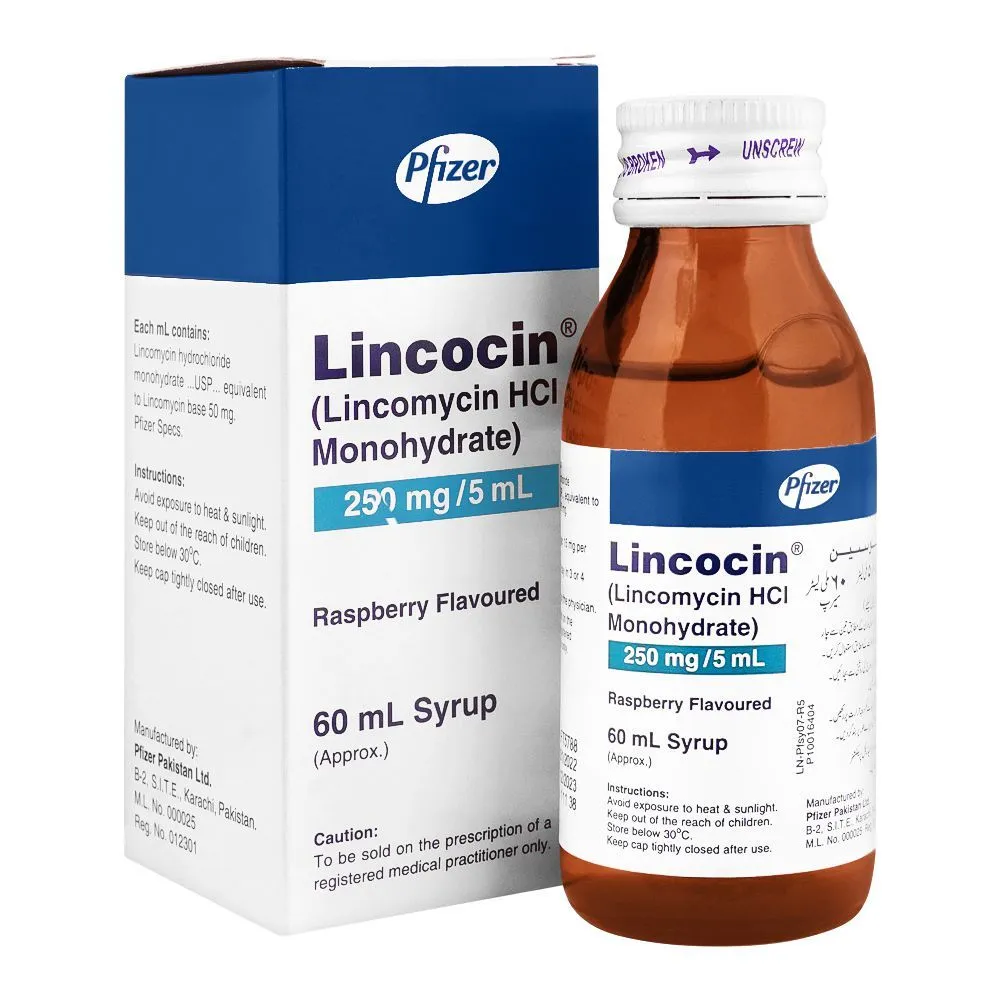
Table of Contents
- Package leaflet: Information for the user
- 1. What Lincocin is and what it is used for
- 2. Important information before using Lincocin
- 3. How to use Lincocin
- 4. Possible adverse effects
- 5. How to store Lincocin
- 6. Contents of the packaging and other information
- Information intended exclusively for healthcare professionals
Package leaflet: Information for the user
Warning! Keep the leaflet. Information on the immediate packaging in a foreign language.
Lincocin, 300 mg/ml, solution for injection / for infusion
Lincomycinum
Please read all of this leaflet carefully before using this medicine, because it contains
important information for the patient.
- Keep this leaflet, so that you can read it again if necessary.
- If you have any doubts, please consult your doctor, pharmacist, or nurse.
- This medicine has been prescribed for a specific individual. Do not pass it on to others. This medicine may harm other people, even if their symptoms are the same.
- If any side effects occur in the patient, including any side effects not listed in this leaflet, inform your doctor, pharmacist, or nurse. See section 4.
Table of contents of the leaflet
- What Lincocin is and what it is used for
- Important information before using Lincocin
- How to use Lincocin
- Possible side effects
- How to store Lincocin
- Contents of the pack and other information
1. What Lincocin is and what it is used for
Lincocin is an antibiotic belonging to the lincosamide group.
Depending on bacterial sensitivity and drug concentration, Lincocin may exert either bactericidal or bacteriostatic effects.
Lincocin is indicated for the treatment of severe infections caused by sensitive anaerobic bacteria, as well as infections caused by sensitive streptococci or staphylococci:
- upper respiratory tract infections, including tonsillitis and otitis media;
- lower respiratory tract infections, including aspiration pneumonia, empyema, and lung abscess;
- skin and soft tissue infections;
- bone and joint infections, including osteomyelitis;
- sepsis.
Your doctor will recommend the use of Lincocin if the use of other antibiotics is inappropriate or contraindicated, or if treatment with other antibiotics has been ineffective.
2. Important information before using Lincocin
When not to use Lincocin
- If the patient is allergic to lincomycin, clindamycin, or any of the other ingredients of this medicine (listed in section 6).
- In premature infants or newborns.
Warnings and precautions
Page 1 of 7
Before starting treatment with Lincocin, discuss with a doctor, pharmacist, or nurse if any of the following situations apply to the patient.
- If the patient is hypersensitive to penicillin. Hypersensitivity reactions (e.g. erythema, skin itching, rash, swelling, shortness of breath) may occur during treatment with Lincocin. In such cases, immediate medical advice must be sought (adrenaline, oxygen and intravenous steroids may be required, and possibly airway clearance or even intubation).
- If the patient has previously suffered from gastrointestinal disorders, particularly colitis.
- If meningitis is suspected in the patient. Lincomycin does not adequately penetrate into the cerebrospinal fluid.
- If the patient has severe impairment of kidney and/or liver function associated with metabolic disturbances. During high-dose treatment, the doctor may recommend monitoring of lincomycin blood levels. Liver and kidney function should also be monitored during prolonged treatment with Lincocin.
- If the patient is concurrently receiving drugs that block neuromuscular junctions (muscle relaxants used in general anaesthesia, such as tubocurarine, pancuronium, vecuronium).
- If the patient has a tendency towards allergies.
If any of the symptoms described below occur during treatment with Lincocin, the patient should immediately inform the doctor.
- If diarrhoea develops during or within several weeks after treatment, especially if it is severe and persistent, the patient should immediately consult a doctor. Pseudomembranous colitis should be suspected (in most cases caused by enterotoxins of Clostridium difficile bacteria). This condition, a complication of antibiotic therapy, may vary in severity: from mild, watery diarrhoea to a severe syndrome with chronic diarrhoea, leukocytosis, intense spasmodic abdominal pain, and possibly mucus and blood in the stool. In extreme cases, it may be life-threatening, particularly in elderly or debilitated patients. The doctor will recommend immediate discontinuation of the drug, and once pseudomembranous colitis is diagnosed, appropriate treatment will be initiated (oral metronidazole is administered, and in severe cases – vancomycin). Drugs that inhibit intestinal peristalsis or other constipating agents should not be used. Recurrence of the disease is possible despite appropriate treatment.
- Diarrhoea associated with Clostridium difficile infection, ranging from mild to fatal colitis, has been reported with the use of nearly all antibacterial agents, including Lincocin. Antibacterial treatment alters the normal colonic microflora, leading to overgrowth of C. difficile. C. difficile infection should be considered in any patient who develops diarrhoea after antibiotic therapy. Diarrhoea associated with C. difficile has been reported even more than two months after administration of antibacterial agents.
- If signs of superinfection are observed – antibiotic use may lead to overgrowth of resistant microorganisms, particularly yeasts.
Severe hypersensitivity reactions, including anaphylactic reactions, and serious skin-related adverse reactions such as Stevens-Johnson syndrome, toxic epidermal necrolysis, acute generalised exanthematous pustulosis, and erythema multiforme, have been reported in patients receiving Lincocin. If an anaphylactic reaction or severe skin reactions occur, Lincocin should be discontinued immediately and appropriate treatment initiated.
Lincocin and other medicines
Page 2 of 7
Inform the doctor about all medicines currently or recently taken by the patient, as well as any medicines the patient plans to take.
Lincocin may enhance the effects of neuromuscular blocking agents used in general anaesthesia.
Microorganisms resistant to clindamycin are also resistant to Lincocin (cross-resistance).
Lincomycin may affect laboratory test results for serum alkaline phosphatase activity, causing falsely elevated values.
Pregnancy, breastfeeding, and fertility
If the patient is pregnant or breastfeeding, suspects she may be pregnant, or is planning to have a child, she should consult a doctor or pharmacist before using this medicine.
Lincomycin crosses the placenta.
Benzyl alcohol, present in the Lincocin solution as an excipient, may cross the placenta [see section 2 "Lincocin contains benzyl alcohol (E 1519)"].
There are only limited data on the use of Lincocin during pregnancy. Lincocin may be used during pregnancy only if the doctor considers it necessary.
Lincomycin passes into human milk. Lincocin should not be used during breastfeeding.
There are no data on the effect of Lincocin on fertility.
Driving and using machines
The effect of Lincocin on the ability to drive and operate machinery has not been studied.
Lincocin contains benzyl alcohol (E 1519)
The injectable/infusion solution form of Lincocin contains 18.9 mg of benzyl alcohol per vial, equivalent to 9.45 mg of benzyl alcohol per ml.
Benzyl alcohol may cause allergic reactions.
Do not administer Lincocin to young children (under 3 years of age) for longer than one week without medical or pharmacist advice.
Patients with kidney or liver disease, pregnant women, or breastfeeding women should consult a doctor before using this medicine, as benzyl alcohol may accumulate in their bodies and cause adverse effects (so-called metabolic acidosis).
3. How to use Lincocin
This medicine should always be used as directed by the physician. In case of doubt, consult your
doctor, pharmacist, or nurse.
Intramuscular administration
Adults
-
600 mg every 24 hours;
-
Severe infections: 600 mg every 12 hours (or more frequently), depending on the severity of infection symptoms.
Children (over 1 month of age) -
10 mg/kg body weight per day as a single injection;
-
Severe infections: 10 mg/kg body weight per day every 12 hours or more frequently.
Page 3 of 7
Intravenous administration
Lincomycin must not be administered undiluted by rapid intravenous injection.
The medicine should be given by infusion lasting at least 60 minutes (see section “Information intended
exclusively for healthcare professionals”).
Adults
- From 600 mg to 1 g every 8 to 12 hours;
- Severe infections: doses may be increased;
- In life-threatening infections, doses up to 8 g per day may be used.
Children (over 1 month of age)
An intravenous infusion dose of 10 to 20 mg/kg body weight per day may be administered, depending on the severity of infection symptoms.
The daily dose in children should be divided into multiple doses.
The medicine must not be administered to premature infants or newborns.
Method of administration
Lincocin may be administered as frequently as necessary, up to the maximum daily dose of lincomycin, which is 8 g per day.
Instructions for dilution, rate of administration, and incompatibilities – see section “Information
intended exclusively for healthcare professionals”.
Duration of treatment
In infections caused by beta-haemolytic streptococci, treatment should be continued for at least 10 days.
Dosage in patients with renal or hepatic impairment
In patients with impaired renal or hepatic function, the physician will consider reducing the frequency of administration of Lincocin.
If treatment with lincomycin is necessary in patients with severe renal impairment, the appropriate dose is 25% to 35% of the dose recommended for patients with normal renal function.
Use of a higher than recommended dose of Lincocin
If an overdose is taken, seek medical advice immediately.
In case of Lincocin overdose, gastrointestinal symptoms may occur, such as: abdominal pain, nausea, vomiting, diarrhea.
There is no specific antidote. Haemodialysis or peritoneal dialysis are not effective in removing Lincocin from plasma.
Missed dose of Lincocin
Do not administer a double dose to make up for a missed dose.
4. Possible adverse effects
Like all medicines, this medicine can cause adverse effects, although not everyone will experience them.
Common adverse effects (occurring no more frequently than 1 in 10 to 100 patients)
- Diarrhea, nausea, vomiting
Uncommon adverse effects (occurring no more frequently than 1 in 100 to 1000 patients)
- Rash, urticaria
- Vaginal infection
Page 4 of 7
Rare adverse effects (occurring no more frequently than 1 in 1000 to 10,000 patients)
- Itching
Frequency not known (frequency cannot be estimated from available data)
- Pseudomembranous colitis, infection with Clostridium difficile bacteria
- Pancytopenia (deficiency of the main types of blood cells), agranulocytosis, aplastic anemia, neutropenia (reduced number of phagocytic granulocytes), leukopenia (reduced number of white blood cells), thrombocytopenic purpura
- Anaphylactic reactions, angioedema, serum sickness syndrome
- Circulatory and respiratory arrest
- Hypotension, thrombophlebitis
- Esophagitis, abdominal discomfort
- Jaundice, abnormal liver function test results
- Toxic epidermal necrolysis, Stevens-Johnson syndrome, acute generalized exanthematous pustulosis, bullous dermatitis, exfoliative dermatitis, erythema multiforme
- Sterile abscess at infusion site, induration at injection site, pain at injection site, irritation at injection site
Rare cases have been reported following too rapid intravenous administration.
Following parenteral administration, especially if administered too rapidly.
Event reported after intravenous administration.
Event reported after oral administration.
Events reported after intramuscular administration.
Reporting of adverse effects
If any adverse effects occur, including any possible adverse effects not listed in this leaflet, inform your doctor, pharmacist or nurse.
Adverse effects can be reported directly to the Department for Monitoring Adverse Drug Reactions of the Office for Registration of Medicinal Products, Medical Devices and Biocidal Products,
Al. Jerozolimskie 181C
02-222 Warsaw
Tel.: +48 22 49 21 301
Fax: +48 22 49 21 309
Website: https://smz.ezdrowie.gov.pl
By reporting adverse effects, additional information on the safety of the medicine can be collected.
5. How to store Lincocin
Store below 25°C.
Keep the medicine in a place out of sight and reach of children.
Do not use the medicine after the expiry date stated on the packaging. The expiry date refers to the last day of the stated month.
Medicines must not be disposed of via wastewater or household waste. Ask your pharmacist how to dispose of medicines no longer in use. This will help protect the environment.
6. Contents of the packaging and other information
Page 5 of 7
What Lincocin contains
- The active substance is lincomycin in the form of lincomycin hydrochloride. 1 ml of solution contains 300 mg of lincomycin.
- Other components of the medicine are: benzyl alcohol (E 1519) [see section 2 "Lincocin contains benzyl alcohol (E 1519)"], water for injections.
What Lincocin looks like and contents of the pack
A vial made of colourless type I glass containing 2 ml of solution for injection / for infusion (600 mg
lincomycin), with a bromobutyl rubber stopper and an aluminium "flip-off" cap, in a cardboard box.
For further information, please contact the marketing authorisation holder or the parallel importer.
Marketing authorisation holder in Spain, country of export:
Pfizer, S.L., Avda. de Europa 20-B, Parque Empresarial La Moraleja, 28108 Alcobendas (Madrid),
Spain
Manufacturer:
Pfizer Manufacturing Belgium N.V., Rijksweg 12, 2870 Puurs, Belgium
Parallel importer:
Delfarma Sp. z o.o., ul. Św. Teresy od Dzieciątka Jezus 111, 91-222 Łódź
Repackaged in:
Delfarma Sp. z o.o., ul. Św. Teresy od Dzieciątka Jezus 111, 91-222 Łódź
Marketing authorisation number in Spain, country of export: 693853.9
Parallel import authorisation number: 283/25
Information intended exclusively for healthcare professionals
Dilutions and rate of administration
The basis for calculating the dilution of intravenous doses is a lincomycin solution containing 1 g of the product in at least 100 ml of a suitable solution, administered intravenously over at least one hour.
| Dose | Solution volume | Time |
| 600 mg | 100 ml | 1 hour |
| 1 g | 100 ml | 1 hour |
| 2 g | 200 ml | 2 hours |
| 3 g | 300 ml | 3 hours |
| 4 g | 400 ml | 4 hours |
Warning
When the intravenous administration rate or concentration of lincomycin exceeded the recommended values,
severe respiratory and circulatory disturbances were observed.
Pharmaceutical incompatibilities
Page 6 of 7
Neomycin, kanamycin, and phenytoin administered in the same injection show physical incompatibility
with lincomycin.
Page 7 of 7