Lidocaine jelfa
Poland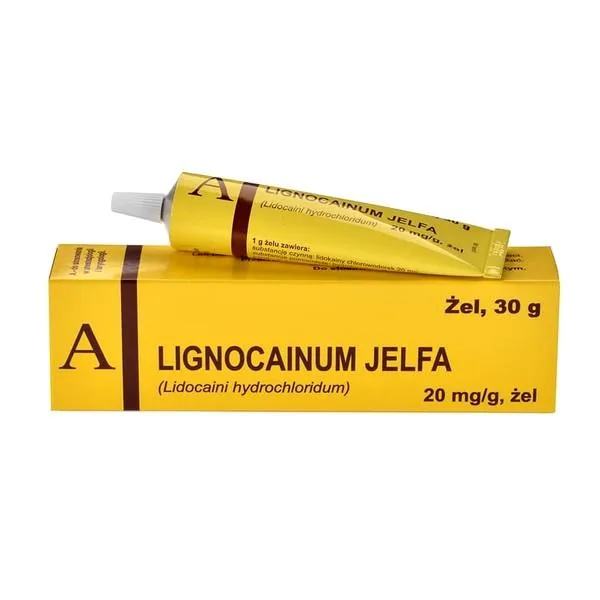
Table of Contents
Package leaflet: Information for the user
LIGNOCAINUM JELFA, 20 mg/g, gel
Lidocaini hydrochloridum
Please read the entire leaflet carefully before using this medicine, as it contains
important information for the patient.
Keep this leaflet, as you may need to read it again.
If you have any further questions, please consult your doctor, pharmacist, or nurse.
This medicine has been prescribed for a specific individual. Do not pass it on to others. The medicine may harm
another person, even if their symptoms are the same.
If you experience any adverse effects, including any not listed in this leaflet, inform your doctor, pharmacist, or nurse. See
section 4.
Contents of the leaflet
- What Lignocainum Jelfa is and what it is used for
- Important information before using Lignocainum Jelfa
- How to use Lignocainum Jelfa
- Possible side effects
- How to store Lignocainum Jelfa
- Contents of the pack and other information
1. What Lignocainum Jelfa is and what it is used for
The active substance in Lignocainum Jelfa is an amide derivative exhibiting local anesthetic action.
The product containing lidocaine is used for local anesthesia of mucous membranes or skin. It does not irritate tissues and does not dilate blood vessels. Due to its high viscosity and low surface tension, it reduces the friction coefficient between the mucous membrane and contacting medical instruments.
The effect of the medicine begins 2–3 minutes after application and lasts approximately
30–60 minutes.
After local administration, the medicine is absorbed into the systemic circulation, most rapidly from mucous membranes.
Indications for use
Lignocainum Jelfa type A is used in anesthesiology and otorhinolaryngology:
- for coating endotracheal and tracheostomy tubes, gastric tubes, and probes;
- for superficial anesthesia of nasal and nasopharyngeal mucous membranes prior to laryngoscopy, nasal polyp surgery, or removal of an overgrown palatine tonsil;
- as preliminary anesthesia prior to intubation in conscious patients.
Lignocainum Jelfa type U is used in urology:
- for anesthesia of the urethra prior to procedures (urinary bladder catheterization, cystoscopy, bladder stone fragmentation, electrocoagulation of bladder papilloma, urethral stricture dilation); a sterile cannula attached to the tube enables direct administration of the gel into the urethra;
- for coating the surface of instruments (catheters, cystoscopes).
2. Important information before using Lignocainum Jelfa
When not to use Lignocainum Jelfa:
- if the patient is allergic to lidocaine or other local anaesthetics containing substances with an amide structure, or to any of the other ingredients of this medicine (listed in section 6);
- for lubricating the metal tracheal tube stylet.
Warnings and precautions
If any of the warnings below apply to the patient, consult a doctor, pharmacist, or nurse before starting treatment with Lignocainum Jelfa.
Use with caution:
- in patients treated with tricyclic antidepressants or monoamine oxidase inhibitors (MAO inhibitors);
- on infected or damaged mucous membranes;
- in patients with heart disease or circulatory disorders;
- care must be taken to ensure that lidocaine does not enter the lumen of the tracheostomy tube.
The lowest effective doses should be used to avoid high blood concentrations of lidocaine and severe adverse effects.
Lignocainum Jelfa and other medicines
Inform your doctor or pharmacist about all medicines currently used or recently used, as well as any medicines the patient plans to use.
Lidocaine:
- enhances the effect of skeletal muscle relaxants;
- reduces the effectiveness of sulfonamides.
Pregnancy, breastfeeding and fertility
If the patient is pregnant or breastfeeding, suspects she may be pregnant, or is planning to have a child, she should talk to her doctor or pharmacist before using this medicine.
This medicine should be used during pregnancy only if clearly necessary.
Caution should be exercised when using the gel in breastfeeding women.
Driving and operating machinery
This medicine may temporarily and to a minor extent impair the ability to drive and operate machinery.
If in doubt about performing these activities, consult a doctor.
Lignocainum Jelfa contains:
methyl parahydroxybenzoate and propyl parahydroxybenzoate, which may cause allergic reactions (including delayed-type reactions) and, very rarely, bronchospasm.
3. How to use Lignocainum Jelfa
This medicine should always be used according to the instructions given by the doctor or pharmacist. If in doubt, consult your doctor or pharmacist.
Lignocainum Jelfa is applied directly to the mucous membrane or onto the surface of medical instruments.
Anaesthesiology and otorhinolaryngology
Before otorhinolaryngological procedures, the gel is applied to mucous membranes by brushing.
Urology
To anaesthetize the urethra, the gel is introduced via a sterile cannula into the urethral lumen until a sensation of fullness is felt, usually in a volume of approximately 15 ml – 20 ml. In men, the external urethral orifice is then compressed for 5 minutes, after which the compression is released and the procedure is performed.
After use, both the urological cannula and the gel that has been in contact with it are no longer sterile and therefore should not be reused.
Use in children and adolescents
Lidocaine is readily and rapidly absorbed from mucous membranes – when used in children, the dose should be calculated according to body weight.
The dose should not exceed 3 mg/kg body weight.
The same applies to patients with low body weight, debilitated patients, elderly patients, and when large amounts of the medicine are used.
Use of more than the recommended dose of Lignocainum Jelfa
Hypotension, excitation, clonic–tonic seizures, and cardiovascular depression may occur. If these symptoms occur, immediate medical assistance is required.
If you have any further doubts regarding the use of this medicine, consult your doctor or pharmacist.
4. Possible adverse reactions
Like all medicines, this medicine can cause adverse reactions, although not everyone will experience them.
Lidocaine administered locally may cause allergic reactions and, after absorption, systemic effects.
The occurrence and severity of systemic effects depend on the drug concentration in serum, the patient's general condition, liver function, age, body weight, heart disease, and hyperthyroidism.
Cardiac disorders:
bradycardia (slow heart rate), cardiovascular collapse leading to cardiac arrest.
Vascular disorders:
decrease in blood pressure.
Nervous system disorders:
dizziness, paraesthesia;
drowsiness after lidocaine administration is usually an early sign of high blood concentration, e.g. due to very rapid absorption.
Psychiatric disorders:
agitation, anxiety, disorientation.
Skin and subcutaneous tissue disorders:
skin changes, urticaria, swelling.
Immune system disorders:
anaphylactic reactions.
In some individuals, other adverse reactions may occur during the use of Lignocainum Jelfa gel.
Reporting of adverse reactions
If any adverse reactions occur, including any adverse reactions not listed in this leaflet, inform your doctor, pharmacist, or nurse. Adverse reactions can be reported directly to the Department of Monitoring Adverse Drug Reactions of the Office for Registration of Medicinal Products, Medical Devices and Biocidal Products:
Al. Jerozolimskie 181C, 02-222 Warsaw, tel.: 22 49-21-301, fax: 22 49-21-309,
Website: https://smz.ezdrowie.gov.pl
Adverse reactions can also be reported to the marketing authorization holder.
Reporting adverse reactions helps to provide more information on the safety of using the medicine.
5. How to store Lignocainum Jelfa
Store below 25°C. Do not freeze.
Keep the medicine out of sight and reach of children.
Use within 7 days after first opening of the tube.
Do not use this medicine after the expiry date stated on the carton after: Expiry date.
The expiry date refers to the last day of the stated month.
Medicines should not be disposed of via wastewater or household waste. Ask your pharmacist how to dispose of medicines no longer required. This will help protect the environment.
6. Contents of the packaging and other information
What Lignocainum Jelfa gel contains
- The active substance is lidocaine hydrochloride. 1 g of gel contains 20 mg of lidocaine hydrochloride.
- The other ingredients are: hydroxyethylcellulose, methyl parahydroxybenzoate, propyl parahydroxybenzoate, sodium hydroxide (for pH adjustment), concentrated hydrochloric acid (for pH adjustment), purified water.
What Lignocainum Jelfa gel looks like and contents of the pack
Lignocainum Jelfa is a transparent or slightly opalescent, colorless, homogeneous gel.
Available pack sizes:
- Type A for use in anesthesiology and laryngology – an aluminum tube with a cannula and a plastic cap made of HDPE containing 30 g of gel, in a cardboard box.
- Type U for use in urology – an aluminum tube with a membrane and a plastic cap made of HDPE containing 30 g of gel, in a cardboard box. A sterile urological cannula is supplied with the pack.
Marketing Authorisation Holder:
Bausch Health Ireland Limited
3013 Lake Drive
Citywest Business Campus
Dublin 24, D24PPT3
Ireland
Manufacturer:
Przedsiębiorstwo Farmaceutyczne Jelfa SA
58 – 500 Jelenia Góra, ul. Wincentego Pola 21