Lidocaine 2% fresenius kabi
Poland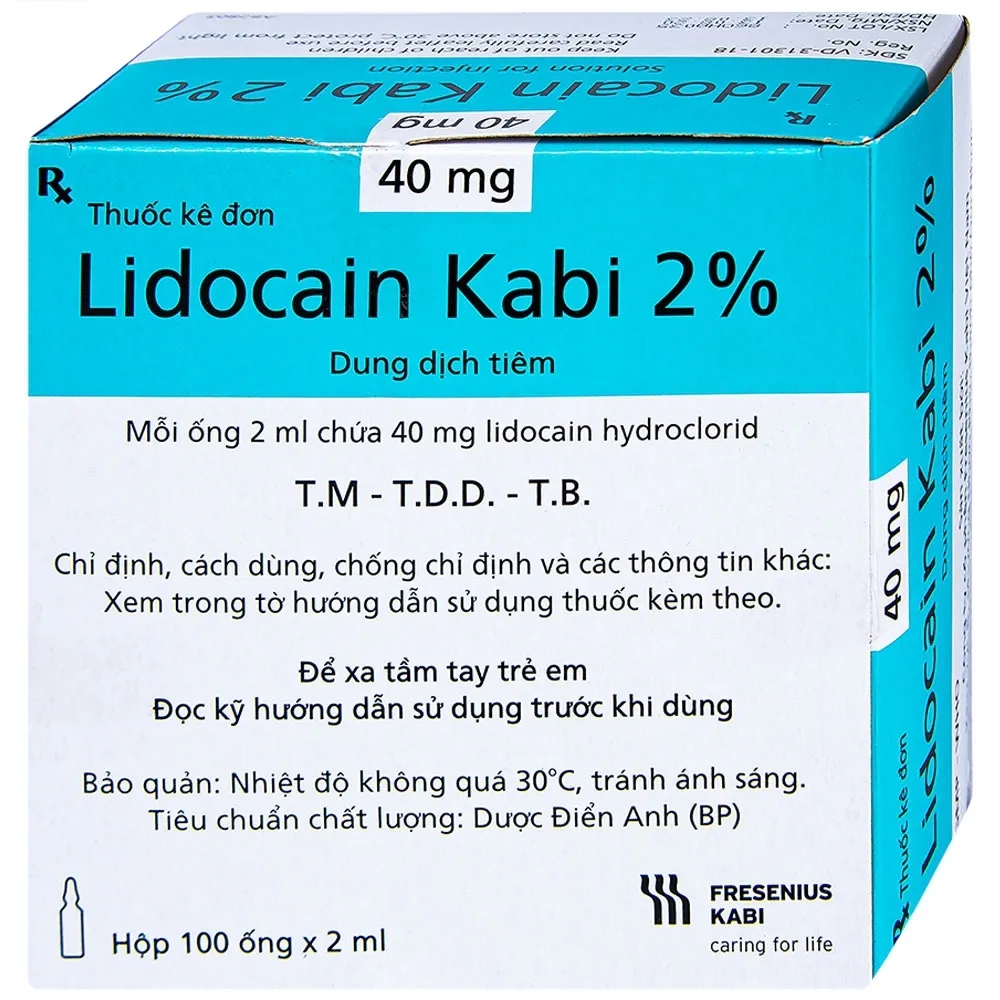
Table of Contents
- Package leaflet: Information for the user
- 1. What Lidocaine Fresenius Kabi is and what it is used for
- 2. Important information before using Lidocaine Fresenius Kabi
- 3. How to use Lidocaine 1% Fresenius Kabi
- 4. Possible adverse reactions
- 5. How to store Lidocaine Fresenius Kabi
- 6. Contents of the package and other information
- Information intended exclusively for healthcare professionals:
Package leaflet: Information for the user
Lidocaine 1% Fresenius Kabi, 10 mg/mL, solution for injection
Lidocaine 2% Fresenius Kabi, 20 mg/mL, solution for injection
Lidocaini hydrochloridum
Please read all of this leaflet carefully before using this medicine because it contains
important information for you.
- Keep this leaflet, as you may need to read it again.
- If you have any further questions, please ask your doctor, pharmacist, or nurse.
- If you experience any adverse reactions, including any not listed in this leaflet, tell your doctor, pharmacist, or nurse. See section 4.
Contents of the leaflet
- What Lidocaine Fresenius Kabi is and what it is used for
- What you need to know before using Lidocaine Fresenius Kabi
- How to use Lidocaine Fresenius Kabi
- Possible side effects
- How to store Lidocaine Fresenius Kabi
- Contents of the pack and other information
1. What Lidocaine Fresenius Kabi is and what it is used for
Lidocaine Fresenius Kabi is a local anaesthetic medicine.
It is used for local anaesthesia and pain relief in the area of the body where the medicine has been administered.
2. Important information before using Lidocaine Fresenius Kabi
When not to use Lidocaine Fresenius Kabi:
- if the patient is allergic (hypersensitive) to lidocaine hydrochloride, to other local anaesthetics of the amide type, or to any of the other ingredients of this medicine (listed in section 6);
- if the patient has reduced circulating blood volume (hypovolemia);
- if the patient has certain heart rhythm disorders (irregular or abnormally slow heart rhythm).
Warnings and precautions
Before using Lidocaine Fresenius Kabi, discuss with your doctor,
pharmacist, or nurse:
- if the patient has ever had allergic reactions or adverse effects, such as skin rash or shortness of breath, after administration of local anaesthetics;
- if the patient suffers from heart disease, especially heart rhythm disorders;
- if the patient is taking medicines used to treat heart rhythm disorders, such as amiodarone;
- if the patient is in shock;
- if the patient suffers from lung disease or breathing disorders;
- if the patient has seizures or epilepsy;
- if the patient has muscle weakness (fatigue of muscles, known as myasthenia);
- if the patient has blood clotting disorders and is being treated with anticoagulant medicines;
- if the patient is elderly or in a generally weakened condition;
- if the patient feels unwell or is tired and exhausted for any reason;
- if the patient has kidney or liver disease;
- if the patient has blood disorders or any abnormalities in blood composition, especially low blood potassium levels causing muscle cramps and constipation (hypokalaemia);
- if the patient has increased acidity of blood and tissues or inadequate oxygen levels;
- if the patient has recently experienced vomiting, diarrhoea, bleeding, or has not taken in adequate fluids;
- if the patient or a family member has been diagnosed with a rare inherited blood pigment disorder (porphyria) affecting the skin and nervous system;
- if the patient has inflammation or infection at the site where the medicine is to be injected;
- if the patient is pregnant, planning pregnancy, or breastfeeding.
Children
Lidocaine Fresenius Kabi is not recommended for use in neonates (below 1 month of age).
Lidocaine Fresenius Kabi and other medicines
Tell your doctor or nurse about all medicines the patient is currently taking or has recently taken, as well as any medicines the patient plans to use, including those available without a prescription.
In particular, inform the doctor if the patient is taking any of the following
medicines, as they may interact with Lidocaine Fresenius Kabi:
- medicines used to treat high blood pressure, including diuretics, beta-blockers such as propranolol, timolol, and calcium channel blockers such as verapamil, prenylamine;
- medicines used to treat heart rhythm disorders, such as amiodarone, mexiletine, phenytoin;
- medicines used to stimulate heart function or treat shock, such as dopamine;
- medicines used to treat heart failure or shock states, such as dopamine;
- medicines used to prevent blood clots (anticoagulants), such as heparin;
- medicines used to treat stomach ulcers, such as cimetidine, ranitidine;
- medicines used to treat infections, such as quinupristin, dalfopristin;
- medicines used to treat viral infections, such as amprenavir, atazanavir, darunavir, lopinavir;
- strong painkillers, such as fentanyl, codeine, pethidine;
- medicines used to treat migraine, such as ergotamine;
- muscle relaxants, such as suxamethonium;
- medicines used to treat certain types of muscle spasms, such as serotonin;
- medicines used to treat psychiatric disorders, such as sertindole, pimozide, fluvoxamine, olanzapine, quetiapine, zotepine;
- medicines used to treat nausea and vomiting, such as dolasetron, tropisetron;
- medicines that reduce intraocular pressure, such as acetazolamide;
- oral contraceptives and hormone replacement therapy.
If lidocaine is administered together with adrenaline (epinephrine), the patient should
inform the doctor if they have high blood pressure, reduced blood flow to the brain,
hyperthyroidism, or are taking antidepressant medicines. A patient scheduled to receive
a strong anaesthetic for general anaesthesia should inform the doctor if they have previously
received lidocaine in combination with adrenaline (epinephrine).
If the patient is taking any of the medicines listed above, they should inform their doctor before using Lidocaine Fresenius Kabi.
Pregnancy and breastfeeding
If the patient is pregnant or breastfeeding, suspects she may be pregnant, or is planning to have
a child, she should consult her doctor or pharmacist before using this medicine.
Lidocaine Fresenius Kabi may be used in pregnant and breastfeeding women when necessary.
Driving and using machines
Depending on the dose and site of administration, Lidocaine Fresenius Kabi may impair the ability
to drive and operate machinery. Ask your doctor when it is safe to drive and
operate machinery.
Patients should not drive or operate machinery if the use of Lidocaine Fresenius Kabi has affected their psychomotor performance.
Lidocaine 1% Fresenius Kabi, 10 mg/mL, solution for injection contains sodium
This medicine contains 85 mg (approximately 3.72 mmol) of sodium (the main component of table salt) per dose.
This corresponds to 4.25% of the maximum daily sodium intake recommended for adults.
Lidocaine 2% Fresenius Kabi, 20 mg/mL, solution for injection contains sodium
This medicine contains 32 mg (approximately 1.39 mmol) of sodium (the main component of table salt) per dose.
This corresponds to 1.6% of the maximum daily sodium intake recommended for adults.
3. How to use Lidocaine 1% Fresenius Kabi
The doctor individually adjusts the dose of the medicine based on the patient's age, general physical condition, site of administration, type of procedure, and response to anesthesia.
Use of a higher than recommended dose of Lidocaine 1% Fresenius Kabi
Since the medicine is administered by trained medical personnel, the risk of receiving an excessive dose of Lidocaine 1% Fresenius Kabi is low.
However, if the patient believes they have received too high a dose or experiences dizziness or a feeling of emptiness in the head, tingling or numbness of the lips and the area around the mouth, or ringing in the ears, they should immediately inform the person performing the anesthesia.
If there are any further doubts regarding the use of this medicine, consult a doctor.
4. Possible adverse reactions
Like all medicines, this medicine can cause adverse reactions, although they do not occur in everyone.
If the patient experiences an allergic reaction, contact a doctor immediately.
Symptoms of an allergic reaction include:
- swelling of the hands, feet, face, lips, mouth, tongue or throat;
- difficulty breathing;
- itchy skin rash;
- fever;
- low blood pressure or shock.
Other possible adverse reactions:
Very common (may affect more than 1 in 10 people):
- low blood pressure;
- nausea.
Common (may affect up to 1 in 10 people):
- paraesthesia (tingling, numbness);
- dizziness;
- slowed heart rate;
- high blood pressure;
- vomiting.
Uncommon (may affect up to 1 in 100 people):
- seizures (convulsive seizure);
- feeling of emptiness in the head, drowsiness, loss of consciousness, trembling, tongue numbness, difficulty speaking (these symptoms may sometimes indicate that too high a dose of lidocaine has been administered).
Rare (may affect up to 1 in 1000 people):
- hypersensitivity reactions such as urticaria, skin rash, sudden swelling of subcutaneous tissue and mucous membranes, difficulty breathing, and in severe cases, low blood pressure and shock;
- facial rash, facial itching or facial swelling;
- pain, inflammation or numbness at the site of administration persisting after the medicine's effect has worn off;
- disturbances in balance and coordination (peripheral nerve damage);
- inflammation of the membranes surrounding the nerves (meningitis);
- blurred or double vision;
- temporary loss of vision;
- heart rhythm disorders;
- cardiac arrest (heart attack).
Frequency unknown (frequency cannot be estimated from available data):
- bluish discoloration of the skin, headache, shortness of breath and feeling of fatigue due to abnormal levels of methemoglobin (a type of hemoglobin with reduced oxygen-binding capacity) in the blood;
- agitation (nervousness);
- loss of consciousness;
- tinnitus (ringing in the ears);
- sound sensitivity;
- difficulty breathing or respiratory arrest.
After intrathecal administration of Lidocaine Fresenius Kabi, inform the doctor if the patient develops any of the following symptoms:
- back pain or numbness in the lower limbs;
- difficulty walking;
- problems controlling urination or defecation;
- feeling of faintness or emptiness in the head;
- slowed heart rate or pulse.
Information for patients discharged home before numbness or loss of sensation from the local anaesthetic has worn off
While numbness persists in the anaesthetized area, serious injury may occur without the patient's awareness. Extreme caution should be taken and injury avoided until normal sensation returns to the anaesthetized area of the body.
Reporting of adverse reactions
If the patient experiences any adverse symptoms, including any possible adverse reactions not listed in this leaflet, inform the doctor, pharmacist or nurse. Adverse reactions can also be reported directly to the Department of Monitoring Adverse Drug Reactions, Office for Registration of Medicinal Products, Medical Devices and Biocidal Products,
Al. Jerozolimskie 181C, 02-222 Warsaw,
tel.: +48 22 49 21 301, fax: +48 22 49 21 309,
e-mail: [email protected].
Adverse reactions may also be reported to the marketing authorization holder.
Reporting adverse reactions helps to provide more information on the safety of the medicine.
5. How to store Lidocaine Fresenius Kabi
Keep the medicine out of the sight and reach of children.
No special storage conditions are required for this medicine.
After opening the ampoule, the contents should be used immediately and any unused solution must be discarded.
Do not use this medicine if the ampoule is damaged or cracked.
After dilution in sodium chloride solution 9 mg/mL (0.9%) or glucose solution 50 mg/mL (5%), under strictly aseptic conditions, the solution should be used immediately.
If the diluted solution is not used immediately, it must not be stored for longer than 12 hours under strictly aseptic conditions, at a temperature below 25°C.
Do not use this medicine after the expiry date stated on the label and carton after EXP.
The expiry date refers to the last day of the stated month.
Medicines should not be disposed of via the sewage system or household waste. Ask your pharmacist how to dispose of medicines no longer required. Such measures will help protect the environment.
6. Contents of the package and other information
What Lidocaine Fresenius Kabi contains
- The active substance is lidocaine hydrochloride.
Lidocaine 1% Fresenius Kabi, 10 mg/mL, solution for injection:
One mL of solution for injection contains 10 mg of lidocaine hydrochloride, equivalent to 8.11 mg of lidocaine.
Each 5 mL of solution for injection contains 50 mg of lidocaine hydrochloride.
Each 10 mL of solution for injection contains 100 mg of lidocaine hydrochloride.
Each 20 mL of solution for injection contains 200 mg of lidocaine hydrochloride.
Lidocaine 2% Fresenius Kabi, 20 mg/mL, solution for injection:
One mL of solution for injection contains 20 mg of lidocaine hydrochloride, equivalent to 16.22 mg of lidocaine.
Each 5 mL of solution for injection contains 100 mg of lidocaine hydrochloride.
Each 10 mL of solution for injection contains 200 mg of lidocaine hydrochloride.
Each 20 mL of solution for injection contains 400 mg of lidocaine hydrochloride.
- Other ingredients include: sodium chloride, sodium hydroxide (for pH adjustment), concentrated hydrochloric acid (for pH adjustment), and water for injections.
What Lidocaine Fresenius Kabi looks like and contents of the pack
Lidocaine Fresenius Kabi is a clear, colourless, aqueous solution free from visible particles.
Lidocaine Fresenius Kabi is supplied in LDPE ampoules with a "twist-off" opening system.
Pack sizes:
5, 10, 20, 50 or 100 ampoules of 5 mL
5, 10, 20, 50 or 100 ampoules of 10 mL
5, 10, 20, 50 or 100 ampoules of 20 mL
Not all pack sizes may be marketed.
Marketing Authorisation Holder and Manufacturer
Marketing Authorisation Holder
Fresenius Kabi Polska Sp. z o.o.
Al. Jerozolimskie 134
02-305 Warsaw
Poland
Manufacturer
Labesfal - Laboratórios Almiro, S.A.
Zona Industrial do Lagedo
3465-157 Santiago de Besteiros
Portugal
For further information, please contact the Marketing Authorisation Holder:
Fresenius Kabi Polska Sp. z o.o.
Al. Jerozolimskie 134
02-305 Warsaw
Poland
Tel.: +48 22 345 67 89
This medicinal product is authorised in the member countries of the European Economic Area under the following names:
| Member State | Medicinal product name |
| Belgium | Lidocaine Fresenius Kabi 10 mg/ml, 20 mg/ml solution for injection |
| France | Lidocaine Kabi 10 mg/ml, 20 mg/ml solution for injection |
| Italy | Lidocaine Kabi |
| Ireland | Lidocaine Hydrochloride 1%, 2% w/v solution for injection |
| Poland | Lidocaine 1% Fresenius Kabi Lidocaine 2% Fresenius Kabi |
| Portugal | Lidocaine Fresenius Kabi |
| Romania | Lidocaine Fresenius Kabi 10mg/ml, 20mg/ml solution for injection |
| Slovenia | Lidocaine Kabi 10 mg/ml, 20 mg/ml solution for injection |
| Spain | Lidocaine Kabi 10 mg/ml, 20 mg/ml solution for injection |
| United Kingdom | Lidocaine Hydrochloride 1%, 2% w/v solution for injection |
Information intended exclusively for healthcare professionals:
Special warnings
Lidocaine injection solution is not indicated for use in newborns. The optimal serum drug concentration preventing toxic effects, such as seizures and cardiac arrhythmias, has not been established in this age group.
Storage and pharmaceutical incompatibilities
Lidocaine Fresenius Kabi injection solution may be diluted with sodium chloride 9 mg/mL (0.9%) or glucose 50 mg/mL (5%) solution.
The diluted solution should be inspected visually and must not be used if opalescence, visible particles, or precipitate are present.
If the drug has been diluted with sodium chloride 9 mg/mL (0.9%) or glucose 50 mg/mL (5%) under strictly aseptic conditions, the solution must be used within 12 hours.
Lidocaine is incompatible with solutions containing amphotericin B, sodium sulfadiazine, methohexital sodium, cefazolin sodium, phenytoin, glyceryl trinitrate, and other alkaline solutions. Therefore, mixing Lidocaine Fresenius Kabi with other substances is not recommended.
Drugs stable in acidic environments, such as adrenaline hydrochloride, noradrenaline bitartrate, or isoprenaline, may degrade when mixed with lidocaine hydrochloride, because lidocaine solutions may increase the pH of the mixture above the maximum pH at which these drugs remain stable.
Disposal of unused medicinal product or waste
Any unused residues of the medicinal product or waste materials must be disposed of in accordance with local regulations.