Librexa
PolandTable of Contents
Package leaflet: Information for the patient
LIBREXA, 11.25 mg, implant in pre-filled syringe
Leuprorelinum
Please read all of this leaflet carefully before use, as it contains important information for the patient.
- Keep this leaflet, so that you can read it again if necessary.
- If you have any questions, please consult your doctor, pharmacist or nurse.
- This medicine has been prescribed for a specific individual. Do not pass it on to others. The medicine may harm another person, even if their symptoms are the same.
- If you experience any adverse effects, including any not listed in this leaflet, inform your doctor, pharmacist or nurse. See section 4.
Contents of the leaflet
- What LIBREXA is and what it is used for
- Important information before using LIBREXA
- How to use LIBREXA
- Possible side effects
- How to store LIBREXA
- Contents of the pack and other information
1. What LIBREXA is and what it is used for
The active substance in LIBREXA (leuprorelin acetate) belongs to a group of medicines that reduce the levels of certain sex hormones.
LIBREXA acts on the pituitary gland, initially stimulating and then suppressing the production of hormones that regulate the formation of male sex hormones in the testes.
This means that the concentration of sex hormones decreases and remains at a stable level during treatment. After discontinuation of LIBREXA, concentrations of pituitary and sex hormones return to normal values.
LIBREXA is used in men:
- for symptomatic treatment of advanced hormone-dependent prostate cancer (prostate carcinoma);
- as adjuvant therapy during and after radiotherapy, in the treatment of locally advanced, hormone-dependent prostate cancer.
2. Important information before using LIBREXA
When not to use LIBREXA:
- if you are allergic to leuprorelin or to any of the other ingredients of this medicine (listed in section 6);
- if the cancer diagnosed in you is not hormone-dependent;
- this medicinal product is not indicated for use in women, and in particular during pregnancy and breastfeeding.
Warnings and precautions
Severe skin rashes, including Stevens-Johnson syndrome and toxic epidermal necrolysis (SJS/TEN), have been reported with the use of leuprorelin. If you notice any symptoms related to serious skin reactions described in section 4, treatment with leuprorelin should be discontinued immediately and you should contact your doctor without delay.
Before starting treatment with LIBREXA, discuss the following with your doctor:
- if you have high blood pressure. In such a case, your doctor will monitor your condition closely.
- if you have fatty liver disease.
There have been reports of depression in patients receiving leuprorelin. If depressive moods occur during treatment with LIBREXA, inform your doctor.
If any of the following apply: any heart or blood vessel diseases, including heart rhythm disorders (arrhythmia), or if you are taking medicines for these conditions, inform your doctor. The risk of heart rhythm disturbances may increase during treatment with LIBREXA.
If you have undergone bilateral orchiectomy (surgical removal of both testes). In this case, LIBREXA does not further reduce the level of male sex hormone in the blood.
If, prior to starting treatment, you already have neurological symptoms (spinal cord compression, spinal metastases) or experience discomfort when urinating due to urinary tract changes. You should inform your doctor immediately, who will closely monitor your condition during the first weeks of treatment, preferably in a hospital setting.
If symptoms of disease recur (e.g. pain, difficulty urinating, or leg muscle weakness) during long-term treatment with LIBREXA. In such a case, your doctor will regularly assess treatment efficacy through appropriate tests (digital rectal examination of the prostate, imaging studies) and by monitoring blood markers (phosphatase activity, prostate-specific antigen (PSA) levels, and male sex hormone (testosterone) levels).
If you are at increased risk of reduced bone mass (osteoporosis).
If you have diabetes. In such a case, your doctor will monitor your condition very closely.
If you experience severe or recurrent headaches, visual disturbances, or tinnitus (ringing or buzzing in the ears), seek medical advice immediately.
Misuse for doping purposes
Use of LIBREXA may result in a positive outcome in anti-doping tests.
LIBREXA with other medicines
Inform your doctor or pharmacist about all medicines you are currently taking or have recently taken, as well as any medicines you plan to take.
LIBREXA may interact with certain medicines used to treat heart rhythm disorders (such as quinidine, procainamide, amiodarone and sotalol) or may increase the risk of heart rhythm disturbances when used concomitantly with certain other medicines, e.g. methadone (used as an analgesic and in detoxification of drug-dependent individuals), moxifloxacin (an antibiotic), and antipsychotics (used to treat severe psychiatric disorders).
Pregnancy, breastfeeding and fertility
LIBREXA is not indicated for use in women and must not be used in pregnant or breastfeeding women (see section 2 "When not to use LIBREXA").
Driving and operating machinery
Fatigue is a common side effect, particularly at the beginning of treatment, and may also be related to the underlying tumour disease. Until further information is available, the following precautions should be considered: Even when used as directed, this medicine may affect your reactions and impair your ability to drive or operate machinery. This effect is more pronounced if alcohol is consumed during treatment.
3. How to use LIBREXA
LIBREXA should only be administered by a doctor or nurse.
The recommended dose is:
LIBREXA is injected subcutaneously into the abdominal area once every three months.
Treatment of advanced, hormone-dependent prostate cancer with LIBREXA is usually long-term.
LIBREXA must not be administered intra-arterially (into blood vessels carrying oxygen-rich blood).
Do not discontinue treatment without prior consultation with your doctor.
Use of a higher than recommended dose of LIBREXA
Since LIBREXA is administered by a healthcare professional, overdose seems unlikely.
Even with administration of a dose of 20 mg of leuprorelin acetate daily for two years, no signs of poisoning were observed.
If you have any doubts regarding the use of this medicine, consult your doctor or pharmacist.
4. Possible side effects
Like all medicines, this medicine can cause side effects, although not everyone will experience them.
Frequency unknown (frequency cannot be determined from available data):
If you notice any of the following symptoms, contact your doctor immediately:
- Red, flat, target-shaped or circular spots on the trunk, often with blisters in the centre, peeling of the skin, and ulceration of the mouth, throat, nose, genital organs and eyes. These severe skin rashes may be preceded by fever and flu-like symptoms (Stevens-Johnson syndrome, toxic epidermal necrolysis)
- Skin redness and itchy rash (toxic skin eruptions)
- Skin reaction causing red spots or patches on the skin, which may look like a bullseye with a dark red centre surrounded by lighter red rings (erythema multiforme)
Other side effects
Initially, patients usually experience an increase in the level of male sex hormone (testosterone) in the blood, which may cause a temporary worsening of symptoms related to the disease, such as:
- occurrence or worsening of bone pain
- difficulty in urinating due to narrowing of the urinary tract
- pressure on the spinal cord
- weakness of the leg muscles
- swelling of tissues due to fluid (lymph) accumulation, so-called lymphoedema
The worsening of these symptoms usually resolves spontaneously without the need to discontinue treatment with LIBREXA.
At the beginning of therapy, your doctor may prescribe an appropriate sex hormone antagonist (so-called anti-androgen) to alleviate possible disturbances related to the initial increase in male sex hormone concentration.
During treatment, testosterone levels decrease to very low values. As a result, the following side effects may occur in some patients:
Very common (may affect more than 1 in 10 people):
- Hot flushes
- Weakness or loss of libido and potency
- Reduction in testicle size
- Bone pain
- Excessive sweating
- Reactions at the injection site such as redness, pain, swelling, itching, which usually resolved during treatment
- Increase in body weight
Common (may affect up to 1 in 10 people):
- Breast enlargement in men
- Increased appetite
- Decreased appetite
- Mood swings
- Depression
- Sleep disturbances
- Headache
- Unusual sensations (paraesthesia) / numbness
- Nausea, vomiting
- Joint and (or) back pain
- Muscle weakness
- Increased frequency of urination at night
- Problems with urination
- Frequent need to pass small amounts of urine
- Fatigue
- Fluid accumulation in tissues (oedema)
- Loss of body weight
- Increased activity of liver enzymes (AlAT, AspAT, gamma-GT) and other enzymes (LDH, alkaline phosphatase), which may also be related to the disease.
Uncommon (may affect up to 1 in 100 people):
- Generalised allergic reactions (fever, itching, increased number of certain white blood cells [eosinophilia], skin rash)
- Diarrhoea
- Dryness of the skin and (or) mucous membranes
- Severe night sweats
- Inability to completely empty the bladder
- Testicular pain
Rare (may affect up to 1 in 1,000 people):
- Decrease or increase in blood sugar levels
- Dizziness
- Transient taste disturbances
- Changes in blood pressure (lowering or increase in blood pressure)
- Hair loss
Very rare (may affect up to 1 in 10,000 people):
- Severe hypersensitivity reactions (anaphylactic reactions)
Contact your doctor immediately if any of the following symptoms of severe hypersensitivity reaction occur, which may very rarely occur during treatment with LIBREXA and require immediate medical attention:
skin redness with swelling of the skin and mucous membranes, difficulty breathing due to narrowing of the airways, drop in blood pressure, rapid heartbeat, seizures, in severe cases: life-threatening circulatory failure.
- As with other medicines in this group: pituitary apoplexy after the first dose of the medicine in patients with pituitary adenoma.
Frequency unknown (frequency cannot be determined from available data):
- Lung inflammation, lung diseases
- Changes in ECG (prolongation of QT interval)
- Seizures
- Idiopathic intracranial hypertension (increased intracranial pressure around the brain, characterised by headache, double vision and other visual disturbances, and ringing or buzzing in one or both ears)
Special information:
Response to treatment with LIBREXA should be monitored by measuring blood levels of male sex hormone (testosterone) 28 days after each injection and before each subsequent administration of LIBREXA, as well as by other laboratory tests such as measurement of acid phosphatase activity and PSA levels. For example, in the initial phase of treatment, testosterone levels first increase, then decrease within 2 weeks. After 2 to 4 weeks, testosterone levels are comparable to those observed after bilateral removal of the testes and remain stable throughout the treatment period.
In the initial phase of treatment, a transient increase in acid phosphatase activity (detected in laboratory testing) may occur. Return to physiological or near-physiological values occurs after several weeks.
Reduction in sex hormone (testosterone) levels following removal of the testes or as a result of treatment with sex hormone inhibitors (such as LIBREXA) may lead to decreased bone density with an increased risk of fractures (see section 2 "Warnings and precautions"). Decreased bone density is more pronounced after removal of the testes than after administration of LIBREXA.
An abscess at the injection site is a rare complication. Cases of abscess formation at the injection site associated with reduced absorption of leuprorelin have been reported. In such cases, measurement of testosterone levels is recommended.
Reporting of side effects
If any side effects occur, including any not listed in this leaflet, tell your doctor, pharmacist or nurse. Side effects can be reported directly to the Department of Monitoring of Adverse Drug Reactions of the Office for Registration of Medicinal Products, Medical Devices and Biocidal Products:
Al. Jerozolimskie 181C
02-222 Warsaw
Phone: +48 22 49 21 301
Fax: +48 22 49 21 309
Website: https://smz.ezdrowie.gov.pl
Side effects can also be reported to the marketing authorisation holder.
Reporting side effects helps to provide more information on the safety of the medicine.
5. How to store LIBREXA
Do not use this medicine after the expiry date stated on the carton box
and sterile pouch after EXP.
The prefilled syringe should be used immediately after removal from the sterile pouch.
Do not store above 30°C.
Keep the prefilled sy游戏副本 in its original closed packaging to protect it from
moisture.
Keep this medicine out of the sight and reach of children.
Medicines should not be disposed of via wastewater or household waste. Ask your
pharmacist how to dispose of medicines no longer required. These measures will help
protect the environment.
6. Contents of the package and other information
What Librexa contains:
The active substance is leuprorelin acetate.
1 implant contains: 10.72 mg leuprorelin (Leuprorelinum), equivalent to 11.25 mg leuprorelin acetate.
The other components are: DL-lactide and glycolide copolymer (1:1) and DL-lactide polymer.
What Librexa looks like and contents of the pack
Pre-filled syringe made of MMBS polymer (Methyl Methacrylate Butadiene Styrene), with plunger and stainless steel needle, placed in a PETP/Aluminium/PE foil pouch containing a desiccant, packed in a cardboard box.
Pack contents:
1 pre-filled syringe containing 1 subcutaneous implant.
Marketing Authorisation Holder
Przedsiębiorstwo Farmaceutyczne LEK-AM Sp. z o.o.
ul. Ostrzykowizna 14A
05-170 Zakroczym
Poland
Manufacturer
AMW GmbH
Birkerfeld 11
83627 Warngau,
Germany
Information intended exclusively for healthcare professionals:
Instructions for use
Image 1
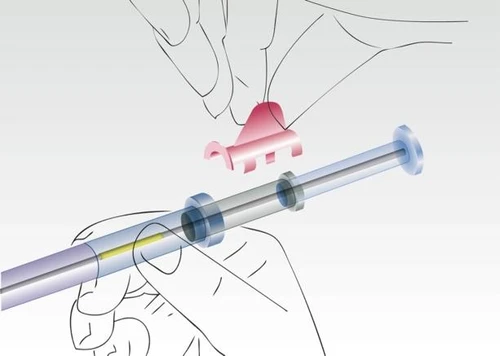
Remove the applicator from the sterile packaging.
Check whether the implant visible inside is properly positioned within the applicator.
Remove the protective ring.
Image 2
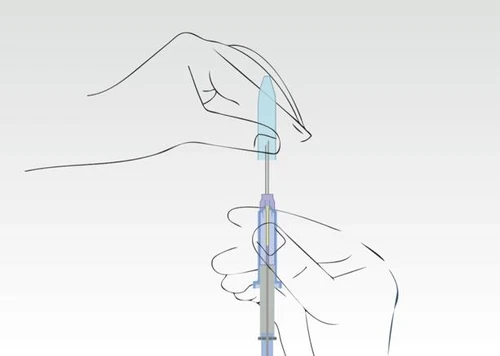
Grasp the applicator located on the syringe cylinder and remove the cap.
Image 3
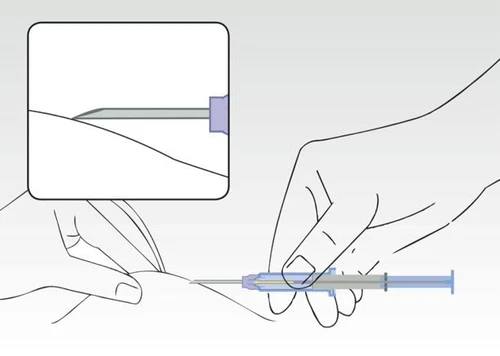
Simultaneously pinch the patient's skin and, holding the syringe cylinder, insert the needle obliquely (almost parallel to the skin surface) with the needle bevel facing upward.
Insert the needle into the subcutaneous tissue (not into muscle or the abdominal cavity) of the anterior abdominal wall below the umbilical line until the syringe cylinder touches the patient's skin.
The syringe cylinder must remain in contact with the skin throughout the entire application process!
Image 4
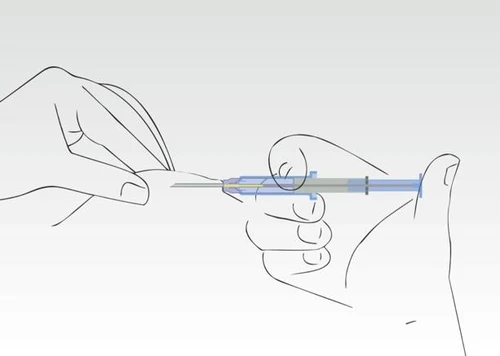
Press the syringe plunger. The implant moves to the tip of the needle.
Do not withdraw the syringe. During the application process, the syringe cylinder must remain in contact with the patient's skin.
Image 5
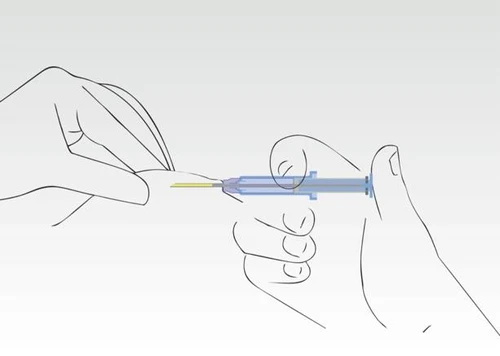
When the plunger is fully depressed, the needle automatically retracts.
Image 6
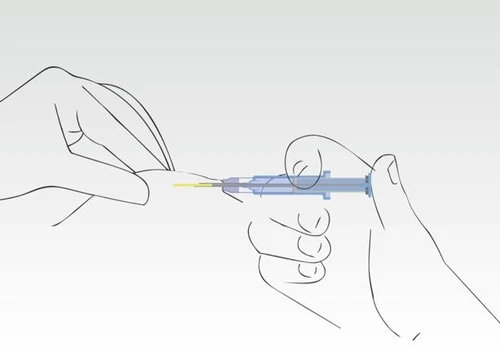
The needle withdraws from the tissue into the syringe cylinder. The syringe cylinder must remain in contact with the patient's skin. Typically, depressing the plunger and needle retraction occur in one smooth motion.
Image 7
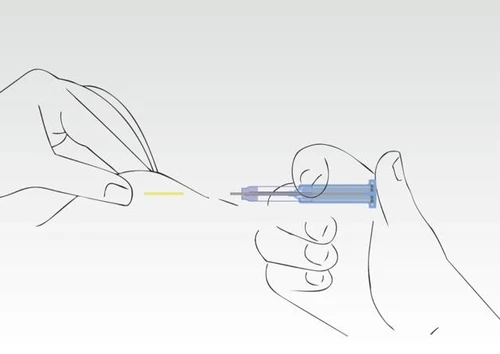
The application process is complete. The needle has been fully retracted into the syringe cylinder.
The hub with supernatant protects against injuries from the needle tip.
Image 8
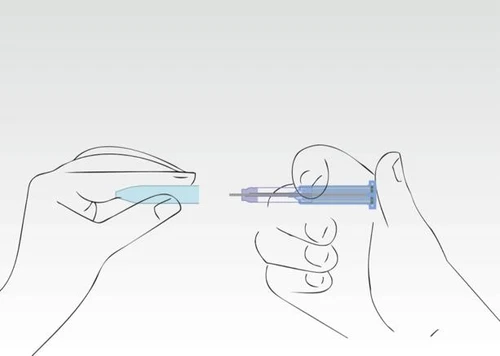
Replace the cap.
Dispose of the syringe into the designated container.