Lexotan
Poland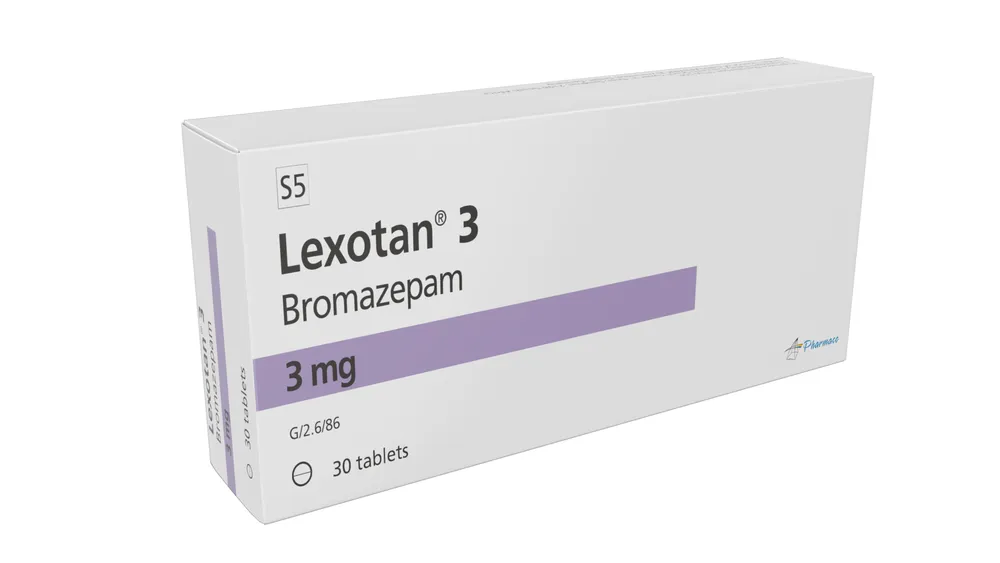
Table of Contents
Package leaflet: Information for the patient
Warning! Keep this leaflet. Information on the immediate packaging in a foreign language.
Lexotan
6 mg, tablets
Bromazepamum
Please read carefully the entire leaflet before using the medicine, as it contains
important information for the patient.
- Keep this leaflet, as you may need to read it again.
- If you have any questions, please consult your doctor or pharmacist.
- This medicine has been prescribed for a specific individual. Do not pass it on to others. This medicine may harm another person, even if their symptoms are the same.
- If you experience any adverse reactions, including any adverse reactions not listed in this leaflet, inform your doctor, pharmacist, or nurse. See section 4.
Table of contents
- What Lexotan is and what it is used for
- Important information before taking Lexotan
- How to take Lexotan
- Possible side effects
- How to store Lexotan
- Contents of the pack and other information
1. What Lexotan is and what it is used for
Lexotan contains bromazepam, which is an anxiolytic medicine belonging to the group of benzodiazepines.
Lexotan is indicated for pharmacological treatment of:
- generalized anxiety disorders
- autonomic dysfunctions presenting somatically, including skin symptoms, gastrointestinal, cardiovascular, and urogenital system symptoms
- anxiety states occurring in the course of chronic organic diseases of the central nervous system
- post-traumatic stress disorders with anxiety symptoms
- adjustment disorders.
2. Important information before using Lexotan
When not to use Lexotan
- if the patient is allergic to benzodiazepines or any of the other ingredients of this medicine (listed in section 6)
- if the patient has severe respiratory insufficiency
- if the patient has severe hepatic insufficiency (benzodiazepines are not indicated for treatment of patients with severe liver impairment due to the risk of brain damage)
- if the patient has muscle weakness (myasthenia gravis)
- if the patient has sleep apnoea syndrome.
Warnings and precautions
The patient should remain under medical supervision throughout the duration of treatment – at the beginning of treatment to establish the minimum effective dose and dosing frequency, and during treatment to prevent overdose.
Memory impairment
Benzodiazepines may cause anterograde amnesia. This condition most commonly occurs several hours after taking the medicine. To reduce the risk of anterograde amnesia, the patient should ensure uninterrupted sleep for several hours. The amnesic effect may be associated with abnormal behaviour.
Psychological reactions
When using benzodiazepines, reactions such as anxiety, restlessness, irritability, aggression, anxiety, delusions regarding the external environment or one's own condition, outbursts of anger, nightmares, hallucinations, psychoses, abnormal behaviour and other undesirable behaviours may occur. If such symptoms occur, contact a doctor immediately.
The above-mentioned symptoms are more likely to occur in children and elderly patients.
Duration of treatment
The duration of treatment is limited (should not exceed 8–12 weeks), and the dose of the medicine should be gradually reduced under medical supervision. During discontinuation of Lexotan, rebound phenomena may occur (see section 3, "Discontinuing treatment with Lexotan").
Alcohol consumption or use of medicines that depress the central nervous system
During treatment with Lexotan, alcohol should not be consumed and medicines that depress the central nervous system should not be taken.
Alcohol may intensify the effect of Lexotan and cause severe sedation as well as respiratory or circulatory depression, which may lead to coma or death.
Tolerance
Repeated administration of Lexotan over a prolonged period may lead to reduced effectiveness of the medicine.
During benzodiazepine treatment, withdrawal symptoms may develop if the medicine being used is replaced by a benzodiazepine with a significantly shorter half-life.
Benzodiazepines should not be used as the sole treatment for depression or anxiety states associated with depression (in such conditions, suicidal tendencies may be increased).
Benzodiazepines should not be used as first-line treatment for psychotic disorders.
Due to the muscle-relaxant effect of the medicine, there is a risk of falls and hip fractures, especially in elderly patients who get up at night.
History of alcohol, drug or substance abuse
The medicine should be used with particular caution and strictly according to the doctor's instructions.
Drug dependence
Taking medicines from the benzodiazepine group, including Lexotan, or similarly acting medicines, may lead to the development of both physical and psychological dependence on these medicines. The risk of dependence increases with dose and duration of treatment. The risk is also increased in patients with a history of alcohol, drug or substance abuse and in patients with personality disorders.
Warnings regarding specific patient groups
Particular care should be taken in patients with chronic respiratory insufficiency due to the risk of respiratory disturbances.
Extreme caution should be exercised in patients with mild or moderate liver impairment.
Benzodiazepines should not be administered to children without careful assessment of the justification for their use; treatment duration should be as short as possible, and the dose should be individually adjusted for each patient.
Elderly patients should receive a reduced dose.
Pregnancy and breastfeeding
Before taking any medicine, consult a doctor or pharmacist.
Pregnancy
The safety of bromazepam use in pregnant women has not been definitively established. Although there are no clinical data indicating significant congenital malformations in the fetus due to benzodiazepine use during the first trimester of pregnancy, some epidemiological studies have shown an increased risk of cleft palate.
Therefore, bromazepam should not be used during pregnancy unless strictly indicated and with strict adherence to the dosing regimen.
Patients should contact their doctor to discuss discontinuation of treatment if they are planning to become pregnant or suspect they are pregnant.
Administration of bromazepam during the third trimester of pregnancy and during delivery is permitted only in cases of absolute necessity, as adverse effects in newborns may be expected, such as hypothermia (lowered body temperature), decreased muscle tone (manifesting as sucking difficulties, leading to poor weight gain), and moderate respiratory depression or apnoea. Additionally, withdrawal symptoms in the newborn, such as excessive irritability, restlessness and tremors, have been observed.
In infants whose mothers have taken benzodiazepines long-term during the final stages of pregnancy, physical dependence on the drug and risk of withdrawal symptoms after birth may occur.
Breastfeeding
Benzodiazepines pass into breast milk; therefore, women who are breastfeeding should not use Lexotan.
Driving and operating machinery
Do not drive vehicles or operate machinery, as Lexotan may cause excessive sedation and amnesia, impair concentration and muscle function. In case of sleep deprivation, the likelihood of reduced alertness may increase. This effect may be particularly intensified if the patient has also consumed alcohol.
Lexotan with other medicines
Inform your doctor about all medicines currently or recently taken, as well as any medicines the patient plans to use.
Concomitant use of Lexotan with any medicines that depress the central nervous system (e.g. antidepressants, hypnotics, narcotic analgesics, neuroleptics, anxiolytics and sedatives, anticonvulsants, sedative antihistamines, anaesthetics) and alcohol may enhance the sedative effect of the medicine and increase its depressive effects on the respiratory and circulatory systems.
When narcotic analgesics are used concomitantly, a state of euphoria may occur, increasing the risk of psychological dependence.
Substances that inhibit the activity of certain liver enzymes may affect benzodiazepines metabolized by these enzymes. Concomitant administration of Lexotan with cimetidine, fluvoxamine, or (probably) propranolol may result in stronger or prolonged effects.
Lexotan contains monohydrate lactose. If the patient has previously been diagnosed with intolerance to certain sugars, the patient should consult a doctor before taking Lexotan.
3. How to use Lexotan
This medicine should always be used as directed by the physician. In case of doubt, consult your
doctor.
Lexotan is available in doses of 3 mg and 6 mg.
In all cases, Lexotan should be used under medical supervision.
Typical dosage
Average doses for outpatients: 1.5 mg to 3 mg three times daily.
Severe cases, especially in hospital treatment: 6 mg to 12 mg two or three times daily.
The physician should treat these dosage recommendations as general guidelines and adjust the dose
individually for each patient. Outpatient treatment should begin with low doses, gradually increasing
them to the optimal level. Treatment should last no longer than necessary.
Patients should visit their doctor regularly to assess the need for continued medication, especially
when disease symptoms are no longer present. Total treatment duration should not exceed 8 to 12
weeks, including the tapering-off period.
In certain cases, therapy may last longer, provided that a specialist evaluation of the patient's
condition has been performed by the physician.
Elderly patients and patients with impaired liver function require lower doses.
If the effect of Lexotan seems too strong or too weak, consult your doctor.
Use of a higher than recommended dose of Lexotan
If a higher than recommended dose is taken, contact your doctor immediately.
The doctor will decide on further management.
Common symptoms of benzodiazepine overdose include: drowsiness, impaired motor coordination,
speech disturbances, and nystagmus.
Overdose with Lexotan rarely poses a life-threatening risk when the drug is taken alone. However,
it may lead to loss of reflexes, respiratory arrest, hypotension, cardiorespiratory depression, and
coma. Coma, if it occurs, usually lasts several hours but may recur and worsen, especially in elderly
individuals. Symptoms of respiratory depression are more severe in patients with pre-existing
respiratory disorders.
Benzodiazepines enhance the effects of other central nervous system depressants (including alcohol).
Missed dose of Lexotan
Do not take a double dose to make up for a missed dose.
Stopping Lexotan treatment
If physical dependence has developed, withdrawal symptoms (withdrawal syndrome) may occur
after discontinuation of treatment.
These may include: headache, diarrhea, muscle pain, increased anxiety, tension, restlessness,
disorientation, and irritability. In severe cases, the following symptoms may occur:
distorted perception of the surrounding reality (derealization), disturbances in the sense of self
(depersonalization), hypersensitivity to sound, numbness and tingling sensations in the limbs,
hypersensitivity to light, noise, and touch, hallucinations, or seizures.
After discontinuation of the drug, "rebound" anxiety may occur—a transient syndrome in which the
symptoms that led to the use of Lexotan return in an intensified form. Other reactions may also
occur, such as: mood changes, anxiety, sleep disturbances, and restlessness.
Because the risk of withdrawal syndrome and "rebound" phenomena is greater following abrupt
discontinuation of treatment, gradual reduction of the Lexotan dose is recommended.
If you have any further questions about the use of this medicine, consult your doctor.
4. Possible adverse reactions
Like any medicine, Lexotan may cause adverse reactions, although not everyone experiences them.
The adverse reactions listed below have occurred with an unknown frequency (cannot be estimated
from the available data):
- hypersensitivity (allergy), anaphylactic shock, angioedema
- confusion, disorientation, emotional disturbances and mood disturbances – mainly at the beginning of treatment and usually subsiding during treatment
- libido disorders
- drug dependence, drug abuse, withdrawal syndrome
- depression
- paradoxical reactions such as anxiety, excitation, irritability, aggression, delusions, anger, nightmares, hallucinations, psychosis, unusual behavior, restlessness, fear, unusual dreams, hyperactivity and other behavioral disturbances – higher probability of such reactions in children and elderly patients
- anterograde amnesia
- memory impairment
- drowsiness, headache, dizziness, reduced alertness, problems with motor coordination and maintaining balance – mainly at the beginning of treatment and usually subsiding during treatment
- double vision – mainly at the beginning of treatment and usually subsiding during treatment
- heart failure, including cardiac arrest
- reduced depth and frequency of respiration
- nausea, vomiting – mainly at the beginning of treatment and usually subsiding during treatment
- constipation
- rash, itching, urticaria
- decreased muscle strength – mainly at the beginning of treatment and usually subsiding during treatment
- urinary retention
- fatigue – mainly at the beginning of treatment and usually subsiding during treatment
- falls, fractures – risk is increased in individuals concurrently using sedatives (including alcoholic beverages) and in elderly individuals.
Dependence:
Prolonged use of the medicine (even at therapeutic doses) may lead to the development of
psychological and physical dependence, and discontinuation of treatment may result in withdrawal
symptoms or "rebound" anxiety (worsening of disease symptoms – see "Discontinuation of Lexotan treatment").
Cases of benzodiazepine abuse have been reported.
Reporting of adverse reactions
If any adverse reactions occur, including any not listed in this leaflet, inform your doctor, pharmacist or nurse. Adverse reactions can be reported directly to the Department of Monitoring Adverse Drug Reactions of the Office for Registration of Medicinal Products, Medical Devices and Biocidal Products:
Al. Jerozolimskie 181C, 02-222 Warsaw, tel.: + 48 22 49 21 301, fax: + 48 22 49 21 309, website: https://smz.ezdrowie.gov.pl
Reporting adverse reactions helps to provide more information on the safety of the medicine.
5. How to store Lexotan
Keep the medicine out of the sight and reach of children.
Do not store above 30°C.
Do not use this medicine after the expiry date stated on the packaging. The expiry date refers to the last day of the stated month.
Medicines must not be disposed of via wastewater or household waste. Ask your pharmacist how to dispose of medicines no longer in use. This will help protect the environment.
6. Contents of the packaging and other information
What Lexotan contains
- The active substance is bromazepam (Bromazepamum). 1 tablet contains 6 mg of bromazepam.
- Other components are: microcrystalline cellulose, magnesium stearate, talc, lactose monohydrate (90.85 mg per 1 tablet), indigo carmine aluminium lake (E 132), yellow iron oxide (E 172).
What Lexotan looks like and contents of the pack
Lexotan is in the form of tablets.
The pack contains 30 tablets in blisters, placed in a cardboard box.
For more detailed information, please contact the marketing authorisation holder or the parallel importer.
Marketing authorisation holder in Portugal, country of export:
CHEPLAPHARM Arzneimittel GmbH
Ziegelhof 24
17489 Greifswald, Germany
Manufacturer:
Delpharm Milano S.r.l.
Via Carnevale, 1
20090 Segrate (MI)
Italy
Parallel importer:
Delfarma Sp. z o.o.
ul. Św. Teresy od Dzieciątka Jezus 111
91-222 Łódź
Repackaging performed at:
Delfarma Sp. z o.o.
ul. Św. Teresy od Dzieciątka Jezus 111
91-222 Łódź
Marketing authorisation number in Portugal, country of export: 4576880
Parallel import authorisation number: 214/18