Levoftyal
PolandTable of Contents
Package leaflet: Information for the user
Levoftyal, 5 mg/mL, eye drops, solution
Levofloxacinum
Please read the entire leaflet carefully before use, as it contains
important information for the patient.
- Keep this leaflet, so that you can read it again if necessary.
- If you have any questions, please consult your doctor or pharmacist.
- This medicine has been prescribed for a specific individual. Do not pass it on to others. The medicine may harm another person, even if their symptoms are the same.
- If you experience any adverse reactions, including any not listed in this leaflet, inform your doctor, pharmacist, or nurse. See section 4.
Table of contents
- What Levoftyal is and what it is used for
- Important information before using Levoftyal
- How to use Levoftyal
- Possible side effects
- How to store Levoftyal
- Contents of the pack and other information
1. What Levoftyal is and what it is used for
Levofloxacin is an antibiotic belonging to a group known as fluorochinolones (sometimes referred to briefly as quinolones). The action of the medicine consists in destroying certain types of bacteria that may cause infections.
Levofloxacin in the form of eye drops is used in children aged 1 year and older, as well as in adults, for the treatment of bacterial infections affecting the front surface of the eye.
One type of infection in this area is bacterial conjunctivitis, which is an infection of the outer membrane of the eye (conjunctiva).
The use of Levoftyal is not recommended in children under 1 year of age.
If there is no improvement after 5 days of treatment, or if the patient feels worse, consult a doctor.
2. Important information before using Levoftyal
When not to use Levoftyal:
- if the patient is allergic to levofloxacin, other quinolones, or any of the other ingredients of this medicine (listed in section 6).
If in doubt, consult a doctor or pharmacist.
Warnings and precautions
Before starting treatment with Levoftyal, discuss this with your doctor, pharmacist, or
nurse:
- if an allergic reaction occurs, even after a single dose, discontinue use of the medicine immediately,
- if during treatment the patient notices worsening of eye-related symptoms, contact a doctor as soon as possible,
- if after the treatment period prescribed by the doctor there are no signs of recovery, contact a doctor as soon as possible,
- contact lenses of any kind should generally not be worn during an eye infection,
- Levoftyal eye drops contain the preservative benzalkonium chloride, which may cause eye irritation.
Tendon swelling and rupture have been observed in patients taking fluorquinolones orally or intravenously, especially in elderly patients and in patients receiving concomitant corticosteroid therapy. If tendon pain or swelling (tendonitis) occurs, discontinue use of Levoftyal immediately.
Children and adolescents
Special warnings and precautions for use of this medicine are the same for adults, adolescents, and children aged 1 year and older.
Levoftyal and other medicines
Inform your doctor or pharmacist about all medicines currently used, recently used, or planned to be used.
It is particularly important to inform your doctor or pharmacist about the use of any other eye drops or ointments before starting treatment with Levoftyal eye drops.
If the patient is using other eye drops, wait at least 15 minutes between the application of Levoftyal and other eye drops.
Pregnancy, breastfeeding, and fertility
If the patient is pregnant or breastfeeding, suspects she may be pregnant, or is planning to have a child, she should consult a doctor or pharmacist before using this medicine.
Pregnancy
Levoftyal eye drops may be used in pregnant women only if the expected benefit justifies the potential risk to the developing child.
Breastfeeding
Although levofloxacin may pass into blood and breast milk in very small amounts, it is highly unlikely that eye drops would have a harmful effect on the developing child. The doctor is aware of potential risks and will advise the patient whether Levoftyal should be used in such circumstances.
Fertility
When Levoftyal is used as directed, fertility (a woman's ability to become pregnant or a man's ability to father children) is not affected.
Driving and operating machinery
Levoftyal has minor influence on the ability to drive and operate machinery.
If the eye drops cause blurred vision, the patient should wait until vision is fully restored before driving or operating machinery.
Levoftyal contains benzalkonium chloride
This medicine contains 0.05 mg of benzalkonium chloride per 1 mL of solution.
Benzalkonium chloride may be absorbed by soft contact lenses and may alter their color. Remove contact lenses before instilling the drops and wait at least 15 minutes before reinserting them.
Benzalkonium chloride may also cause eye irritation, especially in patients with dry eye syndrome or corneal disorders (the transparent layer at the front of the eye). If abnormal sensations, stinging, or pain in the eye occur after using the medicine, contact a doctor.
3. How to use Levoftyal
This medicine should always be used exactly as directed by your doctor or pharmacist. If in doubt,
consult your doctor or pharmacist.
Levoftyal is intended for ophthalmic use and must be applied to the external surface of the eye.
For patients over 1 year of age, the recommended dosage is:
DAYS 1–2
- One to two drops into the affected eye(s) every two hours up to eight times daily, except during sleeping hours.
DAYS 3–5
- One to two drops into the affected eye(s) four times daily.
There is no need to adjust the dose in elderly patients.
Treatment usually lasts five days. Your doctor will inform you how long you should continue using the drops.
If you are using any other eye medication, wait at least 15 minutes between applying different types of eye drops.
Contact lens wearers
If you wear contact lenses, remove them before applying Levoftyal. After applying Levoftyal, wait at least 15 minutes before reinserting contact lenses.
Use in children and adolescents
There is no need to adjust the dose in children aged 1 year and older and adolescents. Levoftyal is not recommended for use in children under 1 year of age.
Instructions for use
- Wash your hands and assume a comfortable sitting or standing position.
- Unscrew the cap from the bottle.
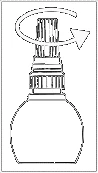
- Hold the inverted bottle between your thumb and other fingers.
- Gently pull down the lower eyelid of the affected eye with your finger.
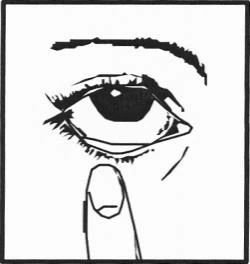
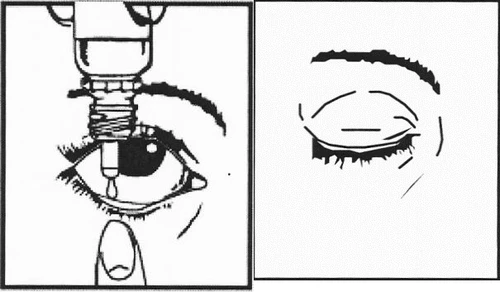
- Bring the tip of the bottle close to the eye. Do not touch the eye or the area around the eye with the tip of the bottle.
- Gently squeeze the bottle until one drop of medicine falls into the eye, then release the lower eyelid.
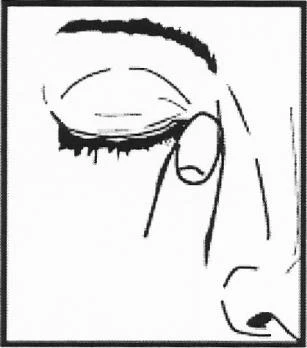
- Press with your finger on the inner corner of the affected eye near the nose and maintain pressure for 1 minute with the eye closed.
- Immediately after use, tightly close the bottle with the cap.
If an additional drop is needed, or if treatment also involves the second eye, repeat steps 3 to 8.
Levoftyal must not be injected into the interior of the eyeball.
Use of more Levoftyal than recommended
If more Levoftyal is used than recommended, rinse the eye(s) with water and contact your doctor or pharmacist.
Missed dose of Levoftyal
If you miss a dose of eye drops, use the next dose as soon as you remember. Do not use a double dose to make up for a missed dose.
Accidental swallowing of Levoftyal
The amount of levofloxacin contained in the bottle is too small to cause adverse effects. However, if in doubt, inform your doctor or pharmacist, who will advise on necessary actions.
Stopping Levoftyal before your doctor advised
Stopping the use of the drops earlier than advised by your doctor may prolong the recovery process.
If you have any further questions about the use of this medicine, consult your doctor or pharmacist.
4. Possible adverse reactions
Like all medicines, this medicine can cause adverse reactions, although not everyone will experience them.
Adverse reactions occur in approximately one out of ten people using Levoftyal eye drops.
Most of these adverse reactions affect only the eye and are usually short-lived. If the patient experiences any severe or persistent adverse reaction, use of these eye drops should be discontinued and medical advice should be sought urgently.
In very rare cases, the medicine may cause severe allergic reactions.
The following symptoms may occur even after administration of just a single dose of Levoftyal:
- swelling and a sensation of tightness in the throat,
- difficulty breathing.
In rare cases, other allergic reactions may occur. Symptoms include:
- worsening of eye redness and itching,
- worsening or sudden onset of eyelid swelling.
If any of these symptoms occur, use of Levoftyal should be discontinued and immediate contact with a physician should be made.
Common adverse reactions (may occur in not more than 1 in 10 people):
- burning sensation in the eye,
- blurred vision or mucus discharge from the eye.
Uncommon adverse reactions (may occur in not more than 1 in 100 people):
- stinging or irritation of the eyes,
- eye pain,
- dryness or discomfort of the eyes,
- swelling or redness (bloodshot eyes) of the conjunctiva (the front layer covering the eye) or eyelids,
- sensitivity to light,
- itching of the eyes,
- eyelid stickiness,
- headache,
- skin rash around the eyes,
- nasal congestion or nasal discharge.
Rare adverse reactions (may occur in not more than 1 in 1,000 people):
- allergic reactions such as skin rash.
Very rare adverse reactions (may occur in not more than 1 in 10,000 people):
- swelling and a sensation of tightness in the throat,
- difficulty breathing.
Additional adverse reactions in children and adolescents
The frequency, type, and severity of adverse reactions in children and adolescents are expected to be the same as in adults.
Reporting of adverse reactions
If any adverse symptoms occur, including any adverse symptoms not listed in this leaflet, the patient should inform their doctor, pharmacist, or nurse. Adverse reactions can be reported directly to the Department of Monitoring Adverse Drug Reactions of the Office for Registration of Medicinal Products, Medical Devices and Biocidal Products
Al. Jerozolimskie 181C
02-222 Warsaw
Tel.: +48 22 49 21 301
Fax: +48 22 49 21 309
Website: https://smz.ezdrowie.gov.pl
Adverse reactions can also be reported to the responsible entity.
Reporting adverse reactions helps to provide more information on the safety of the medicine.
5. How to store Levoftyal
Keep this medicine out of sight and reach of children.
Do not store in a refrigerator or freeze. Store in the original packaging to protect from light.
Do not use this medicine after the expiry date stated on the bottle and carton after "Expiry date (EXP)". The expiry date refers to the last day of the stated month.
Do not use the medicine if, before starting treatment with a new bottle, the patient notices that the plastic seal around the cap and neck of the bottle has been broken or damaged.
Keep the bottle tightly closed.
After first opening: store at a temperature below 25°C.
Usable period after first opening of the bottle: 28 days.
Medicines must not be disposed of via wastewater or household waste. Ask your pharmacist how to dispose of medicines no longer in use. Such measures help protect the environment.
6. Contents of the pack and other information
What Levoftyal contains
- The active substance is levofloxacin. One mL of eye drops, solution, contains 5.12 mg of levofloxacin hemihydrate, equivalent to 5 mg of levofloxacin.
- The other ingredients are: benzalkonium chloride (preservative), sodium chloride, concentrated hydrochloric acid (for pH adjustment) and water for injections.
What Levoftyal looks like and contents of the pack
Levoftyal is a clear, slightly yellowish-green solution, practically free from particles.
The medicine is supplied in a 5 mL white, opaque bottle made of LDPE, with a dropper made of LDPE and a cap made of PP with a tamper-evident seal made of PE.
The plastic bottle is packaged in a cardboard box.
Pack size: 1 bottle x 5 mL.
Marketing Authorisation Holder and Manufacturer
UNIMED PHARMA spol. s r.o.
Oriešková 11
82105 Bratislava
Slovakia
For further information, please contact the local representative of the Marketing Authorisation Holder:
Verco S.A.
Skwer kard. S. Wyszyńskiego 5, lok. 6U
01-015 Warsaw
Tel.: +48 22 811 41 61
This medicinal product is authorised in the European Economic Area countries under the following names:
Estonia: Levofloxacin UNIMED PHARMA
Lithuania: Levofloxacin UNIMED PHARMA 5 mg/mL akių lašai (tirpalas)
Latvia: Levofloxacin UNIMED PHARMA 5 mg/mL acu pilieni, šķīdums
Poland: Levoftyal
Slovenia: Levofloksacin UNIMED PHARMA 5 mg/mL kapljice za oko, raztopina
Hungary: Levofloxacin UNIMED PHARMA 5 mg/mL oldatos szemcsepp