Levofolic 50 mg/ml solution for injection / for infusion
Poland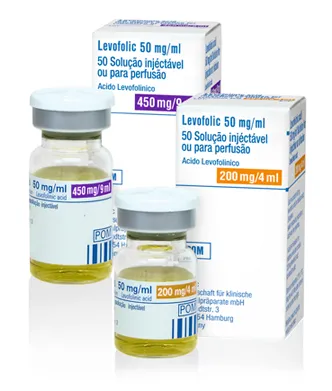
Table of Contents
- Package leaflet: Information for the user
- 1. What Levofolic is and what it is used for
- 2. Important information before using Levofolic
- 3. How to use Levofolic
- 4. Possible adverse reactions
- 5. How to store Levofolic
- 6. Contents of the packaging and other information
- Information intended exclusively for medical professionals:
Package leaflet: Information for the user
Levofolic 50 mg/ml solution for injection / infusion
Acidum levofolinicum
Please read all of this leaflet carefully before using this medicine because it contains
important information for you.
- Keep this leaflet. You may need to read it again.
- If you have any further questions, ask your doctor, pharmacist, or nurse.
- If you get any side effects, including any not listed in this leaflet, tell your doctor, pharmacist, or nurse. See section 4.
Contents of the leaflet
- What Levofolic is and what it is used for
- What you need to know before you use Levofolic
- How to use Levofolic
- Possible side effects
- How to store Levofolic
- Contents of the pack and other information
1. What Levofolic is and what it is used for
Use of Levofolic in combination with methotrexate
Levofolic 50 mg/ml solution for injection / infusion belongs to a group of medicines that reduce the toxicity of anticancer drugs. These are medicines used during cancer treatment (cytostatic therapy) to prevent cytotoxic drug toxicity.
Levofolic is used in the treatment of cancer in adults and children to reduce toxicity and prevent the effects of drugs such as methotrexate, which inhibits the action of endogenous folic acid (therefore it is called a folic acid antagonist). Overdose of folic acid antagonists can also be treated with Levofolic.
Use of Levofolic in combination with 5-fluorouracil
It has been shown that Levofolic enhances the effect of certain cytostatic drugs. Therefore, it is used in cancer treatment to increase cell damage caused by the anticancer drug 5-fluorouracil.
2. Important information before using Levofolic
When not to use Levofolic
- if the patient is allergic to l-folinic acid or any of the other ingredients of this medicine (listed in section 6),
- in patients with pernicious anemia or other anemias due to vitamin B deficiency,
- in combination with 5-fluorouracil if there are contraindications to the use of 5-fluorouracil, particularly in pregnant or breastfeeding women,
- in combination with 5-fluorouracil if the patient has severe diarrhea.
Warnings and precautions
Before starting treatment with Levofolic, please discuss this with your doctor, pharmacist, or
nurse.
General information
Levofolic should only be used with methotrexate or 5-fluorouracil under the direct supervision of a physician experienced in cancer treatment.
L-folinic acid must not be administered intrathecally (into the spinal fluid), as severe adverse reactions, including death, have been reported with such administration.
If the patient is being treated with certain cytotoxic (cell-damaging) drugs such as hydroxyurea, cytarabine, mercaptopurine, or thioguanine, macrocytosis (enlargement of red blood cells) may develop. Such cases of macrocytosis should not be treated with l-folinic acid.
In patients with seizures treated with certain medications (phenobarbital, phenytoin, or primidone), there may be a risk of increased seizure frequency due to reduced plasma concentrations of anticonvulsant drugs. The treating physician will likely perform blood tests during and after treatment with l-folinic acid. Plasma levels of anticonvulsant drugs can be measured and the dose adjusted if necessary.
Special precautions when using Levofolic in combination with methotrexate
The treating physician must ensure that l-folinic acid is not administered simultaneously with folic acid antagonists (e.g. methotrexate), as the therapeutic effect of the antagonist may be reduced.
In addition, the physician should avoid excessive doses of l-folinic acid, as this may impair the antitumor activity of methotrexate.
However, accidental overdose of a folic acid antagonist such as methotrexate will be treated immediately as an emergency requiring prompt intervention.
Methotrexate excretion may be delayed due to fluid accumulation (e.g. in the peritoneal cavity or pleural space), in patients with impaired renal function, in those who are improperly hydrated, or in those taking certain anti-inflammatory or pain medications (nonsteroidal anti-inflammatory drugs such as ibuprofen, diclofenac, or salicylates such as acetylsalicylic acid).
In such circumstances, higher doses of Levofolic or prolonged administration may be indicated.
Delayed excretion of methotrexate may in turn affect kidney function and lead to increased blood levels of methotrexate.
In such cases, the patient may receive higher doses of Levofolic or the duration of l-folinic acid administration may be extended.
Special precautions when using Levofolic in combination with 5-fluorouracil
When used in combination with 5-fluorouracil, l-folinic acid may increase the risk of toxic effects of 5-fluorouracil. The most common symptoms, which may limit dosing, include:
- decreased white blood cell count,
- mucositis (e.g. in the mouth and/or stomach),
- diarrhea.
If the patient experiences watery stools twice daily and/or gastric mucositis (mild or moderate ulcers), medical advice should be sought immediately.
If the patient experiences gastrointestinal adverse reactions regardless of severity, 5-fluorouracil in combination with l-folinic acid will not be administered, nor will such treatment be continued.
In particular, if the patient develops diarrhea, close monitoring is required, as the patient's condition may rapidly deteriorate and severe adverse reactions may occur. Treatment with 5-fluorouracil in combination with l-folinic acid may be initiated or resumed only after complete resolution of gastrointestinal symptoms.
Elderly patients, patients in poor general condition, or patients who have undergone radiotherapy should exercise particular caution, as l-folinic acid may increase the risk of 5-fluorouracil toxicity.
Levofolic and other medicines
Inform your doctor or pharmacist about all medicines currently or recently taken, or those planned for use.
The following drugs may have altered effects if Levofolic is used concomitantly:
phenobarbital, primidone, phenytoin, and succinimides (medications used in epilepsy treatment).
The doctor may monitor blood levels of these drugs and adjust the dose to prevent increased seizures.
If Levofolic is administered simultaneously with methotrexate, it may interfere with the proper action of methotrexate.
Concomitant use of Levofolic with 5-fluorouracil increases both the efficacy and adverse effects of 5-fluorouracil.
When Levofolic is administered together with a folic acid antagonist (e.g. co-trimoxazole, pyrimethamine), the efficacy of the folic acid antagonist may be reduced or completely neutralized.
Pregnancy and breastfeeding
If the patient is pregnant or breastfeeding, suspects she may be pregnant, or plans to become pregnant, she should consult her doctor before using this medicine.
It is unlikely that a doctor would recommend the use of a folic acid antagonist or 5-fluorouracil during pregnancy or breastfeeding. However, if the patient has used a folic acid antagonist during pregnancy or breastfeeding, this medicine (Levofolic) may be used to alleviate adverse effects.
Pregnancy
There are no reports indicating that Levofolic causes harmful effects when administered to pregnant women.
Methotrexate may be administered to pregnant women only when the benefits of treatment outweigh the potential risks to the fetus.
There are no restrictions on the use of disodium l-folinate to reduce or prevent methotrexate effects in pregnant women.
Levofolic must not be administered to pregnant patients in combination with 5-fluorouracil.
Breastfeeding
Breastfeeding should be discontinued before starting treatment with methotrexate or 5-fluorouracil.
Levofolic may be used in monotherapy during breastfeeding if necessary.
Driving and using machines
There is no evidence suggesting that Levofolic, when used as monotherapy, affects the ability to drive or operate machinery. The patient's general condition is more relevant than any effect caused by Levofolic.
Levofolic medac contains sodium
The medicine contains less than 1 mmol (23 mg) of sodium per vial, meaning the medicine is considered "sodium-free".
3. How to use Levofolic
Preparation and administration of Levofolic must be performed exclusively by trained medical personnel.
Levofolic is administered intravenously either undiluted as an injection or diluted for infusion.
Levofolic must not be administered into the spinal canal (intrathecally).
Dose of Levofolic for preventing symptoms of toxicity during methotrexate therapy
Patients receiving high-dose antineoplastic methotrexate at doses exceeding 500 mg/m² BSA should be given l-folinic acid after methotrexate administration. The physician may also consider administering l-folinic acid when methotrexate is used at doses of 100 mg/m² BSA – 500 mg/m² BSA.
Dose adjustment according to the patient's condition is the responsibility of the physician.
Dose of Levofolic to enhance the cytotoxic effect of 5-fluorouracil
Various treatment regimens with Levofolic are used in combination therapy with 5-fluorouracil (weekly, bimonthly, and monthly regimens).
The responsibility for adjusting the dose according to the patient's condition within the appropriate treatment regimen lies with the physician.
Use of a higher than recommended dose of Levofolic
Excessive amounts of Levofolic may reduce the efficacy of folic acid antagonists such as methotrexate. In case of overdose with 5-fluorouracil in combination with Levofolic, follow the instructions for 5-fluorouracil overdose.
If you have any further doubts regarding the use of this medicine, consult your doctor, pharmacist, or nurse.
4. Possible adverse reactions
Like all medicines, this medicine can cause adverse reactions, although not everyone will experience them.
If any of the symptoms listed below occur, stop using Levofolic immediately and contact your doctor or go to the nearest emergency department.
Very rare (may affect less than 1 in 10,000 people)
- Severe allergic reactions – the patient may suddenly develop itchy rash (urticaria), swelling of the hands, feet, ankles, face, lips, mouth or throat (which may cause difficulty swallowing or breathing), and the patient may feel faint. This is a serious adverse reaction which may require immediate medical attention.
Other adverse reactions that may occur:
Uncommon (may affect less than 1 in 100 people):
- fever.
Rare (may affect less than 1 in 1,000 people):
- sleep disturbances (insomnia), restlessness and depression after high doses,
- gastrointestinal problems (after high doses),
- increased frequency of seizures (fits) in patients with epilepsy.
L-sodium folinate in combination therapy with 5-fluorouracil
When L-folinic acid is used in combination with anticancer medicines containing fluoropyrimidines, there is an increased likelihood of the following adverse reactions associated with the other medicine.
Very common (may affect more than 1 in 10 people):
- decrease in blood cell counts (including life-threatening conditions),
- inflammation (painful swelling and redness) of the mucous membranes of the intestines and mouth (life-threatening conditions have occurred).
Common (may affect less than 1 in 10 people):
- redness and swelling of the palms and soles, which may lead to skin peeling (hand-foot syndrome).
Not known (frequency cannot be estimated from available data):
- elevated blood ammonia levels (a metabolic by-product produced by the body).
The overall safety profile usually depends on the 5-fluorouracil treatment regimen used, due to the enhanced toxic effects caused by 5-fluorouracil.
Monthly regimen:
Very common (may affect more than 1 in 10 people):
- vomiting, nausea.
No increase in other toxic effects caused by 5-fluorouracil (e.g. neurotoxicity) has been observed.
Weekly regimen:
Very common (may affect more than 1 in 10 people):
- severe diarrhoea and dehydration, which may result from diarrhoea, requiring hospitalization for treatment, and even leading to death.
Reporting of adverse reactions
If any adverse reactions occur, including any not listed in this leaflet, inform your doctor, pharmacist or nurse. Adverse reactions can be reported directly to the Department of Monitoring Adverse Reactions of Medicinal Products at the Office for Registration of Medicinal Products, Medical Devices and Biocidal Products:
Al. Jerozolimskie 181C, PL-02-222 Warsaw, Tel.: +48 22 49-21-301, Fax: +48 22 49-21-309, website: https://smz.ezdrowie.gov.pl
Adverse reactions can also be reported to the marketing authorization holder.
Reporting adverse reactions helps to provide more information on the safety of the medicine.
5. How to store Levofolic
Keep this medicine out of the sight and reach of children.
Do not use this medicine after the expiry date stated on the label after: Exp.
The expiry date refers to the last day of the stated month.
Store in a refrigerator (2ºC – 8ºC).
Keep the vial in the outer packaging to protect from light.
6. Contents of the packaging and other information
What Levofolic contains
The active substance is l-folinic acid.
One ml of solution contains 54.65 mg of disodium l-folinate, equivalent to 50 mg of l-folinic acid.
One 1 ml vial contains 54.65 mg of disodium l-folinate, equivalent to 50 mg of l-folinic acid.
One 4 ml vial contains 218.6 mg of disodium l-folinate, equivalent to 200 mg of l-folinic acid.
One 9 ml vial contains 491.85 mg of disodium l-folinate, equivalent to 450 mg of l-folinic acid.
The other ingredients are sodium hydroxide, hydrochloric acid, water for injections.
What Levofolic looks like and contents of the pack
Levofolic is a clear, colourless or slightly yellow solution for injection/infusion. The medicine is supplied in vials made of colourless type I glass with a bromobutyl rubber stopper and an aluminium flip-off cap.
Pack sizes:
Vials containing 1 ml, 4 ml or 9 ml of solution for injection/infusion, available in packs of 1 or 5 vials. Not all pack sizes may be marketed.
Marketing Authorisation Holder and Manufacturer:
medac
Gesellschaft für klinische Spezialpräparate mbH
Theaterstr. 6
22880 Wedel
Germany
<22880 Wedel>
medac s.a.s.
23 rue Pierre Gilles de Gennes
69007 Lyon, France
This medicinal product is authorised in the Member States of the European Economic Area under the following names:
Belgium
Levofolic 50 mg/ml solution injectable/pour perfusion
Levofolic 50 mg/ml oplossing voor injectie / infusie
Levofolic 50 mg/ml Injektions-/Infusionslösung
Estonia
Levofolinic acid medac 50 mg/ml süste-/infusioonilahus
Finland
Levofolic 50 mg/ml injektio-/infuusioneste, liuos
Levofolic 50 mg/ml injektions-/infusionsvätska, lösning
France
Levofolinate de sodium medac 50 mg/ml, solution injectable/pour perfusion
Lithuania
Levofolino rūgštis medac 50 mg/ml injekcinis ar infuzinis tirpalas
Latvia
Levofolic 50 mg/ml šķīdums injekcijai/ infūzijai
Germany
Levofolic 50 mg/ml Injektions-/Infusionslösung
Poland
Levofolic 50 mg/ml roztwór do wstrzykiwań / do infuzji
Portugal
Levofolic 50 mg/ml solução injetável ou para perfusão
Slovakia
Levofolic 50 mg/ml injekčný/infúzny roztok
Slovenia
Levofolic 50 mg/ml raztopina za injiciranje/infundiranje
Sweden
Natriumlevofolinat medac
United Kingdom
Levofolinic acid 50 mg/ml solution for injection/infusion
Italy
Sodio Levofolinato medac 50 mg/ml soluzione iniettabile o per infusione
Information intended exclusively for medical professionals:
Instructions for preparation prior to use of Levofolic
Preparation of the infusion solution must be carried out under aseptic conditions.
The injection/infusion solution may be diluted with 9 mg/ml (0.9%) sodium chloride solution or
5% glucose solution.
The medicinal product Levofolic is compatible with 5-fluorouracil.
Use only solutions that are free from visible particles.
For single use only. Any unused medicinal product or waste material must be disposed of in
accordance with local regulations.
For intravenous administration.
Shelf life after first opening or dilution
After dilution with 5-fluorouracil or dilution with 9 mg/ml (0.9%) sodium chloride solution or
5% glucose solution:
Chemical and physical stability has been demonstrated for 72 hours at 20–25°C.
From a microbiological standpoint, the product should be used immediately. Otherwise, the user
is responsible for the storage duration and conditions prior to use, which generally should not
exceed 24 hours at 2°C–8°C, unless the dilution was performed under controlled and validated
aseptic conditions.
Dosage and method of administration
Enhancement of 5-fluorouracil cytotoxicity
Various regimens and doses have been used, without identification of an optimal dose.
The following regimens, used in adult and elderly patients for the treatment of advanced or
metastatic colorectal cancer, are provided as examples.
Bimonthly regimen: A dose of 100 mg/m² BSA of l-folinic acid (= 109.3 mg/m² BSA of disodium
l-folinate) administered as a 2-hour intravenous infusion, followed by a bolus dose of
400 mg/m² BSA of 5-fluorouracil and a 22-hour infusion of 5-fluorouracil (600 mg/m² BSA) on
two consecutive days, repeated every 2 weeks on days 1 and 2.
Weekly regimen: A dose of 10 mg/m² BSA of l-folinic acid (= 10.93 mg/m² BSA of disodium
l-folinate) as a bolus, or 100 to 250 mg/m² BSA of l-folinic acid (= 109.3 mg/m² BSA to
273.25 mg/m² BSA of disodium l-folinate) as a 2-hour intravenous infusion, plus
500 mg/m² BSA of 5-fluorouracil as an intravenous bolus administered either midway through
or at the end of the disodium l-folinate infusion.
Monthly regimen: A dose of 10 mg/m² BSA of l-folinic acid (= 10.93 mg/m² BSA of disodium
l-folinate) as an intravenous bolus, or 100 to 250 mg/m² BSA of l-folinic acid (= 109.3 mg/m² BSA
to 273.25 mg/m² BSA of disodium l-folinate) as a 2-hour intravenous infusion, followed
immediately by a dose of 425 or 370 mg/m² BSA of 5-fluorouracil as an intravenous bolus
administered over 5 consecutive days.
When used in combination with 5-fluorouracil, modification of 5-fluorouracil dosage and
intervals between treatment cycles may be necessary, depending on the patient's condition,
clinical response, and dose-limiting toxicities described in the 5-fluorouracil medicinal product
characteristics. Dose reduction of disodium l-folinate is not required.
The number of repeated cycles administered depends on the physician's decision.
Children and adolescents
Data on the use of such combination therapies are not available.
Protective use of disodium l-folinate during methotrexate therapy
Since protective treatment with disodium l-folinate depends heavily on the dosage and route of
administration of high- and intermediate-dose methotrexate, the methotrexate treatment regimen
determines the dosing of protective disodium l-folinate. Therefore, the dosage and route of
administration of disodium l-folinate should be best adapted to the high or intermediate doses and
administration method used in the methotrexate treatment regimen.
The following guidelines may serve as examples of regimens used in adults, elderly patients, and
children:
In patients with malabsorption syndrome or other gastrointestinal disorders, disodium l-folinate
should be administered parenterally when intestinal absorption cannot be guaranteed.
Doses exceeding 12.5–25 mg of l-folinic acid should be administered parenterally due to the
possibility of saturating intestinal absorption of disodium l-folinate.
Administration of disodium l-folinate is necessary when methotrexate is used at doses exceeding
500 mg/m² BSA. If methotrexate is administered at doses of 100–500 mg/m² BSA, administration
of disodium l-folinate should be considered.
The dosage and duration of protective treatment depend on the methotrexate treatment regimen
used, the occurrence of toxic effects, and the individual capacity to eliminate methotrexate. The
initial dose of l-folinic acid is generally 7.5 mg (3–6 mg/m² BSA), administered 12–24 hours (no
later than 24 hours) after initiation of the methotrexate infusion. This same dose is repeated every
6 hours for 72 hours. After several parenteral doses, oral administration may be initiated.
In addition to administering disodium l-folinate, it is important to implement measures ensuring
rapid elimination of methotrexate.
Such measures include:
a. Urine alkalinization to maintain a pH greater than 7.0 prior to methotrexate infusion (to
increase the solubility of methotrexate and its metabolites).
b. Maintenance of urine output at 1800–2000 cm³/m²/24 hours by increasing oral or intravenous
fluid volume on days 2, 3, and 4 after methotrexate administration.
c. Monitoring of plasma methotrexate concentration, blood urea nitrogen (BUN), and creatinine
concentration on days 2, 3, and 4.
These measurements should continue until the plasma methotrexate concentration falls below
10 µmol/l (0.1 µmol).
In some patients, delayed methotrexate elimination may occur. This may be due to fluid
accumulation in the third space (e.g., observed as ascites or pleural effusion), renal impairment,
or inadequate hydration. In such circumstances, higher doses or prolonged administration of
disodium l-folinate may be indicated. In patients with delayed initial methotrexate elimination,
reversible renal failure may occur.
Forty-eight hours after initiation of the methotrexate infusion, the residual methotrexate
concentration should be determined. If it is greater than > 0.5 µmol/l, the dosage of disodium
l-folinate should be adjusted as follows:
| Residual methotrexate concentration in blood 48 hours after initiation of methotrexate administration: | Additional dose of l-folinic acid administered every 6 hours for 48 hours until methotrexate concentration reaches below 0.05 µmol/l: |
| ≥ 0.5 µmol/l | 7.5 mg/m² bsa |
| ≥ 1.0 µmol/l | 50 mg/m² bsa |
| ≥ 2.0 µmol/l | 100 mg/m² bsa |