Leuject
PolandInstructions for Use
Package leaflet: Information for the patient
Leuject, 2 mg/ml, solution for injection
Cladribine
Please read all of this leaflet carefully before using this medicine, as it contains important information for you.
- Keep this leaflet, as you may need to read it again.
- If you have any questions, ask your doctor or pharmacist.
- If you experience any side effects, including any not listed in this leaflet, inform your doctor or pharmacist. See section 4.
Contents of the leaflet
- What Leuject is and what it is used for
- What you need to know before using Leuject
- How to use Leuject
- Possible side effects
- How to store Leuject
- Contents of the pack and other information
1. What Leuject is and what it is used for
Leuject contains the active substance cladribine. Cladribine is a cytostatic agent. It affects the development of malignant (cancerous) white blood cells involved in hairy cell leukemia. Leuject is used to treat this disease.
2. Important information before using Leuject
When not to use Leuject
- if the patient is allergic to cladribine or any of the other ingredients of Leuject (listed in section 6)
- during pregnancy or breastfeeding
- in patients under 18 years of age
- in patients with moderate or severe kidney or liver function impairment
- after using other medicines that affect blood cell production in the bone marrow (myelosuppression)
Warnings and precautions
Before starting treatment with Leuject, discuss this with your doctor or pharmacist. If at any time during or after treatment the patient experiences any of the symptoms listed below, you must immediately inform the doctor or nurse:
blurred vision, loss of vision, or double vision, difficulty speaking, weakness in the arm or leg, change in walking pattern or problems with balance, persistent numbness, weakness, or loss of sensation, memory loss, or feeling confused. All of these may be symptoms of a serious and potentially fatal brain disease called progressive multifocal leukoencephalopathy (PML). If the patient has previously experienced these symptoms before treatment with cladribine, the doctor must be informed about any changes in these symptoms.
Inform the doctor if the patient has or has had:
- liver or kidney disease
- infections
- any infection should be treated before starting treatment with Leuject.
- if signs of infection (such as flu-like symptoms) occur during treatment with Leuject, inform the doctor immediately.
- fever.
Blood tests
Before starting and during treatment with Leuject, the patient will have regular blood tests to ensure that continuing treatment is safe. The doctor may decide that a blood transfusion is necessary to improve blood cell counts. In addition, liver and kidney function will be monitored.
Leuject and other medicines
Tell the doctor about all medicines the patient is currently taking or has recently taken, including those available without a prescription. In particular, inform the doctor if the patient is taking medicines containing:
- corticosteroids, usually used to treat inflammatory conditions
- antiviral medicines, used to treat viral infections
Leuject must not be used together with other medicines that affect blood cell production in the bone marrow (myelosuppression).
Pregnancy, breastfeeding, and effects on fertility
Leuject must not be used during pregnancy. Effective contraception methods must be used during treatment and for at least 6 months after the last dose of Leuject. If pregnancy occurs during treatment, inform the doctor immediately.
Breastfeeding must not be used during treatment with Leuject and for at least 6 months after the last dose of Leuject.
Men planning to father a child should inform their doctor before starting treatment with cladribine. Effective contraception methods should be used during treatment and for at least 3 months after the last dose of Leuject. The doctor may provide advice regarding the possibility of storing sperm in a frozen state (cryopreservation).
Driving and operating machinery
Leuject has a strong effect on the ability to drive and operate machinery. If drowsiness occurs, which may result from a low number of red blood cells caused by treatment with Leuject, or if dizziness occurs, the patient should not drive or operate machinery.
Leuject contains sodium
This medicine contains less than 1 mmol (23 mg) of sodium per dose, i.e. this medicine is considered "sodium-free".
3. How to use Leuject
Leuject must always be used as directed by the physician. If in doubt, consult a doctor or pharmacist.
The physician will calculate the appropriate dosage based on the patient's body weight and provide detailed instructions regarding the treatment regimen. The recommended daily dose is 0.14 mg per kilogram of body weight for five consecutive days (one treatment cycle).
Leuject must be injected under the skin (subcutaneous injection) at approximately the same time each day. If the patient self-injects Leuject, proper training by a physician or nurse is required beforehand. Detailed injection instructions are provided at the end of this leaflet.
The patient may also receive an additional medicine containing the active substance allopurinol to reduce excess uric acid.
Use of a higher than recommended dose of Leuject
If an incorrect dose has been injected, contact the doctor immediately.
Missed dose of Leuject
Do not inject a double dose to make up for a missed dose. If a dose is missed, contact the doctor immediately.
If there are any further questions regarding the use of this medicine, consult the doctor or pharmacist.
4. Possible adverse reactions
Like any medicine, Leuject may cause adverse reactions, although not everyone experiences them.
You should immediately inform the doctor if any of the following occur in the patient during or after treatment with Leuject:
- any signs of infection (such as flu-like symptoms)
- fever. Recurrence of tumour disease (cancer) cannot be excluded. This means that the risk of developing tumour disease in the future is slightly higher than in healthy individuals. This slightly increased risk may be due to hairy cell leukaemia or treatments used for the disease, including treatment with Leuject.
The following adverse reactions may occur:
Very common adverse reactions (may affect more than 1 in 10 people)
- Infections.
- Fever.
- Low number of certain white blood cells (neutrophils and lymphocytes) and low platelet count in blood tests.
- Low number of red blood cells, which may lead to anaemia with symptoms such as fatigue and drowsiness.
- Decreased immune system function.
- Headache, dizziness.
- Abnormal breathing, abnormal breath sounds on auscultation, cough.
- Nausea, vomiting, constipation, and diarrhoea.
- Skin eruptions (rash), swelling, redness, and pain around the injection site, sweating. Skin reactions are usually mild to moderate and typically resolve within a few days.
- Fatigue, chills, decreased appetite.
- Weakness.
Common adverse reactions (may affect up to 1 in 10 people)
- Recurrence of tumour disease (cancer).
- Low platelet count, which may cause unusual bleeding (e.g. from the nose or skin).
- Insomnia, anxiety.
- Increased heart rate, abnormal heart sounds, low blood pressure, reduced blood flow to the heart muscle.
- Shortness of breath, lung tissue swelling due to infection, inflammation of the mouth and tongue.
- Abdominal pain and excessive gas in the stomach or intestines; most often mild increases in liver function laboratory markers (bilirubin, aminotransferases), returning to normal after treatment ends.
- Itching, itchy skin eruptions (urticaria), skin redness, and skin pain.
- Tissue swelling, malaise, pain (muscle pain, joint pain, bone pain).
Uncommon adverse reactions (may affect up to 1 in 100 people)
- Anaemia caused by destruction of red blood cells.
- Drowsiness, numbness and tingling of the skin, weakness, inactivity, peripheral nerve disorders, confusion, coordination disturbances.
- Eye inflammation.
- Sore throat.
- Vein inflammation.
- Significant weight loss.
Rare adverse reactions (may affect up to 1 in 1,000 people)
- Decreased liver function.
- Decreased kidney function.
- Complications due to anti-tumour treatment resulting from tumour cell breakdown.
- Transfusion reaction.
- Increased number of specific white blood cells (eosinophils).
- Stroke.
- Swallowing and speech disorders.
- Heart failure.
- Irregular heartbeat.
- Inability of the heart to maintain adequate blood circulation.
- Intestinal obstruction.
- Severe skin allergic reactions (Stevens-Johnson syndrome or Lyell's syndrome).
Very rare adverse reactions (may affect up to 1 in 10,000 people)
- Depression, seizure.
- Eyelid swelling.
- Pulmonary embolism.
- Gallbladder inflammation.
- Decreased organ function due to high levels of a substance produced by the body (glycoprotein).
Reporting of adverse reactions
If any adverse reactions occur, including any not listed in this leaflet, they should be reported to a doctor or pharmacist. Adverse reactions can be reported directly to the Department of Monitoring Adverse Drug Reactions, Office for Registration of Medicinal Products, Medical Devices and Biocidal Products, Al. Jerozolimskie 181C, 02-222 Warsaw, Tel: +48 22 49 21 301, Fax: +48 22 49 21 309, Website: https://smz.ezdrowie.gov.pl
Adverse reactions can also be reported to the marketing authorisation holder. Reporting adverse reactions helps to provide more information on the safety of the medicine.
5. How to store Leuject
Keep out of the sight and reach of children.
Do not use Leuject after the expiry date stated on the vial label and on the cardboard
package: Expiry date (EXP). The expiry date refers to the last day of the stated month.
Store in a refrigerator (2°C – 8°C). Do not freeze.
After opening, the medicinal product should be used immediately.
Do not use cladribine if the vial is damaged or if the solution is not clear or contains any
particulate matter.
Any unused medicinal product or waste material should be disposed of in accordance with
local regulations.
6. Contents of the pack and other information
What Leuject contains
- The active substance is cladribine. Each ml of solution contains 2 mg of cladribine. Each vial contains 10 mg of cladribine in 5 ml of solution.
- The other ingredients are: sodium chloride, sodium hydroxide (for pH adjustment), hydrochloric acid (for pH adjustment), and water for injections.
What Leuject looks like and contents of the pack
Leuject is available in Type I glass vials containing 5 ml of clear, colourless solution for injection. The carton pack contains 1 or 5 vials. Not all pack sizes may be marketed.
Marketing Authorisation Holder
Atnahs Pharma Netherlands B.V.
Herikerbergweg 88
1101 CM Amsterdam
The Netherlands
Manufacturer
Pharma Pack Hungary Kft.
Building B, Raktarvarosi Ut 9
2045 Torokbalint
Hungary
INJECTION INSTRUCTIONS
This section contains instructions for administering Leuject injections. It is essential not to begin self-injecting the medicine without first receiving training from your doctor or nurse. Your doctor will inform you how much Leuject you need and how often and when to inject it. Leuject should be injected under the skin (subcutaneous injection). If you have any doubts about how to give the injection, please ask your doctor or nurse for help.
Leuject is a cytotoxic medicine and therefore must be handled with care. If the medicine is not being self-administered by the patient, it is recommended to wear disposable gloves and protective clothing during preparation and administration of Leuject. If Leuject comes into contact with the skin or eyes, immediately rinse the affected area thoroughly with plenty of water. Pregnant women should avoid contact with Leuject.
What is needed to give an injection?
To perform a subcutaneous self-injection, you will need:
- One vial of Leuject (or two vials if more than 5 ml of medicine needs to be injected). Do not use damaged vials or if the solution is not clear or contains any particulate matter.
- One sterile syringe (e.g. a 10 ml syringe),
- One sterile injection needle (e.g. 0.5 x 19 mm, 25 G x ¾"),
- Alcohol-impregnated swabs,
- A puncture-resistant container for the safe disposal of used syringes.
What to do before giving a subcutaneous injection of Leuject?
- Before injection, allow Leuject to warm to room temperature.
- Wash your hands thoroughly.
- Find a comfortable, well-lit place and arrange all necessary items within easy reach.
How to prepare the injection?
Before injecting Leuject, perform the following steps:
- Remove the red protective cap from the Leuject vial. Do not remove the rubber stopper. Wipe the rubber stopper with an alcohol swab (alcohol wipe). Remove the syringe from its packaging without touching the tip. Remove the injection needle from its packaging and firmly attach it to the syringe tip. Remove the needle shield without touching the needle.
- Insert the needle through the rubber stopper of the vial and turn the vial (together with the syringe) upside down. Ensure the needle tip is immersed in the solution.
- Draw the required volume of Leuject solution into the syringe by pulling back the plunger (your doctor will advise how many millilitres of Leuject to administer).
- Remove the needle from the vial.
- Check that no air remains in the syringe (point the needle upwards and expel any air).
- Confirm that the correct volume has been drawn up.
- Inject without unnecessary delay.
Where should *** the injections be given?***

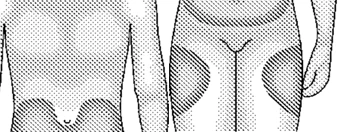
The illustrations show the recommended sites for self-injection: upper thighs and abdomen, excluding the area around the navel. If another person is administering the injection, the outer sides of the upper arms or buttocks may also be used.
How to give the injection?
- Disinfect the skin using an alcohol-impregnated swab, wait until dry, then pinch a fold of skin between your thumb and index finger, but do not squeeze it.
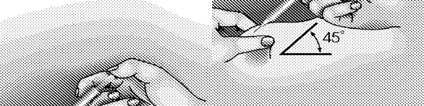


- Insert the needle fully into the skin at an angle of approximately 45°, as shown in the illustration.
- First, gently pull back on the plunger to check whether a blood vessel has been punctured. If blood appears in the syringe, remove the needle and insert it at another site.
- Inject the solution slowly and evenly over about one minute, keeping the skin fold gently pinched throughout.
- After injecting the solution, remove the needle.
- Dispose of the used syringe into the puncture-resistant container. A new syringe and needle must be used for each injection. Vials are intended for single use only. Any unused medicine or waste material should be returned to your doctor or pharmacist for proper disposal.
Disposal of used syringes
Used syringes must be disposed of in a puncture-resistant container and stored out of reach and sight of children. Dispose of the puncture-resistant container as instructed by your doctor, nurse, or pharmacist. Do not throw used syringes into household waste bins.
This page has been machine-translated and may contain inaccuracies. The original data is available in the manufacturing country's language.
Last data check: June 04, 2026 · Data source: Rejestr Produktów Leczniczych (URPL)