Lenzetto
Poland
Table of Contents
Package leaflet: Information for the patient
Warning! Keep this leaflet! The information on the immediate packaging is in a foreign language.
Lenzetto, 1.53 mg/dose, transdermal spray, solution
Estradiol
Please read the entire leaflet carefully before using this medicine, as it contains
important information for the patient
- Keep this leaflet for future reference.
- If you have any questions, consult your doctor or pharmacist.
- This medicine has been prescribed for a specific individual. Do not share it with others. This medicine may harm others, even if their symptoms are similar.
- If you experience any adverse reactions, including those not listed in this leaflet, inform your doctor or pharmacist. See section 4.
Table of contents
- What Lenzetto is and what it is used for
- Important information before using Lenzetto
- How to use Lenzetto
- Possible side effects
- How to store Lenzetto
- Contents of the pack and other information
1. What Lenzetto is and what it is used for
Lenzetto is used in hormone replacement therapy (HRT). It contains the female hormone
estrogen. Lenzetto is used in postmenopausal women, at least 6 months after the last natural
menstrual period.
Lenzetto may also be used in women who have undergone surgical removal of the ovaries, as this
causes immediate onset of menopause.
Lenzetto is a spray formulation containing a small amount of the active substance called
estradiol. When sprayed directly onto the skin, the medicine passes through the skin into the bloodstream.
Lenzetto is indicated for:
Relief of symptoms occurring after menopause
During menopause, the amount of estrogen produced by a woman's body decreases. This may
cause symptoms such as hot flushes affecting the face, neck, and chest (so-called hot flashes). Lenzetto reduces the severity of such menopausal symptoms. Your doctor will prescribe Lenzetto only if your symptoms significantly impair your daily functioning.
Lenzetto is indicated for the treatment of estrogen deficiency symptoms following menopause, when menstrual bleeding has ceased. Estrogen deficiency symptoms include hot flashes (sudden episodes of heat and sweating affecting the whole body), sleep disturbances, irritability, and vaginal dryness.
Experience with use in women over 65 years of age is limited.
Lenzetto is not a contraceptive medicine.
2. Important Information Before Using Lenzetto
Medical History and Regular Check-ups
Hormone Replacement Therapy (HRT) carries risks that should be considered when deciding whether to start or continue treatment.
Experience with the use of this medicine in women with premature menopause (due to ovarian dysfunction or surgical intervention) is limited. The risks associated with HRT in women with premature menopause may differ from those in women who have undergone natural menopause. Consult your doctor.
Before starting or restarting HRT, your doctor will take a full medical and family history. Your doctor may decide to perform a physical examination, which may include breast examination and (or), if necessary, a gynaecological examination.
After starting treatment with Lenzetto, you should have regular check-ups (at least once a year) and discuss with your doctor the benefit-risk balance of continuing Lenzetto treatment.
You should undergo regular breast examinations as recommended by your doctor.
When Not to Use Lenzetto
If any of the following apply to you, or if you have any doubts before starting treatment with Lenzetto, consult your doctor.
Do not use Lenzetto:
- if you have or have had breast cancer or suspect you may have it;
- if you have or suspect you may have other estrogen-dependent tumours, such as cancer of the uterine lining (endometrium);
- if you have vaginal bleeding of unknown cause;
- if you have excessive thickening of the lining of the womb (endometrial hyperplasia) that has not been treated;
- if you have or have had venous thromboembolic disease in the legs (deep vein thrombosis) or lungs (pulmonary embolism);
- if you have blood clotting disorders (such as protein C deficiency, protein S deficiency, or antithrombin deficiency);
- if you have or recently had arterial blood clotting disorders, such as heart attack, stroke, or angina pectoris;
- if you have or have had liver function disorders and liver function tests have not returned to normal values;
- if you have a rare inherited blood disorder (porphyria) that runs in the family;
- if you are allergic to estradiol or any of the other ingredients of this medicine (listed in section 6).
If any of the above symptoms occur for the first time during treatment with Lenzetto, stop treatment immediately and contact your doctor.
Warnings and Precautions
Before starting treatment with Lenzetto, discuss this with your doctor or pharmacist.
Inform your doctor if you currently have, have had in the past, and/or have experienced worsening of any of the following conditions, as they may recur or worsen during treatment with Lenzetto. In such cases, consult your doctor for more frequent monitoring:
- uterine fibroids;
- increased risk of excessive thickening of the lining of the womb (endometrial hyperplasia) and cancer of the endometrium;
- increased risk of blood clots (see "Blood clots in veins (thrombosis)");
- increased risk of estrogen-dependent tumours (such as breast cancer in mother, sister, or grandmother);
- high blood pressure;
- liver function disorders, such as benign liver tumour;
- diabetes;
- gallstones;
- migraine or severe headache;
- immune system disorders affecting multiple organs (systemic lupus erythematosus, SLE);
- epilepsy;
- asthma;
- disorders affecting the eardrum and hearing (otosclerosis);
- very high levels of fats in the blood (hypertriglyceridaemia);
- fluid retention due to heart or kidney disorders;
- hereditary or acquired angioedema.
Stop using Lenzetto and contact your doctor immediately
if you experience any of the following symptoms while taking Hormone Replacement Therapy (HRT):
- any of the conditions listed in the section "When not to use Lenzetto";
- yellowing of the skin or whites of the eyes (jaundice). These may be signs of liver problems;
- swelling of the face, tongue and (or) throat and (or) difficulty swallowing, or hives combined with breathing difficulties, suggesting angioedema;
- significant increase in blood pressure (symptoms may include: headache, fatigue, dizziness);
- first occurrence of migraine-type headaches;
- if you become pregnant;
- if you notice symptoms of blood clots such as:
- painful swelling and redness in the legs,
- sudden chest pain,
- difficulty breathing.
For further information, see section: "Blood clots in veins (thrombosis)".
Note: Lenzetto is not a contraceptive. If less than 12 months have passed since your last menstrual period, or if you are under 50 years of age, you may need to use an additional contraceptive method to prevent pregnancy. Consult your doctor.
HRT and Cancer
Excessive thickening of the lining of the womb (endometrial hyperplasia) and cancer of the lining of the womb (endometrial cancer)
Using HRT with estrogen-only medicines increases the risk of excessive thickening of the lining of the womb (endometrial hyperplasia) and cancer of the endometrium.
This risk can be avoided by taking a progestagen together with estrogen for at least 12 days in each 28-day cycle. Therefore, your doctor will prescribe a progestagen separately for women who still have their uterus. If your uterus has been removed (hysterectomy), consult your doctor whether you can safely use this medicine without taking a progestagen.
Among women who still have their uterus and do not use HRT, on average 5 out of 1000 will be diagnosed with endometrial cancer between the ages of 50 and 65.
Among women aged 50 to 65 who still have their uterus and use estrogen-only HRT, 10 to 60 out of 1000 will be diagnosed with endometrial cancer (i.e. 5 to 55 additional cases), depending on the dose and duration of treatment.
Lenzetto contains a higher dose of estrogen than other estrogen-only HRT medicines. The risk of endometrial cancer associated with using Lenzetto in combination with a progestagen is unknown.
Unexpected bleeding
While using Lenzetto, you will have monthly bleeding (so-called withdrawal bleeding) if you are also taking progestagen-containing medicines in a sequential regimen. If you experience unexpected bleeding or spotting unrelated to monthly bleeding that:
- continues despite 6 months of treatment;
- occurs for the first time after 6 months of starting Lenzetto;
- continues after stopping Lenzetto;
you should see your doctor as soon as possible.
Breast cancer
Available data confirm an increased risk of breast cancer with Hormone Replacement Therapy (HRT), whether in the form of combined estrogen-progestagen products or estrogen-only products. This increased risk depends on how long HRT is used. A higher risk becomes clearly evident after 3 years of HRT use. After stopping HRT, the additional risk gradually decreases, but may persist for 10 years or longer if HRT was used for more than 5 years.
Comparison
Among women aged 50 to 54 who do not use HRT, on average 13 to 17 out of 1000 will be diagnosed with breast cancer within 5 years.
Among women aged 50 who start a 5-year course of estrogen-only HRT, the number of cases will be 16–17 per 1000 women (i.e. 0 to 3 additional cases).
Among women aged 50 who start a 5-year course of combined estrogen-progestagen HRT, the number of cases will be 21 per 1000 women (i.e. 4 to 8 additional cases).
Among women aged 50 to 59 who do not use HRT, breast cancer will be diagnosed in an average of 27 out of 1000 women over 10 years.
Among women aged 50 who start a 10-year course of estrogen-only HRT, the number of cases will be 34 per 1000 women (i.e. 7 additional cases).
Among women aged 50 who start a 10-year course of combined estrogen-progestagen HRT, the number of cases will be 48 per 1000 women (i.e. 21 additional cases).
You should regularly examine your breasts. If you notice any changes such as those listed below, consult your doctor:
- skin dimpling,
- changes in the nipples,
- any visible or palpable lumps.
Additionally, you are advised to participate in mammographic screening programmes if offered. It is important to inform the nurse or radiographer that you are using HRT, as treatment may increase breast density, which could affect the mammogram result. With increased breast density, mammography may not detect all lumps.
Ovarian cancer
Ovarian cancer is rare – significantly less common than breast cancer. The use of HRT with estrogen-only or combined estrogen-progestagen products is associated with a slightly increased risk of ovarian cancer.
The risk of ovarian cancer depends on age. For example, among women aged 50 to 54 who do not use HRT, ovarian cancer will be diagnosed in an average of about 2 out of 2000 women over 5 years.
Among women who have used HRT for 5 years, it will occur in about 3 out of 2000 women (i.e. about 1 additional case).
Effects of HRT on the Heart and Circulation
Blood clots in veins (thrombosis)
The risk of venous blood clots is approximately 1.3 to 3 times higher in women using HRT compared to women not using HRT, especially during the first year of treatment.
If a clot travels to the lungs, it may cause chest pain, shortness of breath, loss of consciousness, and even death.
The likelihood of venous blood clots increases with age and if any of the following apply to you:
- if you are unable to walk for a prolonged period due to major surgery, injury or illness (see section 3 "If you need to undergo surgery"),
- if you are obese (BMI > 30 kg/m²),
- if you have a blood clotting disorder requiring long-term anticoagulant treatment,
- if any of your close relatives have had a blood clot in the leg, lungs or another organ,
- if you have systemic lupus erythematosus (SLE),
- if you have cancer.
Symptoms of blood clots are described in the section: "Signs requiring immediate discontinuation of Lenzetto and contact with your doctor".
Among women over 50 who do not use HRT, on average 4 to 7 out of 1000 can be expected to develop venous blood clots within 5 years.
Among women over 50 who have used estrogen-progestagen HRT for 5 years, the number of cases will be 9 to 12 per 1000 women (i.e. 5 additional cases).
Among women over 50 who have had a hysterectomy and have used estrogen-only HRT for 5 years, the number of cases will be 5 to 8 per 1000 women (i.e. 1 additional case).
Heart disease (heart attack)
There is no evidence that HRT prevents heart attacks.
In women over 60 years of age using estrogen-progestagen HRT, there is a slight increase in the risk of heart disease compared to women not using HRT.
The risk of heart disease does not increase in women who have had a hysterectomy and use estrogen-only HRT.
Stroke
The risk of stroke is approximately 1.5 times higher in women using HRT compared to women not using HRT. The increase in stroke cases due to HRT use is proportional to the age of the population.
Comparison: Among women over 50 who do not use HRT, stroke will occur in an average of 8 out of 1000 within 5 years. Among women over 50 using HRT, stroke will occur in about 11 out of 1000 within 5 years (i.e. 3 additional cases).
Other conditions
HRT does not protect against memory loss. There is some evidence of an increased risk of memory loss in women who start HRT after age 65. Consult your doctor.
Children
Estradiol in aerosol form may be accidentally transferred from the patient's skin to others.
Avoid contact between other people, especially children, and the exposed skin area of the patient. If necessary, cover the area after the aerosol has dried. If a child comes into contact with skin where estradiol has been sprayed, wash the child's skin immediately with soap and water. Due to estradiol transfer, young children may show unexpected signs of sexual development (e.g. breast budding). In most cases, these symptoms resolve once the child is no longer exposed to the estradiol aerosol.
If you observe any signs or symptoms of puberty (e.g. breast development or other sexual changes) in a child who may have been accidentally exposed to estradiol aerosol, contact your doctor.
Lenzetto and Other Medicines
Inform your doctor about all medicines you are currently taking or have recently taken, as well as any medicines you plan to take.
Some medicines may affect the action of Lenzetto, leading to irregular bleeding. These include:
- medicines used to treat epilepsy (such as phenobarbital, phenytoin and carbamazepine),
- medicines used to treat tuberculosis (such as rifampicin, rifabutin),
- medicines used to treat HIV infection (such as nevirapine, efavirenz, ritonavir and nelfinavir),
- herbal products containing St. John's wort (Hypericum perforatum).
HRT may affect the way some other medicines work:
- the epilepsy medicine (lamotrigine), as it may increase seizure frequency,
- medicines used to treat hepatitis C virus (HCV) infection (such as ombitasvir/paritaprevir/ritonavir with or without dasabuvir, or glecaprevir/pibrentasvir regimens), which may cause increased liver function parameters in blood tests (elevated liver enzyme AlAT activity) in women using combined hormonal contraceptives containing ethinylestradiol. Lenzetto contains estradiol instead of ethinylestradiol. It is unknown whether elevated AlAT liver enzyme activity may occur when Lenzetto is used concomitantly with such HCV combination treatment regimens.
Inform your doctor or pharmacist about all medicines you are currently taking or have recently taken, including over-the-counter medicines, herbal remedies and dietary supplements. Your doctor will provide appropriate advice.
Laboratory Tests
If you need to have a blood test, inform your doctor or laboratory staff that you are using Lenzetto, as this medicine may affect the results of certain tests.
Pregnancy and Breastfeeding
Lenzetto is intended only for postmenopausal women. If you become pregnant, stop using Lenzetto immediately and contact your doctor.
Do not use Lenzetto while breastfeeding.
Driving and Operating Machinery
There is no data on the effect of Lenzetto on the ability to drive or operate machinery.
Lenzetto Contains Alcohol
This medicine contains 65.47 mg of alcohol (ethanol) per dose, equivalent to 72.74% v/v.
It may cause a stinging sensation on damaged skin.
Alcohol-based products are flammable. Keep away from fire. During application of the aerosol to the skin, avoid open flames, lit cigarettes, or certain hot appliances (e.g. hair dryers) until the applied dose has dried completely.
3. How to use Lenzetto
This medicine should always be used exactly as prescribed by your doctor. If in doubt, consult your
doctor or pharmacist.
Your doctor will aim to prescribe the lowest possible dose for the shortest possible duration needed
to relieve your symptoms. During treatment, your doctor may adjust the dose according to your
individual needs. If you feel the medicine is too strong or not effective enough, consult your doctor.
If you have not undergone a hysterectomy (surgical removal of the uterus), your doctor will prescribe
tablets containing another hormone called a progestagen to balance the effects of estrogens on the
uterine lining. Your doctor will explain how to take these tablets. Withdrawal bleeding may occur at
the end of the progestagen treatment period (see section "Unexpected bleeding").
If you need to undergo surgery
If you are planning a surgical procedure, inform your doctor that you are using Lenzetto. You may
need to stop using Lenzetto approximately 4 to 6 weeks before surgery to reduce the risk of blood
clots (see section 2. "Blood clots in veins"). Ask your doctor when you can restart using Lenzetto.
Where to apply Lenzetto
The spray should be applied to dry and healthy skin on the inner forearm. If this is not possible,
apply it to the inner surface of the thigh.
Do not apply Lenzetto to the breasts or areas near the breasts.
How to use Lenzetto
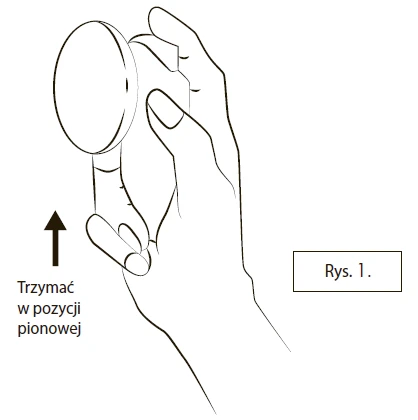
Before first use of a new dispenser, prime the pump by spraying the medicine three times with the cap closed: Hold the container upright as shown in Figure 1. Without removing the cap, press the button three times with your thumb or index finger.
The medicine is now ready for use.
The dispenser should not be primed before each use, only before the first use from a new container. If one or more doses are missed, prime the dispenser according to the instructions in the section "Missed dose of Lenzetto".
Ensure the skin where the medicine will be sprayed is healthy, clean, and dry.
Dosing instructions.
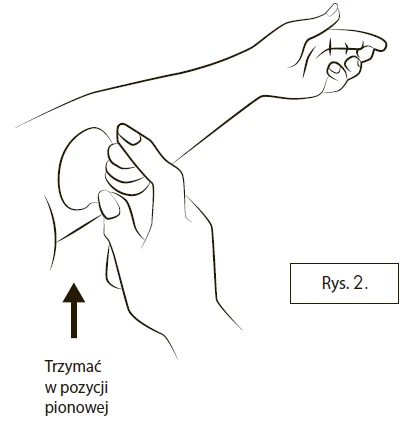
To administer the daily dose, remove the plastic cap, hold the container upright, and place the plastic applicator tip evenly against the skin surface (Fig. 2).
You may need to adjust your arm or move the applicator nozzle along the arm to ensure it lies flat against the skin with no gaps between the nozzle and the skin.
Press the activation button once. Before releasing, press it completely down and hold.
If a second spray is needed, move the applicator nozzle along the arm to an area not previously sprayed, then press the button once.
If a third spray is needed, move the applicator nozzle further along the arm and press the button once.
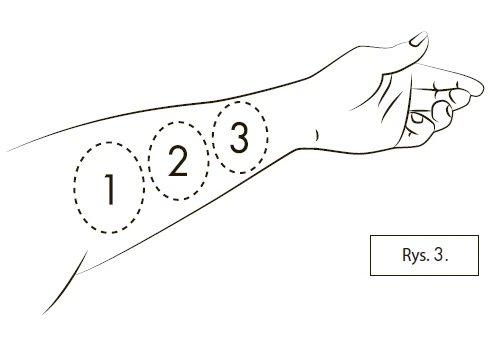
If the second or third spray cannot be applied to the same inner forearm surface, the medicine may be applied to the other forearm. If you have difficulty placing the applicator tip on the inner forearm as shown in Figure 3, or have trouble applying the medicine to the forearm, the medicine may also be applied to the inner surface of the thigh.
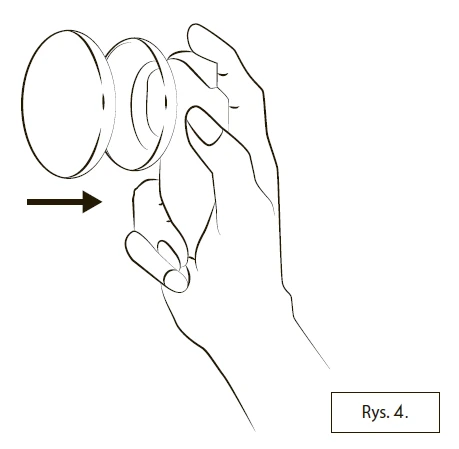
After using Lenzetto, always close the container with the cap (Fig. 4).
If you use Lenzetto as directed, each spray delivers the same amount of active substance to the skin, regardless of differences in the shape or appearance of the solution on the skin.
Allow the sprayed medicine to dry for at least 2 minutes before dressing and for at least 60 minutes before bathing or showering. If Lenzetto accidentally gets onto other skin areas, such as the hands, wash the area immediately with soap and water.
Do not apply Lenzetto to damaged or broken skin.
Do not rub or massage Lenzetto into the skin.
Do not allow other people to touch the area of skin where the spray has been applied until it is completely dry, and cover the area with clothing if necessary 2 minutes after application. If another person (especially a child) accidentally touches the sprayed skin area, instruct them to wash the area with soap and water immediately.
What dose of Lenzetto should be used
Your doctor will likely recommend starting treatment with the lowest dose (one spray per day). Discuss with your doctor which dose is appropriate for you. If necessary, your doctor may increase the dose to two sprays per day. The maximum daily dose is 3 sprays.
How often to use Lenzetto
The total number of sprays (dose(s)) prescribed by your doctor should be administered daily at the same time each day.
Duration of treatment with Lenzetto
Every 3–6 months, discuss with your doctor how long you should continue using Lenzetto. Lenzetto should only be used as long as needed to relieve menopausal symptoms.
Other useful information
Sunscreen products may affect the absorption of estrogens in Lenzetto. Avoid applying sunscreen to the skin areas where you intend to spray Lenzetto. However, if sunscreen use is necessary, apply it to the skin at least 1 hour before using Lenzetto.
Use Lenzetto with caution under extreme temperature conditions, such as during sauna use or sunbathing.
Limited data suggest that the rate and extent of absorption of Lenzetto may be reduced in overweight and obese women. Discuss this with your doctor. During treatment, your doctor may adjust the dose according to your individual needs.
Using more than the recommended dose of Lenzetto
If you use more than the recommended dose of Lenzetto or if the medicine is accidentally used by a child, contact your doctor or go to the hospital for advice on potential risks and necessary actions.
Overdose of Lenzetto may cause nausea, vomiting, and intermenstrual bleeding (abnormal vaginal bleeding).
Missed dose of Lenzetto
If you miss a dose of Lenzetto at the usual time, apply it as soon as possible, then continue as usual. If it is almost time for the next dose, wait and take the next dose at the regular time. If one or more doses are missed, one priming spray with the cap closed is required before the next use. Do not use a double dose to make up for a missed dose. Missing a dose may increase the likelihood of intermenstrual bleeding and spotting.
If you have any further questions about using this medicine, consult your doctor or pharmacist.
Stopping Lenzetto
Your doctor will also explain how to stop using this medicine after completing treatment.
If you have any further questions about using this medicine, consult your doctor or pharmacist.
4. Possible adverse effects
Like all medicines, this medicine can cause adverse effects, although not everyone will experience them.
In women using HRT compared to women not using HRT, the following conditions have been reported more frequently:
- breast cancer;
- abnormal growth or cancer of the lining of the womb (endometrial hyperplasia or cancer);
- ovarian cancer;
- blood clots in the veins of the legs or lungs (venous thromboembolic disease);
- heart disease;
- stroke;
- gallbladder disease;
- high blood pressure;
- liver function disorders;
- high blood sugar levels;
- possible memory loss if HRT is started by a patient aged over 65 years.
For more information about the above adverse effects, see section 2.
Some adverse effects may be serious.
The following symptoms require immediate medical attention:
- sudden chest pain;
- chest pain spreading to the arm or neck;
- difficulty breathing;
- painful swelling and redness of the legs;
- yellowing of the eyes and face (jaundice);
- unexpected vaginal bleeding (intermenstrual bleeding) or spotting after using Lenzetto for some time or after stopping treatment;
- changes in the breasts, including skin indentation, changes in the nipples, lumps that the patient may see or feel;
- painful periods;
- dizziness and fainting;
- changes in speech;
- changes in vision;
- unexplained headaches resembling migraine.
If any of the adverse effects worsen or if any adverse effects not listed in this leaflet occur, inform your doctor or pharmacist.
The following adverse effects have been reported with the use of Lenzetto:
Common adverse effects (may occur in up to 1 in 10 people)
Headache, abdominal pain, nausea, rash, itching (pruritus), irregular uterine bleeding or vaginal bleeding, including spotting, breast tenderness, breast pain, increased or decreased body weight.
Uncommon adverse effects (may occur in up to 1 in 100 people)
Hypersensitivity reactions, depressive mood, insomnia (difficulty sleeping), dizziness (feeling of dizziness or "spinning"), visual disturbances, palpitations (awareness of heartbeat), diarrhoea, dyspepsia (indigestion), increased blood pressure, nodular erythema (characterized by painful red nodules on the skin), urticaria (generalized or localized rash or hives), skin irritation, fluid retention-related swelling (oedema), muscle pain, breast pigmentation, nipple discharge, polyps (small-sized) in the uterus or cervix, endometrial hyperplasia, ovarian cyst, genital tract infection (vaginitis), increased liver enzyme activity and blood cholesterol levels, axillary pain.
Rare adverse effects (may occur in up to 1 in 1000 people)
Anxiety, decreased or increased libido, migraine, intolerance to contact lenses, bloating, vomiting, hirsutism (excessive hair growth), acne, muscle cramps, painful menstruation, premenstrual syndrome, breast enlargement, fatigue.
Since Lenzetto has been placed on the market, the following other adverse effects have been reported with unknown frequency (frequency cannot be estimated from available data): hair loss (alopecia), chloasma (golden-brown pigmented patches, so-called "pregnancy mask", particularly on the face), skin pigmentation changes.
The following adverse effects have been reported with other medicines used in HRT:
Severe allergic reaction causing swelling of the face or throat (angioedema), anaphylactic and/or anaphylactoid reactions (severe allergic reaction causing difficulty breathing or dizziness), glucose intolerance, depression, mood disorders, irritability, worsening of chorea (Huntington's chorea), exacerbation of epilepsy, dementia, worsening of asthma, gallbladder disease, yellowing of the skin (jaundice), pancreatitis, benign smooth muscle tumours of the uterus, skin disorders, skin pigmentation changes, particularly on the face or neck, known as "pregnancy mask" (chloasma), painful red nodules on the skin (erythema nodosum), target-shaped erythematous rash or ulceration (erythema multiforme), haemorrhagic changes (petechiae), hair loss, joint pain, milk secretion from the breasts, breast lumps, increased size of benign uterine smooth muscle tumours, changes in the exfoliation of the inner lining of the cervix, vaginitis, fungal vaginal infection (vaginal candidiasis), abnormally low calcium levels in the blood.
Reporting of adverse effects
If any adverse effects occur, including any not listed in this leaflet, inform your doctor or pharmacist. Adverse effects can be reported directly to the Department for Monitoring Adverse Drug Reactions of the Office for Registration of Medicinal Products, Medical Devices and Biocidal Products, Al. Jerozolimskie 181C, 02-222 Warsaw, tel.: +48 22 49 21 301, fax: +48 22 49 21 309, website: https://smz.ezdrowie.gov.pl
By reporting adverse effects, additional information on the safety of this medicine can be collected.
5. How to store Lenzetto
Keep this medicine out of sight and reach of children.
Do not use this medicine after the expiry date stated on the packaging. The expiry date refers to the last day of the stated month.
Use the medicine within 56 days of first use.
Do not store in a refrigerator or freeze.
Do not store at temperatures above 25°C.
This medicine contains ethanol, which is a flammable substance. Store away from radiators, open flames, and other sources of ignition.
Medicines must not be disposed of via wastewater or household waste. Ask your pharmacist how to dispose of medicines no longer in use. This will help protect the environment.
6. Package contents and other information
What Lenzetto contains
- The active substance is estradiol (in the form of estradiol hemihydrate). Each dose contains 1.53 mg of estradiol (equivalent to 1.58 mg of estradiol hemihydrate).
- The other components are: octyl salicylate and 96% ethanol.
What Lenzetto looks like and contents of the pack
Lenzetto is a transdermal aerosol containing a solution of estradiol and octyl salicylate in ethanol. It is equipped with a metering pump.
Lenzetto is available in a glass bottle with a dosing pump, closed with a plastic overcap containing an applicator and a protective cap made of plastic material, packed in a cardboard box. Each package contains one bottle containing 6.5 ml of solution, allowing for 56 doses of 90 microliters each.
The number of administered sprays should be recorded in the table on the packaging.
Each dose contains 1.53 mg of estradiol.
The Lenzetto container must not be used for more sprays than indicated on the label, even if the container is not completely empty.
Pack size:
One plastic container, 6.5 ml (56 doses).
For more detailed information, please contact the marketing authorization holder or the parallel importer.
Marketing authorization holder in Romania, country of export:
Gedeon Richter România S.A.
Str. Cuza Vodă Nr. 99-105
540306 Târgu-Mureş, Romania
Manufacturer:
Gedeon Richter România S.A.
Str. Cuza Vodă Nr. 99-105
540306 Târgu-Mureş, Romania
Gedeon Richter Plc.
Gyömrői út 19-21
1103 Budapest, Hungary
Parallel importer:
InPharm Sp. z o.o., ul. Strumykowa 28/11, 03-138 Warsaw
Repackaged in:
InPharm Sp. z o.o. Services sp. k., ul. Chełmżyńska 249, 04-458 Warsaw
Marketing authorization number in Romania, country of export: 13913/2021/01
13913/2021/02
Parallel import authorization number: 149/25