Lecigon
Poland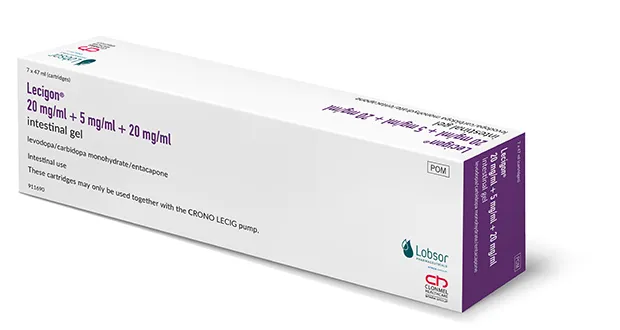
Table of Contents
Package leaflet: Information for the user
Lecigon, 20 mg/mL + 5 mg/mL + 20 mg/mL, intestinal gel
Levodopum + Carbidopum + Entacaponum
Please read all of this leaflet carefully before using this medicine because it contains
important information for the patient.
- Keep this leaflet as you may need to read it again.
- If you have any questions, ask your doctor, pharmacist or nurse.
- This medicine has been prescribed for a specific individual. Do not pass it on to others. It may harm them even if their symptoms are the same as yours.
- If you experience any adverse effects, including any not listed in this leaflet, tell your doctor, pharmacist or nurse. See section 4.
Table of contents
- What Lecigon is and what it is used for
- Important information before using Lecigon
- How to use Lecigon
- Possible side effects
- How to store Lecigon
- Contents of the pack and other information
1. What Lecigon is and what it is used for
Lecigon is used in the treatment of Parkinson's disease. It is used in advanced cases
when oral medicines no longer provide sufficient effect.
Lecigon is a gel intended for continuous administration, delivered via a pump and
a tube directly into the small intestine. Lecigon contains three active substances:
- levodopa
- carbidopa (in the form of carbidopa monohydrate)
- entacapone
How Lecigon works
In people with Parkinson's disease, dopamine levels in the brain are low. Levodopa is converted
in the brain into dopamine, thereby alleviating the symptoms of Parkinson's disease. Carbidopa and entacapone enhance the effect of levodopa in Parkinson's disease.
2. Important information before using Lecigon
When not to use Lecigon
- If the patient is allergic to levodopa, carbidopa, entacapone, or any of the other ingredients of this medicine (listed in section 6).
- If the patient has an eye condition called narrow-angle glaucoma (acute glaucoma).
- If the patient has severe heart failure.
- If the patient has severe heart rhythm disorders (arrhythmia).
- If the patient has recently had a stroke.
- If the patient has severe liver disease.
- If the patient is taking antidepressant medicines called selective MAO-A inhibitors (e.g. moclobemide) or non-selective MAO inhibitors (e.g. phenelzine). Treatment with these medicines
must be discontinued at least two weeks before starting treatment with Lecigon. See also
section "Lecigon and other medicines". - If the patient has a tumour of the adrenal gland causing overproduction of adrenaline and noradrenaline (pheochromocytoma).
- If the patient's body produces too much cortisol (Cushing's syndrome).
- If the patient has increased levels of thyroid hormones (hyperthyroidism).
- If the patient has ever experienced neuroleptic malignant syndrome (a serious, rare reaction that may occur during or after treatment with certain medicines).
- If the patient has ever experienced rhabdomyolysis (a serious, rare muscle disorder affecting the kidneys).
- If the patient has ever had skin cancer or has atypical moles on the skin that have not been examined by a doctor.
Warnings and precautions
Before starting treatment with Lecigon, discuss with the doctor if the patient has or has ever had:
- Heart attack or any other cardiovascular disease, including angina pectoris and heart rhythm disorders.
- Asthma or any other lung problems.
- Kidney or liver disease.
- Hormonal disorders.
- Peptic ulcer.
- Seizures (epileptic fits).
- A serious psychological problem such as psychosis.
- An eye condition called open-angle glaucoma.
- Abdominal surgery.
- Polyneuropathy or a medical condition associated with polyneuropathy. Progressive weakness, pain, numbness, or loss of sensation in the fingers or feet. Symptoms of polyneuropathy have been reported in patients treated with a gastrointestinal gel containing levodopa and carbidopa. Before starting treatment with Lecigon, the doctor will examine for signs of polyneuropathy and will perform periodic examinations thereafter.
If any of the following symptoms occur during treatment with Lecigon, contact the doctor immediately:
- Neuroleptic malignant syndrome: A serious condition characterised by muscle rigidity, spasms, tremor, sweating, fever, rapid heartbeat, large fluctuations in blood pressure, uncontrolled behaviour, disorientation, and loss of consciousness.
- Rhabdomyolysis: A serious condition characterised by unexplained muscle pain, spasms, or muscle weakness. Rhabdomyolysis may be caused by neuroleptic malignant syndrome. → For more information on neuroleptic malignant syndrome and rhabdomyolysis, see section 3 "Stopping or reducing the dose of Lecigon" and section 4 "Possible side effects".
- Problems related to the tube or procedure: Abdominal pain, nausea, or vomiting. This may be due to serious complications related to the tube or procedure, such as blockage, intestinal injury, or trauma.
Contact the doctor if any of the following symptoms occur during treatment with Lecigon:
-
Feeling of depression, suicidal thoughts, or any mental changes noticed by the patient or another person.
-
Unusual congenital moles or pigmented moles that have suddenly appeared or worsened.
-
Involuntary movements (dyskinesia). If the patient has not previously been treated with entacapone (one of the active substances in Lecigon), symptoms may be due to entacapone enhancing the effect of levodopa and carbidopa (other active substances in Lecigon). The doctor may need to reduce the dose.
-
The patient feels that the therapeutic effect suddenly or gradually worsens, e.g. difficulty moving or slow movements (bradykinesia). This may be due to displacement of the tube from the small intestine or blockage of the tube. It may also be due to malfunction of the pump.
-
Occurrence of diarrhoea. Monitoring of body weight may be necessary to avoid significant weight loss, or treatment may need to be interrupted. Persistent or prolonged diarrhoea may be a sign of intestinal inflammation. In such a case, the doctor will evaluate ongoing treatment with Lecigon.
-
Occurrence of loss of appetite, worsening over time, feeling of weakness, and rapid weight loss. A general medical examination may be required, including liver function tests.
If the patient is unable to operate the pump and tube, they must receive assistance from a caregiver (e.g. nurse, nursing aid, or close relative) to avoid complications (problems).
Impulse control disorders — changes in behaviour
Inform the doctor if the patient, their family, or caregivers notice unusual compulsive or uncontrolled behaviours in the patient, or if the patient is unable to resist the impulse, urge, or compulsion to perform certain actions that may harm themselves or others. These behaviours are called impulse control disorders and may include: pathological gambling, excessive eating or spending, pathological increase in sexual drive, and excessive preoccupation with sexual thoughts or feelings. Dose adjustment or discontinuation of treatment by the doctor may be necessary. More information can be found in section 4 "Possible side effects".
Dopaminergic dysregulation syndrome
Inform the doctor if the patient or their family or caregiver notice symptoms resembling addiction, leading to a desire to take increasingly higher doses of Lecigon and other medicines used in the treatment of Parkinson's disease.
Regular monitoring
In case of long-term treatment with Lecigon, the doctor may recommend regular monitoring of liver and kidney function, blood count, heart and blood vessels, and skin examination to detect any skin changes.
Lecigon and tumours
Lecigon contains hydrazine, which is formed during the breakdown of carbidopa (an active substance in Lecigon). Hydrazine may cause genetic damage, which could lead to cancer. However, it is not known whether the amount of hydrazine produced during the recommended dose of Lecigon may cause damage or disease.
Surgery
Before undergoing any surgery, including dental surgery, inform the doctor or dentist that Lecigon is being used.
General urine test
The active substances levodopa and carbidopa may interfere with the results of a general urine test. If the patient is asked to provide a urine sample, inform the medical staff that Lecigon is being used.
Children and adolescents
Lecigon must not be given to children or adolescents under 18 years of age.
Lecigon and other medicines
Tell the doctor or pharmacist about all medicines the patient is currently taking or has recently taken, as well as any medicines the patient plans to take.
Lecigon must not be used if the patient is taking:
- Antidepressant medicines called selective MAO-A inhibitors (e.g. moclobemide) or non-selective MAO inhibitors (e.g. phenelzine). Treatment with these medicines must be discontinued at least two weeks before starting treatment with Lecigon.
Lecigon may enhance the effects and side effects of other medicines, and other medicines may enhance the effects and side effects of Lecigon. Tell the doctor if the patient is taking any of the following medicines:
- Antidepressant medicines called tricyclic antidepressants (e.g. clomipramine, amitriptyline, and nortriptyline). Other types of antidepressants may also interact with Lecigon or Lecigon may interact with these medicines.
- Medicines used to treat Parkinson's disease called selective MAO-B inhibitors (e.g. selegiline), amantadine, dopamine agonists (e.g. piribedil), and anticholinergic medicines (e.g. biperiden).
- Medicines used to treat urinary incontinence (e.g. oxybutynin), asthma and chronic obstructive pulmonary disease (COPD) (e.g. ipratropium and tiotropium). These medicines are known as anticholinergic medicines.
- Certain medicines used to treat asthma and allergies (e.g. salbutamol and terbutaline) and adrenaline. These medicines are known as sympathomimetics.
- Blood pressure-lowering medicines (called antihypertensives). Using these medicines together with Lecigon may cause drops in blood pressure upon changing from a sitting or lying position to standing. Dose adjustment of the antihypertensive medicine may be necessary.
- Warfarin (a medicine that prevents blood clots). If the patient is being treated with Lecigon or if starting, stopping, or changing treatment with Lecigon, the effects of warfarin should be monitored.
Some medicines may reduce the effectiveness of Lecigon. Tell the doctor if the patient is taking any of the following medicines:
- Any iron-containing product taken orally (tablets, capsules, solution). Iron may interfere with the absorption of levodopa from the gastrointestinal tract (and vice versa). Therefore, Lecigon and iron-containing products should be taken at least 2–3 hours apart. If the patient does not use the pump at night, the iron-containing product may be taken before going to bed.
- Medicines used to treat psychosis (e.g. phenothiazine derivatives, butyrophenones (e.g. haloperidol), and risperidone).
- Medicines used to treat nausea (e.g. metoclopramide).
- Medicines used to treat epilepsy (e.g. clonazepam and phenytoin).
- Anxiolytic and sleep medicines known as benzodiazepines (such as diazepam, oxazepam, and nitrazepam).
- Medicines used to treat tuberculosis (isoniazid).
- Medicines used to treat stomach and intestinal spasms (papaverine).
Taking Lecigon with food and drink
Lecigon is poorly absorbed if taken immediately after consuming high-protein foods (e.g. meat, fish, dairy products, nuts, and seeds). Inform the doctor if the patient is on a high-protein diet.
Pregnancy, breastfeeding, and fertility
If the patient is pregnant or breastfeeding, suspects she may be pregnant, or is planning to have a child, she should consult her doctor or pharmacist before using this medicine.
Lecigon is not recommended for use during pregnancy or in women of childbearing potential who are not using contraception, unless the doctor determines that the benefits to the mother outweigh the potential risks to the fetus.
Breastfeeding must not be used during treatment with Lecigon.
Driving and operating machinery
Lecigon has a major influence on the ability to drive and operate machinery. Do not drive or operate machinery until it is known how Lecigon affects the patient.
- Lecigon may cause marked drowsiness or sometimes sudden sleep attacks (sleep episodes).
- Lecigon may cause a drop in blood pressure, e.g. upon changing from a sitting or lying position to standing, and cause dizziness.
Wait until the patient feels fully awake again or no longer experiences drowsiness, dizziness, or lightheadedness before driving, operating tools or machinery, or performing any activity where lack of concentration could put the patient or others at risk.
Lecigon contains sodium
This medicine contains 166 mg of sodium (the main component of table salt) per dose. This corresponds to 8.3% of the maximum recommended daily dietary intake of sodium for adults.
3. How to use Lecigon
This medicine should always be used according to the instructions given by your doctor, nurse, or pharmacist. If you have any doubts, please consult your doctor, nurse, or pharmacist.
How Lecigon is administered
Lecigon is a gel administered continuously via a portable pump (Crono LECIG) and a catheter directly into the upper part of the intestine. The gel is contained in a cartridge placed inside the pump. The pump is connected to a catheter surgically implanted through the abdominal wall into the intestine.
The pump delivers a small, continuous dose throughout the day. This ensures that the medicine concentration in the blood remains constant. As a result, certain side effects, such as those affecting movement, are milder compared to orally administered medicines.
Before implanting the intestinal catheter, your doctor may decide to verify whether treatment with Lecigon is effective. In such cases, the gel is administered through a catheter inserted through the nose, throat, and stomach into the small intestine.
The pump is supplied with an instruction manual.
Dosage
Your doctor will individually adjust the dose based on previously used medications. Precise dose adjustments may be necessary during the first few weeks of treatment.
A higher dose (called a bolus) is usually administered in the morning at the beginning of treatment to rapidly achieve the appropriate drug concentration in the blood. Subsequently, a continuous maintenance dose is delivered during waking hours (typically about 16 hours). If necessary, your doctor may decide to administer Lecigon continuously for up to 24 hours per day.
Additional doses may also be administered if needed. Some patients may require an increase or decrease in the maintenance dose during the day. Your doctor will determine the timing and method of administering additional doses or modifying the maintenance dose after consultation with the patient.
The total daily dose, including the morning bolus, maintenance dose, and any additional doses, must not exceed 100 mL (corresponding to 2000 mg of levodopa, 500 mg of carbidopa, and 2000 mg of entacapone).
If the patient has dementia, the doctor may decide that the pump should only be operated by medical personnel or a family caregiver. The pump can be locked to prevent accidental overdose.
Opened cartridge
The medicine-containing cartridge is intended for single use only and must not be used for longer than 24 hours, even if it still contains residual gel. The infusion pump with the installed cartridge may be worn on the body for up to 16 hours. During overnight treatment, the pump should not be worn on the body but may be placed, for example, on a bedside table. If treatment is interrupted overnight, the opened cartridge may be continued the next day, but only for a total duration of 24 hours from the initial opening. Do not remove the cartridge from the pump before the end of its use (i.e., before 24 hours have elapsed since opening or before it is fully emptied, whichever occurs first).
Toward the end of its shelf life, the gel may become slightly yellowish or reddish. This does not affect the therapeutic effect.
Using more than the recommended dose of Lecigon
Contact your doctor immediately if symptoms of overdose occur.
Symptoms of overdose may include:
- Trembling or eyelid spasms making it difficult to open the eyes.
- Involuntary, persistent muscle contractions leading to repetitive twisting movements or abnormal body postures (dystonia).
- Involuntary movements (dyskinesia).
- Unusually fast, slow, or irregular heartbeat.
- Disorientation or tendency to worry and/or motor restlessness.
- Changes in skin, tongue, eye, or urine pigmentation.
Missing a dose of Lecigon
Restart the pump as soon as possible according to your doctor’s instructions. Do not administer a double dose to make up for a missed dose.
Stopping or reducing the dose of Lecigon
Do not stop or reduce the dose of Lecigon without consulting your doctor. Abruptly reducing the dose or stopping treatment too quickly may lead to serious conditions known as neuroleptic malignant syndrome and rhabdomyolysis. The risk of these conditions is particularly high if the patient is being treated for severe psychiatric disorders at the same time. More information about these conditions can be found in section 4, "Possible side effects."
If treatment is discontinued, alternative therapy will be provided. If Lecigon treatment is permanently stopped, the catheter will be removed and the wound left to heal.
If you have any further questions about the use of this medicine, please consult your doctor, pharmacist, or nurse.
4. Possible adverse effects
Like all medicines, this medicine can cause adverse effects, although not everyone will experience them.
To reduce the risk of adverse effects, it is important to individually adjust
the dose of the medicine by properly setting the pump.
Serious adverse effects of Lecigon
If any of the following symptoms occur during treatment with Lecigon,
seek immediate medical advice — urgent medical intervention may be required:
- Itching, hives, swelling of the face, lips, tongue or throat, which may make breathing or swallowing difficult. Drop in blood pressure. These may be symptoms of a severe allergic reaction (rare adverse effect).
- Combination of muscle stiffness, spasms, tremor, sweating, fever, rapid heartbeat, large fluctuations in blood pressure, uncontrolled behaviour, disorientation, loss of consciousness. These may be symptoms of a serious condition called neuroleptic malignant syndrome (frequency unknown (frequency cannot be estimated from available data)).
- Unexplained muscle pain, muscle cramps or muscle weakness, which may be symptoms of rhabdomyolysis — a serious, rare muscle disorder involving breakdown of muscle cells, which may severely affect the kidneys (frequency unknown (frequency cannot be estimated from available data)) . Rhabdomyolysis may be caused by neuroleptic malignant syndrome.
For more information on neuroleptic malignant syndrome and rhabdomyolysis, see section 3
"Discontinuation or reduction of Lecigon dosage".
- Abdominal pain, nausea or vomiting. This may be due to serious problems related to the catheter or procedure , such as blockage, injury or trauma to the intestine (common adverse effect).
- Infection with symptoms such as fever, severe deterioration in general condition, or fever with local signs of infection such as sore throat and (or) mouth, or difficulty urinating. This may indicate an effect on white blood cells, a condition called agranulocytosis (frequency unknown (frequency cannot be estimated from available data)) . Your doctor will take a blood sample to check this.
- Suicidal thoughts or suicide attempts (uncommon adverse effect).
Other adverse effects of Lecigon
Very common (may affect more than 1 in 10 people):
- Weight loss.
- Anxiety, depression, insomnia.
- Involuntary movements (dyskinesia).
- Worsening of Parkinson's disease symptoms.
- Dizziness upon standing or changing position (orthostatic hypotension) — due to low blood pressure.
- Nausea, constipation, diarrhoea.
- Muscle, tissue and bone pain.
- Discoloration of urine (chromaturia).
- Risk of falling.
- Urinary tract infection.
Common (may affect up to 1 in 10 people):
- Anaemia.
- High levels of amino acids (e.g. homocysteine) in blood, deficiency of vitamins B6 and B12.
- Loss of appetite, weight gain.
- Nightmares, uncontrolled behaviour, restlessness, disorientation, hallucinations, psychotic disorders.
- Sudden sleep attacks, drowsiness, sleep disturbances.
- Dizziness, fainting, headaches.
- Reduced sense of touch, tingling or numbness of the skin.
- Nerve disorders with discomfort, pain and tingling, particularly in the feet (polyneuropathy).
- Involuntary, persistent muscle contractions leading to repetitive twisting movements or abnormal body posture (dystonia), excessive movements (hyperkinesia), tremor.
- Fluctuations in the effect on Parkinson's disease symptoms (on/off episodes).
- Blurred vision.
- Irregular heartbeat, cardiovascular disorders other than myocardial infarction (e.g. angina pectoris).
- High or low blood pressure.
- Breathing difficulties, lung inflammation due to foreign material in the lungs.
- Mouth or throat pain.
- Abdominal distension, abdominal pain, abdominal discomfort, stomach tenderness and pain, heartburn, bloating, vomiting.
- Dry mouth, altered taste sensation.
- Difficulty swallowing, sore throat.
- Contact dermatitis, itching, skin rash.
- Excessive sweating.
- Pain, joint pain, neck pain, muscle cramps.
- Urinary leakage (urinary incontinence), difficulty urinating.
- Feeling of weakness, fatigue, chest pain.
- Gait disturbances.
- Swelling of legs or feet.
Impulse control disorders — behavioural changes. This is a common adverse effect (may affect up to 1 in 10 people):
Inability to resist the urge to perform actions that may be harmful, including:
- Pathological gambling, despite serious consequences for the patient or their family.
- Change or increase in sexual thoughts and behaviours, which is a significant problem for the patient or others. This may include increased sexual drive.
- Uncontrolled and excessive need to buy things and spend money.
- Binge eating (eating large amounts of food in a short time) or compulsive eating (eating more food than normal and in quantities greater than needed to satisfy hunger). If the patient or their family observe any of these behaviours, inform the doctor. The doctor will discuss ways to manage or alleviate the symptoms.
Uncommon (may affect up to 1 in 100 people):
- Lower number of white blood cells or platelets, which may lead to bleeding.
- Suicide.
- Disorientation, elevated mood (euphoric mood), fear, nightmares.
- Problems with muscle coordination, seizures (epileptic fits).
- Eyelid tremor or spasms making it difficult to open the eyes, double vision, optic nerve damage, narrow-angle glaucoma (acute form of increased eye pressure).
- Palpitations, myocardial infarction.
- Phlebitis.
- Voice changes.
- Inflammation of the large intestine, gastrointestinal bleeding.
- Excessive salivation.
- Abnormal liver function test results.
- Skin redness, hives.
- Hair loss, changes in the colour of nails, skin, hair or sweat.
- Malaise.
Rare (may affect up to 1 in 1,000 people):
- Unusual thoughts.
- Abnormal breathing pattern.
- Teeth grinding, tongue pain, discolouration of saliva.
- Hiccups.
- Skin cancer (malignant melanoma) (see section 2 "When not to use Lecigon").
- Prolonged and painful erection.
Reported (frequency cannot be estimated from available data):
- Hepatitis.
- Abnormal laboratory test results in blood and urine samples.
- Memory disorders, dementia.
- Need to take high doses of Lecigon exceeding the recommended dose for controlling motor symptoms, known as dopamine dysregulation syndrome. In some patients, high doses of Lecigon may cause severe, abnormal involuntary movements (dyskinesias), mood fluctuations or other adverse effects.
Adverse effects related to the pump, catheter or surgical procedure:
Very common (may affect more than 1 in 10 people):
- Abdominal pain.
- Surgical wound infection.
- Thick scar at the incision site.
- Problems with catheter insertion, such as pain or swelling in the mouth or throat, difficulty swallowing, stomach discomfort, pain or swelling, injury to the throat, mouth or stomach, internal bleeding, vomiting, bloating, restlessness.
- Problems at the incision site, redness, ulcer, leakage from the stoma, pain or irritation.
Common (may affect up to 1 in 10 people):
- Abdominal discomfort, epigastric pain.
- Infection at the surgical site or in the intestine, postoperative infection when the catheter has been placed in the intestine.
- Peritonitis.
- Catheter displacement from intestine to e.g. stomach or catheter blockage, which may lead to reduced treatment response.
- Gastrointestinal problems related to the stoma (site where the catheter enters the abdominal cavity), pain at the incision site, postoperative constipation, and discomfort, problems or bleeding due to the procedure.
Uncommon (may affect up to 1 in 100 people):
- Inflammation of the large intestine or pancreas.
- Pancreatitis.
- Catheter penetration through the wall of the large intestine.
- Intestinal obstruction, bleeding or ulcer in the small intestine.
- Intussusception (one part of the intestine folds into the adjacent segment).
- Catheter blockage caused by undigested food stuck around the catheter.
- Abscess following catheter insertion into the intestine.
Reported (frequency cannot be estimated from available data):
- Reduced blood flow in the small intestine.
- Catheter penetration through the stomach wall or small intestine.
- Blood infection (sepsis).
Adverse effects when levodopa and carbidopa are taken orally
The following adverse effects have been reported after oral administration of levodopa and carbidopa (the
same active substances present in Lecigon). These adverse effects may also occur with Lecigon.
Rare (may affect up to 1 in 1,000 people):
- Anaemia caused by severe breakdown of red blood cells.
- Inability to fully open the mouth.
- Symptoms affecting one side of the face, including drooping eyelid (Horner's syndrome).
- Pupil dilation, convulsive eye movements to a fixed position, usually upwards.
- Inflammation of small blood vessels causing, among others, raised purpuric rash (Henoch-Schönlein purpura).
Very rare (may affect up to 1 in 10,000 people):
- Changes in blood morphology.
Reporting of adverse effects
If any adverse effects occur, including any not listed in this leaflet, inform your doctor, pharmacist or nurse. Adverse effects can be reported directly to the Department of Monitoring Adverse Drug Reactions, Office for Registration of Medicinal Products, Medical Devices and Biocidal Products
Al. Jerozolimskie 181C
PL-02-222 Warsaw
Tel.: + 48 22 49 21 301
Fax: + 48 22 49 21 309
Website: https://smz.ezdrowie.gov.pl
Adverse effects can also be reported to the marketing authorisation holder.
Reporting adverse effects helps provide more information on the safety of the medicine.
5. How to store Lecigon
Keep this medicine out of the sight and reach of children.
Do not use this medicine after the expiry date stated on the label of the cartridge and on the
cardboard box following: EXP.
Unopened cartridge: Store and transport refrigerated (2°C–8°C). Do not freeze.
Keep in the original packaging to protect from light.
Opened cartridge: Use immediately. The product may be used for up to 24 hours after removal from the refrigerator.
The dosing pump with the inserted cartridge may be worn on the body for up to 16 hours. During overnight treatment, the pump should not be worn on the body, but may be placed, for example, on a nightstand. Any unused product must be discarded after 24 hours.
Cartridges are intended for single use only. An opened cartridge must not be reused.
Medicines must not be disposed of via the sewage system or household waste. Ask your pharmacist how to dispose of medicines no longer in use. This will help protect the environment.
6. Contents of the pack and other information
What Lecigon contains
- The active substances are levodopa, carbidopa and entacapone. 1 mL contains 20 mg levodopa, 5 mg carbidopa and 20 mg entacapone.
- The other ingredients are: sodium carmellose, hydrochloric acid diluted (for pH adjustment), sodium hydroxide (for pH adjustment) and purified water.
What Lecigon looks like and contents of the pack
Lecigon gel for intestinal administration is a yellow or yellowish-red, opaque, sticky gel.
The container is a polypropylene (PP) cartridge. The wider end of the plastic cartridge is closed with a stopper made of polyisoprene rubber, which acts as a plunger. The narrow outlet of the cartridge is sealed with a violet ENFit-type cap made of polypropylene. The cartridge contains 47 mL of gel for intestinal administration. One carton package contains 7 cartridges.
Marketing Authorisation Holder
LobSor Pharmaceuticals AB
Kålsängsgränd 10 D
753 19 Uppsala, Sweden
Manufacturer
Bioglan AB
Borrgatan 31
211 24 Malmö
Sweden
STADA Arzneimittel AG
Stadastrasse 2-18
61118 Bad Vilbel
Germany
For further information about this medicinal product, please contact the local representative of the Marketing Authorisation Holder:
Stada Poland Sp. z o.o.
ul. Krakowiaków 44
02-255 Warszawa
Tel. +48 22 737 79 20
This medicinal product is authorised in the European Economic Area countries under the following names:
Austria Lecigimon 20 mg/ml + 5 mg/ml + 20 mg/ml Gel zur intestinalen Anwendung
Belgium Lecigimon 20 mg/ml + 5 mg/ml + 20 mg/ml, gel intestinal
Lecigimon 20 mg/ml + 5 mg/ml + 20 mg/ml gel voor intestinaal gebruik
Lecigimon 20 mg/ml + 5 mg/ml + 20 mg/ml Gel zur intestinalen Anwendung
Bulgaria Лесигон 20 mg/ml + 5 mg/ml + 20 mg/ml гел за прилагане в червата
Croatia Lecigon 20 mg/ml + 5 mg/ml + 20 mg/ml intestinalni gel
Czech Republic Lecigimon 20 mg/ml + 5 mg/ml + 20 mg/ml intestinální gel
Denmark Lecigon enteralgel
Finland Lecigon 20 mg/ml + 5 mg/ml + 20 mg/ml geeli suoleen
France Lecigimon 20 mg/ml + 5 mg/ml + 20 mg/ml, gel intestinal
Germany Lecigon 20 mg/ml + 5 mg/ml + 20 mg/ml Gel zur intestinalen Anwendung
Hungary Lecigon 20 mg/ml + 5 mg/ml + 20 mg/ml intesztinális gél
Ireland Lecigon 20 mg/ml + 5 mg/ml + 20 mg/ml intestinal gel
Italy Lecigimon 20 mg/ml + 5 mg/ml + 20 mg/ml gel intestinale
Netherlands Lecigon 20 mg/ml + 5 mg/ml + 20 mg/ml gel voor intestinaal gebruik
Norway Lecigon 20 mg/ml + 5 mg/ml + 20 mg/ml intestinalgel
Poland Lecigon 20 mg/mL + 5 mg/mL + 20 mg/mL żel do podania dojelitowego
Portugal Lecigon 20 mg/ml + 5 mg/ml + 20 mg/ml gel intestinal
Romania Lecigon 20 mg/5 mg/20 mg/ml gel intestinal
Slovakia Lecigon 20 mg/ml + 5 mg/ml + 20 mg/ml intestinálny gél
Slovenia Lecigon 20 mg/5 mg/20 mg v 1 ml intestinalni gel
Spain Lecigon 20 mg/ml + 5 mg/ml + 20 mg/ml gel intestinal
Sweden Lecigon 20 mg/ml + 5 mg/ml + 20 mg/ml intestinal gel