Lanvis
Poland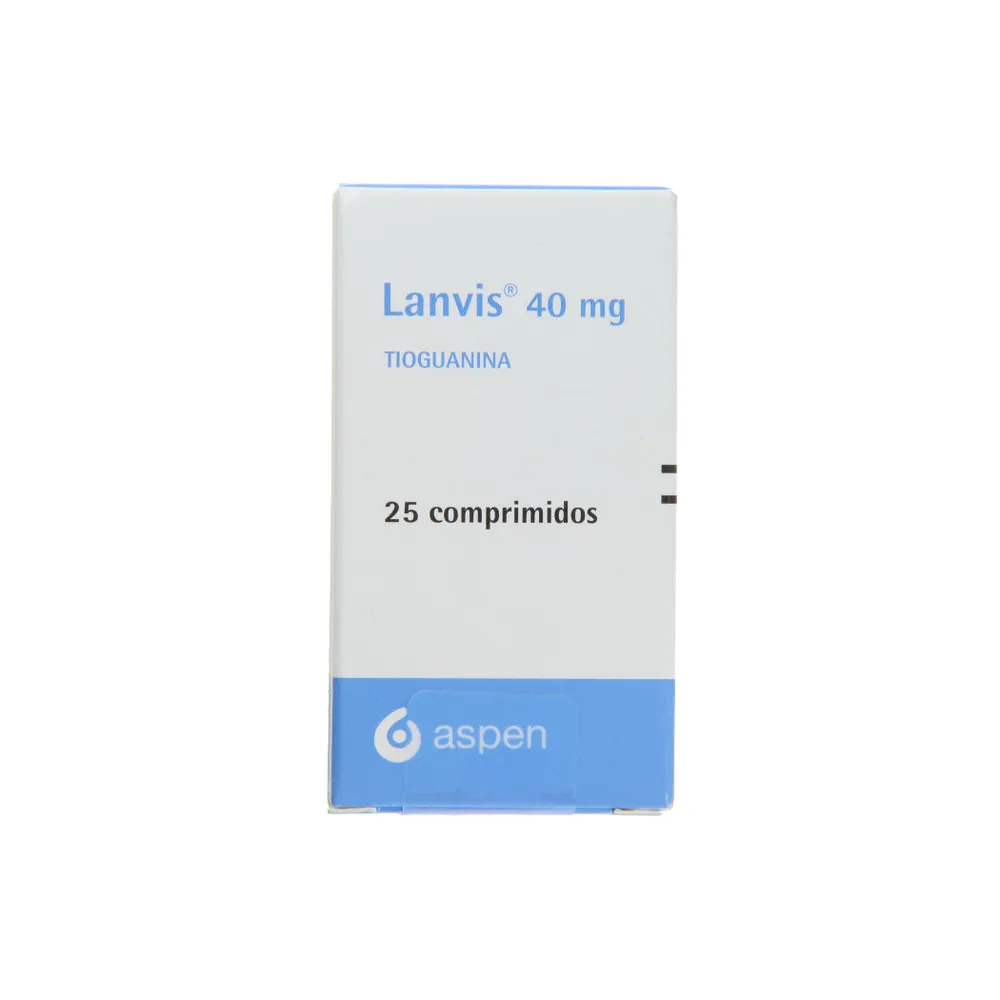
Instructions for Use
Package leaflet: Information for the patient
Lanvis, 40 mg, tablets
Tioguanine
Please read all of this leaflet carefully before taking this medicine, because it contains
important information for the patient.
- Keep this leaflet, so that you can read it again if necessary.
- If you have any questions, please consult your doctor, pharmacist, or nurse.
- This medicine has been prescribed for a specific individual. Do not pass it on to others. This medicine may harm other people, even if their symptoms are the same.
- If you experience any adverse reactions, including any not listed in this leaflet, inform your doctor, pharmacist, or nurse. See section 4.
Contents of the leaflet
- What Lanvis is and what it is used for
- Important information before taking Lanvis
- How to take Lanvis
- Possible side effects
- How to store Lanvis
- Contents of the pack and other information
1. What Lanvis is and what it is used for
Lanvis tablets contain the active substance tioguanine. This substance belongs to a group of medicines called cytotoxic drugs (also known as chemotherapy). Lanvis is used in the treatment of certain blood disorders and blood cancers. The medicine works by reducing the number of new blood cells produced by the body.
Lanvis is used in acute (rapidly progressing) leukemias, such as:
- Acute myeloid leukemia – a rapidly progressing disease causing an increased number of white blood cells produced by the bone marrow. This may lead to infections and bleeding.
- Acute lymphoblastic leukemia – a rapidly progressing disease causing an increased number of immature white blood cells. These immature white blood cells cannot grow or function properly, and therefore cannot fight infections effectively and may cause bleeding.
Ask your doctor if you need more information about these diseases.
2. Important information before using Lanvis
When not to use Lanvis
- if the patient is allergic to thioguanine or to any of the other ingredients of this medicine (listed in section 6).
Warnings and precautions
Before starting Lanvis, discuss with your doctor, pharmacist, or nurse if the patient:
- is taking this medicine for a long time. This may increase the risk of adverse effects, such as liver damage;
- has a condition in which the body produces too little of an enzyme called TPMT or "thiopurine methyltransferase";
- has Lesch-Nyhan syndrome. This is a rare inherited disorder caused by deficiency of an enzyme called HPRT or "hypoxanthine-guanine phosphoribosyltransferase".
NUDT15 mutation
If the patient has a mutation in the NUDT15 gene, they may have an increased risk of low white blood cell counts compared to other patients. This may predispose to infections. This mutation may also increase the risk of hair loss. Patients of Asian descent are particularly at risk.
The doctor may also order genetic testing for TPMT and/or NUDT15 before or during treatment to determine whether the patient's genes may affect their response to this medicine.
If the patient is unsure whether any of the above apply, they should speak with their doctor or pharmacist before starting Lanvis.
Infections in all age groups
Inform the doctor immediately if the patient develops severe chills, fever, sore throat, cough, flu-like symptoms, headache accompanied by nausea, rash, and/or confusion while taking thioguanine with other anticancer medicines.
These symptoms may indicate a bacterial, viral, or fungal infection. The doctor may prescribe antiviral medicines or initiate other supportive treatments.
Lanvis and exposure to sunlight
While taking Lanvis, the patient may become sensitive to sunlight, which could cause skin discoloration or rash. Avoid excessive sun exposure, wear protective clothing, and use sunscreen.
Lanvis and other medicines
Tell the doctor, nurse, or pharmacist about all medicines the patient is currently taking or has recently taken, as well as any medicines they plan to take.
In particular, inform the doctor or pharmacist if the patient is taking any of the following medicines:
- olsalazine or mesalazine – used in a bowel disease called ulcerative colitis;
- sulfasalazine – used to treat rheumatoid arthritis or ulcerative colitis;
- medicines that may harm the bone marrow, such as other chemotherapy or radiotherapy. This may lead to bone marrow damage and may require a reduction in the dose of Lanvis.
Vaccinations while taking Lanvis
If vaccination is planned, discuss it with the doctor or nurse first. This is because certain vaccines (for polio, measles, mumps, and rubella) may cause infection if administered while taking Lanvis.
Taking Lanvis with food, drink, and alcohol
Discuss with the doctor, pharmacist, or nurse, as food and vomiting may affect the absorption of Lanvis.
Pregnancy, breastfeeding, and fertility
If the patient is pregnant or breastfeeding, suspects she may be pregnant, or is planning to have a child, she should consult her doctor before using this medicine.
Lanvis may damage sperm or egg cells. Therefore, effective contraception should be used by either partner while taking Lanvis.
Driving and operating machinery
There is no available data on the effect of Lanvis on the ability to drive or operate machinery.
Lanvis contains lactose.
If the patient has been previously diagnosed with intolerance to certain sugars, they should contact their doctor before taking this medicine.
3. How to use Lanvis
Lanvis should only be administered by a specialist physician experienced in the treatment of blood disorders.
This medicine must always be taken exactly as prescribed by the doctor. It is important to take the medicine at the correct time. If in doubt, consult your doctor, nurse, or pharmacist.
- Tablets should be swallowed whole with a glass of water.
- If it is necessary to break the tablet in half, do not inhale the powder that may be formed. Afterwards, hands should be washed.
- During treatment with Lanvis, the doctor will regularly perform blood tests. These tests are intended to monitor the number and types of blood cells and to ensure that the patient's liver is functioning properly. Based on the results of these tests, the doctor may occasionally adjust the dose of the medicine.
The dose of Lanvis is determined by the doctor according to:
- the patient's body size (body surface area);
- blood test results;
- the disease being treated.
The usual dose ranges between 100 and 200 mg/m² of body surface area per day. If the patient has kidney or liver disease, the doctor may prescribe a lower dose of Lanvis.
Taking more than the recommended dose of Lanvis
If a higher than recommended dose has been taken or if the medicine has been taken by someone else, contact your doctor or pharmacist immediately or go to the nearest hospital emergency department.
Bring the medicine packaging with you.
Missing a dose of Lanvis
Inform your doctor. Do not take a double dose to make up for a missed dose.
Stopping treatment with Lanvis
Do not stop taking Lanvis without the doctor's instruction.
If you have any further questions about the use of this medicine, consult your doctor, nurse, or pharmacist.
4. Possible adverse reactions
Like all medicines, this medicine can cause adverse reactions, although not everyone will experience them.
If the patient experiences any of the following symptoms, a doctor should be informed immediately
or the patient should go to the nearest hospital:
- any symptoms of fever or infection (sore throat, mouth pain, or problems with urination);
- any unexpected bruising or bleeding, as this may indicate that too few of certain blood cells are being produced;
- if the patient suddenly feels unwell (even with normal body temperature);
- any yellowing of the whites of the eyes or skin (jaundice).
Tell the doctor if the patient experiences any of the following adverse reactions, which may also occur during treatment with this medicine:
Very common (occur in more than 1 in 10 patients)
- decrease in white blood cells and platelets;
- jaundice (yellowing of the skin and whites of the eyes) and severe liver damage (symptoms include fatigue and nausea, followed by itching, dark urine, and possibly rash or fever) – during long-term treatment with Lanvis or when high doses of Lanvis are used – this may also be evident in blood tests.
Common (occur in no more than 1 in 10 patients):
-
liver damage, which may cause jaundice (yellowing of the skin and whites of the eyes) or enlargement of the liver (swelling below the ribcage) – during short-term treatment with Lanvis – this may also be evident in blood tests;
-
nausea or vomiting, diarrhoea, and mouth ulcers;
-
increased levels of uric acid in the blood (hyperuricaemia), which may sometimes lead to liver dysfunction.
-
Rare (occur in no more than 1 in 1,000 patients)
-
a bowel disease called necrotising enterocolitis, which may cause severe abdominal pain, vomiting, diarrhoea, and fever;
-
severe liver damage, if the medicine is taken concomitantly with other chemotherapeutic agents, oral contraceptives, or alcohol.
Frequency not known (frequency cannot be estimated from available data)
- photosensitivity.
Reporting of adverse reactions
If any adverse reactions occur, including any adverse reactions not listed in this leaflet, tell a doctor, pharmacist, or nurse. Adverse reactions can be reported directly to the Department of Monitoring Adverse Drug Reactions, Office for Registration of Medicinal Products, Medical Devices and Biocidal Products, Al. Jerozolimskie 181C, 02-222 Warsaw, tel.: +48 22 49 21 301, fax +48 22 49 21 309, website: https://smz.ezdrowie.gov.pl
Adverse reactions can also be reported to the marketing authorisation holder.
Reporting adverse reactions helps provide more information on the safety of this medicine.
5. How to store Lanvis
- Keep this medicine out of sight and reach of children.
- Do not use this medicine after the expiry date stated on the carton and bottle after: "EXP". The expiry date refers to the last day of the specified month.
- Store below 25 °C in a dry place. Protect from light.
- If your doctor advises you to discontinue treatment, any unused tablets should be returned to the pharmacist, who will destroy them in accordance with the applicable regulations for the disposal of hazardous substances. Tablets should only be retained if your doctor specifically advises this.
Medicines must not be disposed of via wastewater or household waste. Ask your pharmacist how to dispose of medicines no longer in use. This will help protect the environment.
6. Contents of the pack and other information
What Lanvis contains
- The active substance is thioguanine. Each Lanvis tablet contains 40 mg of thioguanine.
- The other ingredients are: lactose monohydrate, potato starch, gum arabic, stearic acid, magnesium stearate.
What Lanvis looks like and contents of the pack
Lanvis tablets are white or cream-colored, round, biconvex tablets with a dividing score line and
the imprint "T40" on the upper side, without a dividing score line or embossing on the lower
side.
The pack contains 25 tablets in an amber glass bottle, placed in a cardboard box.
Marketing Authorisation Holder
Aspen Pharma Trading Limited
3016 Lake Drive
Citywest Business Campus
Dublin 24, Ireland
Tel: +48 22 104 21 00
Manufacturer
EXCELLA GmbH & Co. KG
Nürnberger Strasse 12
90537 Feucht, Germany
((logo of the marketing authorisation holder))
This page has been machine-translated and may contain inaccuracies. The original data is available in the manufacturing country's language.
Last data check: June 04, 2026 · Data source: Rejestr Produktów Leczniczych (URPL)