Lakcid entero
Poland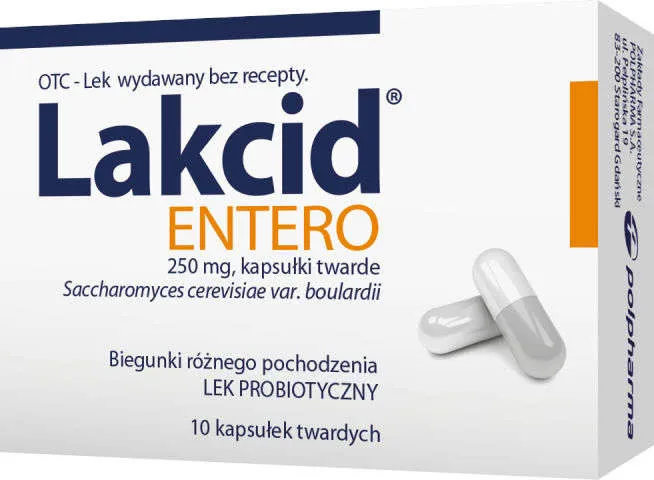
Table of Contents
Package leaflet: Information for the patient
Lakcid ENTERO, 250 mg, hard capsules
Saccharomyces cerevisiae var. boulardii
Please read all of this leaflet carefully before taking this medicine, because it contains important information for you.
This medicine should always be taken exactly as described in this patient leaflet or as directed by your doctor or pharmacist.
- Keep this leaflet, as you may need to read it again.
- If you need advice or further information, please contact your pharmacist.
- If you experience any side effects, including any not listed in this leaflet, tell your doctor or pharmacist. See section 4.
- If there is no improvement after 2 days, or if you feel worse, you should consult your doctor.
Contents of the leaflet
- What Lakcid Entero is and what it is used for
- What you need to know before taking Lakcid Entero
- How to take Lakcid Entero
- Possible side effects
- How to store Lakcid Entero
- Contents of the pack and other information
1. What Lakcid Entero is and what it is used for
Lakcid Entero is an oral anti-diarrheal medicine. Its active ingredient consists of lyophilized yeast Saccharomyces cerevisiae var. boulardii (synonym Saccharomyces boulardii), classified as a probiotic. These yeasts are part of the natural intestinal flora, disturbances of which may cause various digestive problems, including diarrhea.
Lakcid Entero is used for:
- Treatment of acute infectious diarrhea (occurring after ingestion of food or drinks contaminated with pathogenic bacteria or following contact with, for example, rotaviruses)
- Treatment of diarrhea associated with irritable bowel syndrome (IBS)
- Prevention of antibiotic-associated diarrhea (diarrhea occurring during or after antibiotic use)
- Recurrent diarrhea caused by Clostridium difficile infection, as an adjunct to treatment with vancomycin or metronidazole
- Prevention of diarrhea associated with enteral nutrition
- Prevention of traveler's diarrhea
- Adjunctive treatment of Helicobacter pylori infection
Lakcid Entero restores and helps maintain the normal composition of intestinal bacterial flora, which constitutes a natural barrier against the development of harmful microorganisms. However, the balance of the intestinal flora is delicate and can be disrupted by many factors, such as:
- Viruses transmitted via droplets
- Viruses in food, contaminated water, or on dirty hands (e.g. rotaviruses, noroviruses)
- Protozoa such as Giardia lamblia or intestinal parasites
- Bacteria present in food or water (e.g. Salmonella bacteria)
- Bacterial metabolic products, so-called enterotoxins, such as staphylococcal toxin present in dairy products contaminated with this bacterium, e.g. ice cream
Ingestion of food or fluids containing bacteria or their metabolic products may lead to bacterial food poisoning.
Maintaining the balance of intestinal microflora is essential for ensuring important gastrointestinal functions such as digestion, protection against infections, and strengthening natural immunity.
2. Important information before using Lakcid Entero
When not to use Lakcid Entero
- If the patient is allergic to yeast or any of the other ingredients of this medicine (listed in section 6).
- If the patient has a central venous catheter in place.
- If the patient has a weakened immune system or is hospitalized due to severe diseases or disorders (weakening) of the immune system.
Warnings and precautions
Before starting treatment with Lakcid Entero, discuss this with your doctor or pharmacist.
As an adjunct to treatment, it is recommended to:
- maintain adequate hydration (rehydration) by consuming glucose-electrolyte rehydration solutions (ORS) to compensate for fluid loss caused by diarrhea (the average daily water requirement for an adult is 2 liters). In children, fluids should be administered very frequently, i.e. every 15 minutes. In diarrheal diseases, especially in children, fluids and electrolytes should be used as the most important therapeutic measure. There are many ready-made ORS products available on the market, but such a solution can also be prepared at home by adding one teaspoon of table salt and eight flat teaspoons of sugar to 1 liter of boiled and cooled still water.
- maintain an appropriate diet, excluding certain foods such as: fruits, green vegetables, spicy foods, frozen foods, and chilled beverages; instead, it is recommended to consume rice, pasta, salted crackers, potatoes, cereals, bananas, soups, and boiled meat; consider limiting the intake of milk and dairy products.
Seek medical advice immediately if:
- there is no improvement after 2 days of treatment
- fever develops
- blood or mucus appears in the stool
- increased thirst or dryness of the tongue occur, as these are symptoms of developing dehydration, meaning significant fluid loss due to diarrhea. The doctor will decide on the need for rehydration (orally or intravenously), depending on the severity of symptoms, age, and the patient's general health condition.
Patients with immune system disorders
As with all medicinal products containing live microorganisms, special caution should be exercised when handling this product in patients with immune system disorders, particularly those with a central venous catheter, but also peripheral catheters, even in patients not receiving Saccharomyces cerevisiae var. boulardii. Opening capsules near patients with a central venous catheter is not recommended to prevent unwanted fungal colonization of the catheter, especially via contaminated hands. There have been reports of very rare cases of fungemia (fungal penetration into the bloodstream) accompanied by fever and positive blood culture results, even in patients not treated with Saccharomyces cerevisiae var. boulardii. In all reported cases, fungemia resolved after antifungal treatment or, when necessary, after removal of the central venous catheter.
Laboratory tests
If microbiological stool tests are performed during or shortly after treatment with this medicine, the laboratory should be informed about its use, as otherwise false-positive results may occur.
Children and adolescents
This medicine should not be used in infants under 6 months of age, as appropriate dosage forms and safety data are not available.
Treatment of diarrhea in children aged 6 months to 2 years should be conducted under medical supervision.
Lakcid Entero and other medicines
Inform your doctor or pharmacist about all medicines currently used or recently taken, as well as any medicines planned for use.
Concurrent use of this medicine with antifungal drugs may interfere with the effectiveness of Lakcid Entero.
Concurrent use with monoamine oxidase inhibitors (MAOIs) may increase blood pressure.
Pregnancy, breastfeeding, and fertility
If the patient is pregnant, breastfeeding, suspects she may be pregnant, or plans to become pregnant, she should consult a doctor or pharmacist before using this medicine.
Considering the widespread use of yeast as a food ingredient, there are no indications of risk during pregnancy and breastfeeding. However, due to lack of data, this medicine should not be used during pregnancy and breastfeeding.
There is no data available regarding the effect on fertility.
Driving and operating machinery
Lakcid Entero does not affect the ability to drive or operate machinery.
Lakcid Entero contains anhydrous lactose and sodium
If the patient has previously been diagnosed with intolerance to certain sugars, the patient should consult a doctor before taking this medicine.
The medicine contains less than 1 mmol (23 mg) of sodium per capsule; therefore, the medicine is considered "sodium-free".
3. How to use Lakcid ENTERO
This medicine should always be used exactly as described in this patient information leaflet or as directed by a doctor or pharmacist. If in doubt, consult a doctor or pharmacist.
Children over 6 months of age, adolescents and adults:
Treatment of acute diarrhoea and diarrhoea associated with irritable bowel syndrome
1 capsule 1 to 2 times daily. Treatment of diarrhoea should be continued for several days after symptoms have resolved.
Prevention of antibiotic-associated diarrhoea
1 capsule 1 to 2 times daily, during and after antibiotic therapy. The product should be taken for several additional days after completion of antibiotic treatment.
Recurrent diarrhoea caused by Clostridium difficile infection
4 capsules per day for up to 4 weeks.
Prevention of diarrhoea associated with enteral nutrition
3 capsules corresponding to 750 mg of dried yeast Saccharomyces cerevisiae var. boulardii in 1.5 litres of enteral feeding solution per day.
Prevention of travellers' diarrhoea
1 capsule 1 to 2 times daily. Product intake should begin 5 days before travel and continue throughout the travel period.
Adjunctive treatment of Helicobacter pylori infection
1 capsule twice daily.
In children aged 6 months to 2 years, treatment should be conducted under medical supervision.
Method of administration
Oral use.
The capsule should be swallowed with an adequate amount of liquid (preferably a glass of water). The medicine should be taken before meals.
For patients who have difficulty swallowing, for children under 6 years of age, and in tube feeding, the capsule should be opened and its contents mixed thoroughly with food or liquid (at room temperature) or with enteral feeding solution.
Duration of use
There are no known limitations regarding the duration of probiotic use.
Overdose of Lakcid ENTERO
No toxicity related to products containing dried yeast has been reported to date.
In case of overdose, no specific treatment is required.
Missed dose of Lakcid ENTERO
Do not take a double dose to make up for a missed dose.
Continue taking the medicine as directed by your doctor or according to the dosing schedule described in this patient information leaflet.
Discontinuation of Lakcid ENTERO
The patient may discontinue taking Lakcid ENTERO at any time, as stopping treatment is generally considered harmless.
If you have any further questions about the use of this medicine, consult your doctor or pharmacist.
4. Possible adverse reactions
Like all medicines, this medicine can cause adverse reactions, although not everyone will experience them.
If any of the following symptoms occur, discontinue the medicine immediately and contact your doctor without delay:
- allergic reactions, including severe anaphylactic reactions (symptoms may include skin pallor, skin itching, drop in blood pressure, wheezing, and even loss of consciousness),
- swelling of the face, lips, tongue, or throat, which may cause breathing difficulties (angioedema),
- shortness of breath (dyspnea).
Other adverse reactions:
Very rare (affects less than 1 in 10,000 people):
- yeast invasion into the bloodstream (fungemia).
Frequency unknown (frequency cannot be estimated from available data):
- bloating, constipation,
- severe blood infection (sepsis),
- facial swelling,
- localized rash, generalized skin rash (urticaria),
- hives, itching.
Reporting of adverse reactions
If any adverse effects occur, including any adverse effects not listed in this leaflet, inform your doctor or pharmacist. Adverse reactions can be reported directly to the Department of Monitoring Adverse Drug Reactions, Office for Registration of Medicinal Products, Medical Devices and Biocidal Products
Al. Jerozolimskie 181C
02-222 Warsaw
Phone: +48 22 49 21 301
Fax: +48 22 49 21 309
Website: https://smz.ezdrowie.gov.pl
Adverse reactions can also be reported to the responsible entity.
Reporting adverse reactions helps provide more information on the safety of this medicine.
5. How to store Lakcid ENTERO
Keep this medicine out of sight and reach of children.
Do not use this medicine after the expiry date stated on the packaging. The expiry date refers to the last day of the stated month.
Do not store above 25°C.
Medicines must not be disposed of via wastewater or household waste. Ask your pharmacist how to properly dispose of medicines no longer in use. This will help protect the environment.
6. Contents of the package and other information
What Lakcid Entero contains
- The active substance is Saccharomyces cerevisiae var. boulardii. Each hard capsule contains 250 mg of lyophilisate (221.25 mg of active substance) of dried Saccharomyces cerevisiae var. boulardii (synonym Saccharomyces boulardii), corresponding to at least 10^10 viable cells per 1 g of lyophilisate.
- Other ingredients: anhydrous lactose, magnesium stearate, gelatin, titanium dioxide (E171), copper chlorophyllin complex (E141), yellow iron oxide (E172), water, sodium dodecyl sulfate.
What Lakcid Entero looks like and contents of the pack
Elongated, shiny, opaque hard gelatin capsules with a light green body and a yellow cap, filled with ochre to beige-grey granular powder with a characteristic odour.
PVC/PE/PVDC/Aluminium blister pack in a cardboard box.
Pack sizes:
10, 20, 50 or 100 hard capsules.
Not all pack sizes may be marketed.
Marketing Authorisation Holder and Manufacturer
Marketing Authorisation Holder
Zakłady Farmaceutyczne POLPHARMA S.A.
Pelplińska Street 19, 83-200 Starogard Gdański, Poland
Tel. +48 22 364 61 01
Manufacturer
Ardeypharm GmbH
Loerfeldstr. 20
58313 Herdecke, Germany