Lactulosum amara
Poland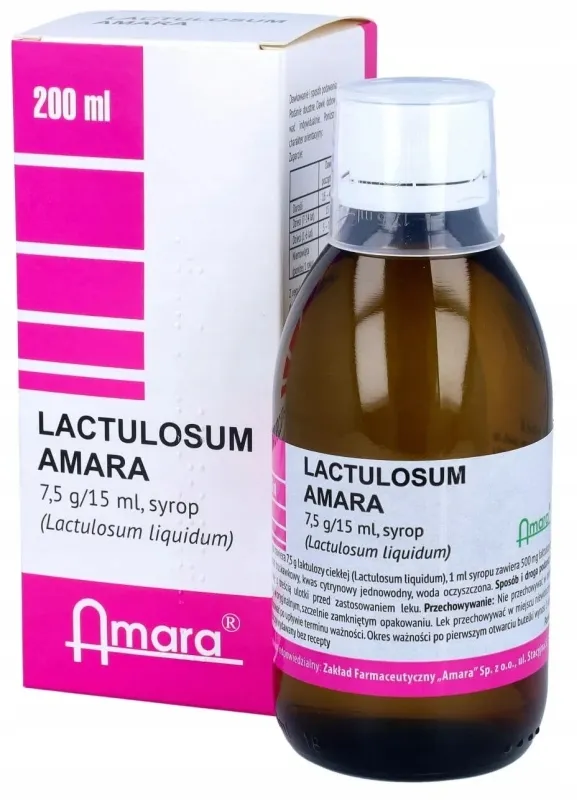
Table of Contents
Package leaflet: Information for the patient
Read the entire leaflet carefully before using the medicine, as it contains
important information for the patient.
This medicine should always be used exactly as described in this patient leaflet or as directed by a
physician, pharmacist, or nurse.
- Keep this leaflet for future reference.
- If advice or additional information is needed, consult a pharmacist.
- If the patient experiences any adverse reactions, including any possible adverse reactions not listed in this leaflet, inform a doctor, pharmacist, or nurse. See section 4.
- If there is no improvement or if the patient feels worse after a few days, contact a doctor.
Table of contents:
- What Lactulosum Amara is and what it is used for
- Important information before taking Lactulosum Amara
- How to take Lactulosum Amara
- Possible side effects
- How to store Lactulosum Amara
- Contents of the pack and other information
1. What Lactulosum Amara is and what it is used for
Lactulosum Amara contains a laxative substance called lactulose.
Lactulose is a synthetic disaccharide which, after oral administration, is not broken down by digestive enzymes and is practically not absorbed from the gastrointestinal tract. It softens the stool and facilitates its passage by promoting water retention in the intestine.
Lactulosum Amara is used in:
- chronic constipation,
- hepatic encephalopathy in liver failure in adults (pre-coma and hepatic coma states).
If there is no improvement or if the patient feels worse after a few days, consult a doctor.
2. Important information before using Lactulosum Amara
When not to use Lactulosum Amara:
- if the patient is allergic to lactulose or any of the other ingredients of this medicine (listed in section 6),
- in case of intestinal obstruction or risk of gastrointestinal tract perforation,
- if the patient has elevated blood galactose levels (galactosemia),
- in case of lactose intolerance.
If the patient has previously been diagnosed with sugar intolerance, they should consult a doctor before taking this medicine.
Warnings and precautions
Before starting treatment with Lactulosum Amara, discuss it with your doctor, pharmacist, or nurse.
Medical advice should be sought in the following cases:
- presence of abdominal symptoms accompanied by pain of unknown origin before starting treatment,
- lack of noticeable improvement after several days of using lactulose.
Chronic use of poorly adjusted doses or improper use may lead to diarrhea and electrolyte imbalance.
During long-term administration of high doses of lactulose in hepatic encephalopathy, serum sodium and potassium levels should be monitored.
Lactulosum Amara and other medicines
Inform your doctor or pharmacist about all medicines the patient is currently taking or has recently taken, as well as any medicines they plan to use.
Since lactulose lowers the pH in the colon, drugs whose release depends on pH may become inactivated.
Concomitant use of lactulose with:
- drugs that neutralize hydrochloric acid may inhibit the reduction of intestinal pH by lactulose,
- oral anticoagulants (e.g. acenocoumarol, phenprocoumon) may enhance the effect of these drugs,
- droperidol – increases the risk of lactulose-induced hypokalemia and hypomagnesemia, and enhances the risk of cardiotoxic effects (QT interval prolongation, ventricular arrhythmia of the type torsade de pointes, and cardiac arrest),
- liquorice root – increases the risk of hypokalemia.
Pregnancy, breastfeeding, and fertility
If the patient is pregnant or breastfeeding, suspects she might be pregnant, or is planning to have a child, she should consult a doctor or pharmacist before using this medicine.
This medicine may be used during pregnancy and breastfeeding after consulting a doctor.
No effect on fertility is expected.
Driving and operating machinery
Lactulosum Amara has no influence on the ability to drive or operate machinery.
3. How to use Lactulosum Amara
This medicine should always be taken exactly as described in this patient information leaflet, or as directed by a doctor, pharmacist, or nurse. If in doubt, consult a doctor, pharmacist, or nurse.
Daily doses should be individually adjusted. The following information is provided for guidance only:
Constipation:
| Initial dose | Maintenance dose | |
| Adults | 15 – 45 ml | 15 – 30 ml |
| Children (7-14 years) | 15 ml | 10 – 15 ml |
| Children (1-6 years) | 5 – 10 ml | 5 – 10 ml |
| Infants (under 1 year) | up to 5 ml | up to 5 ml |
The dose may usually be reduced after a few days, adjusted according to the patient's needs.
The recommended dose is best taken once daily with breakfast. The first clinical effects may appear only after several days, which is related to the mechanism of action of lactulose. Higher doses or increased frequency of administration may be considered if no positive response is observed within the first two days.
Hepatic encephalopathy and pre-coma state – only in adults.
Initial dose: 30–45 ml, 3–4 times daily.
Maintenance dose: should be adjusted so that the patient has soft stools 2–3 times a day. The stool pH should range between 5.0–5.5.
The safety and efficacy of Lactulosum Amara in children (under 18 years of age) with hepatic encephalopathy have not been established. No data are available.
Instructions for use:
Measure the dose using the measuring cup provided in the package.
When using laxatives, it is recommended to drink an adequate amount of fluids (approximately 2 liters per day, i.e., 6–8 glasses).
Use of a higher than recommended dose of Lactulosum Amara
If a higher than recommended dose is taken, consult a doctor or pharmacist immediately.
Overdose may result in diarrhea, abdominal pain, significant fluid loss, decreased potassium levels, and increased sodium levels in the blood. In case of overdose, discontinue the medication. Increased fluid loss due to diarrhea or vomiting may require correction of electrolyte imbalances.
Missed dose of Lactulosum Amara
Do not take a double dose to make up for a missed dose. If you have any further doubts regarding the use of this medication, consult your doctor or pharmacist.
4. Possible adverse reactions
Like all medicines, this medicine can cause adverse reactions, although they do not occur in everyone.
During the first few days of treatment, bloating may occur. This usually resolves after a few days.
When doses higher than recommended are used, abdominal pain and diarrhoea may occur. In such
a case, the dose should be reduced. When high doses are used for a prolonged period (usually only
in the treatment of hepatic encephalopathy), the patient may develop electrolyte imbalance due to diarrhoea.
The following adverse reactions have been reported during the use of Lactulosum Amara:
Very common (may affect more than 1 in 10 people)
- diarrhoea
Common (may affect up to 1 in 10 people)
- bloating
- nausea
- vomiting
- abdominal pain
Uncommon (may affect up to 1 in 100 people)
- electrolyte imbalance as a result of diarrhoea
Reporting of adverse reactions
If any adverse reactions occur, including any not listed in this leaflet, inform your doctor, pharmacist or nurse. Adverse reactions can be reported directly to the Department of Monitoring Adverse Drug Reactions of the Office for Registration of Medicinal Products, Medical Devices and Biocidal Products, Tel.: + 48 22 49 21 301, Fax: + 48 22 49 21 309, website: https://smz.ezdrowie.gov.pl
Reporting adverse reactions helps to provide more information on the safety of the medicine.
5. How to store Lactulosum Amara
Keep this medicine out of sight and reach of children.
Do not store above 25°C. Store in the original, tightly closed packaging.
Do not use this medicine after the expiry date stated on the carton. The expiry date refers to the last day of the stated month.
Medicines must not be disposed of via wastewater or household waste. Ask your pharmacist how to dispose of medicines no longer in use. This will help protect the environment.
6. Contents of the packaging and other information
What Lactulosum Amara contains
The active substance in this medicinal product is liquid lactulose.
15 ml of syrup contains 7.5 g of liquid lactulose (Lactulosum liquidum).
1 ml of syrup contains 500 mg of liquid lactulose.
The other ingredients are: strawberry flavour, citric acid monohydrate, purified water.
What Lactulosum Amara looks like and contents of the pack
Lactulosum Amara is a clear, colourless to brownish-yellow syrup with a characteristic strawberry odour.
Packaging: Amber glass bottles containing 150 ml, 200 ml, or 500 ml of syrup, closed with polyethylene screw caps (without sealing material) or with an aluminium cap with a polyethylene foam seal.
The bottles are packed in a cardboard box together with a patient information leaflet and a polypropylene measuring spoon graduated every 2.5 ml.
Marketing Authorisation Holder and Manufacturer
Zakład Farmaceutyczny „Amara” sp. z o.o.
ul. Stacyjna 5
30-851 Kraków
Tel. 012 657 40 40
e-mail: [email protected]