Lacosamide fresenius kabi
Poland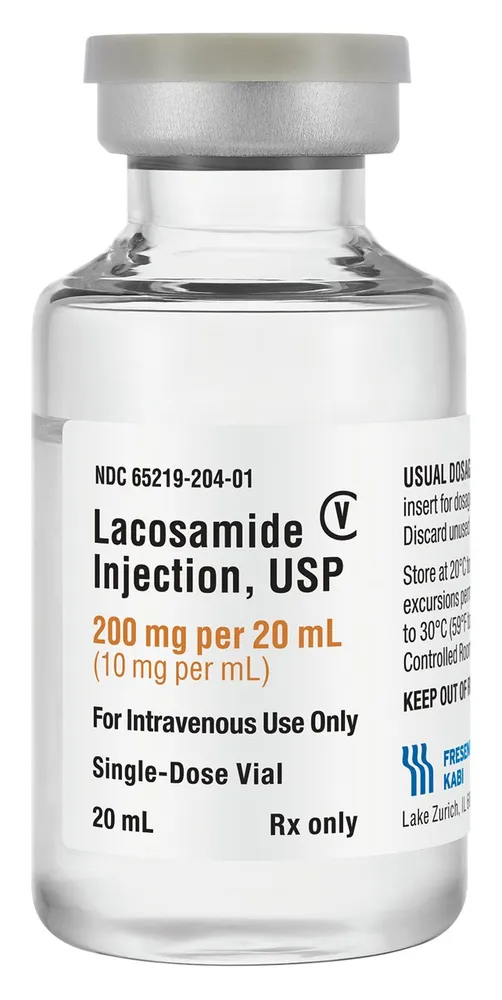
Table of Contents
- Package leaflet: Information for the patient
- 1. What Lacosamide Fresenius Kabi is and what it is used for
- 2. Important information before using Lacosamide Fresenius Kabi
- 3. How to use Lacosamide Fresenius Kabi
- 4. Possible adverse effects
- 5. How to store Lacosamide Fresenius Kabi
- 6. Contents of the pack and other information
- Information intended exclusively for medical professionals:
Package leaflet: Information for the patient
Lacosamide Fresenius Kabi, 10 mg/ml, infusion solution
Lacosamidum
Please read all of this leaflet carefully before using this medicine because it contains
important information for you.
Keep this leaflet as you may need to read it again.
If you have any further questions, please ask your doctor or pharmacist.
If you experience any side effects, including any not listed in this leaflet, tell your doctor or pharmacist. See section 4.
Contents of the leaflet
- What Lacosamide Fresenius Kabi is and what it is used for
- Important information before using Lacosamide Fresenius Kabi
- How to use Lacosamide Fresenius Kabi
- Possible side effects
- How to store Lacosamide Fresenius Kabi
- Contents of the pack and other information
1. What Lacosamide Fresenius Kabi is and what it is used for
What Lacosamide Fresenius Kabi is
Lacosamide Fresenius Kabi contains the active substance lacosamide. It belongs to a group of medicines called "antiepileptic drugs", which are used in the treatment of epilepsy.
This medicine has been prescribed by your doctor to reduce the number of seizures.
What Lacosamide Fresenius Kabi is used for
Lacosamide Fresenius Kabi is used:
- as monotherapy and in combination with other antiepileptic medicines in adults, adolescents and children from 2 years of age for the treatment of epilepsy with partial-onset and secondarily generalized seizures. In this type of epilepsy, seizures initially affect only one side of the brain but may then spread to involve both sides.
- in combination with other antiepileptic medicines in adults, adolescents and children from 4 years of age for the treatment of primary generalized tonic-clonic seizures (major seizures involving loss of consciousness) in patients with idiopathic generalized epilepsy (a type of epilepsy believed to have a genetic basis).
2. Important information before using Lacosamide Fresenius Kabi
When not to use Lacosamide Fresenius Kabi
if the patient is allergic to lacosamide or any of the other ingredients of this medicine
(listed in section 6). If in doubt about the existence of an allergy, consult a doctor.
if the patient has a certain type of heart conduction disorder (called second- or third-degree
atrioventricular block).
If any of the above situations apply, the patient should not take Lacosamide Fresenius Kabi.
If in doubt, consult a doctor or pharmacist before using this medicine.
Warnings and precautions
Before starting treatment with Lacosamide Fresenius Kabi, consult a doctor if:
the patient has thoughts of self-harm or suicide. Some patients treated with antiepileptic
medicines such as lacosamide have had thoughts of self-harm or suicidal thoughts. If such
thoughts occur, contact a doctor immediately.
the patient has a heart condition affecting the heart rhythm – often slow, fast or irregular
(e.g. atrioventricular block, atrial fibrillation or atrial flutter).
the patient has severe heart disease, such as heart failure or has had a heart attack.
the patient frequently experiences dizziness or falls. Lacosamide Fresenius Kabi may cause
dizziness, which could increase the risk of accidental injury or falls. For this reason, caution
should be exercised until the body has adjusted to the medicine.
If any of the above situations apply (or if there is any uncertainty), contact a doctor or pharmacist
before starting treatment with Lacosamide Fresenius Kabi.
While taking Lacosamide Fresenius Kabi, report to the doctor any occurrence of new types of
seizures or worsening of existing seizures.
If the patient is taking Lacosamide Fresenius Kabi and experiences symptoms of abnormal heart
rhythm (such as slow, fast or irregular heartbeat, palpitations, shortness of breath, dizziness,
fainting), contact a doctor immediately (see section 4).
Children
Lacosamide is not recommended for children under 2 years of age with partial-onset seizures,
nor is it recommended for children under 4 years of age with primary generalized tonic-clonic
seizures. The effectiveness of the medicine in this age group is not yet known, and it is not known
whether it is safe for children.
Lacosamide Fresenius Kabi and other medicines
Tell the doctor or pharmacist about all medicines currently or recently taken, as well as any
medicines the patient plans to take.
Particularly inform the doctor or pharmacist if any of the following medicines are being taken,
as they may affect heart function. This is important because lacosamide also affects heart function:
medicines used for heart conditions;
medicines that may prolong the PQ interval (seen on an electrocardiogram, ECG), such as
medicines used to treat epilepsy or pain, e.g. carbamazepine, lamotrigine or pregabalin;
medicines used to treat certain types of cardiac arrhythmias or heart failure.
If any of the above situations apply (or if there is any uncertainty), contact a doctor or pharmacist
before starting treatment with Lacosamide Fresenius Kabi.
Also inform the doctor or pharmacist if any of the following medicines are being taken, as they
may decrease or increase the effectiveness of Lacosamide Fresenius Kabi:
- antifungal medicines such as fluconazole, itraconazole or ketoconazole;
- medicines used to treat HIV infection such as ritonavir;
- medicines used to treat bacterial infections such as clarithromycin or rifampicin;
- the herbal medicine St. John’s wort (Hypericum perforatum) used to treat mild anxiety and depression.
If any of the above situations apply (or if there is any uncertainty), contact a doctor or pharmacist
before starting treatment with Lacosamide Fresenius Kabi.
Lacosamide Fresenius Kabi and alcohol
For safety reasons, alcohol must not be consumed during treatment with Lacosamide Fresenius Kabi.
Pregnancy and breastfeeding
Women of childbearing potential should discuss contraception with their doctor.
If the patient is pregnant, breastfeeding, suspects she may be pregnant, or is planning to become
pregnant, she should consult a doctor or pharmacist before using this medicine.
Lacosamide Fresenius Kabi is not recommended during pregnancy or breastfeeding, as the effect
of this medicine on pregnancy and the unborn or newborn child is unknown. It is also not known
whether Lacosamide Fresenius Kabi passes into human breast milk. Seek urgent medical advice
if the patient becomes pregnant or is planning a pregnancy. The doctor will help decide whether
Lacosamide Fresenius Kabi can be used.
Do not stop treatment without consulting a doctor, as this may lead to an increase in seizure
frequency. Worsening of the mother’s condition may also harm the child.
Driving and using machines
Do not drive, ride a bicycle, or use tools or operate machinery until it is clear how the medicine
affects the patient. This is because Lacosamide Fresenius Kabi may cause dizziness or blurred vision.
Lacosamide Fresenius Kabi contains sodium
This medicine contains 59.8 mg of sodium (the main component of table salt) in each vial. This
corresponds to 3% of the recommended maximum daily sodium intake for an adult.
3. How to use Lacosamide Fresenius Kabi
This medicine should always be used as prescribed by the physician or pharmacist. If in doubt,
consult the physician or pharmacist.
Administration of Lacosamide Fresenius Kabi
Treatment with Lacosamide Fresenius Kabi may be initiated either by:
- oral administration, or
- intravenous infusion ( iv .), during which the physician or nurse administers the medicine into the patient's vein. The infusion time ranges from 15 to 60 minutes.
Intravenous infusion is generally used for a short period when oral administration is not possible.
The physician will decide for how many days the patient will receive infusions. Data are available on the use of lacosamide in infusion twice daily for up to 5 days. For long-term treatment, lacosamide is administered in tablet or syrup form.
When switching the route of administration from infusion to oral (or vice versa), the total daily dose and frequency of administration remain unchanged.
Lacosamide should be administered twice daily (approximately every 12 hours).
The medicine should be taken at approximately the same time each day.
What dose to use
The recommended doses of lacosamide for patients of different age groups and body weights are generally as follows. The physician may prescribe a different dose if the patient has impaired kidney or liver function.
Adolescents and children with body weight at least 50 kg, and adults
Monotherapy with Lacosamide Fresenius Kabi
The usual initial dose of lacosamide is 50 mg twice daily.
Treatment may also be initiated with a dose of 100 mg lacosamide twice daily.
The physician may increase the dose administered twice daily by 50 mg weekly until reaching the maintenance dose, which ranges from 100 mg to 300 mg twice daily.
Combination therapy with Lacosamide Fresenius Kabi and other antiepileptic medicines
The usual initial dose of lacosamide is 50 mg twice daily.
The physician may increase the dose administered twice daily by 50 mg weekly until reaching the maintenance dose, which ranges from 100 mg to 200 mg twice daily.
In patients with body weight at least 50 kg, the physician may decide to initiate lacosamide treatment with a single loading dose of 200 mg. Then, 12 hours later, the patient will start receiving the regular maintenance dose.
Children and adolescents with body weight below 50 kg
Use in the treatment of partial-onset seizures: note that lacosamide is not recommended for use in children under 2 years of age.
Use in the treatment of primary generalized tonic-clonic seizures: note that lacosamide is not recommended for use in children under 4 years of age.
Monotherapy with Lacosamide Fresenius Kabi
The physician will determine the lacosamide dose based on the patient's body weight.
The usual initial dose of lacosamide is 1 mg (0.1 ml) per kilogram (kg) of body weight, administered twice daily.
The physician may increase the dose administered twice daily by 1 mg (0.1 ml) per kilogram (kg) of body weight weekly until reaching the maintenance dose.
Dose tables, including the recommended maximum dose, are provided below for informational purposes only. The appropriate dose for the patient will be calculated by the physician.
Doses administered twice daily for children aged 2 years and older with body weight from 10 kg to below 40 kg:
| Body weight | Week 1. Initial dose: 0.1 ml/kg body weight | Week 2. 0.2 ml/kg body weight | Week 3. 0.3 ml/kg body weight | Week 4. 0.4 ml/kg body weight | Week 5. 0.5 ml/kg body weight | Week 6. Maximum recommended dose: 0.6 ml/kg body weight |
| 10 kg | 1 ml | 2 ml | 3 ml | 4 ml | 5 ml | 6 ml |
| 15 kg | 1.5 ml | 3 ml | 4.5 ml | 6 ml | 7.5 ml | 9 ml |
| 20 kg | 2 ml | 4 ml | 6 ml | 8 ml | 10 ml | 12 ml |
| 25 kg | 2.5 ml | 5 ml | 7.5 ml | 10 ml | 12.5 ml | 15 ml |
| 30 kg | 3 ml | 6 ml | 9 ml | 12 ml | 15 ml | 18 ml |
| 35 kg | 3.5 ml | 7 ml | 10.5 ml | 14 ml | 17.5 ml | 21 ml |
Doses administered twice daily in children and adolescents with a body weight from 40 kg to below 50 kg:
| Body weight | Week 1. Initial dose: 0.1 ml/kg body weight | Week 2. 0.2 ml/kg body weight | Week 3. 0.3 ml/kg body weight | Week 4. 0.4 ml/kg body weight | Week 5. Maximum recommended dose: 0.5 ml/kg body weight |
| 40 kg | 4 ml | 8 ml | 12 ml | 16 ml | 20 ml |
| 45 kg | 4.5 ml | 9 ml | 13.5 ml | 18 ml | 22.5 ml |
Use of Lacosamide Fresenius Kabi with other antiepileptic medicines
The doctor will determine the appropriate dose of lacosamide based on the patient's body weight.
For children and adolescents with a body weight from 10 kg to below 50 kg, the usual initial dose is 1 mg (0.1 ml) per kilogram (kg) of body weight twice daily.
The doctor may increase the dose administered twice daily by 1 mg (0.1 ml) per kilogram (kg) of body weight weekly, until the maintenance dose is reached.
The dosing tables below, including the recommended maximum dose, are provided for informational purposes only. The doctor will calculate the appropriate dose for the patient.
Doses administered twice daily for children aged 2 years and older with body weight from 10 kg to below 20 kg:
| Body weight | Week 1. Initial dose: 0.1 ml/kg | Week 2. 0.2 ml/kg b.w. | Week 3. 0.3 ml/kg b.w. | Week 4. 0.4 ml/kg b.w. | Week 5. 0.5 ml/kg b.w. | Week 6. Maximum recommended dose: 0.6 ml/kg b.w. |
| 10 kg | 1 ml | 2 ml | 3 ml | 4 ml | 5 ml | 6 ml |
| 15 kg | 1.5 ml | 3 ml | 4.5 ml | 6 ml | 7.5 ml | 9 ml |
Doses administered twice daily for children and adolescents with a body weight from 20 kg to below 30 kg:
| Body weight | Week 1. Initial dose: 0.1 ml/kg body weight | Week 2. 0.2 ml/kg body weight | Week 3. 0.3 ml/kg body weight | Week 4. 0.4 ml/kg body weight | Week 5. Maximum recommended dose: 0.5 ml/kg body weight |
| 20 kg | 2 ml | 4 ml | 6 ml | 8 ml | 10 ml |
| 25 kg | 2.5 ml | 5 ml | 7.5 ml | 10 ml | 12.5 ml |
Doses administered twice daily in children and adolescents aged 4 years and older with body weight from
30 kg to less than 50 kg:
| Body weight | Week 1. Initial dose: 0.1 ml/kg body weight | Week 2. 0.2 ml/kg body weight | Week 3. 0.3 ml/kg body weight | Week 4. Maximum recommended dose: 0.4 ml/kg body weight |
| 30 kg | 3 ml | 6 ml | 9 ml | 12 ml |
| 35 kg | 3.5 ml | 7 ml | 10.5 ml | 14 ml |
| 40 kg | 4 ml | 8 ml | 12 ml | 16 ml |
| 45 kg | 4.5 ml | 9 ml | 13.5 ml | 18 ml |
Discontinuation of Lacosamide Fresenius Kabi
If your doctor decides to stop treatment with Lacosamide Fresenius Kabi, the dose will be gradually reduced.
This is to prevent recurrence or worsening of epilepsy.
If you have any doubts regarding the use of this medicine, consult your doctor or pharmacist.
4. Possible adverse effects
Like all medicines, this medicine can cause adverse effects, although not everyone will experience them.
Nervous system effects such as dizziness may be stronger after administration of a single loading dose.
You should inform your doctor or pharmacist if any of the following symptoms occur:
Very common (may affect more than 1 in 10 people):
- headache;
- dizziness or nausea;
- double vision.
Common (may affect up to 1 in 10 people): - brief muscle jerks or muscle group jerks (myoclonic jerks);
- difficulty with coordination of movement or walking;
- loss of balance, tremor, numbness (paraesthesia), muscle spasms, tendency to fall or bruise easily;
- memory impairment, thinking disturbances, difficulty finding words, confusion;
- rapid uncontrolled eye movements (nystagmus), blurred vision;
- sensation of spinning (dizziness), feeling drunk;
- vomiting, dry mouth, constipation, indigestion, bloating, diarrhoea;
- reduced sensation and sensitivity to stimuli, difficulty speaking, attention disturbances;
- tinnitus, such as buzzing, ringing, or whistling sounds;
- irritability, difficulty falling asleep, depression;
- drowsiness, fatigue or weakness (asthenia);
- itching, rash.
Uncommon (may affect up to 1 in 100 people): - slowed heart rate, palpitations, irregular pulse or other changes in the heart's electrical activity (conduction disturbances);
- excessive well-being, seeing and/or hearing things that are not real;
- allergic reaction after taking the medicine, urticaria;
- abnormal blood test results indicating liver problems (suggesting impaired liver function, liver damage);
- thoughts of self-harm or suicide, or suicide attempt: inform your doctor immediately;
- feeling angry or agitated;
- disturbances in thinking or loss of contact with reality;
- severe hypersensitivity reactions causing swelling of the face, throat, hands, feet, ankles or lower legs;
- fainting;
- abnormal involuntary movements (dyskinesia).
Frequency not known (frequency cannot be estimated from the available data): - abnormal rapid heartbeat (ventricular tachyarrhythmia);
- sore throat, high body temperature and more frequent infections. Blood tests may show a significant decrease in the number of a specific type of white blood cells (agranulocytosis);
- severe skin reaction, which may be accompanied by high temperature and flu-like symptoms, facial rash, spreading rash, swollen lymph nodes (enlarged lymph nodes). Blood tests may show increased liver enzyme levels and increased number of one type of white blood cells (eosinophilia);
- widespread rash with blisters and peeling skin, mainly affecting the area around the mouth, eyes, nose and genitals (Stevens-Johnson syndrome) and a more severe form of rash causing skin peeling from over 30% of the body surface (toxic epidermal necrolysis);
- seizures.
Additional adverse effects associated with intravenous infusion
Local adverse effects may occur, such as:
Common (may affect up to 1 in 10 people): - Pain, discomfort or irritation at the site of administration.
Uncommon (may affect up to 1 in 100 people): - Redness at the site of administration.
Additional adverse effects in children
Additional adverse effects observed in children include: fever, cold (nasopharyngitis), sore throat (pharyngitis), decreased appetite, behavioural changes, child not behaving as usual (unusual behaviour), and lack of energy (lethargy). Drowsiness is a very common adverse effect in children and may occur in more than 1 in 10 children.
Reporting of adverse effects
If any adverse effects occur, including any adverse effects not listed in this leaflet, you should tell your doctor, pharmacist or nurse. Adverse effects can be reported directly to the Department of Monitoring of Adverse Drug Reactions of the Office for Registration of Medicinal Products, Medical Devices and Biocidal Products
Al. Jerozolimskie 181C
02-222 Warsaw
tel.: + 48 22 49 21 301
fax: + 48 22 49 21 309
website: https://smz.ezdrowie.gov.pl
Adverse effects can also be reported to the marketing authorization holder.
Reporting adverse effects helps to provide more information on the safety of the medicine.
5. How to store Lacosamide Fresenius Kabi
Keep the medicine out of the sight and reach of children.
Do not use this medicine after the expiry date stated on the carton and vial after "EXP". The expiry date refers to the last day of the stated month.
Do not store above 25°C.
Each vial of Lacosamide Fresenius Kabi must be used only once (single use).
Any unused portion of the solution must be discarded.
Only use a clear solution free from visible particles and discoloration.
Medicines should not be disposed of via the sewage system or household waste. Ask a pharmacist how to dispose of medicines no longer in use. This will help protect the environment.
6. Contents of the pack and other information
What Lacosamide Fresenius Kabi contains
The active substance is lacosamide.
1 ml of infusion solution contains 10 mg of lacosamide.
1 vial contains 20 ml of infusion solution, corresponding to 200 mg of lacosamide.
Other components: sodium chloride, hydrochloric acid 0.86%, water for injections.
What Lacosamide Fresenius Kabi looks like and contents of the pack
Lacosamide Fresenius Kabi, 10 mg/ml, infusion solution is a clear, colourless solution.
Lacosamide Fresenius Kabi is available in packs containing: 1 vial, 5 vials and 10 vials. Each vial contains 20 ml of infusion solution.
Not all pack sizes may be marketed.
Marketing Authorisation Holder
Fresenius Kabi Polska Sp. z o.o.
Al. Jerozolimskie 134
02-305 Warsaw
Poland
Manufacturer
Fresenius Kabi Deutschland GmbH
Pfingstweide 53
61169 Friedberg
Germany
Labesfal - Laboratórios Almiro, S.A.
Zona Industrial do Lagedo
3465-157 Santiago de Besteiros
Portugal
For further information, please contact the Marketing Authorisation Holder:
Fresenius Kabi Polska Sp. z o.o.
Al. Jerozolimskie 134
02-305 Warsaw
Poland
Tel.: +48 22 345 67 89
This medicinal product is authorised in the Member States of the European Economic Area and in the United Kingdom (Northern Ireland) under the following names:
| Member State | Medicinal product name |
| Austria | Lacosamid Fresenius Kabi 10 mg/ml Infusionslösung |
| Bulgaria | Lacosamide Fresenius Kabi 10 mg/ml solution for infusion |
| Cyprus | Lacosamide Fresenius Kabi 10mg/ml solution for infusion |
| Czech Republic | Lacosamide Fresenius Kabi |
| Estonia | Lacosamide Fresenius Kabi |
| Finland | Lacosamide Fresenius Kabi 10 mg/ml solution for infusion |
| France | LACOSAMIDE FRESENIUS KABI 10 mg/ml, solution for infusion |
| Greece | Lacosamide Fresenius Kabi 10mg/ml solution for infusion |
| Spain | Lacosamida Fresenius Kabi 10 mg/ml solution for infusion EFG |
| Ireland | Lacosamide Fresenius Kabi 10mg/ml solution for infusion |
| Liechtenstein | Lacosamid Fresenius Kabi 10 mg/ml Infusionslösung |
| Lithuania | Lacosamide Fresenius Kabi 10 mg/ml infusion solution |
| Latvia | Lacosamide Fresenius Kabi 10 mg/ml solution for infusion |
| Luxembourg | Lacosamide Fresenius Kabi 10 mg/ml Infusionslösung |
| Malta | Lacosamide Fresenius Kabi 10 mg/ml solution for infusion |
| Germany | Lacosamide Fresenius Kabi 10 mg/ml Infusionslösung |
| Norway | Lacosamide Fresenius Kabi |
| Poland | Lacosamide Fresenius Kabi |
| Portugal | Lacosamida Fresenius Kabi |
| Romania | Lacosamid Fresenius Kabi 10 mg/ml solution for infusion |
| Slovakia | Lacosamide Fresenius Kabi 10 mg/ml |
| Hungary | Lacosamide Fresenius Kabi 10 mg/ml solution for infusion |
| United Kingdom (Northern Ireland) | Lacosamide Fresenius Kabi 10 mg/ml solution for infusion |
| Italy | Lacosamide Fresenius Kabi |
Information intended exclusively for medical professionals:
Each vial of Lacosamide Fresenius Kabi must be used only once (single use).
Any unused portion of the solution must be discarded (see section 3).
Lacosamide Fresenius Kabi may be administered without prior dilution or may be diluted
with one of the following solutions: sodium chloride 9 mg/ml (0.9%), glucose 50 mg/ml (5%), or Ringer's lactate solution.
For Lacosamide Fresenius Kabi diluted with the above-mentioned diluents, chemical and physical stability has been demonstrated for 7 days at temperatures up to 25°C when stored in glass containers or bags (PVC or non-PVC).
From a microbiological standpoint, the product should be used immediately. If not used immediately, the responsibility for storage conditions and duration lies with the user. The solution should not be stored for longer than 24 hours at a temperature of 2°C to 8°C, unless the solution was prepared under controlled and validated aseptic conditions.