Laboratoria polfałódź zatoki
Poland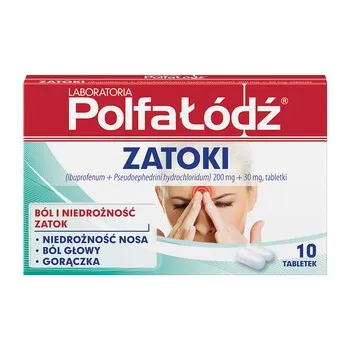
Table of Contents
- Package leaflet: Information for the patient
- 1. What Laboratoria PolfaLodz ZATOKI is and what it is used for
- 2. Important Information Before Using the Medicinal Product Laboratoria PolfaLodz ZATOKI
- 3. How to use Laboratoria PolfaŁódź ZATOKI
- 4. Possible adverse reactions
- 5. How to store the medicinal product Laboratoria PolfaLodz ZATOKI
- 6. Contents of the pack and other information
Package leaflet: Information for the patient
Laboratoria PolfaLodz ZATOKI, 200 mg + 30 mg, tablets
Ibuprofenum + Pseudoephedrini hydrochloridum
Please read this leaflet carefully before using the medicine, as it contains
important information for the patient.
This medicine should always be used exactly as described in this patient leaflet or as directed by a
physician or pharmacist.
- Keep this leaflet, as you may need to read it again.
- If you need advice or further information, please consult your pharmacist.
- If you experience any adverse reactions, including any possible adverse reactions not listed in this leaflet, inform your doctor or pharmacist. See section 4.
- If there is no improvement after 3 days, or if you feel worse, consult your doctor.
Table of contents:
- What Laboratoria PolfaLodz ZATOKI is and what it is used for
- Important information before taking Laboratoria PolfaLodz ZATOKI
- How to take Laboratoria PolfaLodz ZATOKI
- Possible side effects
- How to store Laboratoria PolfaLodz ZATOKI
- Contents of the pack and other information
1. What Laboratoria PolfaLodz ZATOKI is and what it is used for
Laboratoria PolfaLodz ZATOKI is a combination medicine containing ibuprofen and pseudoephedrine, in the form of tablets for oral administration.
Ibuprofen belongs to a group of medicines called non-steroidal anti-inflammatory drugs (NSAIDs), which have therapeutic effects including anti-inflammatory, analgesic, and antipyretic actions.
Pseudoephedrine is a medicine that reduces congestion of the mucous membranes of the upper respiratory tract. When administered orally, it causes vasoconstriction, thereby reducing swelling and congestion of the nasal and sinus mucosa, resulting in improved nasal patency and sinus drainage.
Indicated for short-term relief of symptoms of nasal and paranasal sinus congestion accompanied by headache, pain associated with sinus obstruction, and fever occurring during influenza or the common cold.
2. Important Information Before Using the Medicinal Product Laboratoria PolfaLodz ZATOKI
When not to use the medicinal product Laboratoria PolfaLodz ZATOKI
if the patient is allergic to ibuprofen, pseudoephedrine hydrochloride, or any of the
other components of this medicine (listed in section 6),
if the patient is allergic to NSAIDs, including acetylsalicylic acid;
history of aspirin-induced asthma, angioedema (a skin and mucous membrane disorder characterized by swelling), bronchospasm, rhinitis, or urticaria associated with the use of acetylsalicylic acid or other
NSAIDs,
if the patient has severe renal and/or hepatic insufficiency,
in case of active or past gastric or duodenal ulcer disease,
perforation or bleeding, including events following NSAID use,
if the patient has severe hypertension,
if the patient has glaucoma (an eye disease leading to worsening or loss of vision),
if the patient has hyperthyroidism,
if the patient has benign prostatic hyperplasia,
if the patient has a pheochromocytoma,
if the patient has nasal polyps,
in case of severe cardiovascular disease, tachycardia, or angina pectoris,
in severe heart failure,
in case of a previous hemorrhagic stroke or presence of risk factors
that may increase the likelihood of hemorrhagic stroke, for
example, use of vasoconstrictive drugs or other drugs
reducing blood flow administered orally or intranasally,
during pregnancy and breastfeeding,
in case of hemorrhagic diathesis (tendency to bleed, e.g., in skin, mucous membranes, nose, gastrointestinal tract) and concomitant use of anticoagulant drugs,
in case of urinary retention,
when concurrently using other NSAIDs, including COX-2 inhibitors.
Warnings and precautions
Exercise particular caution:
in patients with impaired liver and/or kidney or circulatory system function; in patients with renal dysfunction, effective doses should be as low as possible, with simultaneous monitoring of renal function,
in patients with bronchial asthma or allergies – taking the medicine may cause bronchospasm,
in patients with systemic lupus erythematosus or mixed connective tissue disease,
- increased risk of aseptic meningitis, in patients with a history of gastrointestinal disorders (ulcerative colitis, Crohn's disease) – symptoms may worsen, in patients with cardiac arrhythmias, hypertension, history of myocardial infarction or heart failure – fluid retention may occur due to worsening renal function, in patients concurrently using anticoagulants or with coagulation disorders,
- ibuprofen may prolong bleeding time, in patients with neurological symptoms (nausea, headache), in diabetic patients, in patients with urinary outflow obstruction, in patients with pyloric stenosis, in patients with mild benign prostatic hyperplasia.
In patients over 65 years of age, the risk of adverse effects is higher than in younger patients.
During treatment with Laboratoria PolfaLodz ZATOKI, sudden abdominal pain or rectal bleeding may occur due to inflammation of the large intestine (ischemic colitis). If such gastrointestinal symptoms occur, treatment with Laboratoria PolfaLodz ZATOKI should be discontinued immediately and medical advice should be sought without delay. See section 4.
With prolonged use of the medicine, especially in patients with a history of gastrointestinal disorders, particularly in those over 65 years of age, there is a risk of gastrointestinal bleeding, ulceration, or perforation. If any unusual gastrointestinal symptoms occur, especially during the initial treatment period, the medicine should be discontinued immediately and a physician should be notified.
Caution should be exercised when using Laboratoria PolfaLodz ZATOKI in patients concurrently using other medicines that may increase the risk of gastrointestinal disorders or bleeding, such as corticosteroids or anticoagulants like warfarin (acenocoumarol) or antiplatelet agents like acetylsalicylic acid.
Concurrent, prolonged use of various analgesics may lead to kidney damage with risk of renal failure.
Skin reactions
Severe skin reactions associated with the use of Laboratoria PolfaLodz ZATOKI have been reported. If any skin rash, mucosal changes, blisters, or other allergic symptoms appear, the use of Laboratoria PolfaLodz ZATOKI should be discontinued immediately and medical help should be sought without delay, as these may be the first signs of a very serious skin reaction. See section 4.
Like other medicines stimulating the central nervous system, there is a risk of abuse with pseudoephedrine. Toxic effects may occur with increased doses. Abrupt discontinuation may lead to depression.
During use of pseudoephedrine, athletes may test positive in doping tests.
This medicine belongs to a group of medicines (non-steroidal anti-inflammatory drugs, NSAIDs) that may adversely affect fertility in women. This effect is reversible and resolves after discontinuation of therapy.
Use of anti-inflammatory/analgesic medicines such as ibuprofen may be associated with a small increased risk of myocardial infarction or stroke, particularly when used at high doses. Do not exceed the recommended dose or duration of treatment.
During treatment with Laboratoria PolfaLodz ZATOKI, reduced blood flow in the optic nerve may occur. If sudden vision loss occurs, treatment with Laboratoria PolfaLodz ZATOKI should be discontinued immediately and medical advice should be sought without delay. See section 4.
Before using Laboratoria PolfaLodz ZATOKI, the patient should discuss treatment with a physician or pharmacist if:
- the patient has heart diseases such as heart failure, angina pectoris (chest pain), history of heart attack, coronary artery bypass surgery, peripheral arterial disease (poor blood circulation in legs due to narrowed or blocked arteries), or history of stroke (including mini-stroke or transient ischemic attack - TIA).
- the patient has hypertension, diabetes, elevated cholesterol levels, family history of heart disease or stroke, or if the patient smokes,
- the patient has an infection – see below, section titled "Infections".
Infections
Laboratoria PolfaLodz ZATOKI may mask symptoms of infection such as fever and pain. Therefore, Laboratoria PolfaLodz ZATOKI may delay appropriate treatment of infection and consequently increase the risk of complications. This has been observed in bacterial pneumonia and bacterial skin infections associated with chickenpox. If the patient takes this medicine during an infection and infection symptoms persist or worsen, immediate medical consultation is required.
Using the medicine at the lowest effective dose for the shortest duration necessary to relieve symptoms reduces the risk of adverse effects.
If new symptoms occur or existing symptoms worsen, contact a physician or pharmacist.
Children
This medicine should not be given to children under 12 years of age.
Laboratoria PolfaLodz ZATOKI and other medicines
Inform your physician or pharmacist about all medicines currently used, recently used, or planned for use.
Laboratoria PolfaLodz ZATOKI may affect the action of other medicines or other medicines may affect the action of Laboratoria PolfaLodz ZATOKI.
Do not use Laboratoria PolfaLodz ZATOKI together with:
- monoamine oxidase inhibitors (MAOIs) or within 14 days after discontinuation of such an inhibitor. Concurrent use of MAO inhibitors and sympathomimetic drugs may lead to hypertensive crises.
Concurrent use of Laboratoria PolfaLodz ZATOKI with the following medicines is not recommended due to increased risk of vasoconstriction and elevated blood pressure when taken with pseudoephedrine:
- dopamine receptor agonists, ergot alkaloid derivatives – bromocriptine, cabergoline, lisuride, pergolide;
- vasoconstrictive dopaminergic drugs – dihydroergotamine, ergotamine, methylergonovine;
- linezolid;
- drugs reducing nasal mucosal congestion (administered orally or intranasally) – phenylephrine, ephedrine, phenylpropanolamine.
Use Laboratoria PolfaLodz ZATOKI with caution in combination with:
- acetylsalicylic acid, other non-steroidal anti-inflammatory drugs, or glucocorticosteroids; concurrent use with these drugs may increase the risk of gastrointestinal adverse effects.
- antihypertensive drugs (ACE inhibitors such as captopril, beta-blockers such as atenolol, angiotensin II receptor antagonists such as losartan);
- anticoagulant drugs (i.e., blood thinners/preventing clot formation, such as aspirin/acetylsalicylic acid, warfarin, ticlopidine);
- lithium: evidence suggests potential increase in serum lithium levels during concomitant use of ibuprofen (similarly to other NSAIDs);
- methotrexate: risk of increased methotrexate plasma concentration during concomitant use of ibuprofen (similarly to other NSAIDs);
- zidovudine: evidence suggests increased risk of joint hemorrhage and hematomas in hemophilic, HIV-positive patients concurrently using zidovudine and ibuprofen.
Concurrent use of the following drugs with pseudoephedrine is not recommended:
- appetite suppressants (pseudoephedrine may enhance their effects);
- psychostimulants such as amphetamines (pseudoephedrine may enhance their effects);
- antihypertensive drugs, alpha-methyldopa, mecamylamine, reserpine, rauwolfia alkaloids, guanethidine (pseudoephedrine may reduce their antihypertensive effect);
- tricyclic antidepressants (pseudoephedrine may theoretically increase the risk of hypertension and cardiac arrhythmias).
Antacids increase the absorption rate of pseudoephedrine, while kaolin reduces it.
During use of inhaled general anesthetics, acute hypertensive reactions may occur in the perioperative period when used in combination with pseudoephedrine, similarly to other drugs with indirect sympathomimetic action. Therefore, discontinuation of Laboratoria PolfaLodz ZATOKI is recommended before planned general anesthesia.
Other medicines may also interact with or be affected by treatment with Laboratoria PolfaLodz ZATOKI. Therefore, always consult a physician or pharmacist before using Laboratoria PolfaLodz ZATOKI with other medicines.
Pregnancy, breastfeeding, and effect on fertility
If the patient is pregnant or breastfeeding, suspects she may be pregnant, or is planning to have a child, she should consult a physician or pharmacist before using this medicine.
Do not use Laboratoria PolfaLodz ZATOKI during pregnancy or breastfeeding.
Do not use Laboratoria PolfaLodz ZATOKI if the patient is pregnant, as it may harm the unborn child or cause complications during delivery. Use of ibuprofen-containing medicines during pregnancy may cause kidney and heart problems in the unborn child. Ibuprofen may increase the tendency to bleeding in both the mother and the child and may delay or prolong labor.
From the 20th week of pregnancy, ibuprofen may cause renal dysfunction in the unborn child, leading to reduced amniotic fluid volume (oligohydramnios). It may also cause constriction of a blood vessel (ductus arteriosus) in the child's heart.
Effect on fertility
See section 2.
Driving and operating machinery
Patients in whom Laboratoria PolfaLodz ZATOKI causes adverse effects affecting psycho-physical performance should not drive vehicles or operate machinery.
3. How to use Laboratoria PolfaŁódź ZATOKI
This medicine should always be taken exactly as described in the patient information leaflet or as directed by a doctor or pharmacist. If in doubt, consult your doctor or pharmacist.
Oral administration.
For adults and children over 12 years of age, the usual dosage is:
Initial dose – 2 tablets, then if necessary, 1 to 2 tablets every 4–6 hours as required during the day.
Maximum daily dose – 6 tablets.
For patients over 65 years of age: dose adjustment is not usually necessary, provided that kidney or liver function is not impaired; in cases of impaired function, dosage should be individually adjusted.
Use the lowest effective dose for the shortest duration necessary to relieve symptoms. If symptoms of infection (such as fever and pain) persist or worsen, consult a doctor immediately (see section 2).
If you feel that the effect of Laboratoria PolfaŁódź ZATOKI is too strong or too weak, consult your doctor.
Use of more than the recommended dose of Laboratoria PolfaŁódź ZATOKI
Adverse effects of varying severity may occur. The earliest symptoms are those of pseudoephedrine overdose: headache, nausea, vomiting, thirst, anxiety, restlessness, irritability, fever, tachycardia (increased heart rate), insomnia, dilated pupils, visual disturbances, hallucinations, delusions, muscle weakness, difficulty urinating, tremor, cardiac arrhythmia, and excessive sweating.
In case of overdose, seek immediate medical advice from a doctor or pharmacist. The doctor may perform gastric lavage and, if necessary, administer medications to correct electrolyte imbalances and other agents to treat overdose symptoms.
Missed dose of Laboratoria PolfaŁódź ZATOKI
Do not take a double dose to make up for a missed dose.
If you have any further questions about the use of this medicine, consult your doctor or pharmacist.
4. Possible adverse reactions
Like any medicine, this medicine may cause adverse reactions, although not everyone experiences them.
Sudden fever, redness of the skin, or numerous small pustules (possible symptoms of Acute Generalized Exanthematous Pustulosis - AGEP) may occur within the first 2 days of using Laboratoria PolfaLodz ZATOKI.
See section 2.
If such symptoms occur, discontinue use of Laboratoria PolfaLodz ZATOKI immediately and contact a doctor or seek medical help without delay.
Adverse reactions due to the presence of ibuprofen
With NSAID treatment, cases of edema, hypertension, and heart failure have been reported.
Taking medicines containing ibuprofen may be associated with a small increased risk of heart attack (myocardial infarction) or stroke.
Adverse reactions occurring not very commonly (in less than 1 in 100 people):
- dyspepsia, abdominal pain, nausea
- headache
- urticaria and itching
Adverse reactions occurring rarely (in less than 1 in 1,000 people):
- diarrhea, bloating, constipation, vomiting, gastritis
- dizziness, insomnia, restlessness, irritability, and feeling of fatigue
- edema
Adverse reactions occurring very rarely (in less than 1 in 10,000 people):
- blood count abnormalities (anemia, leukopenia, thrombocytopenia, pancytopenia, agranulocytosis)
- liver function disorders, particularly during prolonged use
- erythema multiforme, Stevens-Johnson syndrome, toxic epidermal necrolysis
- melena, hematemesis, ulcerative stomatitis, exacerbation of colitis and Crohn's disease. Peptic ulcer of the stomach and/or duodenum, gastrointestinal bleeding and perforation, particularly in patients over 65 years of age
- dysuria – discomfort associated with urination, decreased urine output, renal failure, renal papillary necrosis, increased serum urea concentration, increased serum sodium concentration (sodium retention)
- severe hypersensitivity reactions such as facial, tongue and laryngeal swelling, dyspnea, tachycardia – cardiac arrhythmias, hypotension – sudden drop in blood pressure, shock. Worsening of asthma and bronchospasm
- in patients with pre-existing autoimmune diseases (systemic lupus erythematosus, mixed connective tissue disease), isolated cases of symptoms typical of aseptic meningitis such as neck stiffness, headache, nausea, vomiting, fever, disorientation have been reported during ibuprofen treatment
- edema, hypertension, heart failure associated with high-dose use of NSAIDs
Adverse reactions occurring with unknown frequency (frequency cannot be estimated from available data):
Red, scaly rash with subcutaneous nodules and blisters, primarily located in skin folds, trunk, and upper limbs, accompanied by fever at the beginning of treatment (acute generalized exanthematous pustulosis). If such symptoms occur, discontinue use of Laboratoria PolfaLodz ZATOKI and seek immediate medical help. See also section 2.
In isolated cases: depression, psychotic reactions, and tinnitus have been reported.
Adverse reactions due to the presence of pseudoephedrine
Ischemic colitis (inflammation of the large intestine due to inadequate blood supply) – frequency unknown (cannot be estimated from available data), dyspepsia, gastrointestinal disturbances, skin redness and rash, nausea, vomiting, excessive sweating, dizziness, increased thirst, tachycardia, cardiac arrhythmias, restlessness, insomnia, rarely uncontrolled urination, muscle weakness, tremors, anxiety, disorientation, hallucinations, thrombocytopenia, reduced blood flow in the optic nerve (ischemic optic neuropathy) – frequency unknown (cannot be estimated from available data).
Reporting of adverse reactions
If any adverse reactions occur, including any possible adverse reactions not listed in this leaflet, inform your doctor or pharmacist. Adverse reactions can be reported directly to the Department of Monitoring Adverse Drug Reactions of the Office for Registration of Medicinal Products, Medical Devices and Biocidal Products: Al. Jerozolimskie 181C, 02-222 Warsaw, tel.: +48 22 49 21 301, fax: +48 22 49 21 309, website: https://smz.ezdrowie.gov.pl
Adverse reactions can also be reported to the marketing authorization holder.
Reporting adverse reactions helps provide more information on the safety of the medicine.
5. How to store the medicinal product Laboratoria PolfaLodz ZATOKI
Do not store above 25°C.
Store in the original packaging to protect from light and moisture.
Keep the medicine out of sight and reach of children.
Do not use this medicine after the expiry date stated on the blister and carton after EXP. The expiry date refers to the last day of the stated month.
Do not use this medicine if the patient notices any change in the appearance of the tablets.
Medicines must not be disposed of via wastewater or household waste. Ask a pharmacist how to dispose of medicines no longer required. Such measures will help protect the environment.
6. Contents of the pack and other information
What the medicine contains Laboratoria PolfaŁódź ZATOKI
- The active substances are: ibuprofen (Ibuprofenum) - 200 mg
pseudoephedrine hydrochloride (Pseudoephedrini hydrochloridum) - 30 mg - Other components (excipients) are: mannitol, microcrystalline cellulose, silicified microcrystalline cellulose composed of microcrystalline cellulose and colloidal anhydrous silica, sodium carboxymethyl starch (type A), pregelatinized corn starch, magnesium stearate, povidone K-90.
What Laboratoria PolfaŁódź ZATOKI looks like and contents of the pack
The medicine is in the form of elongated white tablets, packed in blisters. One blister contains 6 or 10 tablets.
The outer packaging – a cardboard box – contains 6, 10 or 20 tablets in blisters and the patient information leaflet.
Not all pack sizes may be marketed.
Marketing Authorisation Holder
URGO Sp. z o.o.
Al. Jerozolimskie 142 B
02-305 Warszawa
tel/fax: 22 616 33 48 / 22 617 69 21
Manufacturer
SENSILAB Polska Spółka z ograniczoną odpowiedzialnością – Spółka komandytowo-akcyjna
ul. gen. Mariana Langiewicza 58
95-050 Konstantynów Łódzki
Detailed information on this medicine is available from the marketing authorisation holder, including for blind and partially sighted persons (audio version, CD) by calling: 22 616 33 48.