Paracetamol laboratoria polfałódź
Poland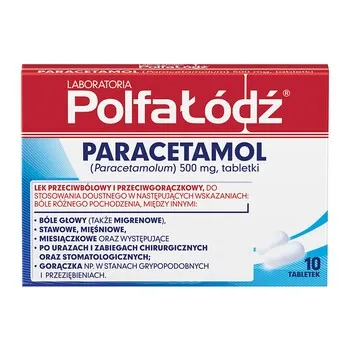
Table of Contents
- Package leaflet: Information for the patient
- 1. What is Laboratoria PolfaLodz Paracetamol and what is it used for
- 2. Information before using Laboratoria PolfaŁódź Paracetamol
- 3. How to use Laboratoria PolfaŁódź Paracetamol
- 4. Possible adverse effects
- 5. How to store Laboratoria PolfaLodz Paracetamol
- 6. Contents of the packaging and other information
Package leaflet: Information for the patient
Laboratoria PolfaLodz Paracetamol, 500 mg, tablets
Paracetamolum
Please read this leaflet carefully before using the medicine, as it contains important information for you.
This medicine should always be used exactly as described in this patient leaflet or as directed by your doctor or pharmacist.
- Keep this leaflet, as you may need to read it again.
- If you need advice or further information, please consult your pharmacist.
- If you experience any adverse reactions, including any possible adverse reactions not listed in this leaflet, inform your doctor or pharmacist. See section 4.
- If there is no improvement after 3 days, or if your condition worsens, consult your doctor.
Table of contents:
- What is Laboratoria PolfaLodz Paracetamol and what is it used for
- Important information before taking Laboratoria PolfaLodz Paracetamol
- How to use Laboratoria PolfaLodz Paracetamol
- Possible side effects
- How to store Laboratoria PolfaLodz Paracetamol
- Contents of the pack and other information
1. What is Laboratoria PolfaLodz Paracetamol and what is it used for
Laboratoria PolfaLodz Paracetamol is an analgesic and antipyretic medicine.
This effect is primarily due to paracetamol's ability to inhibit prostaglandin synthesis in the central nervous system. Laboratoria PolfaLodz Paracetamol has no anti-inflammatory action, does not damage the gastric mucosa, does not impair blood coagulation or platelet aggregation, and does not cause other adverse effects typical of non-steroidal anti-inflammatory drugs (NSAIDs).
Indications:
- Pain of various origins, including: headache (including migraine), joint and muscle pain, menstrual pain, pain following injuries and surgical or dental procedures;
- Fever, for example in influenza-like conditions and colds.
The medicine is indicated for use in adults and children over 12 years of age (detailed information, see section 3).
If there is no improvement after 3 days, or if your condition worsens, consult your doctor.
2. Information before using Laboratoria PolfaŁódź Paracetamol
When not to use Laboratoria PolfaŁódź Paracetamol
- if the patient is allergic to paracetamol or any of the other ingredients of this medicine (listed in section 6),
- in case of alcoholic liver disease.
Warnings and precautions
Before starting to use Laboratoria PolfaŁódź Paracetamol, consult a doctor or pharmacist.
Exercise particular caution:
- in patients with impaired kidney function,
- in patients with impaired liver function (e.g. due to chronic alcohol abuse, Gilbert's syndrome, jaundice),
- in patients taking medicines affecting liver function, in patients with glucose-6-phosphate dehydrogenase deficiency, haemolytic anaemia, alcohol abuse, dehydration, or chronic malnutrition,
- in patients with alcoholic liver disease, the risk of overdose is higher,
- in patients with asthma who are hypersensitive to acetylsalicylic acid, mild bronchospasm has been reported,
- in patients with sepsis, malnutrition, anorexia, or low BMI,
- taking several daily doses at once may cause severe liver damage; in such cases, loss of consciousness does not occur. However, due to the risk of irreversible liver damage, immediate medical help must be sought, even if the patient feels well. Long-term use may lead to liver damage unless paracetamol is used under medical supervision,
- in children and adolescents treated with paracetamol, administration of other antipyretic medicines is not permitted; if treatment is ineffective, consult a doctor or pharmacist,
- paracetamol overdose may cause severe liver damage, which may necessitate liver transplantation or result in patient death,
- in patients with severe diseases, including severe kidney dysfunction or sepsis (when bacteria and their toxins circulate in the blood, leading to organ damage), malnutrition, chronic alcoholism, or in patients also taking flucloxacillin (an antibiotic). Cases of a serious condition called metabolic acidosis (abnormality in blood and body fluids) have been reported in patients taking paracetamol regularly over a prolonged period or when taking paracetamol together with flucloxacillin. Symptoms of metabolic acidosis may include: severe breathing difficulties, including rapid deep breathing, drowsiness, nausea, and vomiting.
During treatment with Laboratoria PolfaŁódź Paracetamol, alcoholic beverages must not be consumed.
Long-term (more than 3 days) or frequent self-medication with paracetamol is not recommended.
Long-term treatment should only be conducted under medical supervision.
Do not use doses higher than recommended.
In case of high fever, signs of secondary infection, or persistence of symptoms after 3 days, consult a doctor.
This medicine contains paracetamol.
Due to the risk of overdose, check whether other medicines being used also contain paracetamol. Do not take other medicines containing paracetamol (including some used to relieve cold and flu symptoms) due to the risk of overdose and associated liver damage. Long-term or frequent use of this medicine is not recommended.
Children and adolescents
This medicine is not intended for use in children under 12 years of age and should not be used in this age group.
Laboratoria PolfaŁódź Paracetamol and other medicines
Inform your doctor or pharmacist about all medicines currently or recently taken, as well as any medicines you plan to take.
In particular, inform about the use of:
- non-steroidal anti-inflammatory drugs (NSAIDs) – risk of kidney function disorders with long-term use,
- barbiturates (anticonvulsant and sedative medicines), tricyclic drugs (antidepressants), and medicines inducing liver enzymes – risk of liver damage,
- chloramphenicol (an antibiotic) – prolonged half-life of chloramphenicol, increased toxicity,
- MAO inhibitors (medicines used in psychiatry and neurology, e.g. phenelzine) – risk of excitation and fever,
- prokinetic drugs (enhancing gastrointestinal motility) – accelerated absorption of paracetamol,
- coumarin anticoagulants (e.g. warfarin) – enhanced anticoagulant effect and risk of bleeding,
- zidovudine (an antiviral medicine) – increased bone marrow toxicity of zidovudine, more frequent allergic reactions,
- probenecid (a diuretic) – delays elimination of paracetamol,
- salicylamide (an analgesic and antipyretic) – prolongs elimination time of paracetamol,
- cholestyramine (a cholesterol-lowering medicine) – reduces absorption rate,
- isoniazid (an antituberculosis medicine) – increases paracetamol toxicity,
- lamotrigine (an antiepileptic medicine) – paracetamol reduces lamotrigine bioavailability,
- flucloxacillin (an antibiotic) – due to a serious blood and fluid disorder (called metabolic acidosis), which requires urgent treatment (see section 2).
False laboratory test results: paracetamol may affect test results for uric acid levels and blood glucose measurement using the glucose oxidase-peroxidase method.
Laboratoria PolfaŁódź Paracetamol with food, drink and alcohol
Alcohol must not be consumed during treatment. In patients who abuse alcohol, liver damage may occur.
Pregnancy, breastfeeding and fertility
If the patient is pregnant or breastfeeding, suspects she may be pregnant, or is planning to have a child, she should consult a doctor before using this medicine.
Laboratoria PolfaŁódź Paracetamol may be administered to pregnant women if clinically justified. The lowest effective dose that adequately relieves pain or reduces fever should be used, and the medicine should be taken for as short a duration as possible. If pain is not relieved or fever does not subside, or if more frequent dosing becomes necessary, consult a doctor.
In breastfeeding women, the medicine should be used only if clearly necessary.
Driving and operating machinery
Laboratoria PolfaŁódź Paracetamol, when used as directed, does not affect the ability to drive or operate machinery.
Laboratoria PolfaŁódź Paracetamol contains sorbitol (E420)
The medicine contains 170 mg of sorbitol per tablet.
Sorbitol is a source of fructose. If intolerance to certain sugars has previously been diagnosed in the patient (or their child), or if hereditary fructose intolerance—a rare genetic disorder in which the patient's body cannot break down fructose—has been diagnosed, the patient should consult a doctor before taking the medicine or giving it to a child.
3. How to use Laboratoria PolfaŁódź Paracetamol
This medicine should always be taken exactly as described in this patient leaflet or as directed by a doctor or pharmacist. If in doubt, consult a doctor or pharmacist.
This medicine contains paracetamol. Due to the risk of overdose, check whether other medicines being taken also contain paracetamol.
Recommended dose:
Adults and adolescents over 15 years of age (body weight above 55 kg):
1 or 2 tablets as a single dose (500 or 1000 mg), maximum 6 tablets (3000 mg) per day.
Children and adolescents aged 12 to 15 years:
1 tablet as a single dose, maximum 4 to 6 times per day.
This medicine should not be used in children under 12 years of age.
Dosage recommendations:
- Use the lowest effective dose possible.
- The interval between doses should be at least 4 hours.
- Do not use together with other medicines containing paracetamol.
- Do not exceed the recommended doses due to the risk of liver damage.
- Do not exceed the recommended maximum daily dose.
- Less frequent dosing applies to children at the lower end of the age range.
- If symptoms (fever and pain) recur, it is permissible to repeat the dose.
- If pain or fever persists for more than 3 days, if pain worsens, fever increases, or if new symptoms appear, discontinue treatment and consult a doctor.
- Taking paracetamol with food or drink does not affect the medicine's action.
- In patients with renal impairment, hepatic impairment, or Gilbert's syndrome, the dose should be reduced or the interval between doses extended.
Method of administration:
Oral administration.
Swallow the tablet with water.
Use of a higher than recommended dose of Laboratoria PolfaŁódź Paracetamol
The medicine should be taken as recommended.
If a higher than recommended dose is taken, symptoms of overdose may occur:
gastrointestinal disturbances (nausea, vomiting, anorexia), pallor, abdominal pain, disturbances in liver and kidney function. Jaundice may appear after two days.
In every case of a single intake of paracetamol at a dose of 5 g or more, vomiting should be induced (if less than one hour has passed since ingestion).
The patient should be taken to hospital immediately.
Missed dose of Laboratoria PolfaŁódź Paracetamol
Paracetamol is taken as needed. If a dose is missed and symptoms persist, take the next dose as soon as possible.
Do not take a double dose to make up for a missed dose.
Stopping the use of Laboratoria PolfaŁódź Paracetamol
If you have any further doubts regarding the use of this medicine, consult your doctor or pharmacist.
4. Possible adverse effects
Like all medicines, this medicine can cause adverse effects, although not everyone experiences them.
Very rare adverse effects (occurring in less than 1 out of 10,000 people):
hypersensitivity reactions (angioedema, breathing difficulties, sweating, nausea,
hypotension, shock, anaphylaxis), severe skin reaction, bronchospasm in patients sensitive
to aspirin or other NSAIDs, decreased blood cell counts, hepatotoxicity, liver enlargement,
hypoglycemia, pyuria, renal function disorders, interstitial nephritis, blood in urine,
anuria.
Rare adverse effects (occurring in less than 1 out of 1,000 people):
decreased number of: platelets, leukocytes, red blood cells, allergies, depression, confusion,
hallucinations, convulsions, headache, visual disturbances, bleeding, abdominal pain, diarrhea,
nausea, vomiting, changes in liver function, liver failure, liver necrosis, jaundice, itching,
rash, sweating, urticaria, erythema, exanthema, skin inflammation, dizziness, malaise,
fever, sedation, overdose and poisoning.
Adverse effects of unknown frequency (frequency cannot be determined from available data):
acute generalized exanthematous pustulosis, toxic necrolysis, drug-induced dermatosis, Stevens-
Johnson syndrome.
A serious condition that may cause the blood to become more acidic (so-called metabolic acidosis) in patients with severe illness taking paracetamol (see section 2).
Reporting of adverse effects
If any adverse effects occur, including any adverse effects not listed in this leaflet, inform your doctor, pharmacist, or nurse.
Adverse effects can be reported directly to the Department of Monitoring Adverse Drug Reactions of the Office for Registration of Medicinal Products, Medical Devices and Biocidal Products
Al. Jerozolimskie 181C
02-222 Warszawa
tel.: + 48 22 49 21 301
fax: + 48 22 49 21 309
Website: https://smz.ezdrowie.gov.pl
Adverse effects can also be reported to the marketing authorization holder.
Reporting adverse effects helps to provide more information on the safety of the medicine.
5. How to store Laboratoria PolfaLodz Paracetamol
Do not store above 30°C.
Keep in the original packaging to protect from light and moisture.
Store the medicine in a place invisible and inaccessible to children.
Do not use this medicine after the expiry date stated on the blister and carton after EXP.
The expiry date refers to the last day of the stated month.
Do not use this medicine if the blister is damaged or if the appearance of the tablets has changed.
Medicines must not be disposed of via wastewater or household waste. Ask your pharmacist how to
dispose of medicines no longer in use. This will help protect the environment.
6. Contents of the packaging and other information
What Laboratoria PolfaŁódź Paracetamol contains
- The active substance is paracetamol - 500 mg/tablet.
- The other ingredients (excipients) are: sorbitol (E420) (170 mg/tablet), potato starch, povidone, magnesium stearate.
What Laboratoria PolfaŁódź Paracetamol looks like and contents of the pack
The medicine is in the form of tablets, packed in blisters. One blister contains 6 or 10 tablets.
The outer packaging contains 6, 10, 20, 50, 500 or 1000 tablets in blisters and the patient information leaflet.
Not all pack sizes may be marketed.
Marketing Authorisation Holder
URGO Sp. z o.o.
Al. Jerozolimskie 142 B
02-305 Warsaw
tel/fax: 22 616 33 48 / 22 617 69 21
Manufacturer
Wörwag Pharma Operations Spółka z ograniczoną odpowiedzialnością
ul. gen. Mariana Langiewicza 58
95-050 Konstantynów Łódzki