Kliogest
Poland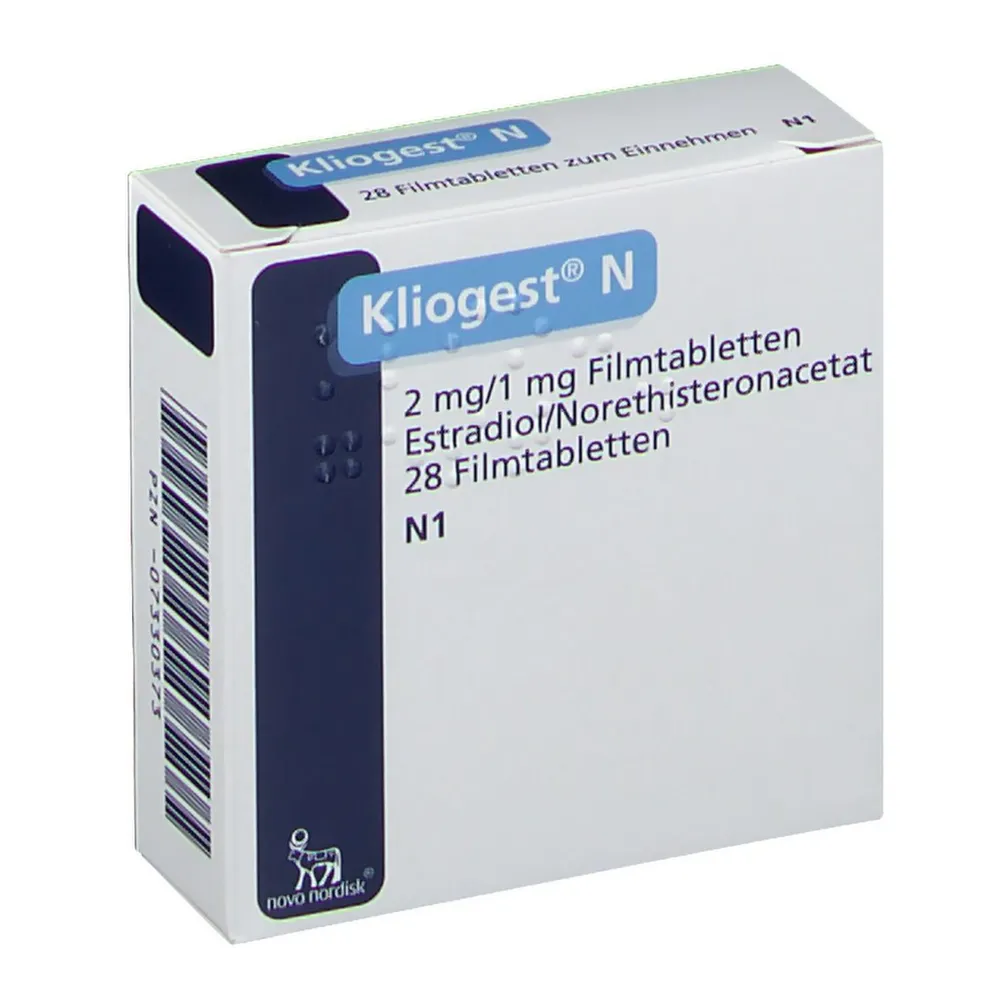
Table of Contents
Patient Information Leaflet
Kliogest, 2 mg + 1 mg, film-coated tablets
Estradiol + Norethisterone acetate
Please read this leaflet carefully before taking this medicine, as it contains important information for you.
- Keep this leaflet. You may need to read it again.
- If you have any further questions, please ask your doctor or pharmacist.
- This medicine has been prescribed for you personally. Do not pass it on to others. It may harm someone else even if their symptoms are the same as yours.
- If you experience any side effects, including any not listed in this leaflet, please inform your doctor or pharmacist. See section 4.
Table of contents
- What Kliogest is and what it is used for
- What you need to know before taking Kliogest
- How to take Kliogest
- Possible side effects
- How to store Kliogest
- Contents of the pack and other information
1. What Kliogest is and what it is used for
Kliogest is a medicine used in continuous combined hormone replacement therapy (HRT), taken daily without interruption. Kliogest is used in postmenopausal women who have been at least one year since their last natural menstrual period.
The tablets contain two hormones: estradiol 2 mg (an estrogen identical to that produced by the ovaries in women) and norethisterone acetate 1 mg (a progestagen acting similarly to the naturally produced human hormone progesterone).
Kliogest is used to:
Relieve symptoms occurring after menopause
During menopause, the amount of estrogen produced by a woman's body decreases, which may cause symptoms such as sudden feelings of heat in the face, neck, and chest (hot flushes).
Kliogest relieves these postmenopausal symptoms. Kliogest may be recommended only if symptoms significantly interfere with daily life.
Prevention of osteoporosis
After menopause, some women develop bone fragility (osteoporosis). All available treatment options should be discussed with your doctor.
If you are at increased risk of fractures due to osteoporosis and other treatments are not suitable, Kliogest may be used to prevent postmenopausal osteoporosis.
Kliogest is recommended for women with an intact uterus who have been at least one year since the last menstrual period.
Experience with treatment in women over 65 years of age is limited.
2. Important Information Before Using Kliogest
Medical History and Regular Medical Examinations
Hormone replacement therapy (HRT) carries certain risks that should be considered when a woman decides whether to start or continue HRT.
Experience in treating women with premature menopause (due to ovarian failure or surgical intervention) is limited. If a woman experiences premature menopause, the risks associated with HRT may differ. Please discuss this with your doctor.
Before starting (or restarting) HRT, your doctor should take a detailed medical and family history. Your doctor may decide to perform certain tests, including a breast examination and/or a gynecological examination, if necessary.
If you start taking Kliogest, you should have regular medical check-ups (at least once a year). During these visits, you should discuss with your doctor the benefits and risks of continuing Kliogest treatment.
You should undergo regular breast examinations as recommended by your doctor.
When Not to Use Kliogest
If any of the conditions listed below apply to you, or if you are unsure, you must inform your doctor before using Kliogest.
Do not start taking Kliogest if:
- you are allergic (hypersensitive) to estradiol, norethisterone acetate, or any of the other ingredients of Kliogest (listed in section 6. Contents of the pack and other information);
- you have been diagnosed with, have had in the past, or are suspected of having breast cancer;
- you have been diagnosed with, have had in the past, or are suspected of having endometrial cancer (cancer of the lining of the womb) or any other estrogen-dependent tumor;
- you have unexplained vaginal bleeding;
- you have excessive growth of the lining of the womb (endometrial hyperplasia) that has not been treated;
- you have been diagnosed with or have had in the past blood clots in the veins (venous thromboembolic disease), such as in the deep veins of the legs (deep vein thrombosis) or in the lungs (pulmonary embolism);
- you have a blood clotting disorder (such as protein C, protein S or antithrombin deficiency);
- you currently have or have had in the past arterial blood clotting disorders such as heart attack, stroke, or angina pectoris;
- you currently have or have had in the past liver disease, and liver function test results have not returned to normal;
- you have a rare inherited blood disorder – porphyria.
Warnings and Precautions
Before starting treatment, inform your doctor if you have ever had any of the following conditions, as they may recur or worsen during treatment with Kliogest. In such cases, your doctor may decide that you require more frequent monitoring:
- uterine fibroids (uterine myomas),
- endometriosis (growth of the endometrial tissue outside the uterus) or a history of endometrial hyperplasia,
- risk factors for venous blood clots (see Blood clots in the veins (venous thromboembolic disease)),
- risk factors for estrogen-dependent cancers (such as breast cancer in mother, sister, or grandmother),
- high blood pressure,
- liver disease, e.g., benign liver tumor,
- diabetes,
- gallstones,
- migraine or severe headaches,
- systemic autoimmune disease affecting multiple organs (systemic lupus erythematosus),
- epilepsy,
- bronchial asthma,
- ear disease leading to progressive hearing loss (otosclerosis),
- high levels of fats (triglycerides) in the blood,
- fluid retention due to heart or kidney dysfunction,
- hypothyroidism (a condition in which the thyroid gland does not produce enough thyroid hormones) requiring hormone replacement therapy,
- hereditary predisposition to recurrent episodes of severe swelling (hereditary angioedema), or if you have experienced episodes of sudden swelling of the hands, face, feet, lips, eyes, tongue, throat (airway obstruction), or gastrointestinal tract (acquired angioedema),
- lactose intolerance.
If any of the following conditions occur during HRT, you must stop taking Kliogest immediately and contact your doctor:
- if any of the conditions listed under When not to use Kliogest develop,
- if your skin or the whites of your eyes turn yellow (jaundice), which may indicate liver problems,
- if you develop swelling of the face, tongue and/or throat, and/or difficulty swallowing or hives, together with breathing difficulties, indicating angioedema,
- if you develop a significant increase in blood pressure (symptoms may include headache, fatigue, and dizziness),
- if you experience a migraine-type headache for the first time,
- if pregnancy is diagnosed,
- if you develop symptoms of blood clots, such as:
- painful swelling and redness in the legs,
- sudden chest pain,
- difficulty breathing. For further information, see Blood clots in the veins (venous thromboembolic disease).
Note: Kliogest is not a contraceptive. If less than 12 months have passed since your last menstrual period or if you are under 50 years of age, you may need to use an additional method of contraception. Please discuss this with your doctor.
HRT and Cancer
Endometrial Hyperplasia and Endometrial Cancer
Taking estrogen-only HRT increases the risk of endometrial hyperplasia and endometrial cancer.
The progestagen in Kliogest helps reduce this additional risk.
Comparison
Among women aged 50 to 65 with an intact uterus who are not using HRT, an average of 5 in 1,000 will be diagnosed with endometrial cancer.
Among women aged 50 to 65 with an intact uterus who are taking estrogen-only HRT, depending on the duration and dose of estrogen, 10 to 60 in 1,000 will be diagnosed with endometrial cancer (i.e., 5 to 55 additional cases).
Unexpected Bleeding
During the first 3 to 6 months of taking Kliogest, unexpected bleeding or spotting may occur. However, if unexpected bleeding:
- continues beyond the first 6 months,
- occurs after more than 6 months of taking Kliogest,
- continues after stopping Kliogest,
you should contact your doctor as soon as possible.
Breast Cancer
Evidence confirms that taking hormone replacement therapy (HRT) in the form of estrogen-progestagen combination or estrogen-only increases the risk of breast cancer. The additional risk depends on how long the woman takes HRT. This additional risk becomes apparent after 3 years of HRT use. After stopping HRT, the additional risk gradually decreases, but may persist for 10 years or longer if HRT was used for more than 5 years.
Comparison
Among women aged 50 to 54 not using HRT, breast cancer will be diagnosed in an average of 13 to 17 per 1,000 women over 5 years.
Among women aged 50 starting a 5-year course of estrogen-only HRT, the number of cases will be 16–17 per 1,000 women (i.e., 0 to 3 additional cases).
Among women aged 50 starting a 5-year course of estrogen-progestagen HRT, the number of cases will be 21 per 1,000 women (i.e., 4 to 8 additional cases).
Among women aged 50 to 59 not using HRT, breast cancer will be diagnosed in an average of 27 per 1,000 women over 10 years.
Among women aged 50 starting a 10-year course of estrogen-only HRT, the number of cases will be 34 per 1,000 women (i.e., 7 additional cases).
Among women aged 50 starting a 10-year course of estrogen-progestagen HRT, the number of cases will be 48 per 1,000 women (i.e., 21 additional cases).
You should regularly examine your breasts. Contact your doctor if you notice any of the following changes:
- skin indentation,
- changes in the nipple,
- presence of lumps that are visible or palpable.
Additionally, screening mammograms are recommended as advised by your doctor. Before the examination, inform the nurse or radiology technician performing the X-ray that you are using hormone replacement therapy, as this medicine may increase breast density, which could affect the mammogram results. Not all lumps may be detected during a mammogram in areas of increased breast density.
Ovarian Cancer
Ovarian cancer is rare—much rarer than breast cancer. HRT, whether estrogen-only or combined estrogen-progestagen, is associated with a slightly increased risk of ovarian cancer.
The risk of ovarian cancer depends on age. For example, among women aged 50 to 54 not using HRT, ovarian cancer will be diagnosed in about 2 out of 2,000 women over 5 years.
Among women who have used HRT for 5 years, it will occur in about 3 out of 2,000 users (i.e., about 1 additional case).
Effects of HRT on the Heart and Circulation
Blood Clots in the Veins (Venous Thromboembolic Disease)
The risk of venous blood clots is 1.3 to 3 times higher in women using HRT compared to non-users, especially during the first year of treatment.
Venous blood clots can be life-threatening; if they travel to the lungs, they may cause chest pain, shortness of breath, loss of consciousness, or even death.
The risk of venous blood clots is higher if you are older or if any of the following risk factors apply. Inform your doctor if:
- you are unable to walk for prolonged periods due to major surgery, injury, or illness (see section 3. If surgery is planned);
- you are obese (body mass index - BMI > 30 kg/m²);
- you have thromboembolic disorders requiring long-term anticoagulant therapy;
- a close family member has had blood clots in the legs, lungs, or other organs;
- you have systemic lupus erythematosus;
- you have been diagnosed with cancer.
If symptoms of blood clots occur, see If any of the following conditions occur during HRT, stop taking Kliogest and contact your doctor immediately.
Comparison
Among women aged 50 to 59 not using HRT, the number of venous blood clot cases over 5 years is estimated at 4 to 7 per 1,000 women.
Among women aged 50 to 59 using estrogen-progestagen HRT, the number of cases over 5 years will be 9 to 12 per 1,000 women (i.e., 5 additional cases).
Coronary Artery Disease (Heart Attack)
There is no evidence that HRT helps prevent heart attacks. Women over 60 years of age using estrogen-progestagen HRT have a slightly higher risk of developing coronary heart disease compared to non-users.
Ischemic Stroke
The risk of stroke is approximately 1.5 times higher in women using HRT compared to non-users. The number of additional stroke cases due to HRT use increases with age.
Comparison
Among women aged 50 to 59 not using HRT, the number of stroke cases over 5 years is estimated at 8 per 1,000 women.
Among women aged 50 to 59 using HRT, the number of cases over 5 years will be 11 per 1,000 women (i.e., 3 additional cases).
Other Conditions
HRT does not prevent memory loss. The risk of memory loss may be somewhat higher in women who start HRT after age 65. In such cases, consult your doctor.
Kliogest and Other Medicines
Some medicines may affect the effectiveness of Kliogest, potentially causing irregular bleeding. These include:
- antiepileptic drugs (such as: phenobarbital, phenytoin, and carbamazepine),
- antituberculosis drugs (such as: rifampicin, rifabutin),
- HIV medications (such as: nevirapine, efavirenz, ritonavir, and nelfinavir),
- medicines used in the treatment of hepatitis C virus infection (such as telaprevir),
- herbal products containing St. John's wort (Hypericum perforatum).
HRT may affect the action of other medicines:
- the antiepileptic drug lamotrigine, which may increase seizure frequency,
- medicines used in the treatment of hepatitis C virus (HCV; e.g., ombitasvir/paritaprevir/ritonavir with or without dasabuvir, or glecaprevir/pibrentasvir) may increase liver function blood test results (increased liver enzyme AlAT activity) in women using combined hormonal contraceptives containing ethinylestradiol. Kliogest contains estradiol, not ethinylestradiol. It is unknown whether using Kliogest together with these HCV combination therapies may also increase AlAT enzyme activity.
Other medicines that may increase the effect of Kliogest:
- medicines containing ketoconazole (an antifungal agent).
Kliogest may affect concomitant treatment with cyclosporine.
You must inform your doctor or pharmacist about all medicines you are currently taking or have recently taken, as well as any medicines you plan to use, including over-the-counter medicines, herbal remedies, or other natural products. Your doctor will advise you accordingly.
Laboratory Tests
If you need to have a blood test, inform your doctor or laboratory staff that you are taking Kliogest, as it may affect the results of certain tests.
Taking Kliogest with Food and Drink
Tablets may be taken with or without food and drink.
Pregnancy and Breastfeeding
Pregnancy: Kliogest is intended for use only in postmenopausal women. If pregnancy occurs, stop taking Kliogest immediately and contact your doctor.
Breastfeeding: Do not take Kliogest while breastfeeding.
Driving and Operating Machinery
The effect of Kliogest on driving or operating machinery is unknown.
Important Information About Some Ingredients of Kliogest
Kliogest contains monohydrate lactose. If you have previously been diagnosed with intolerance to certain sugars, you should consult your doctor before using Kliogest.
3. How to take Kliogest
This medicine should always be taken as prescribed by your doctor. If you have any doubts, consult your doctor or pharmacist.
Take one tablet daily, every day, at approximately the same time.
Tablets should be taken with water.
Tablets must be taken every day without interruption. After using all 28 tablets from the calendar pack, treatment should continue with the next pack of the medicine.
Instructions for using the calendar pack are located at the end of this leaflet, in the section titled “USER INSTRUCTIONS”.
Kliogest may be started on any day. If switching from another HRT product that induced monthly bleeding, Kliogest should be started immediately after the end of the bleeding.
Your doctor should prescribe the lowest effective dose for the shortest duration necessary to relieve symptoms. If you feel the dose is too high or too low, consult your doctor.
Taking more Kliogest than prescribed
If you have taken more Kliogest than prescribed, contact your doctor or pharmacist as soon as possible. Taking a higher dose of estrogens than prescribed may cause breast tenderness, nausea, vomiting, and/or irregular vaginal bleeding (uterine bleeding). Taking a higher dose of progestogens than prescribed may cause depression, fatigue, acne, or excessive hair growth on the body or face (hirsutism).
Missed dose of Kliogest
If you have forgotten to take your tablet at the usual time, take it within the next 12 hours. If more than 12 hours have passed, take the next tablet at the usual time the following day. Do not take a double dose to make up for a missed dose.
In women with an intact uterus, missing a dose may increase the likelihood of breakthrough bleeding or spotting.
Stopping Kliogest
If you wish to stop taking Kliogest, you should first discuss this with your doctor, who will explain the consequences of stopping treatment and discuss alternative therapies.
If you have any further questions about the use of this medicine, consult your doctor or pharmacist.
If surgery is planned
If you are scheduled for surgery, inform your surgeon that you are taking Kliogest. It may be necessary to stop taking Kliogest 4 to 6 weeks before surgery to reduce the risk of blood clots (see section 2. Blood clots in the veins (venous thromboembolic disease)). Before restarting Kliogest, consult your doctor.
4. Possible adverse reactions
Like all medicines, this medicine can cause adverse reactions, although not everyone will experience them.
Women using HRT have an increased risk of developing the following conditions
compared to women not using HRT:
- breast cancer;
- overgrowth or cancer of the lining of the womb (endometrial hyperplasia or cancer);
- ovarian cancer;
- blood clots in the veins of the legs or lungs (venous thromboembolic disease);
- coronary heart disease;
- stroke;
- possibly memory loss if HRT is started after the age of 65. For further information, see section 2. Important information before taking Kliogest.
Hypersensitivity (allergic reaction)
(uncommon adverse reaction – may affect up to 1 in 100 women)
Although hypersensitivity (allergic reaction) is an uncommon adverse reaction, it may occur.
Symptoms of hypersensitivity may include one or more of the following:
urticaria, itching, swelling, difficulty breathing, low blood pressure (pale and cold skin, rapid heartbeat),
dizziness, sweating, which may be symptoms of an anaphylactic reaction and/or anaphylactic shock.
If any of the symptoms listed above occur, you must stop taking Kliogest and seek immediate medical help.
Very common adverse reactions (may affect more than 1 in 10 women)
- breast tenderness or pain,
- vaginal bleeding.
Common adverse reactions (may affect up to 1 in 10 women)
- headache,
- weight gain due to fluid retention,
- vaginal inflammation,
- occurrence or worsening of migraine,
- fungal vaginal infection,
- occurrence or worsening of depression,
- nausea,
- abdominal pain, bloating or discomfort,
- breast enlargement or swelling,
- back pain,
- leg cramps,
- uterine fibroids (benign tumours), worsening, occurrence or recurrence,
- swelling of hands and feet (peripheral oedema),
- weight gain.
Uncommon adverse reactions (may affect up to 1 in 100 women)
- bloating or flatulence,
- acne-like skin changes,
- hair loss (alopecia),
- abnormal hair growth (male pattern),
- itching or urticaria,
- thrombophlebitis (inflammation of superficial veins with clot formation),
- treatment failure,
- allergic reactions,
- nervousness.
Rare adverse reactions (may affect up to 1 in 1,000 women)
- blood clots in blood vessels of legs or lungs (deep vein thrombosis, pulmonary embolism).
Very rare adverse reactions (may affect up to 1 in 10,000 women)
- cancer of the lining of the womb (endometrial cancer),
- overgrowth of the lining of the womb (endometrial hyperplasia),
- high blood pressure, worsening of hypertension,
- gallbladder disease, occurrence or recurrence of gallstones, worsening of symptoms,
- increased sebum secretion, skin rash,
- acute or recurrent swelling (angioedema),
- insomnia, dizziness, anxiety,
- changes in libido,
- visual disturbances,
- weight loss,
- vomiting,
- heartburn (dyspepsia),
- itching of the vagina and vulva,
- myocardial infarction and stroke,
- generalized allergic reactions (anaphylactic reaction, anaphylactic shock).
Other adverse reactions associated with combined HRT
The following adverse reactions have been reported during use of other HRT medicines:
- various skin disorders:
- skin pigmentation, especially on the face or neck, known as "melasma" (chloasma),
- red, tender nodules (erythema nodosum),
- skin rash, including ring-shaped erythematous and oedematous lesions (erythema multiforme),
- red or purple skin and/or mucous membrane discolouration (purpura),
- "dry eyes",
- changes in tear composition.
Reporting of adverse reactions
If any adverse reactions occur, including any not listed in this leaflet, inform your doctor, pharmacist, or nurse.
Adverse reactions can be reported directly to the Department of Monitoring of Adverse Drug Reactions at the Office for Registration of Medicinal Products, Medical Devices and Biocidal Products:
Al. Jerozolimskie 181C, 02-222 Warsaw, tel.: 22 49-21-301, fax: 22 49-21-309, website:
https://smz.ezdrowie.gov.pl.
Adverse reactions can also be reported to the marketing authorisation holder.
Reporting adverse reactions helps provide more information on the safety of this medicine.
5. How to store Kliogest
Keep out of the sight and reach of children.
Do not use this medicine after the expiry date stated on the label and the outer carton after
"Expiry date". The expiry date refers to the last day of the stated month.
Store below 25 °C.
Do not store in the refrigerator.
To protect from light, keep the medicine in the original outer packaging.
Medicines should not be disposed of via wastewater or household waste. Ask your pharmacist
what to do with medicines no longer required. Such measures help protect the environment.
6. Contents of the pack and other information
What Kliogest contains
- The active substances are estradiol 2 mg (as estradiol hemihydrate) and norethisterone acetate 1 mg.
- Other components of the medicine are: monohydrate lactose, corn starch, hydroxypropylcellulose, talc, and magnesium stearate.
- The tablet coating contains: hypromellose, triacetin, and talc.
What Kliogest looks like and contents of the pack
The coated tablets are white, biconvex, with a diameter of 6 mm. The tablets are marked with an embossed
NOVO 281.
Pack sizes:
- 28 coated tablets.
Marketing Authorisation Holder and Manufacturer
Novo Nordisk A/S
Novo Allé
2880 Bagsværd, Denmark.
For further information, please contact the local representative of the Marketing Authorisation Holder:
Novo Nordisk Pharma Sp. z o.o.
Tel.: 22 444 49 00
Fax: 22 444 49 01
Other sources of information
Detailed information on this medicine is available on the website of the Office for Registration of Medicinal Products, Medical Devices and Biocidal Products: www.urpl.gov.pl.
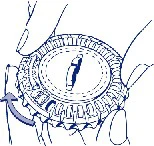
USER INSTRUCTIONS
How to use the calendar pack
1. Setting the day indicator
Rotate the inner dial to align the day of the week with the small plastic flap.
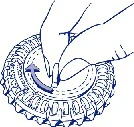
2. Removing the first tablet
Break open the plastic flap and remove the first tablet.
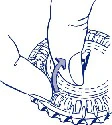

3. Moving the dial each day
The next day, rotate the transparent dial clockwise by one position, as indicated by the arrow. Remove the next tablet. Remember to take only one tablet per day.
The transparent part can only be rotated after removing the tablet located in the opening.