Klimicin
Poland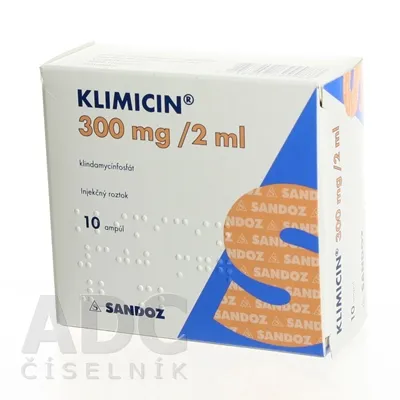
Table of Contents
- Package leaflet: Information for the patient
- 1. What Klimicin is and what it is used for
- 2. Information before using Klimicin
- 3. How to use Klimicin
- 4. Possible adverse reactions
- 5. How to store Klimicin
- 6. Contents of the pack and other information
- Information intended exclusively for healthcare professionals
Package leaflet: Information for the patient
Klimicin, 300 mg/2 ml (150 mg/ml), solution for injection and infusion
Clindamycinum
Please read this leaflet carefully before using the medicine, as it contains
important information for the patient.
- Keep this leaflet, so that you can read it again if necessary.
- If you have any doubts, please consult your doctor, pharmacist, or nurse.
- This medicine has been prescribed for a specific individual. Do not pass it on to others. The medicine may harm another person, even if their symptoms are the same.
- If the patient experiences any adverse reactions, including any adverse reactions not listed in this leaflet, inform the doctor, pharmacist, or nurse. See section 4.
Table of contents
- What Klimicin is and what it is used for
- Important information before using Klimicin
- How to use Klimicin
- Possible side effects
- How to store Klimicin
- Contents of the pack and other information
1. What Klimicin is and what it is used for
Klimicin contains, as the active substance, clindamycin – a lincosamide antibiotic used in the treatment of infections. It works by inhibiting the growth of and destroying bacteria that may cause infections.
Klimicin in the form of solution for injection and infusion is used in the treatment of the following severe infections caused by bacteria sensitive to clindamycin:
respiratory tract infections caused by Streptococcus pneumoniae and other streptococci, Staphylococcus aureus, and anaerobic bacteria;
skin and soft tissue infections caused by Streptococcus pyogenes, Staphylococcus aureus, and anaerobic bacteria;
bone and joint infections caused by Staphylococcus aureus;
septicaemia caused by Staphylococcus aureus;
intra-abdominal infections caused by anaerobic bacteria;
female genital tract infections caused by anaerobic bacteria.
2. Information before using Klimicin
When not to use Klimicin:
if the patient is allergic (hypersensitive) to clindamycin or to any of the other
ingredients of this medicine (listed in section 6);
if the patient has ever experienced such symptoms as rash,
facial, neck or body swelling, or breathing difficulties after receiving clindamycin,
which may indicate an allergic reaction;
if the patient is allergic (hypersensitive) to the antibiotic lincomycin;
in newborns, especially premature infants (due to the presence of benzyl alcohol).
Warnings and precautions
Before starting treatment with Klimicin or during therapy, consult your doctor,
nurse, or pharmacist if:
the patient has previously experienced allergic reactions, especially severe ones. In case of an
allergic reaction or severe skin reaction, inform the doctor immediately, as such
reactions have been reported during clindamycin use;
the patient is allergic to penicillin;
Klimicin is used for a prolonged period and the patient develops diarrhoea or changes in the mucous membranes
of the mouth and/or vagina, which may indicate overgrowth of microorganisms resistant to this drug;
the patient has gastrointestinal disorders (coeliac disease, diverticulosis, Crohn's disease, colitis) or AIDS;
during or after treatment the patient develops diarrhoea (this should be reported to the doctor); the use of almost any antibiotic
may cause pseudomembranous colitis and Clostridium difficile-associated diarrhoea, ranging from mild diarrhoea to life-threatening colitis;
in such cases, drugs inhibiting intestinal peristalsis should not be used;
the patient has meningitis, since clindamycin penetrates poorly into the cerebrospinal fluid;
the patient has severe renal impairment or liver disease; the doctor will adjust the dose appropriately
and may recommend blood tests to monitor kidney and liver function;
the patient has a disease associated with neuromuscular conduction disorders
(e.g. myasthenia gravis, Parkinson's disease).
Acute kidney function disturbances may occur. Inform the doctor about all concomitantly used medications and any kidney problems. If the patient experiences reduced urine output or fluid retention causing swelling of the legs, ankles or feet, shortness of breath or nausea, contact the doctor immediately.
Consult your doctor if any of the above warnings apply to the patient currently or have applied in the past.
Klimicin and other medicines
Tell your doctor about all medicines the patient is currently taking or has recently taken, as well as any medicines the patient plans to use.
It is essential to inform the doctor about the use of Klimicin:
- before any planned surgical procedure,
- before starting electroconvulsive therapy,
- in conditions where seizures may occur.
Additionally, if the patient is taking any of the following medicines, they should inform the doctor:
macrolide antibiotics (e.g. erythromycin) or chloramphenicol;
drugs that inhibit intestinal motility (peristalsis);
gentamicin (an antibacterial agent);
primaquine (a medicine used in the treatment of malaria);
troleandomycin (an antibacterial agent);
levofloxacin (an antibacterial agent);
warfarin and similar drugs used to thin the blood. Concurrent use
with clindamycin may increase the risk of bleeding. The doctor may consider it necessary to perform regular tests
to monitor blood coagulation.
Pregnancy and breastfeeding
If the patient is pregnant or breastfeeding, suspects she may be pregnant, or is planning to have a child, she should consult her doctor or pharmacist before using this medicine.
Pregnancy
Klimicin may be used in pregnant women only if clearly needed.
Breastfeeding
Clindamycin passes into breast milk; therefore, breastfeeding should be avoided during treatment with Klimicin.
Driving and operating machinery
Klimicin has no effect or negligible effect on the ability to drive and operate machinery.
Klimicin contains benzyl alcohol
The medicine contains 18 mg of benzyl alcohol in each ampoule.
If used as recommended, the amount of benzyl alcohol in the maximum daily dose used in adults for very severe infections (2700 mg) is up to 162 mg, in the maximum daily dose used in adults for life-threatening infections (4800 mg) is up to 288 mg, and in the maximum daily dose used in children (40 mg/kg body weight) is 2.4 mg/kg body weight.
Benzyl alcohol may cause allergic reactions.
Do not administer to young children (under 3 years of age) for longer than one week without medical or pharmacist advice.
Pregnant or breastfeeding women should contact their doctor before using this medicine, as large amounts of benzyl alcohol may accumulate in their bodies and cause adverse effects (so-called metabolic acidosis).
Patients with liver or kidney disease should contact their doctor before using this medicine, as large amounts of benzyl alcohol may accumulate in their bodies and cause adverse effects (so-called metabolic acidosis).
Klimicin contains sodium
This medicine contains 15.1 mg of sodium (main component of table salt) per ampoule. This corresponds to 0.75% of the maximum recommended daily sodium intake in the adult diet.
If used as recommended, the maximum daily dose used in adults for very severe infections (2700 mg) contains up to 135.9 mg of sodium, and the maximum daily dose used in adults for life-threatening infections (4800 mg) contains up to 242 mg of sodium. This corresponds to 6.8% and 12.1% of the maximum recommended daily sodium intake in the adult diet, respectively. The maximum daily dose used in children contains 2 mg sodium/kg body weight.
This should be taken into account if the patient has impaired kidney function or is monitoring sodium intake in their diet.
The medicine may be diluted – see below “Information intended exclusively for healthcare professionals”. The sodium content from the diluent should be considered when calculating the total sodium content in the prepared diluted solution. For accurate information on the sodium content of the solution used to dilute the medicine, refer to the patient leaflet of the diluent used.
3. How to use Klimicin
This medicine should always be used as directed by the physician. If in doubt, consult a
physician, nurse, or pharmacist.
The medicine will be administered by a physician or nurse – in exceptional circumstances, qualified
staff may train a relative or caregiver in the proper method of administering the medicine.
Dosage in adults
The recommended daily dose for severe infections is 600 mg to 1200 mg given in 2, 3, or 4 divided
doses.
For very severe infections, the recommended daily dose is 1200 mg to 2700 mg in 2, 3, or 4 divided
doses.
In life-threatening infections, the physician may increase the maximum daily dose administered
intravenously up to 4800 mg.
Do not administer more than 600 mg intramuscularly or 1200 mg intravenously (by infusion) in a
single dose.
Dose adjustment is not required in elderly patients.
Dosage in children (aged 1 month to 16 years)
The recommended daily dose is 20 to 40 mg/kg body weight (b.w.) given in 3 or 4 divided doses.
The maximum daily dose is 40 mg/kg b.w.
Dosage in patients with renal impairment
In patients with severe renal impairment, half the usual recommended dose should be used.
Dose adjustment is not necessary in patients undergoing hemodialysis, peritoneal dialysis, or
hemofiltration.
Dosage in patients with hepatic impairment
The physician will adjust the dose based on serum drug concentration measurements.
Method of administration
The medicine is administered intramuscularly or by slow intravenous infusion. The infusion should
last at least 10 to 60 minutes.
Duration of treatment
In infections caused by beta-hemolytic streptococci, the antibiotic should be administered for at least
10 days to minimize the risk of late complications such as rheumatic fever or glomerulonephritis.
Administration of a higher than recommended dose of Klimicin
It is unlikely that medical personnel would administer a dose higher than recommended.
Severe allergic reactions are very rare. If such reactions occur, administration of Klimicin must be
immediately discontinued and standard measures applied (e.g. administration of antihistamines,
corticosteroids, sympathomimetic drugs, or assisted ventilation).
Clindamycin cannot be removed from the body by hemodialysis or peritoneal dialysis.
Missed dose of Klimicin
Klimicin should be used as prescribed by the physician. If a patient is uncertain whether a dose
was administered, they should inform the physician or nurse.
Do not use a double dose to make up for a missed dose.
Discontinuation of Klimicin
It is very important to continue using the medicine for as long as directed by the physician. Do not
stop treatment prematurely, even if the patient feels better. Stopping the treatment too early may
lead to recurrence of infection and even complications such as glomerulonephritis or rheumatic
fever.
If there are any further questions about the use of this medicine, consult a physician, nurse, or
pharmacist.
4. Possible adverse reactions
Like all medicines, this medicine can cause adverse reactions, although not everyone experiences them.
The most commonly occurring adverse reactions after administration of clindamycin include hypersensitivity reactions and gastrointestinal effects.
If any of the reactions described below occur, treatment with clindamycin must be stopped immediately
and medical help should be sought:
- swelling of the face, lips, mouth, throat, or swelling at other sites causing difficulty in swallowing or breathing;
- chills;
- dizziness, loss of consciousness;
- blistering and peeling of the skin and mucous membranes. These are very serious adverse reactions. Their occurrence may indicate a severe allergic reaction to Klimicin or another serious adverse reaction associated with taking the medicine. Immediate medical assistance in a hospital may be necessary. All of these very serious adverse reactions occur very rarely. The doctor should be informed immediately if the patient experiences:
- fluid retention causing swelling of the legs, ankles or feet, shortness of breath or nausea.
Immediate medical assistance may also be required if severe,
rare adverse symptoms occur, such as:
- severe, persistent diarrhoea;
- muscle paralysis.
Below are adverse reactions that may occur after administration of Klimicin.
Common (occurring in not more than 1 in 10 people): thrombophlebitis, loose stools, oesophagitis and oral mucositis, pseudomembranous colitis, abnormal liver function tests, maculopapular rash, phlebitis (after intravenous administration).
Uncommon (occurring in not more than 1 in 100 people): transient changes in blood cell counts, e.g. reduced number of granulocytes (granulocytopenia), taste disturbances, neuromuscular blockade, diarrhoea, nausea, erythema multiforme, pruritus, urticaria, pain at the site of intravenous or intramuscular injection, abscess at injection site after intravenous administration, hypotension, and in exceptional cases, cardiac arrhythmias, circulatory arrest, and respiratory arrest.
Rare (occurring in less than 1 in 1,000 people): oedema (angioedema, joint swelling).
Very rare (occurring in less than 1 in 10,000 people): anaphylactic shock, severe acute hypersensitivity reactions.
Frequency not known (frequency cannot be estimated from the available data): vaginal infection, Clostridium difficile-associated colitis, changes in the count of certain blood cells, i.e. complete or near-complete absence of granulocytes (agranulocytosis), reduced white blood cell count (leukopenia), reduced neutrophil count (neutropenia), reduced platelet count (thrombocytopenia), increased eosinophil count (eosinophilia), anaphylactic shock (reported post-marketing), anaphylactic or pseudoanaphylactic reactions, hypersensitivity reactions, dizziness, somnolence, headache, drug eruption with eosinophilia and systemic symptoms (most commonly affecting the liver, kidneys, lungs, heart), vomiting, abdominal pain, jaundice, severe skin reactions (e.g. Stevens-Johnson syndrome, toxic epidermal necrolysis [Lyell's syndrome], generalized pustular eruption suddenly appearing over the entire body, exfoliative dermatitis, bullous pemphigoid-like rash, exfoliative bullous dermatitis), angioedema, irritation at injection site.
Prolonged treatment may lead to superinfections caused by resistant microorganisms, most commonly fungi.
Reporting of adverse reactions
If any adverse reactions occur, including any not listed in this leaflet, inform a doctor, pharmacist, or nurse. Adverse reactions can be reported directly to the Department of Monitoring of Adverse Drug Reactions at the Office for Registration of Medicinal Products, Medical Devices and Biocidal Products: Al. Jerozolimskie 181C, 02-222 Warsaw
Tel.: +48 22 49 21 301
Fax: +48 22 49 21 309
Website: https://smz.ezdrowie.gov.pl
Adverse reactions can also be reported to the marketing authorization holder.
Reporting adverse reactions helps provide more information on the safety of the medicine.
5. How to store Klimicin
Keep the medicine out of sight and reach of children.
Store below 25 °C.
Do not use after the expiry date stated on the packaging after EXP. The expiry date refers to the last day of the stated month.
Medicines should not be disposed of via wastewater or household waste. Ask your pharmacist how to dispose of medicines no longer in use. This will help protect the environment.
6. Contents of the pack and other information
What Klimicin contains
The active substance is clindamycin.
1 ml of injectable and infusion solution contains 150 mg clindamycin as clindamycin phosphate.
2 ml of injectable and infusion solution (1 ampoule) contains 300 mg clindamycin (as clindamycin phosphate).
The other ingredients are: benzyl alcohol, sodium hydroxide (for pH adjustment), water for injections.
What Klimicin looks like and contents of the pack
Ampoules made of colourless glass, containing 2 ml of solution, packed in a cardboard box. The pack contains 5 or 10 ampoules.
Marketing Authorisation Holder
Sandoz GmbH
Biochemiestrasse 10
6250 Kundl, Austria
Manufacturer
Lek Pharmaceuticals d.d.
Verovškova 57
1526 Ljubljana, Slovenia
For more detailed information about this medicine, contact the local representative of the Marketing Authorisation Holder:
Sandoz Polska Sp. z o.o.
ul. Domaniewska 50 C
02-672 Warsaw, Poland
tel. +48 22 209 70 00
(logo of the Marketing Authorisation Holder)
Information intended exclusively for healthcare professionals
The drug should be administered intramuscularly or by slow intravenous infusion.
Intravenous administration is indicated only for the treatment of severe bacterial infections.
In patients with sepsis, treatment with clindamycin should be initiated intravenously.
Undiluted clindamycin must not be administered as a rapid intravenous injection (bolus).
Too rapid intravenous administration of clindamycin may cause ventricular arrhythmias and cardiac arrest.
Prior to intravenous administration, the solution must be diluted and infused over a period of at least 10 to 60 minutes.
The concentration of clindamycin in the infusion solution should be less than 18 mg/ml, and the infusion rate should not exceed 30 mg/min.
| Clindamycin dose | Diluent | Infusion duration |
| 300 mg | 50 ml | 10 minutes |
| 600 mg | 50 ml | 20 minutes |
| 900 mg | 50 to 100 ml | 30 minutes |
| 1200 mg | 100 ml | 40 to 60 minutes |
The prepared solutions may be stored at room temperature for 24 hours.
Diluents used for the preparation of clindamycin solution:
0.9% sodium chloride solution
5% glucose solution
5% glucose in 0.9% sodium chloride solution
5% glucose in Ringer's solution
5% glucose in 0.35% sodium chloride solution plus 40 mEq/l potassium chloride solution
2.5% glucose in lactated Ringer's solution
The Klimicin medicinal solution at a concentration of 0.6 mg/ml, obtained by dilution in the above-mentioned solutions and stored in infusion bags, is stable for 24 hours at 25°C.
The clindamycin salt solution has a low pH; therefore, pharmaceutical incompatibilities may be expected with medicinal products having an alkaline reaction or low stability at acidic pH. Pharmaceutical incompatibilities have been observed with the following drugs: ampicillin, sodium salt of phenytoin, diphenylhydantoin, barbiturates, aminophylline, calcium gluconate, magnesium sulfate, sodium salt of ceftriaxone, ranitidine hydrochloride.