Klabax ec
PolandTable of Contents
DE/H/5210/II/012/G_IB/013
Package leaflet: Information for the patient
Klabax EC, 250 mg/5 ml, granules for oral suspension
Clarithromycinum
Please read all of this leaflet carefully before taking this medicine, because it contains
important information for you.
- Keep this leaflet, as you may need to read it again.
- If you have any questions, ask your doctor or pharmacist.
- This medicine has been prescribed for a specific individual. Do not pass it on to others. It may harm them even if their symptoms are the same.
- If you experience any adverse effects, including any not listed in this leaflet, tell your doctor or pharmacist. See section 4.
Leaflet contents
- What Klabax is and what it is used for
- Important information before taking Klabax
- How to take Klabax
- Possible side effects
- How to store Klabax
- Contents of the pack and other information
1. What Klabax is and what it is used for
Klabax contains the active substance clarithromycin.
Clarithromycin belongs to a group of medicines called macrolide antibiotics, which inhibit the growth of certain bacteria.
Klabax is indicated for the treatment of:
- lower respiratory tract infections, such as bronchitis, pneumonia;
- throat and sinus infections;
- skin and soft tissue infections;
- ear infections, particularly acute otitis media.
This medicine is used in children aged from 6 months to 12 years.
2. Important information before using Klabax
When Klabax must not be given:
- if the patient is allergic to clarithromycin, other macrolide antibiotics (such as erythromycin or azithromycin), or any of the other ingredients of this medicine (listed in section 6).
- if the patient is taking ergot alkaloids in tablet form (such as ergotamine or dihydroergotamine) or using ergot alkaloids for migraine in inhaled form.
- if the patient is taking terfenadine or astemizole (medicines often used for hay fever or allergies), cisapride or domperidone (a medicine used for stomach disorders), pimozide (a medicine used for psychiatric disorders), because concomitant use of these medicines may
DE/H/5210/II/012/G_IB/013
cause severe heart rhythm disturbances. Please speak with your doctor for advice
on using alternative medicines.
- if the patient is taking other medicines that may cause severe heart rhythm disturbances.
- if the patient is taking lovastatin or simvastatin (medicines belonging to the statin group – HMG-CoA reductase inhibitors – used to reduce blood cholesterol levels (a type of fat)).
- if the patient is taking oral midazolam (a sedative medicine).
- if the patient has low blood potassium or magnesium levels (hypokalaemia or hypomagnesaemia).
- if the patient has severe liver disease associated with kidney disease.
- if the patient has, or there is a family history of, heart rhythm disorders (ventricular arrhythmias, including torsade de pointes) or abnormalities in the electrocardiogram (ECG – recording of the heart's electrical activity) known as "long QT syndrome".
- if the patient is taking ticagrelor, ivabradine or ranolazine (for angina or to reduce the risk of heart attack or stroke).
- if the patient is taking colchicine (usually used in the treatment of gout).
- if the patient is taking a medicine containing lomitapide.
Warnings and precautions
Please speak with your doctor or pharmacist before starting treatment with Klabax if:
- the patient has heart problems (e.g. heart disease, heart failure, very slow heart rate).
- the patient has kidney or liver function disorders.
- the patient has a fungal infection or is prone to fungal infections (e.g. candidiasis).
Klabax and other medicines
Do not use Klabax if the patient is taking any of the medicines listed above under "When Klabax must not be given".
Inform your doctor or pharmacist about all medicines currently or recently taken by the child, as well as any medicines planned for future use, because dosage adjustment or regular monitoring may be necessary:
- digoxin, quinidine, disopyramide (used to treat heart disorders)
- warfarin or any other anticoagulant, e.g. dabigatran, rivaroxaban, apixaban, edoxaban (medicines used to thin the blood)
- carbamazepine, valproate, phenobarbital or phenytoin (antiepileptic medicines)
- atorvastatin, rosuvastatin [HMG-CoA reductase inhibitors, so-called statins, medicines that lower blood cholesterol (a type of fat)]. Statins may cause rhabdomyolysis (a condition causing breakdown of muscle tissue, which may lead to kidney damage). Monitor for symptoms of muscle injury (muscle pain or weakness).
- nateglinide, pioglitazone, repaglinide, rosiglitazone or insulin (medicines that lower blood glucose levels)
- gliclazide or glimepiride (sulfonylurea derivatives used in the treatment of type 2 diabetes)
- theophylline (used in patients with breathing difficulties such as asthma)
- triazolam, alprazolam, or intravenous or mucosal midazolam (sedative medicines)
- cilostazol (a medicine used for circulatory disorders)
- methylprednisolone (a corticosteroid)
- ibrutinib or vinblastine (used in cancer treatment)
- cyclosporine, sirolimus and tacrolimus (immunosuppressive medicines)
DE/H/5210/II/012/G_IB/013
- etravirine, efavirenz, nevirapine, ritonavir, zidovudine, atazanavir, saquinavir (antiviral medicines used in the treatment of HIV infection)
- rifabutin, rifampicin, rifapentine, fluconazole, itraconazole (used to treat certain bacterial or fungal infections)
- tolterodine (a medicine used for a condition called overactive bladder)
- verapamil, amlodipine, diltiazem (used to treat high blood pressure)
- sildenafil, vardenafil and tadalafil (medicines used for erectile dysfunction in adult men or for pulmonary hypertension (high blood pressure in the blood vessels of the lungs))
- St. John's wort (an herbal medicine used for depression)
- quetiapine or other antipsychotic medicines
- other macrolide antibiotics
- lincosamide antibiotics: lincomycin and clindamycin
- hydroxychloroquine or chloroquine (used to treat, among others, rheumatoid arthritis or to treat and prevent malaria). Taking these medicines together with clarithromycin may increase the risk of heart rhythm disturbances and other serious adverse effects on the heart.
- corticosteroids administered orally, by injection or by inhalation (used to suppress the immune system, which is useful in treating many different conditions)
- omeprazole (used to treat stomach and/or intestinal disorders).
Please consult your doctor if a woman of childbearing age taking oral contraceptive medicines experiences diarrhoea or vomiting, as additional contraceptive measures such as using a condom may be necessary.
Pregnancy and breastfeeding
The safety of clarithromycin during pregnancy and breastfeeding has not been established.
If this medicine is to be given to a woman of childbearing age (who is pregnant or suspects she may be pregnant), please consult your doctor before using this medicine.
Driving and operating machinery
There is no data available on the effect of clarithromycin on the ability to drive and operate machinery.
The patient should consider that dizziness, confusion and disorientation may occur during treatment.
Klabax contains sucrose
5 ml of suspension contains 2889 mg of sucrose.
This should be taken into account in patients with diabetes.
If the patient has previously been diagnosed with intolerance to certain sugars, inform the doctor before starting treatment with this medicine.
Klabax contains aspartame
This medicine contains 1 mg of aspartame in every 5 ml of suspension, equivalent to 0.2 mg/ml.
Aspartame is a source of phenylalanine. It may be harmful to patients with phenylketonuria. This is a rare genetic disorder in which phenylalanine accumulates in the body due to improper excretion.
Klabax contains sodium
This medicine contains less than 1 mmol (23 mg) of sodium in 5 ml of suspension, meaning the medicine is considered "sodium-free".
Klabax contains sodium benzoate
This medicine contains 10 mg of sodium benzoate in 5 ml of suspension, equivalent to 2 mg/ml.
DE/H/5210/II/012/G_IB/013
3. How to use Klabax
This medicine should always be used according to the doctor's or pharmacist's instructions. If in doubt,
consult your doctor or pharmacist.
The recommended doses of Klabax are given below:
Dosage
The dosage depends on body weight.
| Body weight (in kg) | Age (in years) | Dose in ml (to be administered twice daily) |
| 8 - 11 | 1 - 2 | 1.25 |
| 12 - 19 | 3 - 6 | 2.5 |
| 20 - 29 | 7 - 9 | 3.75 |
| 30 - 40 | 10 - 12 | 5 |
Children weighing less than 8 kg should receive a dose of 0.15 ml/kg b.i.d. (twice daily). In certain situations, the physician may prescribe doses higher or lower than those described.
Klabax should be taken twice daily (in the morning and early evening). The medicine may be administered with food if this is more convenient for the patient.
Administration method
Oral use after reconstitution of the suspension. Instructions for preparing the suspension are provided below.
Before each administration, the bottle should be shaken well. After administration, the cap should be tightly closed.
Duration of treatment
Klabax is usually administered for 5 to 10 days.
Instructions for preparing the suspension
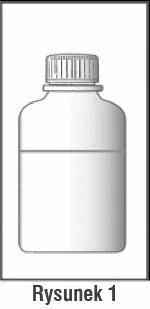
Step A
Remove the bottle from the carton.
DE/H/5210/II/012/G_IB/013
Step B
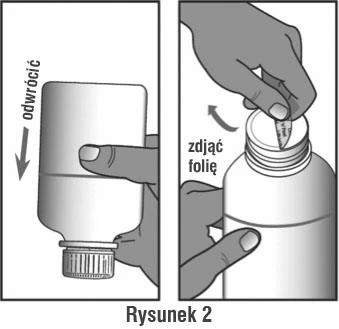
Invert the bottle and shake to ensure the powder is not adhering to the bottom. Check by holding the inverted bottle up to the light. Open the cap according to the instructions below, lift and remove the protective seal (see Figure 2).
Step C
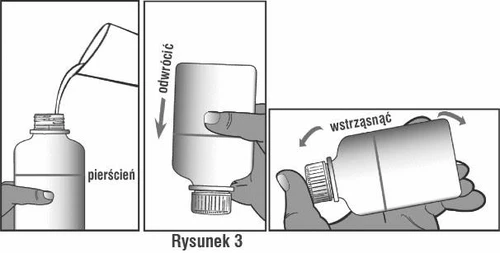
Slowly add water up to the level of the ring on the bottle. Hold the bottle up to the light to check whether it is filled to the correct level. Close the bottle, invert it, and shake vigorously for about 1 minute until the powder no longer adheres to the bottom of the bottle (see Figure 3). Check by holding the inverted bottle up to the light.
Wait a moment, and if necessary, add more water up to the level of the ring, as described in Step D.
Step D
If necessary, add more water up to the level of the ring on the bottle. If needed, hold the bottle up to the light to verify that it is filled to the correct level. Close the bottle. Invert and shake vigorously until the powder no longer adheres to the bottom of the bottle (see Figure 4). Check by holding the inverted bottle up to the light.
DE/H/5210/II/012/G_IB/013
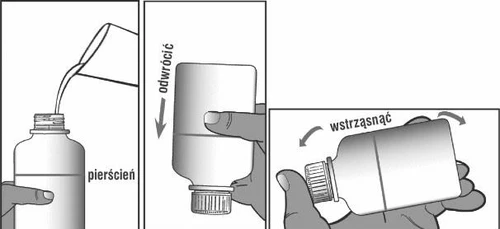
Figure 4
Instructions for use
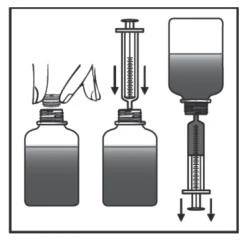
An oral syringe and adapter are provided in the Klabax packaging to facilitate accurate measurement of the required dose to be administered to the child. Please follow the instructions below carefully.
- To open the bottle, remove the child-resistant cap by pressing down and turning counterclockwise simultaneously.
- Remove the plastic, round adapter from its packaging and press it firmly into the neck of the bottle. The adapter should fit tightly and must not be removed once in place.
- Remove the oral syringe from its packaging and ensure the plunger is fully depressed. This will expel any air that may be present in the syringe.
- Insert the tip of the oral syringe into the opening of the adapter.
- Invert the bottle. Hold the bottle in one hand and the oral syringe in the other.
- While holding the oral syringe, slowly pull back the plunger until the syringe is filled with the appropriate volume of suspension required for the child's dose.
- Turn the bottle upright. Holding the syringe barrel, remove the syringe from the adapter.
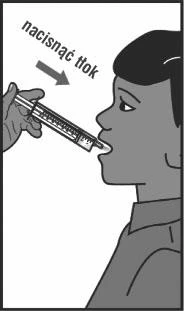
- Place the tip of the syringe into the child's mouth. Administer the medicine by gently pressing the plunger, while supporting the syringe. Do not rush the child; allow time for slow swallowing. Alternatively, the measured dose may be transferred to a spoon and administered this way.
- Close the bottle with the cap.
- Wash the oral syringe with warm soapy water, then rinse thoroughly. Hold the syringe under water and move the plunger up and down several times to ensure the inside is clean. Store the syringe hygienically, together with the medicine.
DE/H/5210/II/012/G_IB/013
Administration of the suspension dose
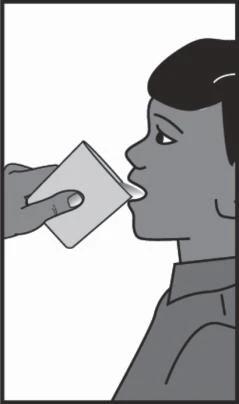
Klabax may cause a bitter taste. This can be minimized by eating something, drinking juice, or water immediately after taking the suspension.
Administration of water or juice after dosing.
Alternatively, the following amounts of water may be added once to the bottle, depending on the bottle size:
| Container size | Volume of water to be added |
| 50 ml bottle | 27 ml |
| 60 ml bottle | 33 ml |
| 70 ml bottle | 38 ml |
| 100 ml bottle | 54 ml |
| 140 ml bottle | 76 ml |
Close the bottle and shake vigorously.
Taking a higher than recommended dose of Klabax
If a child accidentally receives more Klabax than prescribed in one day, or if a child accidentally swallows more of the medicine, seek immediate medical advice from a doctor or go to the nearest hospital emergency department.
Overdosing on Klabax may cause vomiting and stomach pains.
Missing a dose of Klabax
DE/H/5210/II/012/G_IB/013
If you forget to give a dose of Klabax to the child, administer it as soon as possible. Do not give more Klabax in one day than the doctor has prescribed.
Stopping treatment with Klabax
Do not stop giving this medicine, even if the child feels better. It is important to continue using this medicine for as long as the doctor has instructed, otherwise symptoms may return.
If you have any further questions about the use of this medicine, consult your doctor or pharmacist.
4. Possible adverse effects
Like all medicines, this medicine can cause adverse effects, although not everyone will experience them.
Serious adverse effects
If any of the following adverse effects occur in a patient, administration of the medicine must be STOPPED and immediate medical advice must be sought:
- severe or prolonged diarrhoea, possibly with blood or mucus. Diarrhoea may occur even up to two months after completion of clarithromycin treatment; in such a case, contact a doctor as well.
- rash, difficulty breathing, fainting, or swelling of the face, tongue, lips, eyes, and throat. These are symptoms of an allergic reaction.
- yellowing of the skin (jaundice), skin irritation, pale-coloured stools, dark-coloured urine, tenderness of the abdomen, or loss of appetite. These may be symptoms of liver inflammation and liver failure.
- severe skin reactions, such as painful blisters on the skin, in the mouth, on the lips, eyes, and genital organs (symptoms of a rare allergic reaction called Stevens-Johnson syndrome / toxic epidermal necrolysis).
- red, peeling rash with nodules under the skin and blisters (acute generalized exanthematous pustulosis). The frequency of this adverse effect is unknown (cannot be estimated from the available data).
- rare skin allergic reactions causing severe illness with ulceration of the mouth, lips, and skin, accompanied by rash, fever, and inflammation of internal organs (DRESS syndrome).
- muscle pain or weakness known as rhabdomyolysis (a condition causing muscle breakdown, which may lead to kidney damage).
Other adverse effects
Common (occur in less than 1 in 10 patients):
- insomnia
- taste disturbances
- headache
- vasodilation
- stomach disturbances such as nausea, vomiting, abdominal pain, indigestion, diarrhoea
- excessive sweating
Uncommon (occur in less than 1 in 100 patients):
- high temperature
- swelling, redness, or itching of the skin
- oral or vaginal fungal infection (candidiasis)
- gastritis and enteritis
DE/H/5210/II/012/G_IB/013
- decreased platelet count (which help stop bleeding)
- decreased white blood cell count (leukopenia)
- decreased neutrophil count (neutropenia)
- muscle stiffness
- chills
- increased eosinophil count (white blood cells involved in immunity)
- excessive immune response to foreign substances
- loss of appetite or anorexia
- restlessness, nervousness
- drowsiness, fatigue, dizziness, or tremors
- involuntary muscle contractions
- balance disorders
- tinnitus or hearing loss
- chest pain or heart rhythm disturbances such as palpitations or irregular heartbeat
- asthma: a lung disease associated with constriction of the airways, making breathing difficult
- nosebleeds
- blood clots causing sudden blockage of blood flow in the pulmonary artery (pulmonary embolism)
- inflammation of the mucous membrane of the oesophagus and stomach
- anal pain
- bloating, constipation, flatulence, belching
- dryness of the mouth
- condition in which bile (a fluid produced by the liver and stored in the gallbladder) does not flow from the gallbladder into the duodenum (biliary stasis)
- skin inflammation with fluid-filled blisters, itchy and painful rash
- muscle cramps, muscle pain, or loss of muscle tissue. If a child has myasthenia (a disease in which muscles are weak and tire easily), clarithromycin may worsen these symptoms
- abnormal, increased blood test results indicating kidney and liver function, abnormal increased blood test results
- feeling of weakness, fatigue, and lack of energy
Frequency unknown (frequency cannot be estimated from the available data):
- intestinal inflammation
- bacterial skin infection
- decreased number of certain blood cells (which may lead to more frequent infections or increase the risk of bruising or bleeding)
- confusion, psychotic disorder, hallucinations (seeing things that are not there), altered perception of reality, panic attacks, depression, unusual dreams or nightmares, and mania (feeling of excessive happiness or excitement)
- seizures (convulsions)
- sensory disturbances (tingling)
- loss of taste or smell, or inability to properly perceive odours
- deafness
- heart rhythm disorders such as torsade de pointes, ventricular tachycardia
- blood loss (haemorrhage)
- pancreatitis
- discolouration of the tongue or teeth
- acne
- changes in levels of substances produced by the kidneys, kidney inflammation, kidney failure (may present as fatigue, facial swelling, puffiness under the eyes, abdominal swelling, or swelling in the legs or ankles, or difficulty urinating)
Reporting of adverse effects
DE/H/5210/II/012/G_IB/013
If any adverse effects occur, including any not listed in this leaflet, inform a doctor or pharmacist. Adverse effects can be reported directly to the Department of Monitoring Adverse Drug Reactions, Office for Registration of Medicinal Products, Medical Devices and Biocidal Products, Al. Jerozolimskie 181C, 02-222 Warsaw
Tel.: 22 49 21 301
Faks: 22 49 21 309
Website: https://smz.ezdrowie.gov.pl
Adverse effects can also be reported to the marketing authorisation holder.
Reporting adverse effects helps to provide more information on the safety of this medicine.
5. How to store Klabax EC
Keep the medicine out of the sight and reach of children.
Do not use this medicine after the expiry date stated on the bottle or cardboard box. The expiry date refers to the last day of the stated month.
Store below 30°C. Do not store the prepared suspension in a refrigerator or freeze it.
The shelf life of the prepared suspension is 14 days.
Medicines should not be disposed of via wastewater or household waste. Ask your pharmacist how to dispose of medicines no longer in use. This will help protect the environment.
6. Contents of the pack and other information
What Klabax contains
The active substance is clarithromycin.
5 ml of prepared suspension contains 250 mg of clarithromycin.
The other ingredients are: polymethacrylic acid and ethyl acrylate copolymer (1:1), dispersion 30%,
macrogol 1500, talc, carbomer, colloidal anhydrous silica, sucrose, aspartame (E 951), xanthan gum
(E 415), sodium citrate, sodium benzoate (E 211), titanium dioxide (E 171), peppermint flavour
(containing flavouring substances, modified starch), tutti frutti flavour (containing corn maltodextrin,
natural identical flavours, propylene glycol (E 1520), modified corn starch (E 1450), synthetic flavouring and aroma components).
What Klabax looks like and contents of the pack
Granules for oral suspension
Klabax is a white to off-white granular powder for preparing an oral suspension.
Pack sizes:
1 bottle containing 41.66 – 46.04 g of granules for preparing 60 ml of oral suspension, or
1 bottle containing 48.61 – 53.72 g of granules for preparing 70 ml of oral suspension, or
1 bottle containing 69.44 – 76.75 g of granules for preparing 100 ml of oral suspension.
DE/H/5210/II/012/G_IB/013
Not all pack sizes may be marketed.
Marketing Authorisation Holder
Ranbaxy (Poland) Sp. z o.o.
Idzikowskiego Street 16
00-710 Warsaw
tel. 22 642 07 75
Manufacturer/Importer
SUN Pharmaceutical Industries (Europe) B.V.
Polarisavenue 87
2132JH Hoofddorp
The Netherlands
Alkaloida Chemical Company Zrt.
Kabay János u. 29.
4440 Tiszavasvári
Hungary
S.C. Terapia S.A.
Fabricii Street no. 124,
400632 Cluj-Napoca, Jud. Cluj
Romania
This medicinal product is authorised in the European Economic Area and in the United Kingdom (Northern Ireland)
under the following names:
Germany CLARITHROMYCIN BASICS 250 mg/5 ml Granulat zur Herstellung
einer Suspension zum Einnehmen
Italy Claritromicina SUN
Romania Klabax 250 mg/5ml granule pentru suspensie orală
United Kingdom Clarithromycin 250 mg/5ml granules for oral suspension
(Northern Ireland)