Ketoprofenum fastum
Poland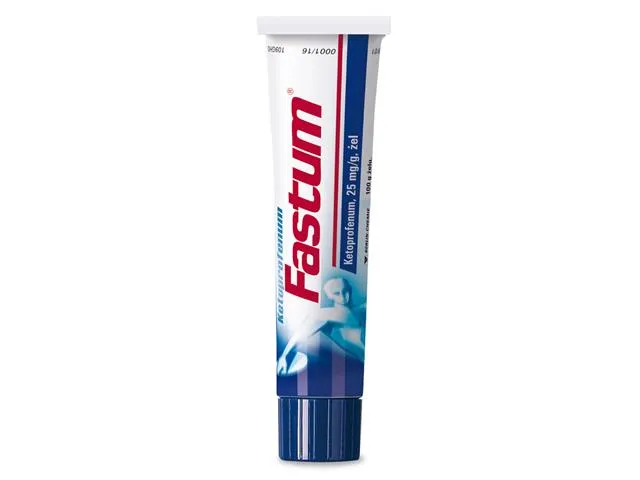
Table of Contents
- Package leaflet: Information for the user
- 1. What Ketoprofenum Fastum is and what it is used for
- 2. Important information before using Ketoprofenum Fastum
- 3. How to use Ketoprofenum Fastum
- 4. Possible adverse effects
- 5. How to store Ketoprofenum Fastum
- 6. Contents of the packaging and other information
Package leaflet: Information for the user
Warning! Keep the leaflet. Information on the immediate packaging is in a foreign language.
Ketoprofenum Fastum (Fastum Gel)
25 mg/g, gel
Ketoprofenum
Ketoprofenum Fastum and Fastum Gel are different trade names for the same medicinal product.
Please read the leaflet carefully before using the medicine, as it contains
important information for the patient.
- Keep this leaflet, as you may need to read it again.
- If you have any questions, consult your doctor or pharmacist.
- This medicine has been prescribed for a specific individual. Do not pass it on to others. The medicine may harm other people, even if their symptoms are the same.
- If you experience any adverse reactions, including any not listed in this leaflet, inform your doctor, pharmacist, or nurse. See section 4.
Table of contents:
- What Ketoprofenum Fastum is and what it is used for
- Important information before using Ketoprofenum Fastum
- How to use Ketoprofenum Fastum
- Possible side effects
- How to store Ketoprofenum Fastum
- Contents of the pack and other information
1. What Ketoprofenum Fastum is and what it is used for
Ketoprofenum Fastum is a medicine belonging to the group of non-steroidal anti-inflammatory and analgesic drugs for topical use.
Ketoprofen – the active substance in Ketoprofenum Fastum – when applied topically, is absorbed through the skin into the inflamed areas of joints, tendons, ligaments, and muscles. It does not accumulate in the body. Due to its water-alcohol base, the gel also has a superficial cooling and soothing effect. The appropriate formulation ensures proper release of ketoprofen and a low risk of systemic adverse effects. The medicine is well tolerated, even in individuals with sensitive skin.
Therapeutic indications
- Local treatment of muscle and joint pain, e.g., caused by injuries (sports-related contusions, joint injuries with ligament sprains without dislocation, tendon and muscle damage due to excessive exertion).
- Local treatment of lower back pain associated with discopathy.
2. Important information before using Ketoprofenum Fastum
When not to use Ketoprofenum Fastum
Do not use the medicine if there is a history of hypersensitivity to ketoprofen or any of the
other components of Ketoprofenum Fastum; to tiaprofenic acid, acetylsalicylic acid
or other nonsteroidal anti-inflammatory drugs, fenofibrate, UV filters or perfumes.
Ketoprofen should not be used in patients who have experienced "aspirin-induced asthma" attacks,
rash or rhinitis after taking acetylsalicylic acid and its derivatives.
The medicine is contraindicated in individuals with a history of aspirin-induced asthma or other
hypersensitivity reactions.
Ketoprofenum Fastum should not be applied to open wounds or used in individuals with rashes,
eczema or oozing skin lesions of unknown origin.
Immediately discontinue use if skin reactions occur, including skin reactions after concomitant use of products containing octocrylene (octocrylene is one of the excipients used in various cosmetics and hygiene products such as:
shampoos, after-shave products, shower and bath gels, skin creams, lip balms, anti-wrinkle creams, make-up removers, hair lacquers, to delay photodegradation).
Avoid exposing treated skin areas to sunlight (even when the sky is cloudy) and UV radiation in solariums during treatment and for 2 weeks after discontinuation of the medicine.
Use of ketoprofen is not recommended in children under 15 years of age due to lack of controlled clinical studies on efficacy and safety.
Do not use in women from the sixth month of pregnancy.
Warnings and precautions
Exposure to sunlight (even when the sky is cloudy) or UVA radiation on areas of skin treated with Ketoprofenum Fastum may cause severe skin reactions (photosensitivity). Therefore, it is essential to:
- protect treated skin areas by wearing clothing during treatment and for two weeks after discontinuation of the medicine to avoid the risk of photosensitivity
- thoroughly wash hands after each application of Ketoprofenum Fastum.
Prolonged use of topical medicines may, in some patients, cause allergic reactions or local irritation. If redness, rash, itching or nausea occur, discontinue use immediately and consult a doctor.
Do not apply the medicine to open wounds or abrasions. If skin changes occur at the site of gel application, discontinue the medicine.
Avoid contact of the medicine with eyes and mucous membranes. Do not use under occlusive dressings.
Do not take the medicine orally or apply it over large body surface areas. Local application of large amounts of the medicine may lead to systemic effects, including hypersensitivity reactions and asthma.
Use Ketoprofenum Fastum with caution in patients with circulatory insufficiency or severe renal or hepatic impairment, as isolated cases of systemic adverse effects have been reported.
Exercise caution when using the medicine in patients with a history of epilepsy due to the presence of an excipient – a terpene derivative (lavender fragrance).
After applying the gel, wash hands unless the hands are the treated area. During prolonged use, protective gloves are recommended.
Treatment must be discontinued immediately if any skin reactions develop after application of Ketoprofenum Fastum.
The medicine contains alcohol; do not use near fire.
Patients with asthma, chronic mucosal inflammation of the nose, chronic sinusitis and/or nasal polyps have a higher risk of allergic reactions to aspirin and/or NSAIDs than the general population.
Ketoprofenum Fastum and other medicines
No interactions between Ketoprofenum Fastum and other medicines have been reported. However, caution is advised in patients concurrently receiving oral anticoagulants.
Pregnancy
Before using any medicine, consult a doctor.
Use of nonsteroidal anti-inflammatory drugs (NSAIDs) during the third trimester of pregnancy may cause harmful effects on the fetal heart and lungs. NSAIDs may delay delivery. Use of the medicine should be avoided during the first and second trimesters of pregnancy.
Do not use in women from the third trimester of pregnancy.
Breast-feeding
Before using any medicine, consult a doctor.
Ketoprofen passes into breast milk in small amounts. Administration of the medicine is not recommended during breast-feeding.
Driving and operating machinery
No effects of the medicine on the ability to drive mechanical vehicles or operate machinery in motion have been reported.
Ketoprofenum Fastum contains orange fragrance and lavender fragrance
This medicine contains fragrances, including citral, citronellol, coumarin, farnesol, geraniol, d-limonene and linalool, which may cause allergic reactions.
3. How to use Ketoprofenum Fastum
Ketoprofenum Fastum should be applied 1 to 2 times daily. Apply a thin layer of gel (a strip of gel approximately 3 to 5 cm in length) to the skin over the painful area and gently massage to enhance absorption. If symptoms do not improve, worsen, or new symptoms appear after 7 days of using the medicine, consult a doctor.
Ketoprofenum Fastum should not be used in children under 15 years of age.
Use of a higher than recommended dose of Ketoprofenum Fastum
There have been no reported cases of overdose or poisoning with Ketoprofenum Fastum.
In case of accidental ingestion of the gel, symptoms such as drowsiness, nausea, and vomiting may occur. Ingestion of large amounts may lead to respiratory depression, coma, convulsions, gastrointestinal bleeding, increased or decreased arterial blood pressure, and acute kidney failure. The physician will apply appropriate measures and initiate symptomatic treatment typically used in cases of poisoning with non-steroidal anti-inflammatory drugs. If less than 1 hour has passed since the overdose, gastric lavage should be performed and symptomatic treatment initiated.
4. Possible adverse effects
Like all medicines, Ketoprofenum Fastum may cause adverse effects, although not everyone experiences them.
The following frequency categories are generally used to assess adverse effects:
Very common: more than 1 in 10 patients;
Common: less than 1 in 10 but more than 1 in 100 patients;
Uncommon: less than 1 in 100 but more than 1 in 1,000 patients;
Rare: less than 1 in 1,000 but more than 1 in 10,000 patients;
Very rare: less than 1 in 10,000 patients; unknown (cannot be estimated from available data).
Cases of local skin reactions have been observed, which may subsequently spread beyond the site of application. Rarely, severe reactions such as bullous or acneiform eruptions have occurred, which may spread or become generalized.
Other systemic adverse effects (e.g. affecting the gastrointestinal system or kidneys) caused by non-steroidal anti-inflammatory drugs result from the penetration of the active substance through the skin and are therefore dependent on the amount of gel applied, the treated skin surface area, the degree of tissue absorption, duration of therapy, and possible use of an occlusive dressing (hypersensitivity, gastrointestinal disorders, and kidney function disorders).
Since the medicine was placed on the market, the following adverse effects have been observed and are listed below by system organ class and frequency as: very common (≥10%), common (from 1% to 10%), uncommon (from 0.1% to 1%), rare (from 0.01% to 0.1%), or very rare (<0.01%), including isolated cases.
Immune system disorders
Very rare: Anaphylactic reaction, hypersensitivity reactions
Gastrointestinal disorders
Very rare: Gastric and/or duodenal ulceration, gastrointestinal bleeding, diarrhoea
Skin and subcutaneous tissue disorders
Uncommon: Erythema, pruritus, rash, burning sensation
Rare: Photosensitivity, bullous eruption, urticaria
Very rare: Allergic contact dermatitis, angioedema
Renal and urinary disorders
Very rare: Renal failure or worsening of renal function disorders
Elderly patients are particularly at risk of experiencing adverse effects following administration of non-steroidal anti-inflammatory drugs.
If any of the adverse effects worsen or if any adverse effects not listed in this leaflet occur, inform your doctor or pharmacist.
Reporting of adverse effects
If any adverse effects occur, including those not listed in this leaflet, please inform your doctor, pharmacist, or nurse. Adverse effects can be reported directly to the Department of Monitoring Adverse Drug Reactions of the Office for Registration of Medicinal Products, Medical Devices and Biocidal Products
Al. Jerozolimskie 181C
02-222 Warsaw
Tel.: +48 22 49 21 301
Fax: +48 22 49 21 309
Website: https://smz.ezdrowie.gov.pl
Reporting adverse effects helps to provide more information on the safety of the medicine.
5. How to store Ketoprofenum Fastum
No special storage instructions are required.
Shelf life after first opening: 6 months.
The medicine should be stored out of sight and reach of children.
Do not use this medicine after the expiry date stated on the packaging. The expiry date refers to the last day of the stated month.
Medicines must not be disposed of via wastewater or household waste. Ask your pharmacist how to dispose of medicines no longer in use. This will help protect the environment.
6. Contents of the packaging and other information
What Ketoprofenum Fastum contains
- The active substance is ketoprofen (Ketoprofenum). 1 g of gel contains 25 mg of ketoprofen.
- Other components of the medicine are: carbomer, ethanol 96%, tromethamine, orange flavour (contains, among others, citral, citronellol, farnesol, geraniol, d-limonene and linalool), lavender flavour (contains, among others, coumarin, geraniol, d-limonene and linalool), purified water.
What Ketoprofenum Fastum looks like and contents of the pack
Aluminium tube with a PE/PP cap containing 50 g or 100 g of gel, packed in a cardboard box.
For more detailed information, please contact the marketing authorisation holder or the parallel importer.
Marketing authorisation holder in Romania, the country of export:
A. Menarini Industrie Farmaceutiche Riunite S.r.l.
Via Sette Santi 3
50 131 Florence
Italy
Manufacturer:
A. Menarini Manufacturing Logistics and Services S.r.l.
Via Sette Santi 3
50 131 Florence
Italy
Parallel importer:
Delfarma Sp. z o.o.
ul. Św. Teresy od Dzieciątka Jezus 111
91-222 Łódź
Poland
Repackaged in:
Delfarma Sp. z o.o.
ul. Św. Teresy od Dzieciątka Jezus 111
91-222 Łódź
Poland
Marketing authorisation number in Romania, the country of export: 8884/2016/03
8884/2016/04
Parallel import authorisation number: 240/18