Ketoprofen dompé
Poland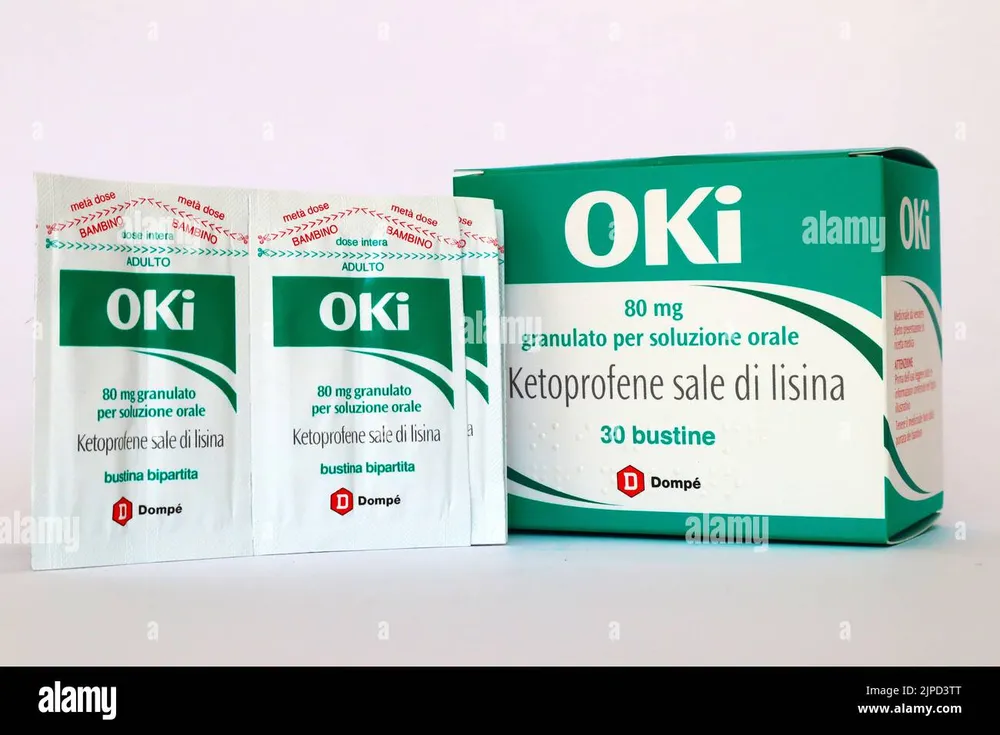
Table of Contents
Package leaflet: Information for the patient
Ketoprofen Dompé, 50 mg, granules for oral solution in sachet
ketoprofen (in the form of ketoprofen lysine salt)
Please read carefully the entire leaflet before taking the medicine, as it contains
important information for the patient.
- Keep this leaflet, as you may need to read it again.
- If you have any questions, please consult your doctor or pharmacist.
- This medicine has been prescribed for a specific individual. Do not pass it on to others. It may harm someone else even if their symptoms are identical.
- If you experience any adverse reactions, including any not listed in this leaflet, inform your doctor or pharmacist. See section 4.
Table of contents
- What Ketoprofen Dompé is and what it is used for
- Important information before taking Ketoprofen Dompé
- How to take Ketoprofen Dompé
- Possible side effects
- How to store Ketoprofen Dompé
- Contents of the pack and other information
1. What Ketoprofen Dompé is and what it is used for
Ketoprofen Dompé 50 mg granules for oral solution in sachet contains the active substance "ketoprofen", which belongs to a group of medicines called non-steroidal anti-inflammatory drugs (NSAIDs), and is used to relieve pain and inflammation.
Ketoprofen Dompé is indicated
in adults for symptomatic treatment of pain and inflammation in conditions such as:
- rheumatoid arthritis (a chronic autoimmune inflammatory disease affecting the joints),
- long-standing inflammation of the spinal joints,
- painful joint inflammation,
- rheumatic diseases affecting extra-articular structures,
- inflammation following injury,
- painful inflammatory conditions in the oral cavity (including teeth), throat, nose, ears, urinary tract, and respiratory tract.
in adolescents aged 16 years and older for short-term symptomatic treatment of pain and inflammation, with or without fever, in conditions such as:
- disorders affecting bones and joints,
- postoperative pain,
- ear inflammation.
2. Important information before using Ketoprofen Dompé
When not to use Ketoprofen Dompé
- if the patient is allergic to ketoprofen or any of the other ingredients of this medicine (listed in section 6);
- if the patient is allergic to other NSAIDs (e.g. aspirin, ibuprofen);
- if the patient has had asthma;
- if the patient has severe heart failure;
- if the patient has severe kidney or liver disorders;
- if the patient has gastric ulcers or bleeding, Crohn's disease, ulcerative colitis (gastrointestinal disease), or gastritis;
- in patients with a history of recurrent gastric ulcers, gastrointestinal bleeding, ulceration, perforation, chronic indigestion, or perforation of the stomach or oesophagus (gastrointestinal perforation);
- if the patient has a low number of blood cells (leukopenia or thrombocytopenia), bleeding, or a tendency to bleed while being treated with medicines that help prevent blood clots (anticoagulants);
- if the patient is undergoing intensive diuretic therapy (to reduce fluid in blood vessels);
- if the patient is in the third trimester of pregnancy.
Warnings and precautions
Before starting treatment with Ketoprofen Dompé, discuss this with your doctor or
pharmacist.
The risk of adverse effects can be minimized by using the lowest effective
dose for the shortest possible duration necessary to control symptoms.
Avoid taking Ketoprofen Dompé simultaneously with other NSAIDs (including selective cyclooxygenase-2 inhibitors).
The use of anti-inflammatory (pain-relieving) medicines such as ketoprofen may be associated
with a small increased risk of heart attack or stroke, especially when high doses are used or treatment is prolonged. Do not exceed the recommended dose or duration of treatment.
Stop taking ketoprofen if:
- the patient notices symptoms of gastrointestinal bleeding (e.g. bright red stools, black tarry stools, vomiting blood or dark particles resembling coffee grounds), stop taking the medicine and contact a doctor immediately. The risk of bleeding is higher when high doses are used, in elderly patients, and in patients with a history of ulcers.
- the patient notices symptoms of ulceration or perforation (symptoms may include: severe abdominal pain, chills, nausea, vomiting, heartburn) after taking Ketoprofen Dompé, stop taking the medicine and contact a doctor immediately.
- the patient notices any symptoms of rash, red, painful skin around body orifices (mucous membranes), or allergic reactions after taking Ketoprofen Dompé, stop taking the medicine and contact a doctor immediately.
- the patient experiences visual disturbances, including blurred vision.
- the patient has abnormal liver function test results.
Before starting treatment with Ketoprofen Dompé, discuss this with your doctor or
pharmacist:
-
if the patient has kidney disease (e.g. nephrotic syndrome, chronic kidney failure) or is taking diuretics (medicines used to increase urine production).
-
if the patient has heart disorders, such as high blood pressure, heart weakness, arterial disease and (or) disorders of blood vessels supplying the brain, diabetes, high cholesterol levels, a family history of heart disease or stroke, or if the patient smokes.
-
if the patient has liver disease (e.g. cirrhosis) or abnormal
liver function test results. -
if the patient has any allergies (e.g. hay fever)
-
if the patient has asthma or another respiratory disorder, as the medicine may trigger asthma attacks or shock.
-
if the patient has an autoimmune disease causing joint pain, skin changes, and disorders of other organs (systemic lupus erythematosus).
-
if the patient has an infection – see section “Infections” below.
-
if the patient is pregnant, trying to become pregnant, or breastfeeding (see section 2).
Infections
Ketoprofen Dompé may mask symptoms of infection, such as fever and pain. Therefore, Ketoprofen Dompé may delay the initiation of appropriate infection treatment and consequently lead to an increased risk of complications. This has been observed in bacterial pneumonia and bacterial skin infections associated with chickenpox.
If the patient takes this medicine during an existing infection and symptoms persist or worsen, seek immediate medical advice.
Children and adolescents
Ketoprofen Dompé should not be used in children and adolescents under 16 years of age.
Elderly patients
This medicine should be used with caution in elderly patients, as they may be more prone to gastrointestinal adverse effects, which may be fatal. Treatment should start with the lowest possible dose, and any unusual symptoms should be reported, especially at the beginning of treatment.
Patients with a history of gastrointestinal disorders
Ketoprofen should be used with caution in patients with a history of gastrointestinal disease (ulcerative colitis, Crohn's disease), due to the risk of exacerbating the condition. Treatment should start with the lowest possible dose, and any unusual symptoms should be reported, especially at the beginning of treatment.
Interaction of Ketoprofen Dompé with other medicines
Tell your doctor or pharmacist about all medicines the patient is currently taking or has recently taken, as well as any medicines the patient plans to take.
Inform your doctor or pharmacist if the patient is taking any of the following
medicines:
- other NSAIDs (e.g. aspirin, ibuprofen) or paracetamol, as this may increase the risk of gastrointestinal bleeding.
- medicines improving blood flow, such as anticoagulants (aspirin, warfarin, heparin, ticlopidine or clopidogrel), thrombolytic agents (reteplase, streptokinase);
- medicines used in certain psychiatric disorders and depression (e.g. lithium and selective serotonin reuptake inhibitors (SSRIs));
- medicines used in cancer treatment (e.g. erlotinib, methotrexate);
- medicines used in epilepsy treatment (e.g. hydantoin, phenytoin);
- certain antibiotics (e.g. quinolones, sulfonamides);
- medicines that may increase blood potassium levels (e.g. potassium chloride);
- medicines used after organ transplantation to prevent rejection (e.g. cyclosporine, tacrolimus);
- antiretroviral medicines used in HIV infection treatment (e.g. ritonavir, zidovudine);
- diuretics, such as bendroflumethiazide, as there is an increased risk of kidney failure and the effect of diuretics may be reduced;
- medicines used in high blood pressure treatment (e.g. ACE inhibitors and angiotensin II antagonists, beta-blockers);
- glucocorticosteroids (steroid hormones, such as hydrocortisone or prednisolone);
- muscle relaxants, such as baclofen;
- medicines used in heart failure treatment and to regulate heart rhythm (e.g. digoxin, digitoxin);
- medicines used in diabetes treatment (e.g. gliclazide);
- medicines used in gout treatment (e.g. probenecid);
- pentoxifylline – a medicine used in muscle pain treatment;
- penicillamine – a medicine used in rheumatoid arthritis treatment;
- medicines used to terminate pregnancy (e.g. gemeprost, mifepristone) or if the patient uses vaginal contraceptives, as their effectiveness may be reduced.
Use of Ketoprofen Dompé with alcohol
During treatment with ketoprofen lysine salt, alcohol consumption should be avoided.
Pregnancy, breastfeeding and effect on fertility
If the patient is pregnant or breastfeeding, suspects she may be pregnant, or is planning to have a
child, she should consult a doctor or pharmacist before using this medicine.
Do not take ketoprofen during the last three months of pregnancy, as it may harm the unborn child or cause complications during delivery. It may cause kidney and heart problems in the unborn child. It may affect bleeding tendency in both the patient and her child and may delay or prolong labour. Do not take
ketoprofen during the first 6 months of pregnancy unless absolutely necessary and as prescribed by a doctor. If treatment is necessary during this period or when trying to conceive, use the lowest possible dose for the shortest possible time. If this medicine is taken for more than a few days starting from the 20th week of pregnancy, ketoprofen may cause kidney problems in the unborn child, which may lead to reduced amniotic fluid volume surrounding the child (oligohydramnios) or narrowing of a blood vessel (ductus arteriosus) in the child's heart. If prolonged treatment is necessary, the doctor may recommend additional monitoring.
Breastfeeding is not recommended during treatment with Ketoprofen Dompé. It is not known whether
ketoprofen passes into breast milk.
Use of Ketoprofen Dompé may impair fertility in women and is not recommended in women planning pregnancy.
Driving and operating machinery
Ketoprofen Dompé does not affect the ability to drive or operate machinery. However, if the patient experiences adverse effects such as dizziness, drowsiness, seizures or visual disturbances, the patient should not drive or operate machinery.
Ketoprofen Dompé contains sodium
Ketoprofen Dompé contains less than 1 mmol of sodium (23 mg) per sachet, meaning the medicine is considered "sodium-free".
Ketoprofen Dompé contains sucrose (contained in the mint flavour)
If the patient has previously been diagnosed with intolerance to certain sugars, the patient should
consult a doctor before taking this medicine.
3. How to use Ketoprofen Dompé
This medicine should always be taken as directed by a doctor. If in doubt, consult a doctor or pharmacist.
Use the lowest effective dose for the shortest duration necessary to relieve symptoms.
Recommended dose:
Adults and adolescents aged 16 years and older:
One full divided sachet, equivalent to 50 mg of ketoprofen (corresponding to 80 mg of ketoprofen lysine salt), three times daily, preferably with food.
The maximum daily dose of ketoprofen is 200 mg, corresponding to 320 mg of ketoprofen lysine salt.
Prior to initiating treatment with a daily dose of 200 mg of ketoprofen, the benefit-risk ratio should be carefully evaluated, and higher doses are not recommended.
Elderly patients:
The doctor must exercise caution when determining the dose and should consider reducing the above-mentioned dose.
Patients with hepatic impairment:
A reduced initial dose is recommended, and maintenance therapy should be initiated with the lowest effective dose. Individual dose adjustment should only be considered after good tolerance of the medicinal product has been established.
How to use Ketoprofen Dompé
After opening the sachet along the line marked “full dose”, a dose of 50 mg of ketoprofen lysine salt (equivalent to 80 mg of ketoprofen lysine salt) is obtained.
Empty the contents of the sachet into a glass half-filled with water and stir for one minute. The solution should be drunk immediately. It is best taken with food.
Use of a higher than recommended dose of Ketoprofen Dompé
If a higher than recommended dose of Ketoprofen Dompé is taken, the patient may experience dizziness, nausea, stomach pain, or headache. Immediate medical help should be sought, even if the patient feels well.
Missed dose of Ketoprofen Dompé
If the patient forgets to take Ketoprofen Dompé, it should be taken as soon as possible. However, if it is almost time for the next dose, the missed dose should not be taken; the next dose should be taken at the usual time.
Do not take a double dose to make up for a missed dose.
Stopping Ketoprofen Dompé
This medicine should be discontinued as soon as the patient feels better.
If there are any further doubts regarding the use of this medicine, consult a doctor or pharmacist.
4. Possible adverse effects
Like all medicines, this medicine can cause adverse effects, although not everyone will experience them.
You must stop using Ketoprofen Dompé and seek immediate medical help if at any time during treatment with Ketoprofen Dompé the patient experiences:
- symptoms of gastrointestinal bleeding, such as: bright red stool, tarry black stool, vomiting blood or dark particles resembling coffee grounds;
- symptoms of rash, severe skin reactions, and blisters affecting the skin, mouth, or eyes;
- symptoms of a severe allergic reaction, such as:
- difficulty breathing or unexplained wheezing;
- dizziness or rapid heartbeat;
- swelling of the lips, face, throat, or tongue.
You should inform the doctor if the patient experiences:
- fever, sore throat, mouth ulcers, headache, vomiting, unexplained bleeding and bruising, or severe fatigue;
- indigestion, stomach or abdominal pain, constipation, diarrhoea, bloating or nausea, chest pain, or rapid, irregular heartbeat;
- liver or kidney dysfunction associated with swelling in the hands and feet.
Adverse effects of Ketoprofen Dompé may include:
Common (may occur in up to 1 in 10 people):
- digestive disturbances (dyspepsia), nausea, abdominal pain, vomiting.
Uncommon (may occur in up to 1 in 100 people):
- headache, central dizziness, peripheral dizziness, drowsiness;
- constipation, diarrhoea, bloating (intestinal gas), gastric mucosal inflammation, gastric discomfort;
- skin rash, itching;
- fluid retention-related swelling;
- fatigue, chills.
Rare (may occur in up to 1 in 1,000 people):
- iron deficiency due to bleeding;
- numbness, tingling;
- blurred vision (see section 2);
- tinnitus (ringing in the ears);
- asthma;
- oral cavity ulceration (stomatitis), gastric or duodenal ulcer (peptic ulcer), inflammation of the lining of the large intestine (colitis);
- hepatitis, increased liver enzyme activity, elevated bilirubin levels due to liver dysfunction, yellowing of the skin or whites of the eyes (jaundice);
- weight gain.
Very rare (may occur in up to 1 in 10,000 people):
- dyskinesia (movement disorder), loss of consciousness (fainting);
- hypotension (low blood pressure);
- laryngeal oedema;
- haematuria (blood in urine);
- asthenia (physical weakness), facial swelling.
Frequency not known (frequency cannot be estimated from available data):
- meningitis (inflammation of the membranes surrounding the brain), lymphangitis;
- changes in blood cell and platelet counts;
- allergic reactions;
- changes in blood potassium levels;
- depression, hallucinations, disorientation, mood changes, restlessness, drowsiness;
- uncontrolled muscle contractions (seizures), tremor, excessive motor agitation (hyperkinesia);
- taste disturbances; periorbital oedema;
- heart failure, cardiac arrhythmias or rapid heartbeat;
- hypertension, hot flushes (vasodilation), inflammatory state of the blood;
- respiratory failure caused by airway constriction (bronchospasm, laryngospasm), acute respiratory failure;
- nasal congestion and runny nose (rhinitis);
- stomach pain, worsening of gastrointestinal disorders, burning sensation in the stomach;
- gastrointestinal bleeding; symptoms may include severe stomach pain, chills, nausea, vomiting, heartburn;
- intestinal perforation, gastric ulcers;
- pancreatitis; vomiting blood (haematemesis) or tarry stool (presence of digested blood in faeces), hyperchlorhydria (excessive secretion of hydrochloric acid in the stomach);
- photosensitivity to sunlight or UV lamps;
- hair loss;
- severe skin reactions, itchy rash, redness, skin changes, irritation, blistering;
- deep skin layer swelling (e.g. face, hands) due to fluid accumulation;
- renal failure, nephritis, abnormal kidney function test results;
- fluid retention, reduced urine output.
Medicines such as Ketoprofen Dompé may be associated (particularly with high doses and prolonged use) with an increased risk of arterial thrombotic events (formation of blood clots in blood vessels), such as myocardial infarction (heart attack) or stroke (cerebrovascular event) (see section 2).
Following the instructions in this leaflet may reduce the risk of adverse effects occurring.
Reporting of adverse effects
If any adverse symptoms occur, including any adverse effects not listed in this leaflet, you should inform your doctor or pharmacist.
Adverse effects can be reported directly to the Department for Monitoring Adverse Drug Reactions of the Office for Registration of Medicinal Products, Medical Devices and Biocidal Products
Al. Jerozolimskie 181C
02-222 Warsaw
Tel.: +48 22 49 21 301
Fax: +48 22 49 21 309
Website: https://smz.ezdrowie.gov.pl
Adverse effects can also be reported to the marketing authorisation holder.
Reporting adverse effects helps provide more information on the safety of this medicine.
5. How to store Ketoprofen Dompé
Keep the medicine out of the sight and reach of children.
Do not use this medicine after the expiry date stated on the packaging. The expiry date refers to the last day of the stated month. The expiry date applies to products stored properly in their original, undamaged packaging.
Store in the original packaging to protect from light.
Medicines must not be disposed of via the sewage system or household waste. Ask your pharmacist how to dispose of medicines no longer required. Such measures help protect the environment.
6. Contents of the pack and other information
What Ketoprofen Dompé contains
- The active substance is ketoprofen in the form of ketoprofen lysine complex. One dual-chamber sachet contains 50 mg of ketoprofen, equivalent to 80 mg of ketoprofen lysine complex.
- Other ingredients are: mannitol (E 421), sodium chloride, colloidal anhydrous silica, ammonium glycyrrhizinate, povidone K25, sodium saccharin (E 954), peppermint flavour (containing: natural flavourings, flavouring preparations, gum arabic (E 414), sucrose, calcium phosphate (E 341)).
What Ketoprofen Dompé looks like and contents of the pack
Ketoprofen Dompé is an ivory-coloured granulate with a mild peppermint scent. Ketoprofen Dompé is available in packs containing 10, 20 or 30 dual-chamber sachets.
Marketing Authorisation Holder
Dompé farmaceutici S.p.A
Via San Martino 12
20122 Milano
Italy
Manufacturer
Dompé farmaceutici S.p.A.
Via Campo di Pile
67100 L’Aquila
Italy