Ketonal sprint max
Poland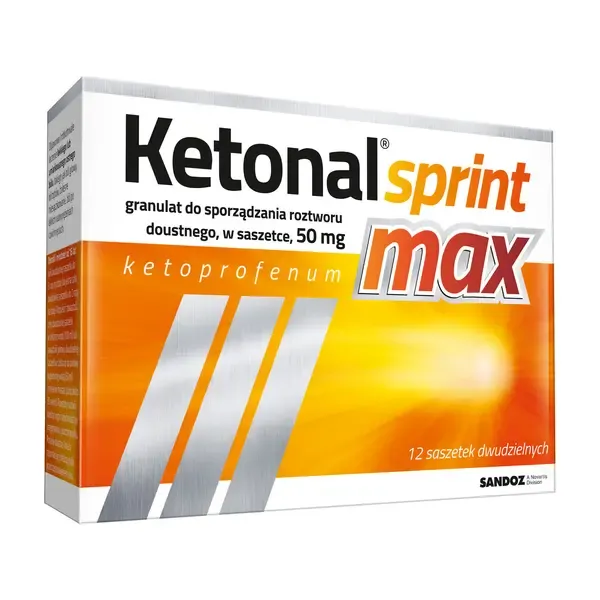
Table of Contents
- 1. NAME OF THE MEDICINAL PRODUCT
- 2. QUALITATIVE AND QUANTITATIVE COMPOSITION
- 3. PHARMACEUTICAL FORM
- 4.2 Dosage and method of administration
- 4.3 Contraindications
- 4.4 Special warnings and precautions for use
- 4.5 Interactions with other medicinal products and other forms of interactions
- 4.6 Fertility, pregnancy and lactation
- 4.8 Effects on ability to drive and use machines
- 4.8 Undesirable effects
- 4.9 Overdose
- 5.2 Pharmacokinetic properties
- 5.3 Preclinical safety data
- 6.2 Pharmaceutical incompatibilities
- 6.3 Shelf life
- 6.4 Special precautions for storage
- 6.5 Type and contents of the container
- 7. MARKETING AUTHORISATION HOLDER
- 8. MARKETING AUTHORISATION NUMBER
- 9. DATE OF FIRST AUTHORISATION OR RENEWAL OF THE AUTHORISATION
- 10. DATE OF ADOPTION OR PARTIAL CHANGE OF THE PRODUCT CHARACTERISTICS
- 03/14/2025
SUMMARY OF PRODUCT CHARACTERISTICS
1. NAME OF THE MEDICINAL PRODUCT
Ketonal Sprint, 25 mg, granules for oral solution, in sachet
Ketonal Sprint Max, 50 mg, granules for oral solution, in sachet
2. QUALITATIVE AND QUANTITATIVE COMPOSITION
Ketonal Sprint, 25 mg
One sachet contains 25 mg of ketoprofen ( Ketoprofenum ) as ketoprofen lysine salt (40 mg).
Ketonal Sprint Max, 50 mg
One divided sachet contains 50 mg of ketoprofen ( Ketoprofenum ) as ketoprofen lysine salt (80 mg).
Full list of excipients: see section 6.1.
3. PHARMACEUTICAL FORM
Granules for oral solution, in a sachet.
White or yellowish granules.
4. CLINICAL PARTICULARS
4.1 Therapeutic Indications
Ketonal Sprint medicinal product is indicated for short-term symptomatic treatment of mild to moderate acute pain, such as:
headache
toothache
painful menstruation
pain due to minor sprains and strains
Ketonal Sprint medicinal product is indicated for use in adults and adolescents aged 16 years and older.
4.2 Dosage and method of administration
Dosage
The medicine should be used at the lowest effective dose for the shortest duration necessary to relieve symptoms, in order to minimize the risk of adverse reactions (see section 4.4).
Adults and adolescents aged 16 years and older
- 25 mg of ketoprofen up to three times daily, or
- 50 mg of ketoprofen twice daily (equivalent to 40 mg of ketoprofen lysinate up to three times daily or 80 mg of ketoprofen lysinate twice daily).
There should be at least an 8-hour interval between doses.
Elderly patients
Dosage should be determined by a physician in elderly patients, and a lower dose than indicated above may be recommended if necessary (see section 4.4).
Children and adolescents
Ketonal Sprint medicinal product is not intended for use in children and adolescents under 16 years of age.
This medicinal product is intended for short-term use only.
If in adolescents aged 16 years and older, use of this medicinal product is required for longer than 3 days, or if symptoms worsen, medical advice should be sought.
If in adults, use of this medicinal product is required for longer than 5 days, or if symptoms worsen, medical advice should be sought.
Hepatic impairment
In patients with mild or moderate hepatic impairment, a reduced initial dose is recommended, and treatment should continue with the lowest effective dose (see section 4.4).
Ketoprofen is contraindicated in patients with severe hepatic impairment (see section 4.3).
Renal impairment
In patients with mild or moderate renal impairment, a reduced initial dose is recommended, and therapy should continue with the lowest effective dose. Individual dose adjustment should be considered only after good tolerance to the initial dose has been established. Renal function should be monitored (see section 4.4).
Ketoprofen is contraindicated in patients with severe renal impairment (see section 4.3).
Method of administration
Oral administration.
Ketonal Sprint, 25 mg
The sachet contains granules with 25 mg of ketoprofen (equivalent to 40 mg of ketoprofen lysinate).
For preparation of the oral solution, see section 6.6.
The solution should be taken during a meal.
Ketonal Sprint Max, 50 mg
Opening the sachet along the line marked "half dose" provides granules containing 25 mg of ketoprofen (equivalent to 40 mg of ketoprofen lysinate).
Opening the sachet along the line marked "full dose" provides granules containing 50 mg of ketoprofen (equivalent to 80 mg of ketoprofen lysinate).
For preparation of the oral solution, see section 6.6.
The solution should be taken during a meal.
4.3 Contraindications
Ketonal Sprint and Ketonal Sprint Max medicinal products should not be administered in the following cases:
hypersensitivity to the active substance, to acetylsalicylic acid (ASA), or to other non-steroidal anti-inflammatory drugs (NSAIDs), or to any of the excipients listed in section 6.1;
in patients with a history of hypersensitivity reactions such as bronchospasm, bronchial asthma attack, acute rhinitis, urticaria, nasal polyps, angioedema, or other types of allergic reactions induced by ketoprofen or other substances with a similar mechanism of action (e.g. acetylsalicylic acid or other NSAIDs). In such patients, severe, rarely fatal anaphylactic reactions have been reported (see section 4.8).
in patients with a history of bronchial asthma;
active peptic ulceration and (or) gastrointestinal bleeding or recurrent gastrointestinal bleeding and (or) ulceration in medical history (two or more confirmed, separate episodes of bleeding or ulceration);
gastrointestinal bleeding, ulceration, or gastrointestinal perforation in medical history, or chronic dyspepsia;
gastrointestinal bleeding or gastrointestinal perforation during previous treatment with NSAIDs in medical history;
leukopenia or thrombocytopenia;
Crohn's disease or ulcerative colitis;
gastritis;
severe heart failure;
severe hepatic insufficiency (liver cirrhosis, severe hepatitis);
severe renal insufficiency;
bleeding diathesis and other coagulation disorders, patients with hemostatic disorders;
patients undergoing intensive diuretic therapy;
third trimester of pregnancy.
4.4 Special warnings and precautions for use
Warnings
The product should be used at the lowest effective dose and for the shortest duration necessary to relieve symptoms, in order to minimize the risk of adverse effects (see section 4.2 and the sections below: gastrointestinal and cardiovascular risks).
Concomitant use of ketoprofen with other nonsteroidal anti-inflammatory drugs (NSAIDs), including selective cyclooxygenase-2 (COX-2) inhibitors, should be avoided.
Gastrointestinal bleeding, ulceration, and perforation
Gastrointestinal bleeding, ulceration, or perforation (some potentially fatal) have been reported with all NSAIDs. These may occur at any time during treatment, even in the absence of preceding symptoms or a history of serious gastrointestinal events.
Epidemiological data suggest that the use of ketoprofen (especially at high doses) may be associated with a higher risk of severe gastrointestinal toxicity compared to some other NSAIDs (see also sections 4.2 and 4.3).
Caution is advised in patients receiving concomitant medications that may increase the risk of gastrointestinal ulceration or bleeding, such as oral corticosteroids, anticoagulants (e.g. warfarin), selective serotonin reuptake inhibitors, antiplatelet agents (e.g. acetylsalicylic acid), or nicorandil (see section 4.5).
The risk of gastrointestinal bleeding, ulceration, or perforation is greater with higher NSAID doses, in patients with a history of peptic ulcer disease of the stomach and/or duodenum, particularly if complicated by bleeding or perforation (see section 4.3), and in elderly patients. In these patients, treatment should be initiated at the lowest available dose.
In these patients, as well as in those requiring concomitant low-dose acetylsalicylic acid or other drugs potentially increasing gastrointestinal risk, concomitant administration of gastroprotective agents (e.g. misoprostol or proton pump inhibitors) should be considered (see below and section 4.5).
Patients with a history of gastrointestinal complications, especially the elderly, should report any unusual abdominal symptoms (particularly gastrointestinal bleeding), particularly during the initial treatment period.
Elderly patients: The frequency of adverse effects associated with NSAID use, especially gastrointestinal bleeding and perforation (which may be fatal), is increased in elderly patients (see section 4.2).
If gastrointestinal bleeding or peptic ulcer disease of the stomach and/or duodenum occurs in patients receiving ketoprofen, treatment must be discontinued.
Skin reactions:
Severe skin reactions (some potentially fatal), including exfoliative dermatitis, Stevens-Johnson syndrome, and toxic epidermal necrolysis, have been very rarely reported in association with NSAID use (see section 4.8). The risk of such reactions is likely higher during the initial treatment period—most cases occurred within the first month of treatment. Ketoprofen should be discontinued at the first appearance of skin rash, mucosal lesions, or any other signs of hypersensitivity.
The medicinal product Ketonal Sprint and Ketonal Sprint Max do not affect low-calorie or controlled diets and may be administered to diabetic patients.
Ketonal Sprint and Ketonal Sprint Max do not contain gluten and are therefore not contraindicated in patients with celiac disease.
Clinical and epidemiological data indicate that the use of certain nonsteroidal anti-inflammatory drugs (especially at high doses and long-term) may be associated with an increased risk of arterial thromboembolic events (e.g. myocardial infarction or stroke). These data are insufficient to exclude such a risk with ketoprofen use.
An increased risk of arterial thromboembolic events has also been reported in patients treated with NSAIDs (excluding acetylsalicylic acid) for pain following coronary artery bypass graft (CABG) surgery.
Children and adolescents
Gastrointestinal bleeding (sometimes severe) and ulceration have been reported in some children and adolescents receiving ketoprofen lysinate (see section 4.8). Therefore, the product should be used under strict medical supervision in these patients, and the treating physician should individually assess the treatment regimen for each patient.
This medicinal product is not intended for use in children and adolescents under 16 years of age.
Patients with current or past gastrointestinal disease should be closely monitored for gastrointestinal disturbances, especially gastrointestinal bleeding.
Patients with active or past peptic ulcer disease:
NSAIDs should be administered with caution in patients with a history of gastrointestinal disorders (e.g. ulcerative colitis, Crohn's disease), as these conditions may be exacerbated (see section 4.8 – Adverse effects).
Precautions
Cardiovascular, renal, and hepatic function disorders:
Ketoprofen should be administered with particular caution in patients with renal impairment due to its primary renal elimination.
Careful monitoring of renal function is required at the beginning of treatment in patients with heart failure, cirrhosis, nephrotic syndrome, patients receiving diuretics, or patients with chronic renal failure, especially the elderly. Administration of ketoprofen to these patients may reduce renal perfusion due to inhibition of prostaglandin synthesis, potentially leading to renal decompensation (see section 4.3 – Contraindications).
Caution is also advised in patients receiving diuretics or in those who may be hypovolemic, as the risk of nephrotoxicity is increased.
As with all NSAIDs, the medicinal product may increase blood urea nitrogen and serum creatinine levels.
Like other prostaglandin synthesis inhibitors, the product may be associated with renal adverse effects, including glomerulonephritis, renal papillary necrosis, nephrotic syndrome, and acute renal failure.
In patients with abnormal liver function tests or a history of liver disease, periodic monitoring of aminotransferase levels is recommended, especially during prolonged treatment. As with other NSAIDs, the product may cause mild, transient increases in liver parameters, as well as significant increases in SGOT (aspartate aminotransferase) and SGPT (alanine aminotransferase) activity. If substantial increases in these parameters are observed, treatment should be discontinued.
Rare cases of jaundice and hepatitis have been reported during ketoprofen use.
During long-term treatment, liver and renal function tests and blood counts should be monitored regularly.
Elderly patients are more susceptible to deterioration in renal, cardiovascular, or hepatic function.
Effects on the circulatory and cerebral vascular system:
As with all NSAIDs, caution is required when treating patients with existing uncontrolled hypertension, congestive heart failure, established ischemic heart disease, peripheral arterial disease, and/or cerebrovascular disease. Caution is also advised before initiating long-term treatment in patients with cardiovascular risk factors (e.g. hypertension, hyperlipidemia, diabetes, smoking).
Patients with a history of hypertension and/or mild to moderate congestive heart failure require appropriate monitoring and management, as fluid retention and edema have been reported with NSAID therapy.
Clinical and epidemiological data indicate that the use of certain NSAIDs (especially at high doses and long-term) may be associated with an increased risk of arterial thromboembolic events (e.g. myocardial infarction or stroke). There are insufficient data to exclude a similar risk with ketoprofen lysinate.
An increased risk of atrial fibrillation associated with NSAID use has been reported.
Hyperkalemia may occur, particularly in patients with diabetes, renal impairment, and/or those receiving concomitant medications that promote hyperkalemia (see section 4.5). In such cases, regular monitoring of serum potassium levels is required.
Masking of underlying infection symptoms:
Ketoprofen may mask signs of infection, potentially delaying appropriate treatment and worsening infection outcomes. This has been observed in community-acquired bacterial pneumonia and bacterial complications of varicella.
If ketoprofen is used for fever or pain associated with infection, the course of infection should be monitored. In outpatient settings, patients should consult a physician if symptoms persist or worsen.
The product should be used cautiously in patients with allergic symptoms or a history of allergy.
NSAIDs may impair fertility in women (see section 4.6).
Respiratory disorders:
As with all NSAIDs, ketoprofen may trigger asthma attacks in patients with bronchial asthma or allergic predisposition.
Patients with bronchial asthma associated with chronic rhinitis, chronic sinusitis, and/or nasal polyps are more likely to experience allergic reactions to acetylsalicylic acid and/or NSAIDs than others. Administration of Ketonal Sprint may provoke asthma attacks or bronchospasm, especially in individuals hypersensitive to acetylsalicylic acid or NSAIDs (see section 4.3). Due to the interaction of the medicinal product with arachidonic acid metabolism, bronchospasm attacks, anaphylactic shock, and other allergic reactions may occur in asthmatic patients or those predisposed.
Visual disturbances:
If visual disturbances (e.g. blurred vision) occur, treatment should be discontinued.
Ketonal Sprint and Ketonal Sprint Max should be administered with caution in patients with hematopoietic disorders, systemic lupus erythematosus, or mixed connective tissue diseases.
Ketonal Sprint and Ketonal Sprint Max contain less than 1 mmol (23 mg) of sodium per sachet, meaning the product is considered "sodium-free".
4.5 Interactions with other medicinal products and other forms of interactions
Concomitant treatment is not recommended
Other NSAIDs (including selective cyclooxygenase-2 inhibitors) and high-dose salicylates (>3 g/day):
Concomitant use of various NSAIDs may increase the risk of gastrointestinal ulceration and bleeding due to a synergistic effect.
Anticoagulant drugs (heparin and vitamin K antagonists [e.g. warfarin]):
NSAIDs may enhance the anticoagulant effect of drugs such as warfarin (see section 4.4). Increased risk of bleeding due to inhibition of platelet function and gastrointestinal mucosal damage (see section 4.4). If concomitant use cannot be avoided, patients should be closely monitored.
Antiplatelet agents (e.g. ticlopidine and clopidogrel):
Increased risk of bleeding due to inhibition of platelet function and gastrointestinal mucosal damage (see section 4.4). If concomitant use cannot be avoided, patients should be closely monitored.
Lithium (interactions with various NSAIDs have been reported):
Risk of increased serum lithium levels (sometimes to toxic levels) due to reduced renal excretion of lithium. If concomitant use is necessary, careful monitoring of serum lithium concentrations and dose adjustment during initiation and after discontinuation of ketoprofen and other NSAIDs is recommended.
Methotrexate at doses of 15 mg/week or higher:
Increased risk of methotrexate hematological toxicity, especially with high-dose therapy (≥15 mg/week), likely due to displacement of methotrexate from protein-binding sites and reduced renal clearance caused by NSAIDs in general.
At least 12 hours should elapse between discontinuation or initiation of ketoprofen treatment and administration of methotrexate.
Hydantoin derivatives (e.g. phenytoin) and sulfonamides:
Ketoprofen may enhance the toxic effects of these substances.
Concomitant treatment requiring caution
Medicinal products and drug groups that may promote hyperkalemia (i.e. potassium salts, potassium-sparing diuretics, ACE inhibitors, angiotensin II receptor antagonists, NSAIDs, heparins [low molecular weight or unfractionated], cyclosporine, tacrolimus, and trimethoprim):
The risk of hyperkalemia may be increased when the above-mentioned medicinal products are used concomitantly.
Tenofovir:
Concomitant use of tenofovir disoproxil fumarate and NSAIDs may increase the risk of renal failure.
Diuretics:
In patients, especially dehydrated ones, receiving diuretic therapy, there is an increased risk of developing renal failure secondary to reduced perfusion due to inhibition of prostaglandin synthesis. Such patients should be adequately hydrated before starting combination therapy, and renal function should be closely monitored after initiation of treatment (see section 4.4). NSAIDs may reduce the efficacy of diuretics.
ACE inhibitors and angiotensin II antagonists:
In patients with impaired renal function (e.g. dehydrated patients and elderly patients), concomitant administration of an ACE inhibitor or angiotensin II antagonist with a cyclooxygenase-inhibiting drug may lead to further deterioration of renal function, possibly resulting in acute renal failure. Therefore, such combination should be used with caution, especially in elderly patients. Patients must be adequately hydrated, and monitoring of renal function should be considered after initiation of concomitant therapy.
Methotrexate at doses less than 15 mg/week:
Enhanced hematological toxicity of methotrex游戏副本
4.6 Fertility, pregnancy and lactation
Pregnancy
Ketoprofen should be avoided during the first and second trimesters of pregnancy.
Inhibition of prostaglandin synthesis may have harmful effects on the course of pregnancy and/or embryonic or fetal development. Epidemiological data suggest that use of prostaglandin synthesis inhibitors in early pregnancy is associated with an increased risk of miscarriage and development of congenital heart and intestinal malformations. The absolute risk of cardiovascular malformations increases from less than 1% to approximately 1.5%. The risk is considered to increase with higher doses and prolonged duration of treatment. Animal studies have shown that administration of prostaglandin synthesis inhibitors leads to increased pre- and post-implantation loss of embryos, as well as increased embryonic and fetal mortality. Furthermore, administration of prostaglandin synthesis inhibitors to animals during organogenesis has been shown to increase the incidence of various developmental abnormalities, including those affecting the cardiovascular system.
Ketoprofen should not be administered during the first and second trimesters of pregnancy unless absolutely necessary.
From the 20th week of pregnancy, use of ketoprofen may cause oligohydramnios due to impaired fetal renal function. This may occur shortly after initiation of treatment and is usually reversible upon discontinuation. Additionally, there have been reports of ductus arteriosus constriction following treatment during the second trimester, which in most cases resolved after stopping treatment. Therefore, ketoprofen should not be used during the first and second trimesters of pregnancy unless strictly necessary. If ketoprofen is used in women attempting to conceive or during the first and second trimesters of pregnancy, it should be administered at the lowest possible dose for the shortest possible duration. Prenatal monitoring for oligohydramnio and ductus arteriosus constriction should be considered following exposure to ketoprofen beyond the 20th week of pregnancy. Ketoprofen should be discontinued if oligohydramnios or ductus arteriosus constriction is detected.
All prostaglandin synthesis inhibitors:
- when used during the third trimester of pregnancy, may expose the fetus to:
- toxic effects on the cardiovascular and pulmonary systems (premature constriction/closure of the ductus arteriosus and pulmonary hypertension);
- renal dysfunction, which may lead to renal failure with oligohydramnios (see above);
- when taken towards the end of pregnancy, may expose the mother and newborn to:
- prolonged bleeding time, anti-aggregatory effects, which may occur even after administration of low doses of ketoprofen;
- inhibition of uterine contractions, leading to delayed or prolonged labor.
Use of this medicinal product during the perinatal period may cause hemodynamic changes in the pulmonary circulation of the unborn child, with serious consequences for respiration.
Therefore, the use of ketoprofen during the third trimester of pregnancy is contraindicated.
Breastfeeding
There are no available data on the passage of ketoprofen into human breast milk. Use of this medicinal product is not recommended in breastfeeding women.
Fertility
Use of NSAIDs may impair fertility in women and is not recommended in women attempting to conceive. Use of Ketonal Sprint and Ketonal Sprint Max products, as well as any other drugs inhibiting prostaglandin synthesis and cyclooxygenase inhibitors, is not recommended in women intending to become pregnant. In women experiencing difficulty conceiving or undergoing investigation for infertility, discontinuation of NSAIDs should be considered.
4.8 Effects on ability to drive and use machines
The medicinal product Ketonal Sprint has no effect or has negligible effect on the ability to drive vehicles and operate machinery. However, patients should be warned about the possibility of experiencing adverse reactions such as drowsiness, dizziness, seizures, or blurred vision, and advised not to drive or operate machinery in such cases.
4.8 Undesirable effects
The most commonly observed adverse reactions are gastrointestinal. Peptic ulceration of the stomach and/or duodenum, perforation or gastrointestinal bleeding (sometimes fatal), especially in elderly patients, may occur (see section 4.4). Nausea, vomiting, diarrhoea, flatulence, constipation, dyspepsia, abdominal pain, melaena, haematemesis, ulcerative stomatitis, exacerbations of colitis and Crohn's disease have also been reported (see section 4.4). Gastritis has been reported less frequently.
In clinical studies in infants and children, vomiting, diarrhoea and hypersensitivity reactions have been reported.
Classification of adverse reaction frequencies: very common (≥1/10); common (≥1/100 to <1/10); uncommon (≥1/1000 to <1/100); rare (≥1/10,000 to <1/1000); very rare (<1/10,000), frequency not known (cannot be estimated from the available data).
The following adverse reactions have been reported during use of ketoprofen in adults:
| System Organ Class | Very common | Common | Uncommon | Rare | Frequency not known |
| Infections and infestations | Aseptic meningitis, phlebitis | ||||
| Blood and lymphatic system disorders | Hemorrhagic anemia | Agranulocytosis, thrombocytopenia, bone marrow failure, hemolytic anemia, neutropenia, leukopenia, aplastic anemia, leukocytosis, thrombocytosis | |||
| Immune system disorders | Anaphylactic reactions (including shock), hypersensitivity | ||||
| Metabolism and nutrition disorders | Hypotension, hyperkalemia (see sections 4.4 and 4.5) | ||||
| Psychiatric disorders | Confusion, mood alterations, restlessness, insomnia, depression, hallucinations. In one patient from the pediatric and adolescent group who received a dose twice higher than recommended in ChPL, anxiety disorders and behavioral disorders also occurred. | ||||
| Nervous system disorders | Headache, central dizziness, somnolence, peripheral dizziness | Paresthesia | Dyskinesia, syncope | Seizures, taste disturbances, tremor, hyperkinesia | |
| Eye disorders | Blurred vision (see section 4.4) | Periorbital edema | |||
| Ear and labyrinth disorders | Tinnitus | ||||
| Cardiac disorders | Heart failure, palpitations, atrial fibrillation and tachycardia | ||||
| Vascular disorders | Hypotension | Hypertension, vasodilation, vasculitis (including leukocytoclastic vasculitis) | |||
| Respiratory, thoracic and mediastinal disorders | Asthma | Laryngeal edema | Bronchospasm (especially in patients with hypersensitivity to ASA and other NSAIDs), rhinitis, dyspnea, laryngospasm, acute respiratory failure | ||
| (Single case reported, resulting in death of a patient with asthma and hypersensitivity to acetylsalicylic acid) | |||||
| Gastrointestinal disorders | Dyspepsia, nausea, abdominal pain, vomiting | Constipation, diarrhea, bloating, gastritis, discomfort in the abdominal cavity | Stomatitis, peptic ulcer, colitis | Exacerbation of colitis and Crohn's disease, gastrointestinal bleeding and perforation (sometimes leading to death, especially in elderly patients – see section 4.4), pancreatitis, fever, stomach pain (gastralgia), gastric ulcer, duodenal ulcer, heartburn, lip swelling, tarry stools, hematemesis, hyperacidity, abdominal pain, erosive gastritis, tongue swelling | |
| Hepatobiliary disorders | Hepatitis, increased aminotransferase activity, increased bilirubin concentration, jaundice | ||||
| Skin and subcutaneous tissue disorders | Rash, pruritus | Photosensitivity, alopecia, urticaria, angioedema, bullous reactions including Stevens-Johnson syndrome, Lyell's syndrome, toxic necrolysis | |||
| Epidermal detachment, acute generalized exanthematous pustulosis, erythema, exanthema, papulopustular rash, purpura, dermatitis | |||||
| Renal and urinary disorders | Hematuria | Acute renal failure, tubulointerstitial nephritis, nephritis or nephritic syndrome, nephrotic syndrome, glomerulonephritis, water/sodium retention with possible edema, acute tubular necrosis, renal papillary necrosis, oliguria, abnormal kidney function test results | |||
| General disorders and administration site conditions | Edema, fatigue, peripheral edema, chills | Asthenia, facial edema | |||
| Investigations | Increased body weight |
Clinical and epidemiological data suggest that the use of certain NSAIDs
(particularly long-term use at high doses) may be associated with an increased risk of arterial thrombotic events
(e.g. myocardial infarction or stroke), see section 4.4.
Reporting suspected adverse reactions
It is important to report suspected adverse reactions after a medicinal product has been authorised. This allows continuous monitoring of the benefit-risk balance of the medicinal product. Healthcare professionals are required to report any suspected adverse reactions via the Department of Monitoring Adverse Drug Reactions at the Office for Registration of Medicinal Products, Medical Devices and Biocidal Products: Al. Jerozolimskie 181C, 02-222 Warsaw, tel.: +48 22 49 21 301, fax: +48 22 49 21 309, website: https://smz.ezdrowie.gov.pl
Suspected adverse reactions may also be reported to the marketing authorisation holder.
4.9 Overdose
Symptoms
Cases of ketoprofen overdose have been reported following doses up to 2.5 g. In most cases, symptoms were mild and limited to lethargy, somnolence, nausea, vomiting, epigastric pain, abdominal pain, headache, dizziness, and diarrhea.
In cases of severe overdose, hypotension, respiratory depression, and gastrointestinal bleeding have been observed.
Patients should be promptly transferred to a specialized center for initiation of symptomatic treatment.
Management
There is no specific antidote in case of ketoprofen overdose.
In cases of significant overdose, recommended management includes gastric lavage in combination with symptomatic and supportive treatment to correct dehydration, monitor urine output, and correct any potential acidosis.
Renal and hepatic function should be closely monitored. In case of renal failure, hemodialysis may be useful in removing the drug from the body.
5. PHARMACOLOGICAL PROPERTIES
5.1 Pharmacodynamic properties
Pharmacotherapeutic group: Non-steroidal anti-inflammatory and anti-rheumatic drugs, propionic acid derivatives.
ATC code: M01AE03
Mechanism of action
The mechanism of action of NSAIDs is related to reduced prostaglandin synthesis due to inhibition of cyclooxygenase enzyme activity.
In particular, inhibition of the conversion of arachidonic acid to cyclic prostaglandin endoperoxides G (PGG_) and H (PGH_), precursors of prostaglandins PGE_, PGE_, PGF_, and PGD_, as well as prostacyclin PGI_ and thromboxanes (TxA_ and TxB_), can be observed. Furthermore, inhibition of prostaglandin synthesis may interfere with the function of other inflammatory mediators such as kinins, resulting in indirect effects additional to the direct action.
Pharmacodynamic effects
The lysine salt of ketoprofen (2-(3-benzoylphenyl)propionic acid) has analgesic, anti-inflammatory, and antipyretic properties. It belongs to the class of non-steroidal anti-inflammatory drugs (NSAIDs). Ketoprofen with lysine is more soluble than the acidic form.
Ketoprofen with lysine has strong analgesic action, which correlates with both anti-inflammatory and central effects. It exerts antipyretic activity without disturbing physiological thermoregulatory processes.
It leads to resolution or alleviation of painful inflammatory conditions, thereby promoting joint mobility.
5.2 Pharmacokinetic properties
Ketoprofen lysinate is more soluble than the acid form.
Absorption
The pharmaceutical form (granules for oral solution) allows administration of the active substance in aqueous solution. This results in rapid increase of active substance concentration in plasma and rapid achievement of maximum concentration. The clinical effect is a fast onset of action and enhanced analgesic and anti-inflammatory effects.
The pharmacokinetic profile in children does not differ from that in adults.
Distribution
Repeated administration does not alter the drug's kinetics and does not lead to its accumulation.
Ketoprofen is 95–99% bound to plasma proteins.
After systemic administration, significant concentrations of ketoprofen have been found in tonsillar tissue and synovial fluid.
Metabolism
Ketoprofen undergoes extensive metabolism: 60–80% of the administered dose is found in urine as metabolites.
Excretion
Ketoprofen is rapidly eliminated, primarily via the kidneys: 50% of the administered dose is excreted in urine within 6 hours. Ketoprofen undergoes extensive metabolism: 60–80% of the administered dose is found in urine as metabolites.
Children and adolescents
The kinetic profile in children is the same as in adults.
5.3 Preclinical safety data
Following oral administration, the LD50 of ketoprofen lysine salt in rats and mice was 102 and 444 mg/kg, respectively, corresponding to 30- to 120-fold the active anti-inflammatory and analgesic dose in the tested animals. Following intraperitoneal administration, the LD50 of ketoprofen lysine salt in rats and mice was 104 and 610 mg/kg, respectively.
In rats, dogs, and monkeys, long-term oral administration of ketoprofen lysine salt at doses equal to or higher than the recommended therapeutic doses did not result in any toxic effects. Administration of high doses caused gastrointestinal and renal changes associated with the known adverse effects induced by nonsteroidal anti-inflammatory drugs (NSAIDs) in animals.
In a long-term toxicity study conducted in rabbits, rectally administered ketoprofen was found to be better tolerated than orally administered ketoprofen. In tolerance studies performed in rabbits, intramuscularly administered ketoprofen lysine salt was well tolerated.
In vitro and in vivo studies did not reveal any mutagenic potential of ketoprofen lysine salt.
Studies in mice and rats did not indicate any carcinogenic potential of ketoprofen.
Data on embryotoxic and fetotoxic effects of NSAIDs, as well as teratogenic effects, see section 4.6.
6. PHARMACEUTICAL PARTICULARS
6.1 List of excipients
Mannitol (E 421)
Povidone K30
Peppermint flavour (contains maltodextrin and gum arabic)
Sodium chloride
Sodium saccharin
Colloidal anhydrous silica
6.2 Pharmaceutical incompatibilities
Not known.
6.3 Shelf life
3 years
The solution obtained after dissolving the granules should be used immediately after preparation.
6.4 Special precautions for storage
No special requirements for storage.
6.5 Type and contents of the container
Ketonal Sprint 25 mg
The medicinal product is packaged in paper/aluminium/PE sachets, in a cardboard box.
Pack sizes: 12, 15 and 18 sachets.
Ketonal Sprint Max 50 mg
The medicinal product is packaged in dual-compartment paper/aluminium/PE sachets, in a cardboard box.
Pack sizes: 6, 8, 10 and 12 dual-compartment sachets.
Not all pack sizes may be marketed.
6.6 Special precautions for disposal and for preparation of the medicinal product for administration
Ketonal Sprint 25 mg
Empty the contents of the sachet into a glass half-filled with water (50 ml) and stir thoroughly for about 30 seconds until the granules dissolve.
Ketonal Sprint Max 50 mg
Empty the contents of the sachet into a glass of water (100 ml) and stir thoroughly for about 30 seconds until the granules dissolve.
Any unused medicinal product or waste material should be disposed of in accordance with local requirements.
7. MARKETING AUTHORISATION HOLDER
FOR SALE
Sandoz GmbH
Biochemiestrasse 10
6250 Kundl, Austria
8. MARKETING AUTHORISATION NUMBER
Ketonal Sprint 25 mg Authorisation number 24985
Ketonal Sprint Max 50 mg Authorisation number 24986
9. DATE OF FIRST AUTHORISATION OR RENEWAL OF THE AUTHORISATION
AND DATE OF RENEWAL
Date of first authorisation: 15.11.2018.
10. DATE OF ADOPTION OR PARTIAL CHANGE OF THE PRODUCT CHARACTERISTICS
PRODUCT CHARACTERISTICS