Ketonal
Poland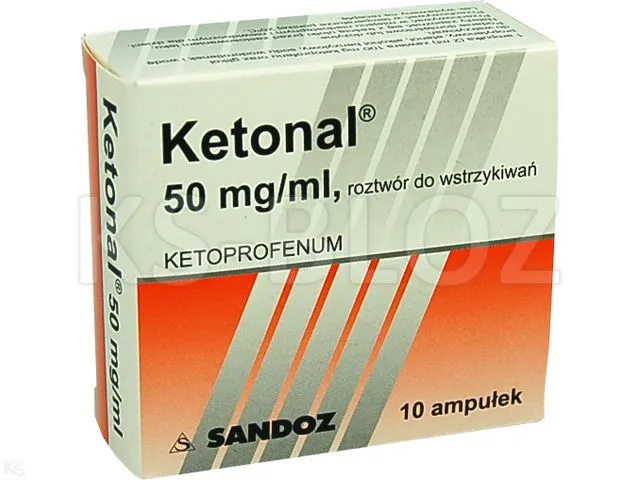
Table of Contents
Package leaflet: Information for the patient
Warning! Keep this leaflet! Information on the immediate packaging is in a foreign language.
Ketonal (Ketonal 100 mg), 50 mg/ml, solution for injection
Ketoprofenum
Ketonal and Ketonal 100 mg are different trade names for the same medicinal product.
Please read the following information carefully before using this medicine, as it contains
important information for the patient.
- Keep this leaflet, as you may need to read it again.
- If you have any further questions, please consult your doctor or pharmacist.
- This medicine has been prescribed for a specific individual. Do not pass it on to others. This medicine may harm others, even if their symptoms are identical.
- If you experience any adverse reactions, including any not listed in this leaflet, inform your doctor, pharmacist, or nurse. See section 4.
Table of contents of the leaflet
- What Ketonal is and what it is used for
- Important information before using Ketonal
- How to use Ketonal
- Possible side effects
- How to store Ketonal
- Contents of the pack and other information
1. What Ketonal is and what it is used for
Ketonal injection solution contains the active substance ketoprofen, a non-steroidal anti-inflammatory drug (NSAID) with anti-inflammatory, antipyretic, and analgesic properties.
Ketonal is used for symptomatic treatment of inflammatory and degenerative rheumatic disorders of the musculoskeletal system and for relief of certain painful conditions.
Indications for intramuscular administration:
- Rheumatoid arthritis
- Osteoarthritis
- Moderate pain
Indications for intravenous administration:
- Postoperative pain
2. Important information before using Ketonal
When not to use Ketonal
- If the patient is allergic to ketoprofen or to any of the other ingredients of this medicine (listed in section 6).
- In patients who have previously experienced hypersensitivity reactions such as bronchospasm, asthma attack, rhinitis, urticaria or other types of allergic reactions after taking ketoprofen, acetylsalicylic acid or other non-steroidal anti-inflammatory drugs (NSAIDs). Severe, rarely fatal, anaphylactic reactions have been reported in such patients.
- In women during the third trimester of pregnancy.
- In the following patients:
- with severe heart failure
- with active or recurrent gastric or duodenal ulcer and (or) gastrointestinal bleeding in history
- with gastrointestinal bleeding or perforation in history related to previous use of non-steroidal anti-inflammatory drugs
- with a tendency to bleeding
- with severe liver failure
- with severe renal failure.
The use of Ketonal is contraindicated in cases of cerebral haemorrhage or
any active bleeding.
Intramuscular administration of Ketonal is contraindicated in patients with coagulation disorders
or those receiving anticoagulant therapy.
The medicine must not be used in children under 15 years of age.
Warnings and precautions
Before using Ketonal, discuss with your doctor if any of the following
warnings currently apply to the patient or have applied in the past.
- It is very important to use the medicine at the lowest effective dose for the shortest duration necessary to relieve symptoms.
- The use of medicines such as Ketonal may be associated with a small increased risk of heart attack (myocardial infarction) or stroke. This risk increases with long-term use of high doses. Do not use higher doses or longer treatment duration than recommended.
- If the patient has heart function disorders, including heart failure, angina pectoris (chest pain), or has previously suffered a myocardial infarction, coronary artery bypass grafting, peripheral vascular disease (circulation disorders in legs or feet due to arterial narrowing or blockage), or any form of stroke (including transient ischaemic attack), the treatment approach should be discussed with a doctor or pharmacist.
- The use of Ketonal should also be discussed with a doctor if the patient smokes, has high blood pressure, high cholesterol levels, diabetes, or has a family history of heart disease or stroke.
- Non-steroidal anti-inflammatory drugs (NSAIDs), including ketoprofen, may cause bleeding, ulceration or perforation of the gastrointestinal tract (very rarely fatal). Particular caution should be exercised in patients receiving high doses of Ketonal, in patients with a history of peptic ulcer (especially if complicated by bleeding or perforation), ulcerative colitis, Crohn's disease, and in elderly patients. All patients, especially elderly ones, who experience unusual gastrointestinal symptoms (especially bleeding) during treatment with Ketonal, must inform their doctor immediately.
- The risk of allergic reactions is increased in patients with asthma, chronic rhinitis, chronic sinusitis and (or) nasal polyps. Administration of Ketonal may trigger an asthma attack or bronchospasm, particularly in individuals allergic to acetylsalicylic acid and (or) NSAIDs.
- In patients after coronary artery bypass grafting, some non-steroidal anti-inflammatory drugs have increased the risk of arterial thrombotic events.
- Inform your doctor if the patient has diabetes or is taking potassium-sparing medicines. Monitoring of blood potassium levels may be indicated.
- The risk of bleeding is increased in patients with coagulation disorders, haemophilia, von Willebrand disease, severe thrombocytopenia, renal or liver failure, and in patients taking anticoagulant medicines (such as coumarins and heparin).
- Very rarely, NSAIDs may cause serious skin reactions (some life-threatening), including exfoliative dermatitis, Stevens-Johnson syndrome and toxic epidermal necrolysis. The risk of such reactions is probably highest at the beginning of treatment (especially during the first month of treatment). If the first signs of rash, mucosal lesions or other allergy symptoms occur, Ketonal should be discontinued immediately and medical advice sought without delay.
- Ketoprofen may impair renal function in patients with:
- heart failure;
- cirrhosis;
- nephrotic syndrome;
- chronic renal failure;
- liver function disorders;
- chronic renal function disorders;
- fluid and electrolyte imbalances (e.g. in dehydrated patients);
- elderly patients.
- In patients with liver failure, the doctor may recommend adjusting the dosage.
Inform your doctor if:
- the patient has previously experienced photosensitivity or phototoxicity,
- the patient has a history of gastrointestinal diseases (peptic ulcer of the stomach and (or) duodenum, ulcerative colitis, Crohn's disease, oesophageal hiatus hernia), blood disorders and (or) coagulation disorders,
- the patient consumes large amounts of alcohol and (or) smokes,
- the patient has hypertension, heart failure or oedema,
- the patient has an infection - see below, section titled "Infections",
- the patient has liver and (or) renal failure or is taking diuretics,
- the patient is due to undergo surgery.
Infections
Ketonal may mask symptoms of infection, such as fever and pain. Therefore, Ketonal
may delay the initiation of appropriate treatment of infection, thereby increasing the
risk of complications. This has been observed in bacterial pneumonia and bacterial
skin infections associated with chickenpox. If the patient is taking this medicine
during an ongoing infection and symptoms of infection persist or worsen, immediate
medical advice should be sought.
Use of Ketonal in elderly patients
In elderly patients, the risk of adverse effects associated with the use of
non-steroidal anti-inflammatory drugs is increased. This particularly includes
gastrointestinal bleeding and perforation, which may be potentially life-threatening.
Ketonal and other medicines
Tell your doctor about all medicines currently or recently taken, as well as any medicines the patient plans to take.
Ketonal must not be used concomitantly with other non-steroidal anti-inflammatory drugs
(including selective COX-2 inhibitors) and salicylates (e.g. acetylsalicylic acid).
Ketonal and other medicines may affect each other's actions and the occurrence of
adverse effects.
This particularly applies to:
- other NSAIDs and salicylates (including acetylsalicylic acid) at high doses,
- corticosteroids (anti-inflammatory medicines),
- anticoagulants such as heparin and warfarin, dabigatran, apixaban, rivaroxaban, edoxaban,
- antiplatelet agents such as acetylsalicylic acid, ticlopidine, clopidogrel, tirofiban,
- nicorandil (a medicine used in the treatment of ischaemic heart disease),
- lithium (a medicine used in the treatment of certain psychiatric disorders),
- methotrexate (a medicine used, among others, in cancer and rheumatoid diseases),
- diuretics,
- medicines that lower blood pressure,
- selective serotonin reuptake inhibitors (medicines used in the treatment of depression),
- potassium salts,
- tacrolimus (an immunosuppressive medicine),
- cyclosporine (an immunosuppressive medicine used to prevent rejection of transplanted organs or bone marrow),
- trimethoprim (an antibiotic),
- oral antidiabetic medicines,
- antiepileptic medicines (e.g. phenytoin),
- cardiac glycosides (medicines used in heart diseases),
- mifepristone (a medicine used, among others, in the treatment of uterine fibroids),
- quinolone antibiotics,
- beta-adrenergic blocking agents (medicines used in heart diseases),
- tenofovir (an antiretroviral medicine used in the treatment of HIV infection and chronic viral hepatitis B).
The use of ketoprofen may reduce the effectiveness of oral contraceptives.
If in doubt about the listed medicines, consult a doctor or pharmacist.
Pregnancy, breastfeeding and fertility
If the patient is pregnant or breastfeeding, suspects she may be pregnant, or is planning to become
pregnant, she should consult a doctor or pharmacist before using this medicine.
Pregnancy
Do not take Ketonal if the patient is in the last 3 months of pregnancy, as it may
harm the unborn child or cause complications during delivery. Ketonal
may cause disturbances in kidney and heart function in the unborn child. It may increase
the tendency to bleeding in both mother and child and may delay or prolong labour.
During the first 6 months of pregnancy, Ketonal should not be used unless the doctor considers its use absolutely necessary. If treatment is required during this period or when trying to conceive, the lowest possible dose should be used for the shortest possible time.
From the 20th week of pregnancy, Ketonal may cause disturbances in kidney function in the unborn
child if taken for longer than a few days. This may lead to low levels of amniotic fluid surrounding the baby (oligohydramnios) or narrowing of a blood vessel (ductus arteriosus) in the baby's heart. If treatment is required for longer than a few days, the doctor may recommend additional monitoring.
Breastfeeding
It is not known whether ketoprofen passes into breast milk. Ketonal should not be given to breastfeeding women.
Effect on fertility
Ketonal may make it more difficult to become pregnant. If the patient is planning pregnancy, has problems conceiving, or is undergoing fertility investigations, she should inform her doctor. The doctor may consider discontinuing Ketonal.
Driving and operating machinery
Ketonal may cause dizziness, drowsiness, convulsions and visual disturbances in some patients. If these symptoms occur, do not drive or operate machinery.
Ketonal contains ethanol, benzyl alcohol, propylene glycol and sodium
Ketonal injection solution contains 200 mg of ethanol per dose (2 ml), equivalent to 5 ml of beer and 2 ml of wine per dose. Harmful for individuals with alcohol-related disorders.
This should be taken into account when using in pregnant or breastfeeding women, children and individuals in high-risk groups, such as patients with liver disease or epilepsy.
The medicine contains 40 mg of benzyl alcohol in each 2 ml ampoule.
Benzyl alcohol may cause allergic reactions.
Pregnant or breastfeeding women, as well as patients with liver or kidney disease, should consult a doctor before using this medicine, as large amounts of benzyl alcohol may accumulate in their bodies and cause adverse effects (so-called metabolic acidosis).
The medicine contains 800 mg of propylene glycol in each 2 ml ampoule.
This medicine contains less than 1 mmol (23 mg) of sodium per dose, meaning the medicine is considered "sodium-free".
3. How to use Ketonal
This medicine should always be used exactly as directed by your doctor. If in doubt, consult your
doctor, nurse, or pharmacist.
Adults and children over 15 years of age
Intramuscular administration
1 ampoule (100 mg ketoprofen) once or twice daily.
If necessary, treatment with the solution may be supplemented with oral or transdermal administration.
Intravenous administration
Ketoprofen in intravenous infusion may only be administered under hospital conditions. The infusion should be
given over ½ to 1 hour, for a maximum of 48 hours.
The maximum dose is 200 mg per day.
Short-term infusion
Contents of 1 to 2 ampoules (100 mg to 200 mg ketoprofen) should be diluted to 100 ml with 0.9%
sodium chloride solution and administered over ½ to 1 hour. The infusion may be repeated after 8
hours. The maximum dose is 200 mg per day.
Continuous infusion
Contents of 1 to 2 ampoules (100 mg to 200 mg ketoprofen) should be diluted to 500 ml with
infusion fluid (0.9% sodium chloride solution, Ringer's lactate solution, or 5% glucose solution) and
administered over 8 hours. The infusion may be repeated after 8 hours.
The maximum dose is 200 mg per day.
Ketoprofen may be administered concomitantly with centrally-acting analgesics.
The solution may be mixed in the same bottle with morphine: 10 mg to 20 mg morphine and 100 mg to 200 mg
ketoprofen diluted in 500 ml of 0.9% sodium chloride solution or Ringer's lactate solution.
The infusion may be repeated after 8 hours.
The lowest effective dose should be used for the shortest duration necessary to relieve symptoms. If
symptoms of infection (such as fever and pain) persist or worsen, medical advice should be sought
immediately (see section 2).
The maximum daily dose is 200 mg. Before initiating treatment with a dose of 200 mg per day, the
physician should carefully weigh the benefits against the risks. Doses higher than recommended are not advised.
Elderly patients
In elderly patients, treatment with ketoprofen should be initiated at the lowest available dose and continued
with the lowest effective dose.
In elderly patients, the risk of severe adverse effects is higher.
Warning
- Tramadol and ketoprofen solutions must not be mixed in the same bottle due to the risk of precipitation.
- Infusion bottles should be wrapped in black paper or aluminum foil, as ketoprofen is light-sensitive. If the patient feels that the effect of Ketonal is too strong or too weak, they should consult their doctor or pharmacist.
Overdose of Ketonal
In adults, the main symptoms of overdose are headache, dizziness, drowsiness,
nausea, vomiting, diarrhoea, and abdominal pain. In cases of severe poisoning, the patient should
be immediately transferred to a specialized hospital unit for symptomatic treatment.
There is no specific antidote.
Missed dose of Ketonal
Do not take a double dose to make up for a missed dose.
If you have any further questions about the use of this medicine, consult your
doctor, nurse, or pharmacist.
4. Possible adverse effects
Like all medicines, this medicine can cause adverse effects, although not everyone will experience them.
Adverse effects may occur with the following frequency:
Very common (may occur in more than 1 in 10 people): increased liver function test results to borderline values.
Common (may occur in less than 1 in 10 people): depression, nervousness, nightmares, drowsiness, general weakness, malaise, tingling sensation, oedema, nausea, loss of appetite, vomiting.
Uncommon (may occur in less than 1 in 100 people): anaemia, haemolysis (breakdown of red blood cells), purpura and skin allergic reactions, headache, dizziness, somnolence, haemoptysis, dyspnoea, sore throat, laryngeal oedema, constipation, diarrhoea, gastritis, rash, alopecia, pruritus, exanthema, purpuric rash, excessive sweating, exfoliative dermatitis, menorrhagia or heavy irregular menstruation, marked increase in aminotransferase activity (AspAT and AlAT), oedema, feeling of fatigue.
Rare (may occur in less than 1 in 1000 people): haemorrhagic anaemia, delirium with visual and auditory hallucinations, disorientation and speech disorders, visual disturbances, tinnitus, bronchial asthma attack, stomatitis, gastric and (or) duodenal ulcer, hepatitis, increased aminotransferase activity, increased serum bilirubin concentration due to hepatitis, colitis.
Very rare (may occur in fewer than 1 in 10,000 people): exacerbation of ulcerative colitis or Crohn's disease, enteropathy with perforation, ulceration or strictures (also with minor bleeding or protein loss), acute tubulointerstitial nephritis.
One case of colonic perforation has been reported in an elderly woman.
Frequency not known (frequency cannot be estimated from the available data): complete or almost complete absence of granulocytes (agranulocytosis), reduced platelet count (thrombocytopenia), haemolytic anaemia (anaemia due to breakdown of red blood cells), reduced white blood cell count (leukopenia), anaphylactic reactions (including anaphylactic shock), mood changes, convulsions, heart failure, hypertension, bronchospasm (especially in patients with hypersensitivity to acetylsalicylic acid and other NSAIDs), rhinitis, gastrointestinal bleeding and perforation (sometimes fatal), photosensitivity, alopecia, urticaria, exacerbation of chronic urticaria, bullous reactions including Stevens-Johnson syndrome and toxic epidermal necrolysis, acute generalized exanthematous pustulosis, acute renal failure, tubulointerstitial nephritis, nephrotic syndrome, decreased sodium concentration in blood (hyponatremia), increased potassium concentration in blood (hyperkalemia), confusion, aseptic meningitis, vasculitis (including leukocytoclastic vasculitis), pancreatitis, angioedema, burning sensation, pain at the site of administration, cutis marmorata.
Ketoprofen in high doses may inhibit platelet aggregation, thus prolonging bleeding time, and may cause nosebleeds and a tendency to bruising.
One case of pseudotumour cerebri and one case of conjunctivitis have been reported. Cases of gastrointestinal discomfort and stomach pain have also been reported, as well as fluid/sodium retention (with possible oedema), organic kidney damage which may lead to acute renal failure, single cases of acute tubular necrosis and renal papillary necrosis.
The use of some NSAIDs (especially long-term and at high doses) may increase the risk of arterial thromboembolic events (e.g. myocardial infarction or stroke). This may also apply to ketoprofen.
Reporting of adverse effects
If any adverse effects occur, including any not listed in this leaflet, inform your doctor, pharmacist or nurse. Adverse effects can be reported directly to the Department of Monitoring Adverse Drug Reactions, Office for Registration of Medicinal Products, Medical Devices and Biocidal Products, Al. Jerozolimskie 181C, 02-222 Warsaw, tel.: +48 22 49 21 301, fax: +48 22 49 21 309, website: https://smz.ezdrowie.gov.pl
Reporting adverse effects helps to provide more information on the safety of the medicine.
5. How to store Ketonal
- Keep the medicine out of the sight and reach of children.
- Do not use this medicine after the expiry date stated on the packaging. The expiry date refers to the last day of the stated month.
- Store below 25°C.
- Medicines should not be disposed of via wastewater or household waste. Ask your pharmacist how to dispose of medicines no longer required. These measures will help protect the environment.
6. Contents of the packaging and other information
What Ketonal contains
The active substance is ketoprofen. Each 2 ml of injection solution (1 ampoule) contains
100 mg of ketoprofen.
The other ingredients are: propylene glycol, anhydrous ethanol, benzyl alcohol, sodium hydroxide,
water for injections.
What Ketonal looks like and contents of the pack
Ketonal is a clear solution without visible particles.
It is available in 2 ml amber glass ampoules, packed in cardboard boxes.
Pack sizes: 5, 10, 50 ampoules.
For more detailed information, please contact the responsible party or the parallel importer.
Responsible party in the Czech Republic, country of export:
Lek Pharmaceuticals d.d.
Verovškova 57
1526 Ljubljana
Slovenia
Manufacturer:
Lek Pharmaceuticals d.d.
Verovškova 57
1526 Ljubljana
Slovenia
Parallel importer:
InPharm Sp. z o.o.
ul. Strumykowa 28/11
03-138 Warsaw
Poland
Repackaged in:
InPharm Sp. z o.o. Services sp. k.
ul. Chełmżyńska 249
04-458 Warsaw
Poland
Marketing authorization number in the Czech Republic, country of export: 29/403/95-C
Parallel import authorization number: 292/25